How To Manage Dog Motion Sickness And Travel Anxiety
Discover expert tips to manage dog motion sickness and travel anxiety. Learn about safe medications, natural remedies, and training for stress-free trips.

Understanding the Physiology of Canine Motion Sickness
Embarking on an adventure with your canine companion is one of the greatest joys of pet ownership. Whether you are heading to a national park for a weekend of hiking or driving across the country to visit family, the open road calls to us. However, for many dogs, the car ride is a source of immense physiological and psychological distress. To effectively manage travel-related health issues, we must first understand the biological mechanisms behind them.
Motion sickness in dogs is primarily driven by the vestibular system, which is located in the inner ear and is responsible for maintaining balance and spatial orientation. When a dog is in a moving vehicle, their eyes may see the stationary interior of the car, while their inner ear senses the acceleration, deceleration, and turning of the vehicle. This sensory conflict confuses the brain, leading to nausea, hypersalivation, lethargy, and eventually, vomiting. According to VCA Animal Hospitals, motion sickness is significantly more common in puppies and young dogs because the structures of the inner ear used for balance are not fully developed until they reach about one year of age.
Travel anxiety, while often presenting with similar symptoms like panting, whining, and trembling, is a distinct psychological response. It is often triggered by negative associations with the vehicle, such as previous trips that ended at the veterinary clinic, or a generalized fear of confined spaces and loud noises. Differentiating between true vestibular motion sickness and psychological travel anxiety is the first critical step in formulating a successful wellness plan for your travels.
Pre-Trip Conditioning and Desensitization Protocols
If you have an upcoming trip, behavioral conditioning should begin at least four to six weeks prior to your departure date. Desensitization is a gradual process that rewires your dog's emotional response to the vehicle, replacing fear and nausea with positive anticipation.
Step 1: Creating a Positive Stationary Association
Start by parking your car in the driveway with the engine off and the doors open. Toss high-value treats, such as freeze-dried liver or boiled chicken breast, into the back seat or the dog's designated travel crate. Allow the dog to enter and exit freely without closing the doors. Do this for five minutes, twice a day, for a full week. The goal is to make the car a 'safe zone' associated with premium rewards.
Step 2: Introducing Sensory Stimuli
Once your dog is comfortably entering the car, close the doors and sit with them in the back seat. Offer a long-lasting chew, like a bully stick or a Kong stuffed with frozen peanut butter. After a few days of this, start the engine but do not put the car in gear. Let the dog acclimate to the vibration and the sound of the motor while they enjoy their treat. The American Kennel Club emphasizes that keeping early car experiences overwhelmingly positive is crucial for preventing lifelong travel phobias.
Step 3: Micro-Drive Incremental Progression
Begin taking very short drives—literally just to the end of the driveway and back, or around the block. Gradually increase the duration of the drive by one or two minutes each session. Always end the drive at a highly rewarding location, such as a favorite park or a pet-friendly patio, never at the vet or groomer during this training phase.
Comparing Treatments: Medications vs. Natural Remedies
When behavioral conditioning is not enough, or when an immediate trip is necessary, veterinary interventions become vital. Below is a comprehensive comparison of the most common medical and holistic interventions used to manage canine motion sickness and travel anxiety.
| Treatment Type | Active Ingredient / Method | Onset Time | Typical Cost | Best Use Case |
|---|---|---|---|---|
| Prescription Antiemetic | Maropitant Citrate (Cerenia) | 1 to 2 hours | $3 - $6 per dose | Severe vestibular motion sickness and vomiting prevention. |
| OTC Antihistamine | Dimenhydrinate (Dramamine) | 30 to 45 mins | $0.15 - $0.30 per dose | Mild motion sickness; causes mild drowsiness. |
| Prescription Anxiolytic | Trazodone | 1 to 2 hours | $1 - $3 per dose | Severe travel anxiety, noise phobia, and confinement stress. |
| Pheromone Therapy | Adaptil (DAP) Spray/Collar | 15 to 30 mins | $15 - $25 per spray | Mild to moderate anxiety; creates a calming environmental cue. |
| Holistic Antiemetic | Powdered Ginger Root | 30 to 60 mins | $0.10 - $0.20 per dose | Natural stomach settling for mild nausea without sedation. |
Important Note on Cerenia: Maropitant citrate (brand name Cerenia) is the only FDA-approved medication specifically for the prevention of acute vomiting and motion sickness in dogs. It works by blocking substance P, a neurotransmitter involved in the vomiting reflex, from binding to NK1 receptors in the brain. It is highly effective but does not treat the underlying psychological anxiety; therefore, it is often paired with a behavioral modification plan or an anxiolytic like Trazodone for highly stressed dogs.
Packing a Comprehensive Canine Travel Health Kit
Proper preparation extends beyond training and medication. A dedicated canine travel health kit ensures you are equipped to handle minor medical issues and maintain your dog's baseline wellness on the road. According to guidelines from the ASPCA, bringing familiar items from home is essential for reducing environmental stress.
- Hydration Supplies: Pack a collapsible silicone travel bowl and at least one gallon of familiar tap water from home per dog, per two days of travel. Sudden changes in water mineral content can cause gastrointestinal upset and diarrhea.
- Dietary Consistency: Bring enough of your dog's regular kibble or wet food for the entire trip, plus a 20% surplus for emergencies. Measure out daily portions into ziplock bags in advance to save time at rest stops.
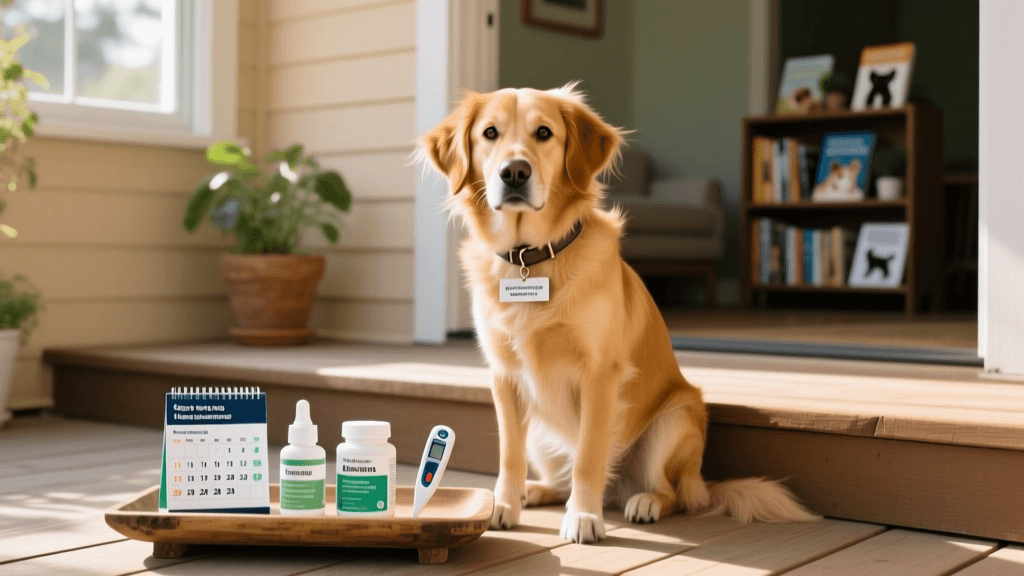
- Canine First Aid: Include styptic powder for torn nails, vet-wrap (self-adhering bandage), saline eye wash for flushing out trail debris, and a digital thermometer. Normal canine resting temperature is between 101.0°F and 102.5°F.
- Paw Protection: If your adventure involves hiking on hot pavement, sharp rocks, or ice, pack a set of durable dog boots (such as Ruffwear Grip Trex) and a tin of paw wax (like Musher's Secret) to prevent pad abrasions and burns.
- Documentation: Carry a physical and digital copy of your dog's most recent veterinary exam, rabies certificate, and a list of current medications. This is legally required for crossing state lines and essential in a medical emergency.
In-Transit Best Practices for Health and Comfort
How you manage the actual journey significantly impacts your dog's physical and mental state upon arrival. Implementing strict in-transit protocols will minimize sensory overload and physical discomfort.
Climate and Airflow Control
Dogs do not sweat through their skin like humans; they dissipate heat primarily through panting and the sweat glands in their paw pads. Keep the cabin temperature strictly between 68°F and 72°F. Direct air conditioning vents toward the dog's crate or harness area, but avoid blowing air directly into their eyes, which can cause corneal drying and irritation, especially if they enjoy looking out the window.
Hydration and Potty Schedules
Dehydration is a silent risk during long road trips. Offer 2 to 4 ounces of familiar water every two hours. Withhold large meals for at least three to four hours before departure to reduce the likelihood of motion-induced vomiting. Instead, feed a small, easily digestible snack (like a spoonful of plain pumpkin puree) right before hitting the road. Schedule potty breaks every three to four hours at quiet, low-traffic rest areas. Always use a secure, well-fitted harness and a sturdy leash when exiting the vehicle at unfamiliar locations to prevent bolting.
Safety Restraints
Allowing a dog to roam freely in a vehicle is a severe health and safety hazard. In the event of a sudden stop or collision, an unrestrained 30-pound dog becomes a projectile exerting over 1,000 pounds of force. Always secure your dog in a crash-tested travel crate (such as those certified by the Center for Pet Safety) or use a crash-tested harness tethered directly to the vehicle's seatbelt latch. This not only protects the dog but also prevents them from climbing into the front seat and distracting the driver.
Post-Travel Recovery and Destination Wellness
Arriving at your destination is not the end of the wellness protocol. Travel is inherently exhausting for dogs, both physically and mentally. When you arrive at your hotel, cabin, or campsite, immediately establish a 'safe zone.' Set up their familiar travel crate or a portable playpen in a quiet corner of the room, complete with their unwashed bed from home. The familiar scent provides a powerful psychological anchor in a novel environment.
Allow your dog to decompress for at least 24 hours before embarking on strenuous hikes or visiting crowded, dog-friendly tourist attractions. Engage in low-impact activities like sniffari walks—where the dog is allowed to lead the pace and thoroughly investigate the new scents of the area. Mental stimulation through sniffing is incredibly tiring for dogs and helps burn off residual travel anxiety. By prioritizing your dog's physiological needs and psychological comfort, you transform travel from a stressful ordeal into a deeply bonding, health-promoting adventure for both of you.
priya-sutaria
All our authors care for dogs every day — read more of their work on the authors page.