Adapted Obedience Training for Canine OA Dogs 2026
Discover 2026 adapted obedience training techniques for dogs with osteoarthritis. Learn low-impact conditioning and mental exercises for OA treatment.
Canine osteoarthritis (OA) is a degenerative joint disease that affects a significant portion of the senior and large-breed dog population. Historically, the diagnosis of OA meant a drastic reduction in a dog’s activity level, often leading to the cessation of obedience training and behavioral conditioning. However, the veterinary and canine rehabilitation consensus in 2026 has shifted dramatically. Today, adapted obedience training is recognized not just as a behavioral tool, but as a critical, active component of holistic canine OA treatment.
According to Washington State University's College of Veterinary Medicine, managing OA requires a multimodal approach that includes weight management, medical intervention, and controlled, low-impact physical and mental exercise. When traditional training commands cause joint strain, adapted training steps in to preserve your dog's cognitive sharpness, maintain the human-animal bond, and support joint mobility without exacerbating pain.
The Shift to Low-Impact Obedience in 2026
Traditional obedience training often relies heavily on repetitive movements that are highly detrimental to arthritic joints. Commands like "sit," "down," and "stand" require deep flexion of the stifle (knee) and hip joints, which can cause severe discomfort for a dog with OA. Furthermore, high-impact tricks like jumping, weaving through agility poles, or catching frisbees are strictly contraindicated.
In 2026, certified canine rehabilitation therapists and veterinary behaviorists emphasize "joint-friendly" obedience. This approach focuses on isometric exercises, static holds, and cognitive conditioning. The goal is to fatigue the dog mentally and engage stabilizing muscles without placing repetitive mechanical stress on degraded cartilage. By modifying how we ask our dogs to interact with their environment, we can continue to provide the structure and enrichment they crave while actively supporting their medical OA treatment plan.
Core Adapted Commands for Arthritic Dogs
Transitioning your dog to an adapted training repertoire requires patience and an understanding of canine biomechanics. Here are the foundational commands recommended for OA management in 2026.
1. The "Place" Command (Mat Training)
Instead of asking an arthritic dog to "sit" or "down" on a hard floor, the "Place" command directs them to a designated, supportive surface. This is highly beneficial for dogs with hip dysplasia or severe stifle OA.
- Equipment: Use a high-density, orthopedic memory foam mat that provides traction and joint cushioning.
- Training Steps: Lure your dog onto the mat using a high-value treat. Mark the behavior with a clicker or a verbal "yes" the moment all four paws are on the mat. Reward in a standing or relaxed lying position, avoiding the need for them to tuck their hind legs into a formal sit.
- Duration Building: Gradually increase the time they spend on the mat, rewarding calm, static behavior. This teaches impulse control and provides a safe "default" behavior that replaces the traditional sit-stay.
2. Hand Targeting ("Touch")
Hand targeting is an invaluable tool for guiding a dog's movement without using a leash that might pull on their neck or spine. It is particularly useful for guiding dogs up ramps or into vehicles.
- Training Steps: Present your open palm a few inches from your dog's nose. When they lean forward to sniff or "boop" your hand, mark and reward.
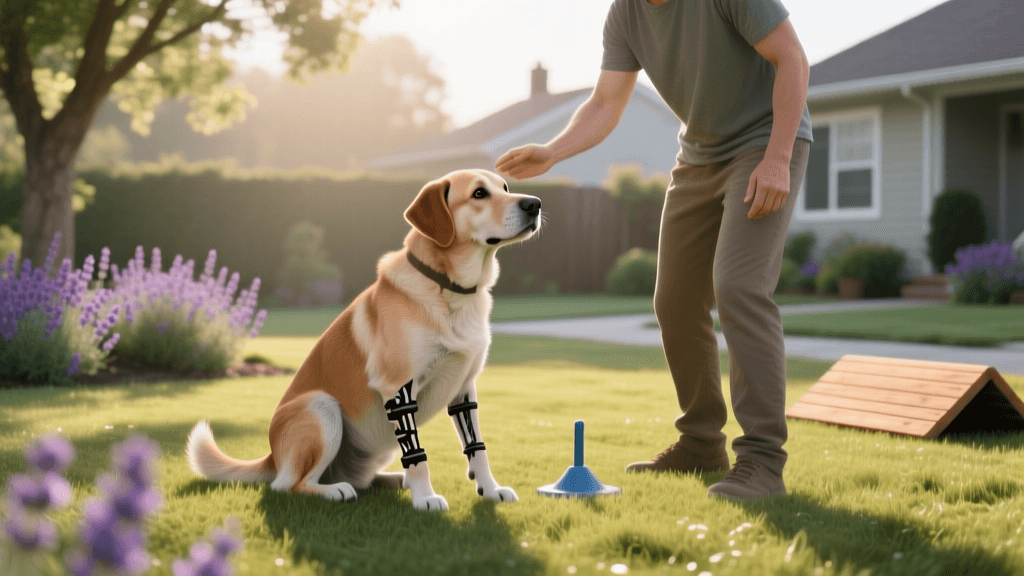
- OA Adaptation: Keep your hand low to the ground or at the dog's natural standing head height to prevent them from straining their cervical spine (neck) or reaching up on their hind legs.
- Application: Use the "Touch" command to guide your dog through doorways, onto non-slip rugs, or to reposition them for grooming and veterinary exams without physical force.
3. The "Stand-Stay"
For dogs who struggle to rise from a seated or down position, teaching a solid "Stand-Stay" is a game-changer. It allows you to halt your dog's movement for greetings or leash attachment without requiring them to lower their hindquarters.
- Training Steps: While your dog is naturally standing, use a treat to lure their head slightly forward and upward, encouraging them to square their stance. Mark and reward for remaining still in a standing position.
- Support: If your dog has severe hind-end weakness, you can use a supportive hind-lift harness during the initial training phases to provide balance and confidence.
Traditional vs. Adapted Commands: A Comparison
Understanding how to swap out harmful commands for therapeutic alternatives is essential for any dog owner managing OA. The table below outlines the 2026 standard for command adaptation.
| Traditional Command | OA Adaptation | Joint Health Benefit |
|---|---|---|
| Sit / Sit-Stay | Place (on orthopedic mat) or Stand-Stay | Eliminates deep hip and stifle flexion; prevents stiffness from prolonged sitting. |
| Jump / Up | Ramp Targeting / Touch | Removes explosive impact on carpal (wrist) and shoulder joints. |
| Fetch / Retrieve | Scent Work / Hide and Seek | Prevents sudden stops, turns, and sliding on floors that tear ligaments. |
| Heel (Fast Pace) | Loose-Leash Sniffari | Encourages a slow, deliberate gait and natural head-lowering for spinal relief. |
| Shake / Paw | Nose Boop / Hand Target | Avoids unnatural weight-shifting onto three legs, which strains the supporting shoulder. |
Mental Conditioning: Scent Work and Puzzle Games
Because dogs with OA cannot rely on rigorous physical exercise to burn off energy, mental conditioning becomes a primary pillar of their daily routine. According to the American Kennel Club (AKC), keeping a senior dog's mind active is just as important as managing their physical pain. Scent work is widely considered the ultimate low-impact sport for arthritic dogs.
In scent work, the dog uses their nose to locate hidden treats or essential oils (like birch or anise) at their own pace. This activity requires minimal joint articulation but provides immense cognitive fatigue. Fifteen minutes of focused scent work can tire a dog out as much as a two-mile walk, without the associated joint wear-and-tear. Additionally, utilizing snuffle mats and interactive puzzle feeders for daily meals encourages foraging behaviors and keeps the brain engaged while the body rests.
Timing Training with Modern OA Therapies
To get the most out of your adapted training sessions, you must align them with your dog's medical treatment schedule. By 2026, anti-nerve growth factor (anti-NGF) monoclonal antibody injections have become a cornerstone of canine OA pain management. These monthly injections significantly reduce pain signaling, allowing for improved mobility.
However, a common pitfall is overtraining. Because the medication masks the pain, dogs may feel capable of doing more than their joints can structurally handle. The American College of Veterinary Surgeons (ACVS) warns that while pain relief is crucial, owners must act as the "governor" on their dog's engine. Schedule your most demanding training sessions (like learning a new scent work pattern or practicing ramp loading) a few days after their pain management treatments, but strictly enforce time limits to prevent post-exercise inflammation.
Environmental Setup for Safe Training
Before initiating any adapted obedience routine, audit your training environment. Slipping on hardwood or tile floors is a leading cause of acute injuries in OA dogs, as compromised joints cannot stabilize the body during a slide.
- Flooring: Lay down interlocking foam tiles or non-slip yoga mats in your primary training area.
- Lighting: Ensure the area is well-lit. Dogs with declining vision or cognitive dysfunction syndrome (often comorbid with advanced age and OA) need clear visual boundaries to feel secure.
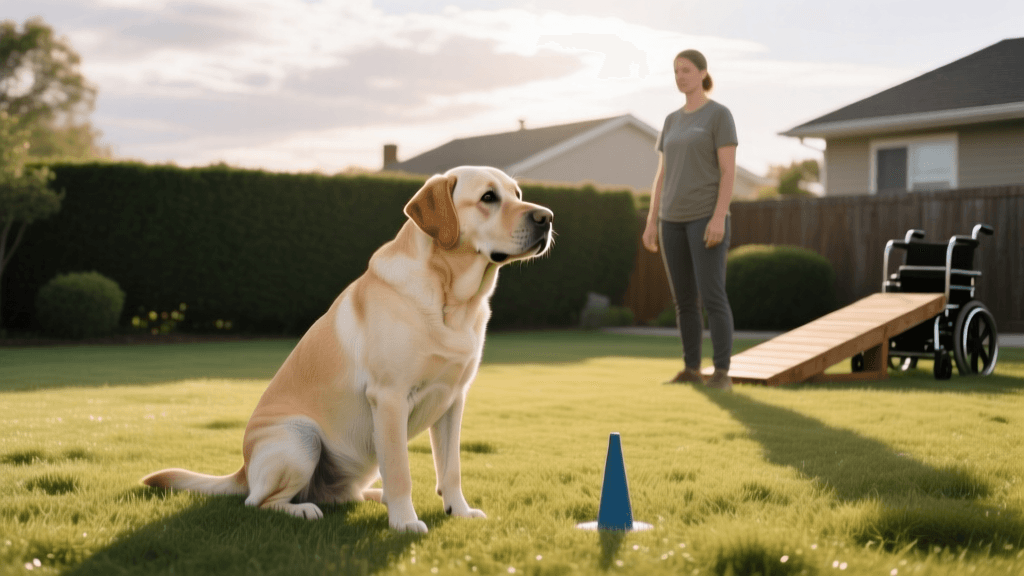
- Props: Use adjustable, textured ramps for vehicle or couch loading, and ensure all training treats are soft and easily chewable to accommodate potential dental issues common in senior dogs.
Sample Weekly Adapted Training Schedule
Consistency is key to behavioral conditioning. Here is a sample weekly schedule designed for a medium-to-large breed dog with moderate OA, focusing on short, frequent sessions to avoid fatigue.
- Monday: 10 minutes of "Place" command training on the orthopedic mat; 5 minutes of indoor scent work.
- Tuesday: Active Rest. Gentle canine massage and passive range of motion (PROM) exercises as prescribed by your rehab vet.
- Wednesday: 10 minutes of "Touch" (hand targeting) and "Stand-Stay" practice; feed dinner via a puzzle toy.
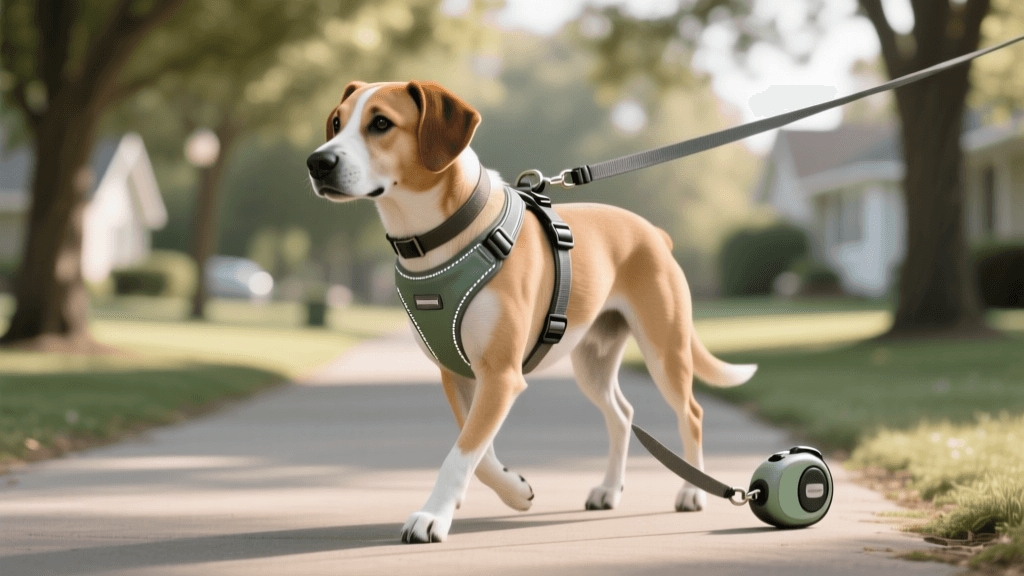
- Thursday: 15-minute "Sniffari" walk on a grassy, even surface using a well-fitted Y-front harness.
- Friday: 10 minutes of ramp loading practice using the "Touch" command; 5 minutes of scent work.
- Saturday: Mental enrichment day. Frozen Kongs, lick mats, and hide-and-seek with low-calorie treats.
- Sunday: Rest day. Focus on bonding, gentle petting, and monitoring for any signs of delayed-onset stiffness.
Conclusion
A diagnosis of canine osteoarthritis does not mean the end of your dog's training journey; it simply requires a change in methodology. By embracing adapted obedience, low-impact mental conditioning, and strategic environmental modifications, you can provide your dog with the structure, enrichment, and joy they deserve. In 2026, training is no longer just about obedience—it is a vital, empowering therapy that enhances the quality of life for our arthritic companions.
aaron-whyte
All our authors care for dogs every day — read more of their work on the authors page.