Trick Training for Beginners: A Complete Guide to Teaching Your Dog Fun Tricks
Learn how to teach your dog amazing tricks with our beginner-friendly guide. Step-by-step instructions, common mistakes to avoid, and expert tips inside.
Trick Training for Beginners: A Complete Guide to Teaching Your Dog Fun Tricks
Teaching your dog tricks is one of the most rewarding experiences you can share with your furry companion. Beyond the obvious joy of watching your pup shake hands, spin in circles, or play dead on command, trick training builds a powerful bond between you and your dog while providing essential mental stimulation that keeps their mind sharp and engaged. Whether you have a curious puppy or a seasoned senior dog, learning tricks together opens the door to better communication, deeper trust, and countless moments of shared fun.
Unlike basic obedience commands such as sit, stay, and come — which are essential for safety and good manners — trick training is all about creativity, play, and pushing the boundaries of what your dog can learn. It transforms routine training sessions into exciting games that your dog will look forward to every single day. If you have been searching for a way to spice up your training routine or simply want to impress your friends and family with your dog's talents, you have come to the right place.
In this comprehensive guide, we will walk you through everything you need to know about trick training as a beginner. From the foundational principles that make training effective to step-by-step instructions for five fantastic beginner-friendly tricks, plus tips for avoiding common pitfalls and answers to frequently asked questions, this article has everything you need to get started on your trick training journey today.
Getting Started: The Foundations of Trick Training
Before you dive into teaching specific tricks, it is critical to establish a solid foundation. Successful trick training rests on a few key principles that every beginner should understand and apply consistently. Master these basics, and everything else will fall into place much more smoothly.
Understanding Positive Reinforcement
Positive reinforcement is the gold standard in modern dog training, and it is especially important when teaching tricks. The concept is simple: when your dog performs a desired behavior, you immediately reward them with something they value — typically a tasty treat, enthusiastic praise, or a favorite toy. Over time, your dog learns to associate the behavior with the reward and becomes eager to repeat it.
Never use punishment, force, or intimidation during trick training. Tricks should be a source of joy and confidence for your dog, not fear or anxiety. If your dog seems stressed, frustrated, or disinterested, take a break and try again later with a fresh approach. For a deeper understanding of reward-based methods, check out our positive reinforcement training guide.
Choosing the Right Treats and Rewards
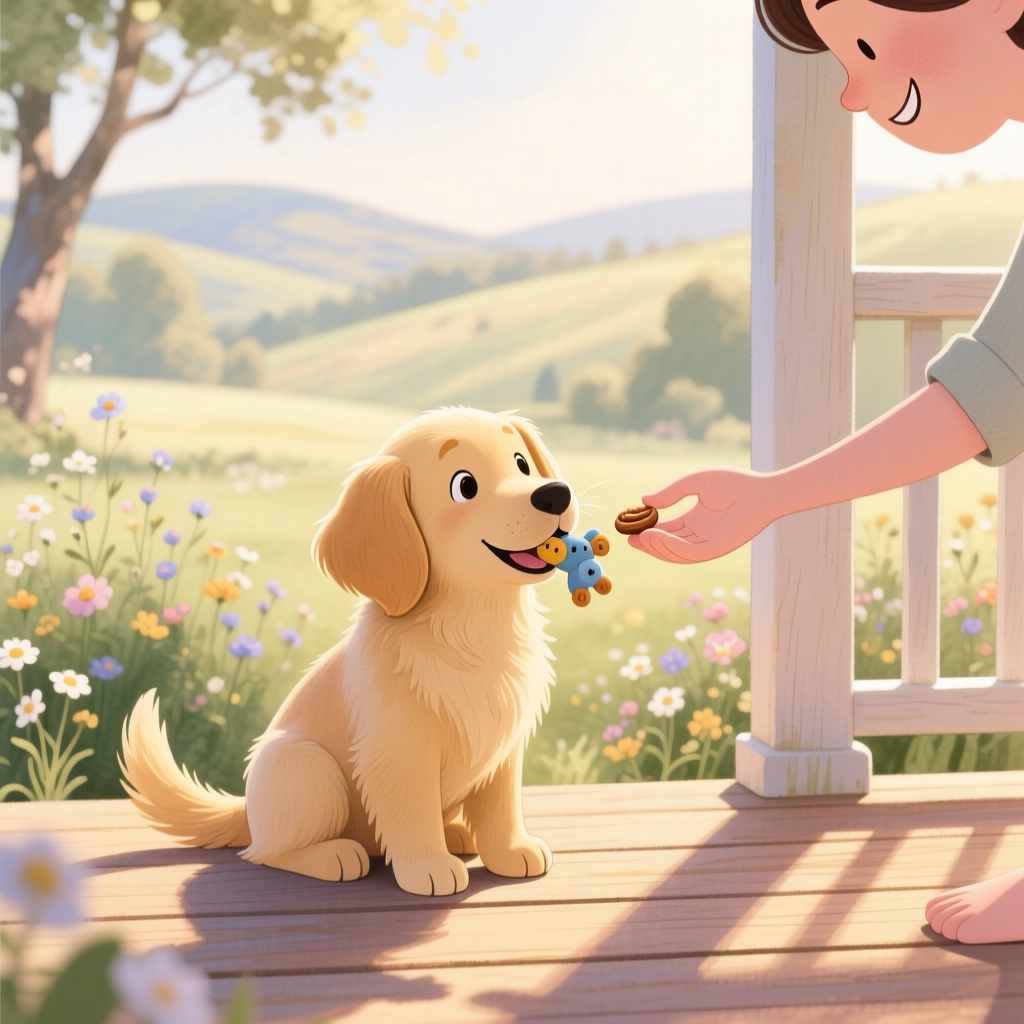
Not all rewards are created equal. For trick training, you want to use high-value treats that your dog finds irresistible. Small, soft, and smelly treats tend to work best because they can be consumed quickly without interrupting the flow of training. Think tiny pieces of chicken, cheese, or commercially available training treats.
Keep treats small — roughly the size of a pea — so your dog does not fill up too quickly during a session. You can also mix in verbal praise, petting, and play with a favorite toy to keep rewards varied and exciting. Some dogs are more toy-motivated than food-motivated, so experiment to discover what drives your individual dog.
Setting Up Your Training Environment
Your training environment plays a bigger role than you might think. When teaching new tricks, start in a quiet, low-distraction area such as your living room or a fenced backyard. As your dog becomes more proficient, gradually introduce distractions to proof the behavior in different settings.
Make sure the surface your dog is working on provides adequate grip. Slippery hardwood floors or tile can make it difficult for your dog to perform certain movements and may even lead to injury. A carpeted area, yoga mat, or rubber mat is ideal for indoor training sessions.
Timing Your Sessions Perfectly
Short, frequent training sessions are far more effective than long, drawn-out ones. Aim for sessions lasting five to fifteen minutes, two to three times per day. Dogs have relatively short attention spans, and pushing a session too long can lead to frustration for both you and your pup. Always end on a positive note — if your dog successfully performs a trick, reward generously and wrap up the session while they are still eager for more.
The Power of a Clicker or Marker Word
A clicker is a small handheld device that makes a distinct clicking sound, which you can use to mark the exact moment your dog performs the desired behavior. This precise timing helps your dog understand exactly what they did right. If you prefer not to use a clicker, choose a short marker word like "yes" or "good" and use it consistently in the same way.
To introduce the clicker, simply click it and immediately give your dog a treat. Repeat this ten to fifteen times until your dog understands that the click predicts a reward. Once that association is established, you can use the clicker to mark desired behaviors during trick training with remarkable precision.
Five Essential Tricks Every Beginner Should Teach
Now that you have a solid understanding of the foundations, it is time to start teaching some actual tricks. The following five tricks are perfect for beginners because they build on natural canine behaviors, require no special equipment, and provide a strong base for more advanced tricks down the road.
Trick 1: Shake (Paw)
The shake is often the very first trick dog owners teach, and for good reason — it is adorable, easy to learn, and builds confidence in both you and your dog.
Step-by-step instructions:
- Ask your dog to sit. If your dog does not know how to sit yet, review our basic obedience commands guide first.
- Hold a treat in your closed fist and present it near your dog's paw at chest level.
- Your dog will likely sniff, lick, and eventually paw at your hand to try to get the treat.
- The moment their paw touches your hand, click or say your marker word and immediately give them the treat with your other hand.
- Repeat this process several times until your dog consistently paws at your hand.
- Begin opening your hand slightly so your dog places their paw on your open palm.
- Add the verbal cue "shake" just before presenting your hand.
- Practice until your dog offers their paw on the verbal cue alone.
Pro tip: Once your dog masters shaking with one paw, you can teach "other paw" by presenting your opposite hand and using a different verbal cue. This opens the door to teaching a "high five" variation as well.
Trick 2: Spin and Twirl
Spinning is a visually impressive trick that is surprisingly easy to teach. It also helps improve your dog's body awareness and coordination.
Step-by-step instructions:
- Stand in front of your dog with a treat in your hand.
- Hold the treat close to your dog's nose and slowly lure their head in a circular motion, guiding them to turn in a full circle.
- Start with small arcs and gradually increase the circle size until your dog completes a full 360-degree turn.
- Click or mark the behavior the moment they complete the circle and reward immediately.
- Repeat in the same direction several times before switching directions.
- Add the verbal cue "spin" for one direction and "twirl" for the other direction.
- Gradually fade the lure by making your hand motion smaller and smaller until your dog responds to just a finger gesture and verbal cue.
Pro tip: Spinning is an excellent warm-up exercise for dogs involved in agility or other canine sports. It gets their body moving and their mind focused on you.
Trick 3: Roll Over
Roll over is a crowd-pleasing classic that looks impressive and is a natural progression from the "down" command. Make sure your dog is comfortable lying down before attempting this trick.
Step-by-step instructions:
- Ask your dog to lie down. If you need help with this, our down command tutorial has detailed instructions.
- Hold a treat near your dog's nose and slowly move it toward their shoulder, encouraging them to turn their head.
- Continue moving the treat in an arc over their back, luring them onto their side.
- Once they are on their side, click and reward. This is a crucial intermediate step.
- Continue the lure from their side all the way over until they complete the full roll.
- Click and reward the moment they finish the roll.
- Add the verbal cue "roll over" once the physical motion is consistent.
- Practice in both directions, as most dogs will have a preferred rolling side.
Important: Some dogs feel vulnerable when rolling onto their backs. If your dog shows signs of discomfort or stiffness, go back to rewarding the side-lying position and progress more slowly. Never physically push or force your dog into a roll.
Trick 4: Play Dead (Bang!)
Play dead is a dramatic and entertaining trick that never fails to get a reaction from onlookers. It builds on the down position and the side-lying position you practiced during roll over training.
Step-by-step instructions:
- Ask your dog to lie down.
- Lure your dog onto their side using a treat, just as you did in the roll over steps.
- Once they are lying on their side, hold the treat at their nose to keep them still.
- Click and reward for staying in the side-lying position for one second.
- Gradually increase the duration before clicking and rewarding — two seconds, five seconds, ten seconds.
- Introduce your chosen cue. Many owners use a finger-gun gesture paired with the word "bang!"
- Practice the cue until your dog flops onto their side as soon as they see or hear it.
- Add duration by delaying the reward, and eventually add distance by taking a step back after giving the cue.
Pro tip: For an extra theatrical performance, teach your dog to do a little "shake" or leg twitch while playing dead. You can capture this natural behavior by marking and rewarding it when it happens spontaneously during practice.
Trick 5: Crawl
The crawl is a fun and visually striking trick where your dog moves forward while staying in a lying-down position. It requires patience to teach but produces an incredibly impressive result.
Step-by-step instructions:
- Ask your dog to lie down.
- Hold a treat right at their nose, close enough that they do not need to get up to reach it.
- Slowly move the treat forward along the ground, just an inch or two.
- If your dog scoots forward while staying down, immediately click and reward.
- If they stand up, calmly ask them to lie down again and try moving the treat a shorter distance.
- Gradually increase the distance of each crawl before rewarding.
- Add the verbal cue "crawl" once your dog is consistently moving forward in the down position.
- Practice on a comfortable surface — carpet or a mat works much better than bare floor.
Pro tip: The crawl is easiest for dogs with longer bodies, such as Dachshunds and Corgis, but any breed can learn it with patience and proper technique. If your dog struggles, try practicing on a slightly textured surface that gives them more traction.
Pro Tips for Trick Training Success
Teaching tricks is as much an art as it is a science. The following tips will help you maximize your training sessions and accelerate your dog's learning curve.
Break Complex Tricks into Tiny Steps
Every trick, no matter how complex, can be broken down into small, achievable steps. This process, known as shaping, involves rewarding successive approximations of the final behavior. For example, if you want to teach your dog to close a door, you might start by rewarding them for simply looking at the door, then for moving toward it, then for touching it with their nose, and so on until the full behavior is achieved.
Patience is essential here. Some dogs will progress through the steps quickly, while others need more time at each stage. Meet your dog where they are and celebrate every small victory along the way.
Keep a Training Journal
Maintaining a simple training journal can dramatically improve your progress. After each session, jot down what tricks you worked on, how many successful repetitions your dog completed, what challenges arose, and what you plan to focus on next time. This record helps you identify patterns, track improvement over time, and avoid repeating unproductive approaches.
Train Before Meals, Not After
A slightly hungry dog is a more motivated dog. Schedule your training sessions just before your dog's regular mealtime when their food drive is at its peak. A dog who just ate a full meal may be less interested in treat-based rewards and more inclined to nap than to work.
Use Life Rewards in Addition to Treats
Treats are fantastic, but they are not the only reward available to you. Access to the backyard, a game of tug, a belly rub, or the opportunity to go for a walk can all serve as powerful reinforcers. Mixing up your rewards keeps training exciting and prevents your dog from becoming dependent on food alone. Learn more about reward variety in our training with toys and play guide.
Know Your Dog's Limits
Every dog is an individual with unique physical capabilities, temperament, and learning speed. A Border Collie might pick up complex tricks in a handful of sessions, while a Bulldog might need more repetition and patience — and that is perfectly okay. Adjust your expectations to match your dog's abilities and always prioritize their physical comfort and emotional well-being.
Be especially mindful of tricks that involve jumping, standing on hind legs, or repetitive spinning if your dog has joint issues, is a senior, or belongs to a breed prone to hip dysplasia or back problems. Consult your veterinarian if you are unsure whether a particular trick is safe for your dog.
Common Mistakes Beginners Make (and How to Avoid Them)
Even the most enthusiastic dog owners stumble into common training traps. Being aware of these mistakes ahead of time will save you and your dog a great deal of frustration.
Mistake 1: Moving Too Fast
One of the most frequent errors beginners make is rushing through the steps of a trick. If you skip intermediate steps or increase difficulty too quickly, your dog will become confused and may shut down entirely. Always progress at your dog's pace. If they seem stuck at a particular step, break it down even further and add more reinforcement at that level before moving on.
Mistake 2: Inconsistent Cues
Dogs do not understand English — they learn to associate specific sounds and gestures with specific behaviors. If you sometimes say "shake," sometimes say "paw," and sometimes say "give me your foot," your dog will struggle to figure out what you want. Choose one verbal cue and one hand signal for each trick and stick with them consistently. Make sure everyone in your household uses the same cues to avoid confusing your dog.
Mistake 3: Training When Frustrated
Dogs are remarkably attuned to human emotions. If you are feeling frustrated, impatient, or angry, your dog will pick up on those feelings and may become anxious or shut down. If you feel your frustration rising, end the session on a positive note — ask for a simple behavior your dog knows well, reward generously, and take a break. You can always try again later when you are feeling calmer and more patient.
Mistake 4: Skipping the Basics
Trick training builds on foundational obedience skills. If your dog has not mastered basic commands like sit, down, stay, and come, you will find trick training unnecessarily difficult. Invest time in building a strong obedience foundation first. Our complete guide to basic obedience covers everything you need to get started.
Mistake 5: Not Fading the Lure
Luring with a treat is an excellent way to guide your dog into position when first teaching a trick, but many beginners fail to fade the lure in a timely manner. If you always hold a treat in front of your dog's nose when asking them to spin, they will learn to follow the treat rather than respond to the verbal cue. Gradually make your lure motion smaller and smaller, transition to an empty-hand gesture, and eventually rely on the verbal cue alone. Fade the lure as soon as your dog understands the physical movement.
Mistake 6: Neglecting Proofing
A trick performed perfectly in your living room may fall apart at the park or when guests visit. This is because dogs are contextual learners — they associate behaviors with specific environments. To make tricks reliable in any setting, you need to proof them by practicing in multiple locations, with varying levels of distraction, and with different people present. Start proofing only after your dog has mastered the trick in your initial training environment.
Frequently Asked Questions About Trick Training
How long does it take to teach a dog a new trick?
The time it takes varies widely depending on the complexity of the trick, your dog's prior training experience, their breed characteristics, and the consistency of your training sessions. Simple tricks like shake or spin can often be learned in one to three short sessions. More complex tricks like crawl or play dead may take one to three weeks of consistent practice. Remember that every dog learns at their own pace, so focus on progress rather than perfection. Some breeds, like Poodles and Golden Retrievers, are known for their quick learning abilities, while others may need a bit more time and repetition.
Can older dogs learn tricks, or is it only for puppies?
Absolutely, older dogs can learn tricks! The old saying that you cannot teach an old dog new tricks is a complete myth. While puppies may learn certain physical tricks more quickly due to their flexibility and boundless energy, adult and senior dogs often have better focus, longer attention spans, and a calmer demeanor that actually makes training easier in many respects. The key is to adapt tricks to your older dog's physical abilities. Avoid high-impact tricks that could stress aging joints, and always consult your veterinarian if you have concerns about your senior dog's ability to perform certain movements. For more age-specific advice, visit our senior dog training tips page.
My dog loses interest quickly during training. What should I do?
If your dog is losing interest, there are several things you can try. First, shorten your training sessions — even three to five minutes can be productive if the quality is high. Second, increase the value of your rewards by using higher-value treats or incorporating play as a reward. Third, make sure you are ending sessions before your dog gets bored, not after. Leaving them wanting more is the secret to enthusiastic future sessions. Fourth, evaluate whether the trick is too difficult or too easy — both extremes can lead to disengagement. Finally, consider whether the training environment has too many distractions. A quieter setting may help your dog focus better. If problems persist, our guide to keeping dogs motivated offers additional strategies.
Do I need any special equipment for trick training?
For most beginner tricks, you need very little equipment — just your dog, some high-value treats, and optionally a clicker. As you progress to more advanced tricks, you might find it helpful to invest in a few additional items such as a target stick, a training platform or mat, treat pouches for easy access to rewards, and a long training leash for practicing at a distance. However, none of these items are strictly necessary to get started. The most important "equipment" you have is your patience, consistency, and positive attitude. A comfortable, non-slip training surface is the one thing worth investing in early to keep your dog safe during physical tricks.
Is trick training suitable for all dog breeds?
Yes, trick training is suitable for virtually all dog breeds, though the specific tricks you choose may need to be adapted to your dog's physical build and natural tendencies. Herding breeds like Australian Shepherds and Border Collies tend to excel at complex trick sequences due to their intelligence and work ethic. Smaller breeds like Chihuahuas and Pomeranians can learn an impressive array of tricks and are well-suited to tricks involving balance and agility. Brachycephalic breeds like Bulldogs and Pugs may need modified tricks that account for their breathing limitations and joint structure. The key is to choose tricks that play to your dog's strengths and to always prioritize their comfort and safety. Browse our breed pages for more information about your specific dog's characteristics and training aptitudes.
Conclusion: Start Your Trick Training Journey Today
Trick training is one of the most enjoyable and fulfilling activities you can share with your dog. It strengthens your bond, provides essential mental stimulation, and gives your dog a healthy outlet for their energy and intelligence. As a beginner, the most important things to remember are to keep sessions short and positive, use high-value rewards, break tricks into manageable steps, and always respect your dog's individual pace and physical limitations.
Start with the five foundational tricks outlined in this guide — shake, spin, roll over, play dead, and crawl — and build from there. Once you and your dog have mastered these basics, a whole world of advanced tricks, trick chains, and even competitive dog sports will open up before you. The journey of a thousand tricks begins with a single paw shake, so grab some treats, call your dog over, and start training today. Your furry friend will thank you with wagging tails, bright eyes, and a lifetime of shared joy.
Jonas Cole
All our authors care for dogs every day — read more of their work on the authors page.