Mastering Therapy Dog Preparation: A Guide to Public Manners
Learn how to prepare your dog for therapy work with our comprehensive guide on public manners, step-by-step training, and essential socialization tips.
Therapy dogs hold a deeply special place in our communities. Unlike service dogs, which are rigorously trained to perform specific, life-altering tasks for an individual with a disability, therapy dogs work alongside their handlers to provide emotional support, comfort, and joy to a wide variety of people. You will find these incredible canines visiting hospitals, nursing homes, schools, libraries, and disaster relief centers. However, the environments they enter are inherently unpredictable, making impeccable public manners an absolute necessity.
Preparing a dog for therapy work goes far beyond basic obedience. It requires a profound level of environmental stability, emotional resilience, and advanced public manners. A therapy dog must be completely unfazed by sudden noises, erratic movements, medical equipment, and the enthusiastic (sometimes clumsy) affection of strangers. If you are considering turning your beloved companion into a certified therapy dog, you must first master the art of public manners. This comprehensive guide will walk you through the essential steps of therapy dog preparation, ensuring your dog is safe, confident, and ready to serve.
The Foundation of Therapy Dog Manners
Before you can introduce your dog to the chaotic environment of a hospital or a busy school hallway, you must establish a rock-solid foundation of basic obedience. Therapy dog organizations require dogs to respond reliably to commands, even when heavily distracted. If your dog struggles with basic cues at home, they will certainly struggle in public. Reviewing and reinforcing basic obedience commands is your critical first step.
Mastering the Loose Leash Walk
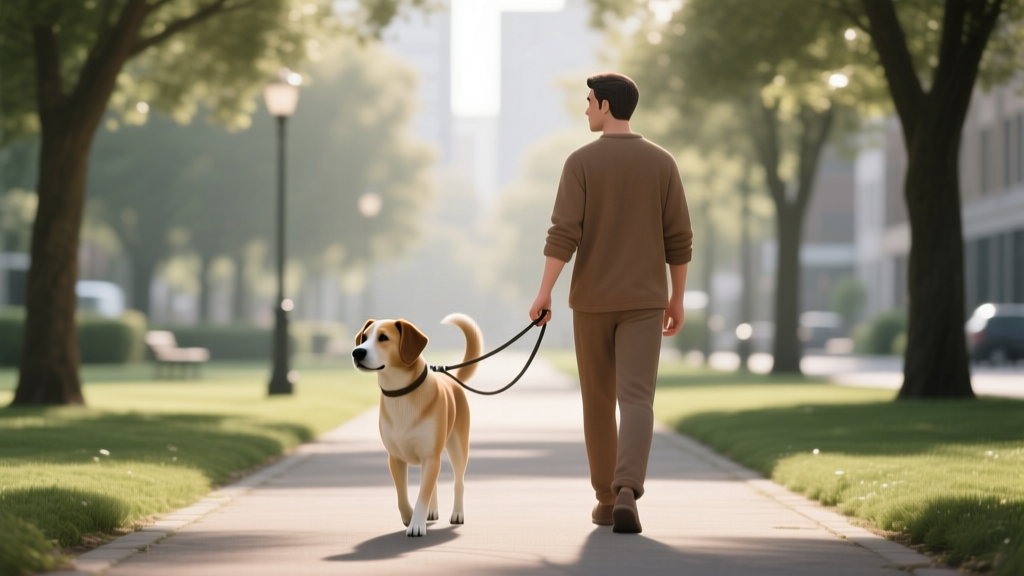
A therapy dog must walk politely on a loose leash at all times. In a healthcare facility, your dog might need to navigate narrow corridors, share elevators with medical carts, and walk beside individuals who have limited mobility. If your dog pulls on the leash, they could easily knock over a fragile patient or an elderly resident. Furthermore, handlers are often required to hold the leash in one hand while opening doors or signing visitor logs, making a pulling dog a significant liability.
To train a loose leash walk, start in a low-distraction environment. Use high-value treats to reward your dog every time the leash forms a "J" shape, indicating slack. If the leash goes tight, stop walking immediately. Do not move forward until your dog looks back at you and the leash is slack again. For a deeper dive into stopping pulling behavior, consult our comprehensive leash training guide.
The Polite Greet: Four on the Floor
People love dogs, and when a therapy dog enters a room, everyone wants to pet them. However, a jumping dog, even a small one, can scratch a patient, knock over an IV pole, or startle someone with trauma. Your dog must learn the "four on the floor" rule, meaning all four paws must remain on the ground when greeting strangers.
Practice this by inviting friends over. Instruct your guests to completely ignore the dog—no eye contact, no talking, no touching—if the dog jumps. The moment all four paws touch the floor, the guest can offer calm praise and a gentle pet under the chin. If the dog jumps again, the attention is immediately withdrawn. Consistency is vital; every single person your dog meets must enforce this rule.
Step-by-Step Public Socialization
Socialization for a therapy dog is vastly different from standard puppy socialization. It is not merely about exposing your dog to new things; it is about teaching them to remain neutral, calm, and confident in the presence of bizarre, loud, or intimidating stimuli. A well-rounded puppy socialization guide is a great start, but therapy prep requires advanced, targeted exposure.
Desensitization to Medical Equipment
Hospitals and rehabilitation centers are filled with unusual sights and sounds. Wheelchairs, walkers, crutches, motorized scooters, and sliding automatic doors can trigger a dog's prey drive or fear response. You must systematically desensitize your dog to these items.
- Wheelchairs and Walkers: Borrow a wheelchair or walker and leave it in your living room for a few days so your dog can sniff and investigate it while it is stationary. Next, begin pushing it slowly around the house, rewarding your dog for remaining calm. Gradually increase the speed and introduce sudden stops and turns.
- Crutches and Canes: Drop crutches on the floor to simulate the loud clatter they make in a hospital. Reward your dog for not reacting to the noise. Practice walking beside someone using crutches so your dog learns to match their slow, uneven pace.
- Uniforms and Hats: Dogs can be suspicious of people wearing scrubs, lab coats, or surgical caps. Invite friends over wearing various medical uniforms and have them offer your dog treats, building a positive association with these specific outfits.
Navigating Unusual Surfaces
Therapy dogs must confidently walk on a variety of surfaces without hesitation. Linoleum floors, metal grates, slippery tiles, and thick carpets are all common in public facilities. A dog that slips on a hospital floor may become terrified and refuse to walk, ruining a therapy visit. Purchase inexpensive samples of different flooring materials from a hardware store and lay them out in your yard or home. Lure your dog across each surface using high-value treats, praising them heavily for brave exploration.
Advanced Distraction Training for Therapy Work
Public spaces are littered with distractions, some of which can be incredibly dangerous to a dog. In a hospital setting, a dropped pill could be fatal if ingested by your dog. In a school, a dropped piece of candy or a rogue crayon could cause a medical emergency. Advanced distraction training is not just about manners; it is a matter of life and death.
The Life-Saving 'Leave It' Command
A reliable "leave it" command is arguably the most important skill a therapy dog can possess. Your dog must learn to ignore dropped food, spilled medication, and discarded trash on command. If you need help building this skill from scratch, review our tutorial on teaching leave it and drop it.
To proof this behavior for therapy work, you must practice with high-value, dangerous-looking items. Place a piece of hot dog or a pill bottle on the floor. Walk your dog past the item on a leash. The moment they look at the item, say "Leave it." If they look away from the item and up at you, immediately reward them with a different, even higher-value treat from your pocket. Never reward them with the item you told them to leave. Gradually increase the difficulty by dropping items from waist height while walking, simulating a nurse accidentally dropping a medication cup.
Ignoring Sudden Noises and Alarms
Fire alarms, intercom announcements, dropping metal trays, and slamming doors are everyday occurrences in public facilities. A therapy dog cannot panic, bark, or bolt when a loud noise occurs. You can condition your dog to remain calm by playing recordings of hospital noises, sirens, and sudden bangs on your phone at a very low volume while feeding them their dinner. Over several weeks, gradually increase the volume. If your dog shows signs of stress, lower the volume immediately. You are teaching them that loud, strange noises predict wonderful things, like meals and treats.
Preparing for the Canine Good Citizen (CGC) Test
Almost all reputable therapy dog organizations, such as Pet Partners and Therapy Dogs International, require dogs to pass the American Kennel Club's Canine Good Citizen (CGC) test before they can even begin the therapy-specific evaluation. The CGC test is a 10-item evaluation that proves your dog has excellent public manners and basic obedience skills.
Key CGC Test Items for Therapy Prep
- Accepting a Friendly Stranger: The evaluator will approach you and your dog, shake your hand, and engage in conversation. The dog must show no sign of resentment or shyness and must not jump on the evaluator.
- Sitting Politely for Petting: The evaluator will pet the dog on the head and body. The dog must remain seated or standing calmly without pulling away or jumping up for more attention.
- Walking Through a Crowd: You and your dog must walk past at least three people. The dog may show interest but must not jump, pull, or bark.
- Reaction to Another Dog: You will approach another handler and their dog, stop, shake hands, and exchange pleasantries. The dogs must remain calm and not show aggression or excessive excitement.
- Supervised Separation: You will hand your dog's leash to the evaluator and leave the room for three minutes. The dog does not need to stay in a specific position, but they must not bark, whine, or panic.
Practicing these specific scenarios in busy parks, outside grocery stores, and at outdoor cafes will prepare your dog for the rigorous CGC evaluation and, by extension, the therapy dog test.
Essential Tips & Common Mistakes to Avoid
Training a therapy dog is a marathon, not a sprint. It requires patience, empathy, and a deep understanding of canine body language. Below are essential tips to ensure your success, alongside common pitfalls that can derail your progress.
Top Tips for Success
- Learn Canine Calming Signals: Dogs communicate stress through subtle body language. Lip licking, yawning when not tired, "whale eye" (showing the whites of their eyes), and a tucked tail are all signs that your dog is overwhelmed. If you see these signals, give your dog a break immediately.
- Keep Training Sessions Short: Public manners training is mentally exhausting for a dog. Keep your sessions to 10-15 minutes, followed by plenty of rest and unstructured playtime.
- Advocate for Your Dog: Not everyone understands how to interact with a working dog. It is your job to politely but firmly stop strangers from rushing up to your dog, especially when your dog is resting or off-duty.
- Use High-Value Rewards: In highly distracting public environments, dry kibble will not cut it. Use boiled chicken, freeze-dried liver, or cheese to keep your dog's focus locked onto you.
Common Mistakes to Avoid
- Rushing the Process: Do not force your dog into a scary situation before they are ready. Flooding a dog with fear (e.g., forcing them to sit next to a loud generator) will destroy their confidence and ruin their potential as a therapy dog.
- Punishing Fear: If your dog reacts fearfully to a wheelchair or a loud noise, never scold them. Punishment will only confirm that the scary object is indeed dangerous. Instead, increase the distance between your dog and the trigger and use treats to build a positive association.
- Ignoring the Handler's Stress: Dogs are incredibly empathetic and will mirror your emotions. If you are anxious about passing the therapy dog test, your dog will feel that tension through the leash. Practice deep breathing and remain calm and upbeat.
Frequently Asked Questions
Can any breed become a therapy dog?
Yes, almost any breed or mixed breed can become a therapy dog, provided they have the right temperament and pass the required evaluations. While breeds known for their gentle, eager-to-please nature—such as the Golden Retriever, the Labrador Retriever, and the Poodle—are very common in therapy work, small breeds, terriers, and rescue mutts also make fantastic therapy animals. The most important factors are a stable temperament, a love for strangers, and impeccable public manners, rather than a specific pedigree.
What is the difference between a therapy dog and a service dog?
This is a very common point of confusion. A service dog is individually trained to perform specific tasks that mitigate a person's disability (such as guiding the blind, alerting to seizures, or retrieving items). Service dogs have public access rights and are allowed anywhere their handler goes. A therapy dog, on the other hand, is trained to provide comfort and affection to people in specific facilities. Therapy dogs do not have public access rights; they are only allowed in facilities that have explicitly invited them and granted them permission to visit.
How long does it take to train a therapy dog?
The timeline varies wildly depending on the dog's age, previous training, and natural temperament. For a dog that already has a solid foundation in basic obedience and public socialization, preparing for the Canine Good Citizen and therapy dog evaluations might take three to six months of dedicated, consistent practice. For a young puppy or a dog with behavioral hurdles, it can take a year or more of foundational work before they are ready for the rigors of therapy dog testing.
Do therapy dogs need special certification?
Yes. To volunteer as a therapy dog team, you must be evaluated and certified by a recognized therapy dog organization, such as Pet Partners, Therapy Dogs International, or the Alliance of Therapy Dogs. These organizations provide liability insurance, which is required by almost all hospitals, schools, and nursing homes before they will allow a dog on the premises. The certification process usually involves passing the CGC test, followed by a specialized therapy dog evaluation that tests your dog's reaction to medical equipment, rough petting, and crowded spaces.
What if my dog gets stressed during a visit?
Your primary responsibility as a therapy dog handler is to advocate for your dog's well-being. If your dog displays signs of stress, fatigue, or overstimulation during a visit, it is time to end the session immediately. Give your dog a quiet break in an empty room or take them outside for a decompression walk. Never force a dog to continue working if they are communicating that they are uncomfortable. Protecting your dog's mental health ensures they will continue to enjoy therapy work for years to come.
Tom Renshaw
All our authors care for dogs every day — read more of their work on the authors page.