Recall Training Steps: A Complete Guide to Teaching Your Dog to Come When Called
Master recall training with our step-by-step guide. Learn proven techniques, common mistakes to avoid, and expert tips for a reliable dog recall.

Recall Training Steps: A Complete Guide to Teaching Your Dog to Come When Called
There is perhaps no command more important — and more potentially life-saving — than a reliable recall. Whether your dog spots a squirrel across the park, slips through an open gate, or simply decides that sniffing the neighbor's hedge is more interesting than listening to you, a solid "come" command can mean the difference between a minor scare and a devastating loss. Yet recall remains one of the most challenging behaviors to train, largely because it asks your dog to abandon something exciting and choose you instead.
The good news? With patience, consistency, and the right approach, virtually any dog can learn to come when called. Whether you are working with an energetic Labrador Retriever puppy, a stubborn Siberian Husky, or a seasoned rescue who has never learned to listen, the steps outlined in this guide will set you on the path to success. Let's break down the process into manageable stages so you can build a recall that holds up in the real world.
Why Recall Training Matters More Than You Think
Before diving into the mechanics of recall training, it is worth understanding why this particular skill deserves so much of your time and attention. Many dog owners focus heavily on sit, stay, and leash manners — and while those are all valuable, recall is fundamentally different. It is a safety command first and a convenience command second.
Consider these real-world scenarios where a reliable recall becomes critical:
- Off-leash emergencies: A leash breaks, a collar slips, or a gate is left open. If your dog responds to your call, you can regain control instantly.
- Wildlife encounters: Dogs who chase deer, snakes, or porcupines put themselves in genuine danger. A strong recall interrupts the chase before it starts.
- Traffic hazards: A dog who bolts toward a road is in immediate peril. Recall can stop them in their tracks.
- Dog-to-dog interactions: Not every dog your pet encounters is friendly. Being able to call your dog away from a potentially aggressive animal is invaluable.
- Everyday convenience: From calling your dog inside at night to gathering them quickly during a walk, recall simplifies daily life with your pet.
It is also important to recognize that recall training is not a one-time event. It is an ongoing practice that must be maintained and reinforced throughout your dog's life. Even dogs who have performed flawless recalls for years can develop unreliable responses if the behavior is not periodically refreshed. If you are new to dog training in general, our basic obedience training guide provides an excellent foundation before tackling recall specifically.
Step-by-Step Recall Training: From Foundation to Freedom
The following stages are designed to build upon each other progressively. Do not rush from one step to the next. Each stage lays the groundwork for the one that follows, and skipping ahead is one of the most common reasons recall training fails. Depending on your dog's age, temperament, and prior training experience, you may spend anywhere from a few days to several weeks at each stage.
Step 1: Choose Your Recall Word and Build Positive Associations
Before you ever ask your dog to come to you, you need to establish what your recall cue will be. The most common choices are "come," "here," or a whistle. Whatever you choose, commit to it and use it consistently. Avoid using your dog's name as the recall command — their name should mean "pay attention" rather than "come to me."
Begin in a quiet, distraction-free environment such as your living room or a fenced yard. With your dog just a few feet away, say your recall word in a bright, cheerful tone and immediately follow it with a high-value reward. At this stage, you are not testing your dog or asking them to perform — you are simply creating a powerful positive association between the sound of the word and something wonderful.
Key details for Step 1:
- Use treats your dog absolutely loves — think small pieces of chicken, cheese, or hot dogs rather than dry kibble.
- Pair the recall word with an enthusiastic tone of voice every single time.
- Keep sessions short — three to five minutes is ideal for maintaining your dog's interest.
- Repeat this exercise multiple times per day across different rooms in your home.
If you are simultaneously working on leash training, you can incorporate recall practice into those sessions by calling your dog toward you while they are on a short leash in a controlled setting.
Step 2: Add Distance and Movement in Low-Distraction Environments
Once your dog shows clear excitement when they hear the recall word — ears perking up, tail wagging, orienting toward you — it is time to increase the challenge slightly. Begin by increasing the distance between you and your dog to about ten to fifteen feet, still within your home or a securely fenced area.
Say your recall word once, clearly and enthusiastically. If your dog comes to you, reward them generously with treats, praise, and a brief play session. If they do not respond, resist the urge to repeat the command over and over. Instead, walk toward them, gently guide them back to the spot where you called them, and try again from a shorter distance.
Progression tips for Step 2:
- Gradually increase the distance in small increments — five feet at a time.
- Start calling your dog from different rooms in the house so they learn to respond even when they cannot see you.
- Begin moving backward as you call, which taps into your dog's natural instinct to follow movement.
- Introduce a release word such as "okay" or "free" so your dog learns that coming to you does not always mean the fun is over.
This stage is particularly important for breeds with strong independent streaks. If you are training a Beagle or a Shiba Inu, expect to spend extra time here, as these breeds are wired to follow their noses and make their own decisions rather than check in with their handlers.
Step 3: Introduce Controlled Distractions
A recall that works perfectly in your living room but falls apart at the park is not a reliable recall. The third stage of training bridges this gap by systematically introducing distractions in a controlled way.
Start by adding mild distractions to your training environment. Have a family member sit quietly nearby while you practice. Place a favorite toy on the ground a few feet from your dog. Play soft music or turn on the television. Each of these adds a layer of complexity without overwhelming your dog.
As your dog succeeds with mild distractions, gradually increase the intensity:
- Have another person walk around the training area.
- Practice in different outdoor spaces — your backyard, a quiet side street, an empty park.
- Introduce the presence of other dogs at a distance, if possible.
- Practice when your dog is mildly excited, such as just after you have returned home or right before a walk.
The critical principle here is to set your dog up for success. If you introduce a distraction that is too intense and your dog fails to respond, you have moved too quickly. Scale back, reinforce at a lower level, and try again. Our socialization guide offers additional strategies for helping your dog remain focused in stimulating environments.
Step 4: Practice the Long-Line Recall
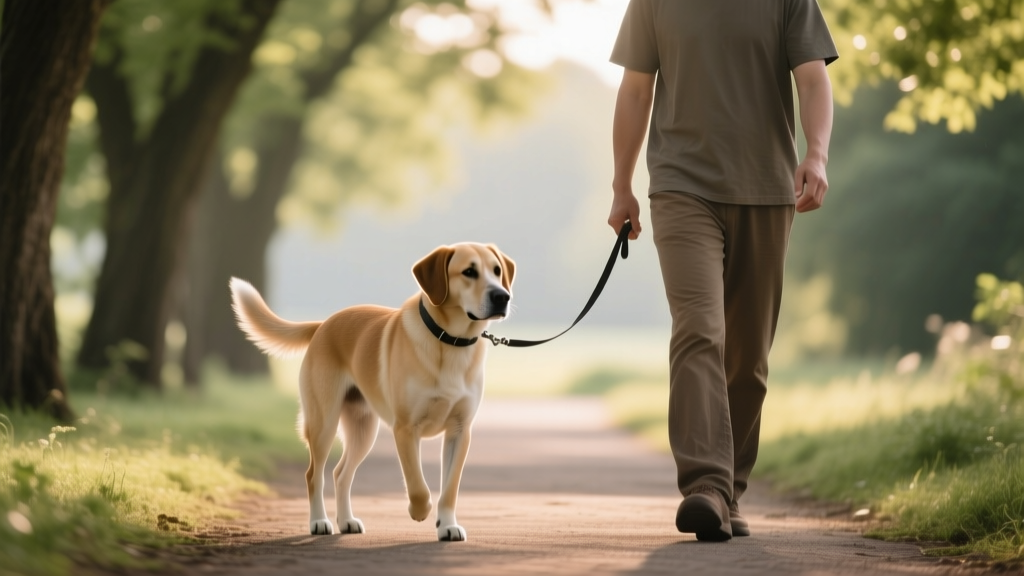
The long line — a lightweight training lead that is typically fifteen to thirty feet in length — is one of the most powerful tools in recall training. It gives your dog the sensation of freedom while providing you with a safety net if they choose not to respond.
Attach the long line to your dog's harness (never a collar, to avoid neck injury if they bolt) and let them explore an open area. Allow them to become engaged with something — sniffing a bush, watching a bird, playing with a toy — and then give your recall command.
If your dog responds immediately, reward them enthusiastically and then release them to go back to what they were doing. This "recall and release" pattern is essential because it teaches your dog that coming to you does not always signal the end of fun.
If your dog does not respond, apply gentle pressure on the long line to guide them toward you. Do not yank or drag them — just steady, light pressure that encourages movement in your direction. When they arrive, reward them as if they had come on their own. Over time, reduce the amount of guidance you provide until your dog responds to the verbal cue alone.
Long-line best practices:
- Use a lightweight biothane or cotton line to minimize drag and tangling.
- Never step on the line or wrap it around your hands — this can cause injury if your dog bolts.
- Practice in a variety of locations to generalize the behavior.
- Transition to a longer line as your dog's reliability improves.
Step 5: Proof the Recall in Real-World Scenarios
The final stage of recall training is proofing — testing and strengthening the behavior under increasingly realistic conditions. This is where you move from training exercises to real-life application, and it requires both patience and good judgment.
Begin proofing in semi-controlled environments such as quiet parks during off-peak hours, empty sports fields, or large parking lots on weekends. Keep your dog on the long line during these sessions and practice recalls when they are engaged in various activities: sniffing, playing, walking away from you, or interacting with other people.
As your dog demonstrates consistent reliability — responding to your recall at least nine times out of ten across multiple environments and distraction levels — you can begin to consider off-leash freedom. However, this transition should be gradual and thoughtful:
- Start by dropping the long line and letting it trail behind your dog so you can grab it if needed.
- Practice off-leash recalls in fully enclosed areas before attempting them in open spaces.
- Continue carrying high-value rewards even after your dog seems to have mastered the behavior.
- Never grant off-leash freedom in areas where local leash laws apply, regardless of how reliable your dog's recall appears to be.
For breeds with high prey drive such as Border Collies or German Shorthaired Pointers, full off-leash reliability in unenclosed areas may take months or even years to achieve — and for some individual dogs, it may never be entirely safe. Know your dog, respect their instincts, and err on the side of caution.
Essential Tips for Recall Training Success
Beyond the step-by-step process, certain principles and strategies can dramatically accelerate your progress and help you avoid common pitfalls. Incorporate these tips into every training session for the best results.
Make Coming to You the Best Thing in the World
Your dog's recall will only be as strong as the reward that backs it up. If coming to you consistently results in something your dog values — whether that is an incredible treat, a game of tug, effusive praise, or the chance to go back and do what they were enjoying — they will be motivated to respond. Vary your rewards to keep things unpredictable and exciting. Sometimes the reward should be food, sometimes play, and sometimes the reward is simply being released to continue their activity.
Never Punish Your Dog for Coming to You
This rule is absolute and non-negotiable. No matter how frustrated you are, no matter how long it took your dog to respond, no matter what they were doing before they came — you must never scold, grab, or punish your dog when they arrive at your side. If you do, you are teaching them that coming to you leads to unpleasant consequences, and your recall will deteriorate rapidly.
If your dog takes five minutes to finally come to you after ignoring repeated calls, greet them with enthusiasm and a reward when they arrive. Then go back and work on your training at an easier level, because the current level was clearly too difficult.
Use the "Recall and Release" Pattern Frequently
One of the biggest mistakes owners make is only calling their dog when it is time to leave the park, get in the car, or come inside. Dogs are remarkably perceptive and quickly learn that "come" means "the fun is over." Counter this by calling your dog, rewarding them, and immediately releasing them back to play at least four out of every five times. This keeps the command unpredictable and prevents your dog from associating it exclusively with endings.
Practice Emergency Recall Separately
Many trainers recommend teaching a separate "emergency recall" using a unique word or sound that is reserved exclusively for urgent situations. This command should be paired with an extraordinarily high-value reward — something your dog receives only in this context, such as a special canned food or a piece of steak. Practice it occasionally in low-distraction settings so it remains sharp, but do not overuse it or it will lose its power. Our advanced training guide covers emergency commands in greater detail.
Keep Training Sessions Short and Positive
Dogs learn best in brief, focused sessions. Three to five minutes of dedicated recall practice, repeated two or three times per day, will yield far better results than a single grueling thirty-minute session. Always end on a success — if your dog performs a great recall, celebrate it and call it a win for the day.
Common Recall Training Mistakes and How to Avoid Them
Even experienced dog owners fall into predictable traps when training recall. Being aware of these mistakes before you begin will save you weeks of frustration and help you build a stronger, more reliable behavior from the start.
Mistake 1: Repeating the Command Over and Over
When you say "come, come, come, come" and your dog eventually responds on the fifth repetition, you have just taught them that the command is optional and that they only need to respond after hearing it multiple times. Say your recall word once. If your dog does not respond, use your long line to guide them, change your position, or make an exciting sound to get their attention — but do not repeat the verbal cue.
Mistake 2: Using Recall for Unpleasant Experiences
If you only call your dog to give them a bath, trim their nails, put them in their crate, or leave the dog park, they will quickly learn to dread the recall word. Balance these necessary but less enjoyable activities by calling your dog for positive experiences throughout the day: treats, play sessions, walks, and affection.
Mistake 3: Moving to Off-Leash Freedom Too Quickly
Granting off-leash freedom before your dog has truly proofed their recall in varied environments is one of the most dangerous mistakes you can make. A single successful chase or exciting escape can reinforce ignoring your recall and set your training back significantly. Use a long line until your dog's response is genuinely reliable across multiple contexts.
Mistake 4: Training Only in One Location
Dogs are contextual learners, which means a recall that works perfectly in your backyard may not transfer to the park, the beach, or a busy street. You must practice in many different locations with many different distraction levels to build a truly generalized recall. If you have recently moved or started visiting new walking routes, expect to revisit earlier training stages in those new environments.
Mistake 5: Inconsistency Between Handlers
If one person in the household uses "come," another uses "here," and a third uses the dog's name, the dog receives conflicting information. Everyone who interacts with your dog should use the same recall word, the same tone of voice, and the same reward protocol. Consistency across handlers is just as important as consistency within a single training session.
Frequently Asked Questions About Recall Training
How long does it take to train a reliable recall?
The timeline varies considerably depending on your dog's age, breed, temperament, and prior training history. Most dogs can learn a basic recall in a low-distraction environment within two to four weeks of consistent daily practice. However, building a recall that is reliable in high-distraction, real-world scenarios typically takes three to six months of dedicated training. For breeds with strong prey drive or independent temperaments, achieving full reliability may take a year or more. The key is consistency — short, daily practice sessions will always outperform occasional marathon sessions.
Can I train recall with an older dog who has never learned it?
Absolutely. While puppies tend to pick up new behaviors quickly, adult and senior dogs are fully capable of learning recall. In fact, older dogs often have longer attention spans and greater impulse control than puppies, which can work in your favor. The training process is the same regardless of age — start with building positive associations, add distance gradually, introduce distractions systematically, and use a long line for safety. The only adjustment you may need to make is being more patient if your older dog has spent years practicing the habit of ignoring commands. Old habits can be replaced, but it requires consistent repetition of the new behavior. If your older dog has any mobility issues, consult your veterinarian before beginning training that involves running or quick direction changes.
What should I do if my dog ignores my recall at the park?
If your dog ignores your recall in a public setting, resist the urge to chase them — this often turns into an exciting game from the dog's perspective. Instead, try these strategies: run in the opposite direction to trigger their instinct to follow you, make an unusual sound like a whistle or a kissy noise to capture their attention, or crouch down and make yourself small and interesting. If your dog is on a long line, apply gentle pressure to guide them back. If they are off-leash and truly not responding, prioritize safety by calmly moving toward them without chasing, and use a treat or toy to lure them. After the incident, honestly assess whether your dog is ready for off-leash freedom in that environment and adjust your training accordingly. This is also a good time to review the fundamentals covered in our basic obedience training guide to strengthen your overall communication with your dog.
Should I use a whistle or a verbal command for recall?
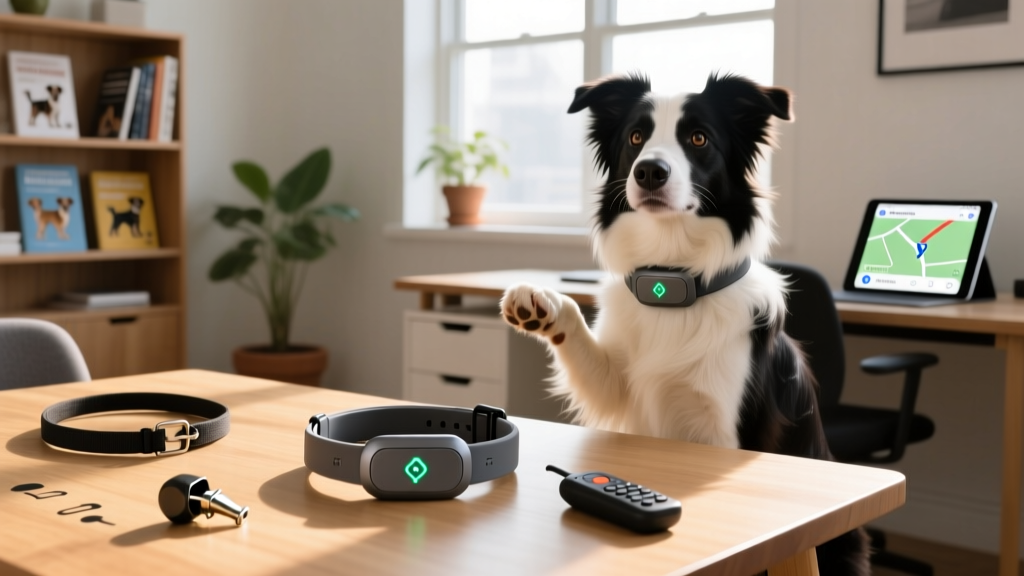
Both whistles and verbal commands can be highly effective, and the best choice depends on your lifestyle and environment. Whistles carry over long distances and through wind or dense vegetation, making them ideal for hiking, hunting, or working dogs. They also provide a consistent sound that does not vary with your emotional state — unlike your voice, which may sound different when you are frustrated, scared, or tired. Verbal commands, on the other hand, require no equipment and are more practical for everyday use in urban and suburban settings. Many trainers recommend teaching both — a verbal recall for daily life and a whistle recall as a backup or for long-distance situations. If you choose to use a whistle, select a specific pattern of blasts and use it consistently, just as you would with a verbal cue.
My dog comes inside perfectly but ignores recall at the dog park — what is going wrong?
This is one of the most common recall challenges, and it stems from the dog's ability to predict outcomes. If your dog has learned that "come" at home means receiving a treat and settling on their bed (a relatively positive experience) but "come" at the dog park means leaving their friends and going home (a negative experience), they will naturally be less motivated to respond in the park setting. To address this, practice the recall-and-release pattern extensively at the park: call your dog, reward them lavishly, and then send them back to play. Do this ten or fifteen times before finally calling them to leave. You should also work on building the value of your recall reward — bring something extraordinary to the park that your dog only receives when they respond to your call, such as real meat or a favorite game. Over time, your dog will learn that responding to your recall at the park is always worth their while, regardless of what happens afterward.
Building a Lifelong Recall
A truly reliable recall is not a destination — it is a lifelong practice. Even after your dog has mastered the behavior, continue to reinforce it regularly with rewards, practice in new environments, and maintain the positive associations you worked so hard to build. Incorporate recall practice into your daily walks, your play sessions, and your casual interactions. Keep it fun, keep it rewarding, and your dog will come running every time you call.
Remember that every dog is an individual, and progress may not always be linear. Some days will feel like breakthroughs, and others will feel like setbacks. Trust the process, stay consistent with the steps outlined in this guide, and celebrate the small victories along the way. A dog who comes when called is a dog who can enjoy more freedom, more adventures, and a deeper bond with their handler — and that is worth every minute of training you invest.
For more training resources, explore our complete training guides and learn about the specific needs and characteristics of different breeds in our breed profiles section.
Priya Sutaria
All our authors care for dogs every day — read more of their work on the authors page.