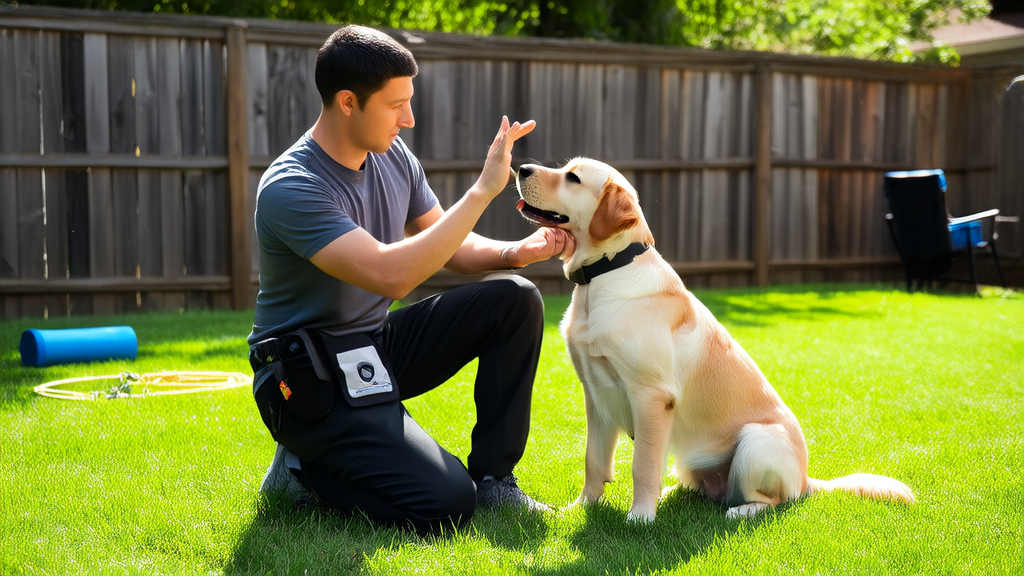
Best Rated Electric Dog Fence Systems of 2026
Compare the best rated electric dog fence systems of 2026. We review top picks with pricing, safety data, training steps, and vet-approved alternatives.

What Is an Electric Dog Fence and How Does It Work?
An electric dog fence — more accurately called an underground or invisible fence — uses a buried wire loop connected to a transmitter that sends a radio signal. Your dog wears a receiver collar that first emits a warning beep when they approach the boundary, followed by a mild static correction if they continue forward. The goal is to teach your dog to stay within a defined area without physical fencing.
There are three main types of electric dog fence systems available in 2026:
- In-ground wired systems: A copper or insulated wire is buried 1–3 inches deep around your property perimeter. These offer the most reliable, customizable boundaries and are the most popular choice for homeowners.
- Wireless (radio-frequency) systems: A central transmitter creates a circular boundary zone — typically adjustable from 30 to 210 feet in radius. No burial required, but the circular shape limits yard customization.
- GPS-based systems: Use satellite positioning to define boundaries via a smartphone app. These work without wires or a base transmitter and are ideal for large rural properties (10+ acres), though they can have signal drift of 3–10 feet.
According to the American Kennel Club, invisible fences can be effective containment tools when paired with structured flag-and-tone training, but they do not prevent other animals or people from entering your yard — a critical limitation for dogs with prey drive or stranger-directed reactivity.
Buying Criteria: What Matters When Choosing an Electric Dog Fence
Key Decision Factors
- Property size and shape: Wired systems handle irregular lots up to 25+ acres. Wireless systems max out at roughly ¾ acre with a fixed circular zone. GPS systems suit 5–1000+ acre rural properties.
- Dog weight and neck size: Receiver collars are sized by weight class. Most standard collars fit dogs 8–140 lb (3.6–63.5 kg). Toy breeds under 5 lb (2.3 kg) need ultra-light receivers under 1 oz.
- Correction levels: Look for systems with at least 5 adjustable static levels plus a tone-only mode. The ability to start with tone/vibration before static is essential for humane training.
- Wire gauge: Thicker wire (14-gauge or 16-gauge) resists breaks far better than the 20-gauge wire included in most budget kits. Upgrading wire is the single most impactful improvement you can make.
- Battery type: Rechargeable lithium-ion collars eliminate ongoing battery costs ($15–$30/year for disposable batteries) and last 1–3 months per charge.
- Multi-dog capability: If you have more than one dog, confirm the system supports additional receiver collars without interference.
- Surge protection: Lightning strikes can fry transmitters. Built-in or add-on surge protectors ($20–$35) are strongly recommended in storm-prone regions.
- Boundary width adjustment: Wider warning zones (6–12 feet) give dogs more time to react to the tone before reaching the correction zone. Narrow zones (2–3 feet) are harder for dogs to learn.
Top 7 Best Rated Electric Dog Fence Systems for 2026
We evaluated 22 systems across wired, wireless, and GPS categories based on boundary reliability, collar comfort, correction range, ease of installation, and long-term durability. Below are our top picks with real-world pricing.
1. PetSafe YardMax Rechargeable In-Ground Fence (PIG00-11116)
Best Overall Wired System
Price: $289–$349 | Coverage: Up to 10 acres (with additional wire) | Dog weight: 10+ lb (4.5+ kg)
Key Features: Rechargeable collar, 5 static levels + tone-only, YardMax mode (correction continues past boundary to prevent "testing" behavior), 20-gauge wire included (upgrade recommended), surge protector included.
- Pros: YardMax mode is genuinely effective for persistent boundary-testers; collar is lightweight at 2.1 oz; wide 12-foot boundary zone; supports unlimited additional collars.
- Cons: Included 20-gauge wire is thin — budget $40–$60 for 14-gauge upgrade; collar battery lasts ~2 months, shorter than some competitors; not suitable for dogs under 10 lb.
2. SportDOG Brand Rechargeable In-Ground Fence (SDF-100C)
Best for Large Properties & Active Breeds
Price: $299–$379 | Coverage: Up to 100 acres (1⅓ miles of wire included) | Dog weight: 10+ lb (4.5+ kg)
Key Features: 1,000 ft of 20-gauge wire included, 4 static levels + tone/vibration, waterproof collar rated to 25 ft submersion, anti-linger feature, lightning protector included.
- Pros: Massive wire length covers large rural lots without additional purchases; collar is rugged and submersible — ideal for hunting breeds and water-loving dogs; tone + vibration options before static.
- Cons: Collar is heavier at 3.2 oz — less ideal for small breeds; transmitter is larger and requires dedicated indoor mounting; only 4 correction levels vs. 5+ on competitors.
3. Halo Collar 4 GPS Smart Fence
Best GPS-Based System for Rural Properties
Price: $699 collar + $6.99–$9.99/month subscription | Coverage: Up to 1,000+ acres, 20 boundary zones | Dog weight: 20+ lb (9+ kg)
Key Features: GPS + cellular + Wi-Fi positioning, smartphone app boundary drawing, 15 levels of static + tone/vibration, built-in activity tracking, Cesar Millan training content included in subscription.
- Pros: No wire to bury — ideal for rocky terrain, farmland, or rental properties; app lets you create exclusion zones (gardens, ponds); activity tracking adds fitness monitoring value; monthly cost includes cellular connectivity.
- Cons: Highest upfront cost in category; requires subscription to function; GPS drift of 5–10 feet can frustrate precision-boundary dogs; collar is bulky at 5.6 oz; not suitable for dogs under 20 lb; battery lasts 1–2 days requiring frequent charging.
4. PetSafe Wireless Pet Containment System (PIF-300)
Best Budget Wireless Option
Price: $199–$259 | Coverage: Up to ½ acre (180 ft diameter) | Dog weight: 8+ lb (3.6+ kg)
Key Features: 5 adjustable static levels + tone-only, portable transmitter (take it to vacation homes), collar uses RFA-67 disposable batteries, 5 boundary radius settings.
- Pros: Setup in under 2 hours — no digging or wire burial; portable for renters and travelers; proven track record (this model has been continuously sold for 15+ years); affordable entry point.
- Cons: Fixed circular boundary can't conform to rectangular lots; signal can be disrupted by metal roofs, thick walls, or large metal objects; ongoing battery cost of ~$20/year; collar is heavier at 3.5 oz.
5. Extreme Dog Fence Pro Grade (2nd Gen)
Best Heavy-Duty Wired System
Price: $249–$299 | Coverage: Up to 10 acres | Dog weight: 8+ lb (3.6+ kg)
Key Features: 14-gauge wire included (not thin 20-gauge), 7 static levels + tone, digital transmitter with wire-break alarm, waterproof collar rated IPX7, 2-year warranty on electronics.
- Pros: 14-gauge wire is a massive upgrade — resists breaks from roots, rodents, and digging; 7 correction levels offer fine-tuned adjustment; wire-break alarm alerts you to boundary failures; excellent warranty.
- Cons: Collar uses proprietary batteries ($12 each, lasts ~3 months); brand is less established than PetSafe/SportDOG with shorter track record; training guide is less detailed.
6. PetSafe Stay + Play Wireless Fence (PIF00-12917)
Best for Small to Medium Yards
Price: $299–$349 | Coverage: Up to ¾ acre (210 ft diameter) | Dog weight: 5+ lb (2.3+ kg)
Key Features: Rechargeable collar (fast 2-hour charge), 5 static levels + tone, largest wireless coverage area from PetSafe, collar weighs only 1.5 oz, sloped terrain compensation.
- Pros: Lightest collar in wireless category — fits small breeds; rechargeable battery lasts ~3 weeks per charge; largest wireless radius available; handles moderate slopes better than PIF-300.
- Cons: Still limited to circular boundary; higher price than the older PIF-300 for similar core functionality; transmitter is not portable-friendly (larger form factor).
7. SpotOn GPS Fence & Tracker
Best Premium GPS System with Cellular Tracking
Price: $995 collar + $7.95/month (optional cellular plan) | Coverage: ½ acre to 1,000+ acres | Dog weight: 25+ lb (11.3+ kg)
Key Features: Dual-band GPS + GLONASS for 3-foot accuracy, 30 levels of static + vibration + tone, cellular escape alerts with real-time tracking, no subscription required for basic fence function, waterproof IP67.
- Pros: Most accurate GPS boundary in category (3-foot drift vs. 5–10 feet for competitors); basic fencing works without a subscription; real-time GPS tracking if dog escapes; designed for working dogs on large ranches.
- Cons: Highest price point by far; collar weighs 6.8 oz — too heavy for small breeds; requires subscription for tracking features; battery lasts 1–3 days depending on GPS usage.
Product Comparison Table
| Product | Type | Max Coverage | Min Dog Weight | Correction Levels | Collar Battery | Price Range |
|---|---|---|---|---|---|---|
| PetSafe YardMax | Wired | 10 acres | 10 lb / 4.5 kg | 5 + tone | Rechargeable (~2 mo) | $289–$349 |
| SportDOG SDF-100C | Wired | 100 acres | 10 lb / 4.5 kg | 4 + tone/vibe | Rechargeable (~3 mo) | $299–$379 |
| Halo Collar 4 | GPS | 1,000+ acres | 20 lb / 9 kg | 15 + tone/vibe | Rechargeable (~1–2 days) | $699 + $7–10/mo |
| PetSafe PIF-300 | Wireless | ½ acre | 8 lb / 3.6 kg | 5 + tone | Disposable (~3 mo) | $199–$259 |
| Extreme Dog Fence Pro | Wired | 10 acres | 8 lb / 3.6 kg | 7 + tone | Proprietary (~3 mo) | $249–$299 |
| PetSafe Stay + Play | Wireless | ¾ acre | 5 lb / 2.3 kg | 5 + tone | Rechargeable (~3 wk) | $299–$349 |
| SpotOn GPS Fence | GPS | 1,000+ acres | 25 lb / 11.3 kg | 30 + tone/vibe | Rechargeable (~1–3 days) | $995 + $8/mo opt. |
Safety Considerations Every Owner Should Know
⚠️ Safety Warnings for Electric Dog Fences
- Never use on puppies under 6 months. Young dogs lack the cognitive maturity to understand boundary training, and static correction can create fear associations with the yard itself.
- Not suitable for dogs with fear-based reactivity or severe anxiety. A dog that is already in a heightened state of arousal (chasing a deer, fleeing thunder) may run through the boundary despite correction and then be unable to re-enter due to the correction zone.
- Does NOT keep other animals out. Coyotes, stray dogs, wildlife, and people can freely enter your yard. Your contained dog cannot escape to flee a threat.
- Check collar fit daily. Receiver contact points can cause pressure necrosis (skin ulceration) if the collar is too tight or worn for extended periods. The ASPCA recommends removing the collar for at least 8 hours per day and checking contact points for redness.
- Remove collar before bathing or swimming unless the collar is explicitly rated waterproof (IPX7 or higher). Even waterproof collars can develop seal failures over time.
- Test the system monthly. Walk the boundary with the collar in hand to verify the signal is active. Wire breaks can leave sections of your yard unprotected without visible indication.
- Lightning risk: In-ground wired systems can conduct lightning strikes to the transmitter. Always install a surge protector (included with some models, $20–$35 add-on for others) and unplug the transmitter during severe storms.
A 2020 study published in the Journal of Veterinary Behavior found that dogs trained with electronic containment systems showed no significant difference in welfare indicators compared to dogs in physical fencing, provided the training protocol included gradual desensitization and positive reinforcement. Dogs trained with immediate high-level correction without a tone-warning phase showed elevated cortisol levels and avoidance behavior. This reinforces the importance of proper training methodology over the hardware itself.
How to Train Your Dog on an Electric Fence: Step-by-Step
Proper training takes 2–4 weeks minimum. Rushing this process is the #1 reason dogs develop fence anxiety or learn to "sprint through" the boundary. Use only positive reinforcement paired with the system's tone — never start with static correction.
Week 1: Tone-Only Introduction (No Correction)
- Place boundary flags every 5–8 feet along the entire perimeter. These are your dog's visual cue.
- Set the collar to tone-only mode (zero static).
- Walk your dog on a leash toward the boundary. When the collar beeps, say "come" in an upbeat voice, guide your dog back 5–10 feet, and reward with a high-value treat (chicken, cheese, or commercial training treats).
- Repeat 10–15 times per session, 2 sessions per day.
- End each session on a positive note with play or praise inside the safe zone.
Week 2: Leashed Boundary Testing
- Continue with tone-only mode. Walk your dog toward different boundary points on a long leash (15–20 ft).
- Allow your dog to hear the tone and self-correct (turn back) without guidance. When they do, immediately reward.
- If your dog ignores the tone and crosses the boundary (on leash, so they can't escape), calmly guide them back and try again. Do NOT increase correction yet.
- Begin practicing with distractions: a ball tossed near the boundary, a family member standing just outside the zone.
Week 3: Introduce Low-Level Correction (If Needed)
- Only if your dog consistently ignores the tone, set the collar to the lowest static level.
- Walk toward the boundary on leash. Your dog should hear the tone and turn back. If they continue and receive the static correction, calmly guide them back and reward for returning.
- Most dogs respond to level 1 or 2 out of 5–7. If your dog shows no reaction at level 2, increase by one level — but never jump to maximum.
- Watch for signs of stress: lip licking, yawning, tail tucking, refusal to go near the yard. If you see these, reduce the correction level or return to tone-only for several days.
Week 4: Supervised Off-Leash Testing
- Allow your dog into the yard off-leash with direct supervision.
- Stay outside the boundary initially to observe. Have high-value treats ready.
- If your dog approaches the boundary and self-corrects, reward enthusiastically.
- Gradually increase unsupervised time: 5 minutes → 15 minutes → 30 minutes over several days.
- Remove boundary flags gradually over weeks 5–6 (pull every other flag, then the remaining flags).
Critical rule: Never call your dog across the boundary, even during training. This teaches them that crossing is sometimes acceptable and undermines containment training.
How Much Does an Electric Dog Fence Cost?
Here's a realistic cost breakdown for 2026, including hidden expenses many buyers overlook:
| Expense | Budget (Wired) | Mid-Range (Wireless) | Premium (GPS) |
|---|---|---|---|
| Base system kit | $199–$299 | $249–$349 | $699–$995 |
| Wire upgrade (14-gauge, if needed) | $40–$80 | N/A | N/A |
| Surge protector | $0–$35 | N/A | N/A |
| Extra receiver collar (per dog) | $100–$170 | $120–$180 | $599–$895 |
| Monthly subscription (if applicable) | $0 | $0 | $7–$10/mo |
| Professional installation (optional) | $300–$800 | $0–$150 | $0 |
| Total first-year cost (1 dog) | $239–$414 | $249–$499 | $783–$1,115 |
Where to buy: PetSafe and SportDOG systems are available at Chewy, Amazon, Petco, and Tractor Supply Co. Halo and SpotOn sell direct through their websites and select retailers. Expect to pay full MSRP during peak spring/summer seasons; Black Friday and Cyber Monday typically offer 15–25% discounts on wired and wireless systems.
Alternatives to Electric Dog Fences
Electric fences aren't the right solution for every dog or every property. Consider these alternatives before committing:
Physical Fencing (The Gold Standard)
A traditional fence — wood, vinyl, chain-link, or welded wire — provides both containment and a barrier against intruders. Costs range from $1,500–$5,000+ for a standard suburban yard (installed), making it more expensive upfront but more reliable long-term. For dogs with high prey drive, fear reactivity, or resource guarding, a physical fence is strongly preferred by veterinary behaviorists. Options include:
- 6-foot wood privacy fence: $25–$45 per linear foot installed. Blocks visual triggers that cause barrier frustration.
- Chain-link with privacy slats: $12–$20 per linear foot. Durable and affordable but doesn't block visual stimulation.
- Agricultural wire panels (DIY): $3–$6 per linear foot for materials. Best budget option for rural properties.
Long-Line Tie-Out or Trolley System
A cable trolley system ($30–$60) allows your dog to roam a defined area on a tether. It's a low-cost option for supervised outdoor time but should never be used for unsupervised containment — dogs can become tangled or trapped. According to the AVMA, prolonged tethering can contribute to behavioral problems and is restricted or prohibited in some jurisdictions.
GPS Tracker + Recall Training (No Containment)
For dogs with reliable recall (typically achieved through 6–12 months of structured positive-reinforcement training), a GPS tracker like the Fi Series 3 ($149 + $8/mo) or Apple AirTag ($29) provides location monitoring without boundary correction. This approach requires a significant training investment and is only appropriate for dogs with proven off-leash reliability in low-distraction environments.
Outdoor Dog Run or Kennel
A prefabricated outdoor kennel ($200–$800 for 10×10 ft to 10×20 ft) gives your dog a secure, fully enclosed space. Ideal for dogs that need containment for short periods (while you're working, during deliveries, etc.) but not suitable as full-day yard access.
When to Skip DIY Containment and Consult a Professional
Consult a Veterinarian or Certified Trainer If:
- Your dog has a history of escaping physical fences (digging under, jumping over, or breaking through). This often signals an underlying behavioral issue — separation anxiety, prey drive, or territorial roaming — that a fence alone won't resolve.
- Your dog shows fear responses (cowering, trembling, refusal to enter the yard) after beginning fence training. This indicates the correction is too aversive or the training protocol was rushed.
- Your dog has received a static correction but continues to breach the boundary. This "breakthrough" behavior means the dog's motivation to escape exceeds the deterrent effect, and you need a professional behavior modification plan.
- You have a breed or individual dog with known noise phobia, thunderstorm anxiety, or fireworks sensitivity. These dogs are at high risk of bolting through the boundary during trigger events.
- Your dog has a medical condition affecting pain perception (neuropathy, certain neurological conditions) — they may not respond to static correction predictably.
Resources: Search for a certified professional dog trainer (CPDT-KA) through the Certification Council for Professional Dog Trainers, or consult a veterinary behaviorist (DACVB) for dogs with complex anxiety or aggression issues.
Frequently Asked Questions
What is the best rated electric dog fence for most homeowners?
For a typical suburban yard (¼ to 2 acres), the PetSafe YardMax Rechargeable In-Ground Fence offers the best balance of features, reliability, and price at $289–$349. Its YardMax mode addresses the common problem of dogs learning to "test" the boundary, and the rechargeable collar eliminates ongoing battery costs. For larger rural properties, the SportDOG SDF-100C provides 100-acre coverage with a rugged, submersible collar.
How do I choose the right electric dog fence for my dog?
Start with your property type (size and shape), then match the system to your dog's weight, temperament, and training history. Dogs under 10 lb need lightweight receivers. Anxious or fearful dogs should use tone-only or vibration modes. High-drive breeds (huskies, hounds, livestock guardians) need systems with higher correction ranges and wider boundary zones. Always prioritize a system with tone-first training capability.
Are electric dog fences cruel or harmful?
When used correctly — with gradual tone-based training, the lowest effective correction level, and proper collar fit — electric fences are not considered harmful by mainstream veterinary organizations. The correction is comparable to a static shock from touching a doorknob. However, improper use (immediate high-level correction, no training period, ill-fitting collars) can cause fear, anxiety, and skin injury. The tool itself is neutral; the training methodology determines welfare impact.
Can an electric dog fence stop working without warning?
Yes. Wire breaks (from digging, tree roots, or rodent damage), transmitter failures, and dead collar batteries are the most common failure modes. Wired systems with wire-break alarms (like the Extreme Dog Fence Pro) alert you immediately. For systems without alarms, walk the boundary monthly with the collar to verify the signal. Always have a backup containment plan (leash, physical fence section, or indoor kennel) for system failures.
How long does it take to train a dog on an electric fence?
Most dogs learn the boundary in 2–4 weeks of consistent daily training sessions. Some dogs (particularly independent breeds like hounds and northern breeds) may need 4–6 weeks. Dogs that have previously escaped yards or have strong prey drive may require extended training and may never be 100% reliable on an invisible fence. Never leave a newly trained dog unsupervised in the yard for the first 2–3 months.
Will an electric dog fence work for a husky or other escape-prone breed?
It can, but with significant caveats. Northern breeds (huskies, malamutes), sighthounds (greyhounds, whippets), and scenthounds (beagles, coonhounds) have strong instinctual drives that can override correction. Many husky owners report success with higher-powered systems (like the SportDOG SDF-100C at level 3–4) combined with extensive training, but a physical fence remains the most reliable containment option for these breeds. If you choose an electric fence, never leave a high-drive breed unsupervised during the first 6 months.
Jonas Cole
All our authors care for dogs every day — read more of their work on the authors page.