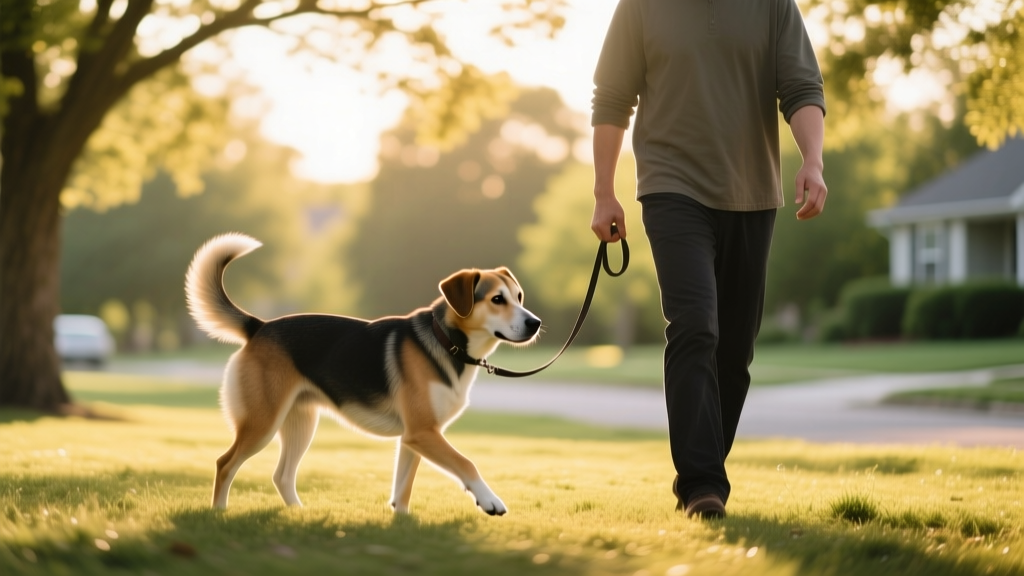
Best No Pull Harness for Dogs in 2026: Vet-Approved Picks & Fit Guide
Find the best no pull harness for dogs in 2026. We compare 6 top-rated front-clip and dual-clip harnesses with fit tips, pricing, and force-free training advice.

Why a No Pull Harness for Dogs Actually Works
If your dog turns every walk into a tug-of-war contest, you're not alone. Leash pulling is one of the most common behavioral complaints dog owners bring to trainers. A no pull harness for dogs redirects your dog's forward momentum by shifting the leash attachment point from the back of the neck or spine to the chest. When your dog pulls, the front-clip design gently rotates their body back toward you rather than allowing them to barrel forward with full force.
Unlike choke chains, prong collars, or shock collars — which rely on pain or discomfort to suppress behavior — a well-designed no pull harness works through biomechanical redirection. According to the American Veterinary Society of Animal Behavior (AVSAB), force-free tools that manage the environment and redirect behavior are preferred over aversive equipment. A front-clip harness fits squarely into that recommendation.
The science is straightforward: when a leash attaches at the sternum area, pulling force creates a turning moment that rotates the dog's torso. This doesn't hurt the dog — it simply makes pulling mechanically inefficient. Over time, paired with positive reinforcement training (rewarding loose-leash walking with treats and praise), most dogs learn that walking calmly beside you is more rewarding than surging ahead.
What to Look for When Choosing a No Pull Harness
The 6 Best No Pull Harnesses for Dogs (2026 Hands-On Comparison)
We evaluated over a dozen no pull harnesses based on construction quality, fit range, clip placement accuracy, durability after months of use, and how well they actually reduce pulling. Here are the top six that consistently perform across breeds and body types.
1. Rabbitgoo No Pull Dog Harness (Dual-Clip)
Price: $22–$28 | Best for: Budget-conscious owners of medium to large dogs
The Rabbitgoo harness offers both a front metal O-ring and a back metal O-ring, plus a back handle. Four adjustment points (two at the neck, two at the chest) allow a reasonably customized fit. The chest plate is padded with soft sponge, and reflective strips run along the chest and belly straps.
- Under $30 — best value in dual-clip category
- Metal O-rings (not plastic) at both clip points
- Bright color options improve visibility
- Breathable mesh panel for summer walks
- Front ring sits slightly high on narrow-chested dogs
- Stitching on belly strap can fray after 6-8 months of heavy use
- No small-dog sizing below 14" chest girth
2. Ruffwear Front Range Harness
Price: $39–$45 | Best for: Active dogs who hike, trail run, or need all-day comfort
Ruffwear's Front Range is a staple in the force-free training community. It features a front V-ring at the chest and an aluminum back V-ring. The chest and belly panels are foam-padded and covered in a ripstop nylon shell. Four adjustment points provide a secure fit, and the harness is designed to sit below the shoulder joint to preserve full range of motion.
- Exceptional build quality — lasts 3-5 years with regular use
- True Y-shape front preserves shoulder mobility
- ID pocket for storing tags
- Available in 4 sizes covering 13"–42" girth
- Higher price point than budget options
- Front ring is webbing-reinforced, not fully metal — very strong pullers may warp it over time
- Limited color selection in some sizes
3. Blue-9 Balance Harness
Price: $55–$68 | Best for: Hard-to-fit dogs and professional trainer recommendations
The Blue-9 Balance is the harness most frequently recommended by certified professional dog trainers (CPDTs) and veterinary behaviorists. Its six-point adjustment system — including independent buckle adjustments at the neck, chest, and belly — accommodates virtually any body shape. The Y-front design clears the shoulder joint entirely, and the front O-ring sits low on the sternum for optimal pulling redirection.
- Industry-leading adjustability — fits deep-chested, barrel-chested, and long-bodied dogs
- Buckles at neck and belly (no need to pull over the dog's head)
- Independently replaceable parts (straps, buckles, rings)
- Made in the USA with BioThane-coated webbing options for waterproofing
- Premium pricing — most expensive option on this list
- More buckles mean more time to put on initially
- Limited retail availability — primarily sold direct or through trainer shops
4. Kurgo Tru Fit Smart Harness (Enhanced Dual-Clip)
Price: $32–$40 | Best for: Car safety plus walking in one harness
Kurgo's Tru Fit doubles as a crash-tested car restraint (rated for dogs up to 75 lb when used with the included 10" seatbelt loop). The chest plate is steel-reinforced at the front clip point, which handles heavy pullers without warping. The padded chest plate distributes pressure across the sternum, and the five-point adjustment system covers most medium-to-large breeds.
- Crash-tested to FMVSS 213 standards — dual-purpose for car and walking
- Steel-reinforced front clip handles strong pullers
- Lifetime warranty against manufacturer defects
- Nestled chest plate design reduces chafing
- Heavier than dedicated walking harnesses (adds ~2 oz vs. competitors)
- Must pull over the dog's head — dogs with head sensitivity may resist
- Sizing runs small — measure carefully before ordering
5. 2 Hounds Design Freedom No Pull Harness
Price: $34–$42 | Best for: Dogs who pull hard and need maximum steering control
This harness uses a patented front-clip design with a Swiss velvet-lined chest strap that sits low on the sternum. The included dual-attachment leash connects to both the front and back rings simultaneously, giving you steering control (front) plus braking power (back). The velvet lining prevents the chafing that cheaper nylon straps cause on thin-coated breeds like Boxers and Pit Bull types.
- Dual-connection leash included — no separate purchase needed
- Swiss velvet lining eliminates chafing on sensitive skin
- Low sternum clip point provides excellent pull redirection
- Wide size range: 14"–44" chest girth
- Back clip ring is plastic — not suitable for tie-outs or long lines
- Velvet lining takes longer to dry if wet
- Only one adjustment buckle at the belly — less fine-tuning than Blue-9
6. Petsafe 3-in-1 Harness
Price: $18–$25 | Best for: First-time harness buyers on a tight budget
The Petsafe 3-in-1 offers front-clip, back-clip, and car restraint functionality at the lowest price point in this roundup. The martingale-style front loop tightens slightly when the dog pulls, adding gentle chest pressure as a secondary cue. It's lightweight, easy to clean, and widely available at big-box pet stores.
- Under $25 — most affordable dual-clip option
- Martingale front loop adds gentle tightening feedback
- Lightweight — good for small to medium dogs
- Widely available at PetSmart, Petco, and online
- Minimal padding — not ideal for long hikes or daily use on sensitive dogs
- Front ring attachment is nylon-reinforced, not metal — may degrade with heavy pullers
- Horizontal chest strap can interfere with shoulder movement on some builds
Side-by-Side Comparison: Which No Pull Harness Fits Your Dog?
| Harness | Price Range | Clip Type | Adjustment Points | Y-Shape Front | Best For |
|---|---|---|---|---|---|
| Rabbitgoo | $22–$28 | Dual (metal) | 4 | Partial | Budget buyers |
| Ruffwear Front Range | $39–$45 | Dual (aluminum) | 4 | Yes | Active/outdoor dogs |
| Blue-9 Balance | $55–$68 | Dual (metal) | 6 | Yes | Hard-to-fit breeds |
| Kurgo Tru Fit | $32–$40 | Dual (steel) | 5 | Yes | Car + walking combo |
| 2 Hounds Freedom | $34–$42 | Dual (mixed) | 3 | Yes | Strong pullers |
| Petsafe 3-in-1 | $18–$25 | Dual (nylon) | 4 | No | Tight budgets |
How to Fit and Use a No Pull Harness Correctly
A no pull harness only works if it fits properly. An ill-fitted harness can cause chafing, restrict breathing, or allow your dog to slip out at the worst possible moment — like near a busy road.
Step-by-Step: Fitting Your Dog's No Pull Harness
- Measure your dog's chest girth. Use a soft tape measure. Wrap it around the widest part of the ribcage, just behind the front legs and over the withers. Record the measurement in inches. If you're between sizes, always size up — you can tighten, but you can't add length.
- Measure the neck opening (if the harness goes over the head). Measure at the base of the neck where a collar normally sits. Add 1–2 inches for comfort.
- Put the harness on. For overhead styles: slip the neck opening over your dog's head, then guide each front leg through the corresponding leg hole. For buckle styles: unbuckle the neck and belly straps, drape the harness over the back, buckle the neck strap first, then the belly strap.
- Adjust all straps. You should be able to slide two fingers flat between any strap and your dog's body — no more, no less. Check the chest plate: it should sit flat against the sternum, not tilted or gaping. The Y-front should clear the shoulder joint by at least 1 inch.
- Attach the leash to the FRONT ring. This is the key step. The front ring (at the chest) is what creates the no-pull effect. The back ring is for when your dog has learned loose-leash walking and you want a standard attachment.
- Test the fit with movement. Walk your dog in a safe, enclosed area. Watch for: harness shifting side to side (too loose), strap rubbing the armpit (adjust belly strap tighter), or the chest plate riding up toward the throat (loosen the belly strap, tighten the chest strap).
Training Protocol: Pairing the Harness with Positive Reinforcement
A harness is a management tool, not a training solution by itself. For lasting loose-leash walking, combine the front-clip harness with this protocol:
- Week 1–2: Walk in low-distraction areas (your yard, quiet streets). Every 5–10 steps of loose-leash walking, mark with a clicker or "yes!" and deliver a high-value treat at your hip. If the dog pulls, stop walking — do not jerk the leash. Wait for the dog to look back at you or take slack out of the leash, then resume.
- Week 3–4: Add moderate distractions (other dogs at a distance, park benches). Increase the treat rate for maintaining position near your leg. Practice direction changes — turn 180° when your dog surges ahead, reward when they catch up to your side.
- Week 5+: Gradually thin the treat schedule (every 15 steps, then 20, then variable). Transition to the back clip ring once your dog consistently walks with a loose leash for 80%+ of a walk.
Safety Warnings: What Can Go Wrong with No Pull Harnesses
⚠️ Critical Safety Considerations
- Never leave a harness on an unsupervised dog. Buckles, straps, and rings can catch on crate bars, furniture, fence rails, or other dogs' teeth. Remove the harness when your dog is crated, in a playgroup, or left alone.
- Check for chafing after every walk for the first two weeks. Run your hands along the armpit area, the sternum, and behind the front legs. Red or raw skin means the harness is too tight, poorly positioned, or the wrong style for your dog's build.
- Do not use a front-clip harness with a long line or tie-out. Front clips are designed for short leash work (4–6 ft). A long line attached to the front ring can tangle around legs and create a tripping or strangulation hazard.
- Inspect hardware monthly. Check O-rings for bending or cracking, buckles for worn teeth, and stitching for fraying. A failed clip at the wrong moment — near traffic, near an aggressive dog — can have serious consequences.
- Brachycephalic breeds need extra care. Dogs with short muzzles (French Bulldogs, Pugs, Boston Terriers) already have compromised airways. Ensure the chest plate does not ride up toward the throat, and never use a harness that puts pressure on the trachea. Consult your veterinarian if your brachycephalic dog shows increased panting or breathing difficulty while wearing a harness.
When to Skip the Harness and See a Vet or Trainer Instead
A no pull harness solves the mechanical problem of pulling, but pulling can sometimes be a symptom of an underlying issue that equipment alone won't fix.
See your veterinarian if:
- Your dog suddenly starts pulling more than usual — this can indicate pain (hip dysplasia, arthritis, spinal issues) causing the dog to rush forward to relieve pressure.
- Your dog pulls specifically toward other dogs or people with intense fixation, lunging, barking, or snapping — this suggests leash reactivity, which requires a behavior modification plan from a certified professional, not just equipment.
- Your dog shows signs of anxiety on walks: panting, trembling, tail tucking, refusing to walk, or frantic pulling to escape. Anxiety-driven pulling requires a different approach, potentially including veterinary behaviorist consultation and medication.
- Your dog has a known tracheal condition (collapsing trachea, common in toy breeds like Yorkshire Terriers and Pomeranians). A harness is safer than a collar, but the specific harness style matters — your vet can recommend the safest configuration.
Consult a certified professional dog trainer (CPDT-KA or IAABC-certified) if:
- Your dog pulls so hard they're choking themselves or you're at risk of shoulder injury.
- You've used a front-clip harness for 4+ weeks with consistent training and seen no improvement.
- Your dog is over 60 lb and you physically cannot manage them even with a no pull harness.
Alternatives to No Pull Harnesses
If a front-clip harness isn't the right fit for your situation, these alternatives also align with force-free, positive reinforcement training principles:
| Alternative | How It Works | Best For | Price Range |
|---|---|---|---|
| Head halter (Gentle Leader, Halti) | Loops over the muzzle and behind the head — steering control similar to a horse halter. Redirects the dog's head, which turns the body. | Very strong pullers where a chest harness alone isn't enough. Requires careful conditioning — many dogs initially resist the muzzle loop. | $15–$25 |
| Back-clip harness + training | Standard harness with leash at the back. No mechanical anti-pull effect — relies entirely on training. | Dogs who already walk well on leash or small dogs under 20 lb where pulling force is manageable. | $12–$35 |
| Martingale collar | Limited-slip collar that tightens slightly to prevent escape but doesn't choke. Minimal anti-pull effect. | Sighthounds and narrow-headed breeds (Greyhounds, Whippets) who slip standard collars. Not a no-pull solution. | $10–$20 |
| Professional training (no equipment change) | Force-free loose-leash training with a CPDT-KA. Uses treats, timing, and environmental management. | Any dog, especially if pulling is paired with reactivity, fear, or over-arousal. | $60–$150/session |
Where to Buy and What You'll Spend
No pull harnesses are widely available across three purchasing channels, each with trade-offs:
- Online retailers (Chewy, Amazon, brand websites): Widest selection and best prices. You can't try the harness on your dog first, so measure carefully and check return policies. Chewy and Amazon both offer free returns on most harnesses within 30 days. Brand-direct sites (Ruffwear, Blue-9) often include fit guarantee exchanges.
- Big-box pet stores (PetSmart, Petco): Limited selection — typically Petsafe, Kurgo, and one or two house brands. Advantage: you can bring your dog in to try on the harness. Prices are usually $3–$8 higher than online.
- Independent pet shops and trainer boutiques: Carry premium brands like Blue-9 Balance and Ruffwear. Staff are often trained to measure and fit harnesses. Prices are MSRP ($40–$68), but you get expert fitting help.
Total first-year cost for a no pull harness setup: Expect to spend $25–$68 on the harness itself, plus $12–$20 on a quality 4–6 ft leash (avoid retractable leashes, which encourage pulling and provide no control in emergencies). If you work with a trainer, add $240–$600 for a 4-session loose-leash walking package.
Frequently Asked Questions About No Pull Harnesses
What is the best no pull harness for dogs?
There's no single "best" harness for every dog — the right choice depends on your dog's build, pulling intensity, and your budget. For most dogs, the Ruffwear Front Range offers the best balance of build quality, Y-shape front design, and price. For hard-to-fit body types (deep-chested sighthounds, barrel-chested bulldogs), the Blue-9 Balance is the gold standard among professional trainers. For budget buyers, the Rabbitgoo Dual-Clip delivers solid performance under $30.
How do I choose the right no pull harness for my dog?
Start with your dog's chest girth measurement (widest part of the ribcage, behind the front legs). Match that to the manufacturer's size chart — don't guess based on breed or weight alone. Then prioritize: if your dog pulls very hard, choose a harness with a metal front O-ring and reinforced stitching. If your dog has an unusual body shape, prioritize adjustability (more adjustment points = better fit). If your dog has sensitive skin, look for padded or velvet-lined straps.
How much does a no pull harness cost?
Budget models range from $18–$28 (Petsafe, Rabbitgoo). Mid-range options cost $32–$45 (Kurgo, Ruffwear, 2 Hounds Design). Premium harnesses run $55–$68 (Blue-9 Balance, custom BioThane options). All price ranges are available at major online retailers as of early 2026.
How do I use a no pull harness safely?
Always attach the leash to the front chest ring for anti-pull function. Fit the harness so you can slide two flat fingers under every strap. Remove the harness when your dog is unsupervised, crated, or in a playgroup. Inspect hardware and stitching monthly for wear. Never attach a long line or tie-out to the front ring. Monitor for chafing during the first two weeks and adjust as needed.
Are there natural alternatives to a no pull harness?
"Natural" in this context means training without specialized equipment. You can teach loose-leash walking using only a flat collar or a standard back-clip harness paired with high-value treats, a clicker, and consistent positive reinforcement training. The trade-off: without a front-clip harness, you have no mechanical advantage while the behavior is being learned, which means more pulling force on your arm and your dog's neck during the training period. Most trainers recommend using the harness as a management tool while the training takes hold.
When should I skip OTC products and see a vet or trainer?
Skip the harness-shopping phase and go straight to a professional if: your dog's pulling is accompanied by aggression (lunging, snarling, snapping at people or other dogs), your dog shows signs of pain while walking (limping, reluctance to move, yelping when the harness is put on), or your dog is so anxious on walks that they're in a constant state of fight-or-flight. These situations require a veterinary exam to rule out medical causes, followed by a behavior modification plan from a certified professional. A harness alone cannot address fear, pain, or aggression.
Sources consulted: American Veterinary Society of Animal Behavior (AVSAB) Position Statement on Humane Dog Training; American Kennel Club: How to Stop Your Dog from Pulling on the Leash; Merck Veterinary Manual: Leash Pulling in Dogs.
This article is for informational purposes only and does not replace professional veterinary or behavioral advice. Consult your veterinarian if your dog shows signs of pain, anxiety, or aggression on walks.
Priya Sutaria
All our authors care for dogs every day — read more of their work on the authors page.