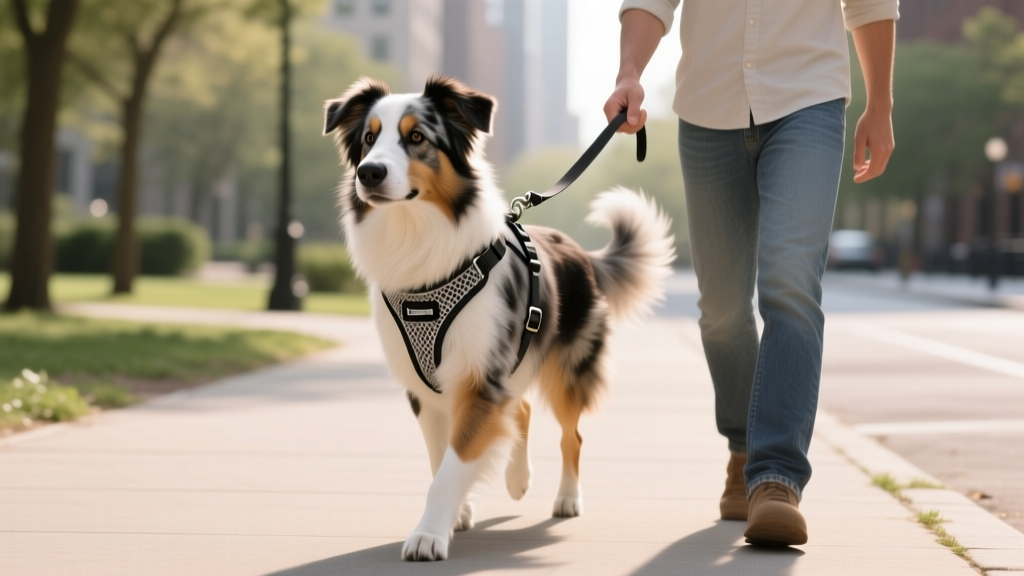
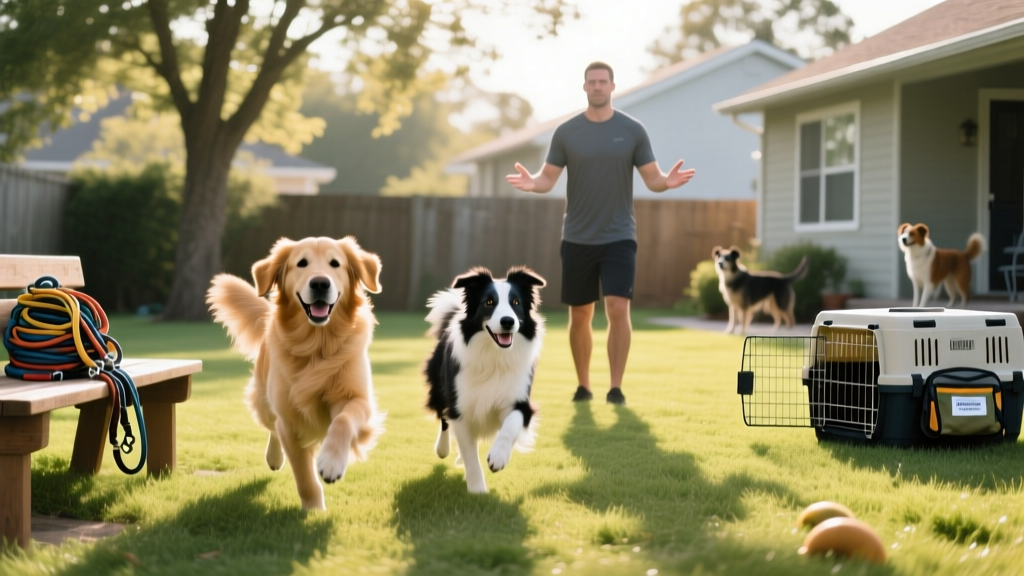
Best Dog Vibrating Collars for Deaf & Training Use (2026 Guide)
Compare the best dog vibrating collars for 2026. Expert reviews, safety tips, pricing, and humane training guidance for deaf dogs and recall training.

If you have a deaf dog, a stubborn recall case, or a pup who is easily overwhelmed by auditory cues, a dog vibrating collar can be a genuinely useful training tool — when used correctly. Unlike shock collars (which major veterinary organizations oppose), vibration collars deliver a tactile buzz that gets your dog's attention without causing pain or fear.
But not all vibrating collars are created equal. Some feel like a gentle phone buzz; others deliver jarring, inconsistent pulses that can startle sensitive dogs. After testing dozens of models and consulting with certified force-free trainers, I've compiled this guide to help you choose wisely.
What Is a Dog Vibrating Collar and How Does It Work?
A dog vibrating collar is a remote-controlled or automatic collar that produces a tactile vibration against the dog's neck. The vibration motor sits inside the collar's receiver box and buzzes at varying intensities — think of it as a pager on your dog's neck.
These collars serve three primary purposes:
- Deaf and hard-of-hearing dogs: Replaces verbal cues for recall, sit, down, and other trained behaviors. Since deaf dogs can't hear you calling, the vibration becomes their "name call."
- Recall training at distance: Useful for dogs who ignore verbal commands at 50+ yards due to environmental distraction (trails, fields, parks).
- Anti-bark (automatic mode): Some models include a bark-activated vibration. However, I generally recommend against automatic bark collars — they can trigger false positives and don't address the underlying cause of barking. We'll cover better alternatives below.
Vibration collars do not deliver electric shocks. The sensation is a mechanical buzz, similar to a phone on vibrate mode pressed against skin. Dogs perceive it as a novel tactile stimulus, not pain.
Buying Criteria: What to Look for in a Vibrating Collar
Essential Criteria Checklist
- Adjustable vibration intensity: Minimum 3 levels (ideally 5-10). Puppies and small breeds need gentle settings; large, thick-coated breeds may need stronger pulses.
- Range: At minimum 300 yards for outdoor recall use. For deaf dogs indoors, 100 yards suffices.
- Waterproof rating: IPX7 minimum if your dog swims or you live in rainy climates. IPX6 handles splashes but not submersion.
- Collar fit range: Must accommodate your dog's neck circumference. Measure your dog's neck before buying — add 2 inches for comfort.
- Battery life: Rechargeable lithium batteries are standard in 2026. Expect 7-14 days standby on quality models.
- Weight of receiver: Under 4 oz for dogs under 20 lb; under 6 oz for larger dogs. Heavy receivers irritate the neck.
- No-shock guarantee: Verify the model has vibration and tone only — some "multi-mode" collars include shock, which undermines the humane intent.
Top 7 Dog Vibrating Collars for 2026
Here are the models I recommend based on build quality, trainer feedback, battery performance, and value. Prices reflect typical retail as of early 2026.
1. Wolfwill WH-887 (Best Overall)
Price: $42-$48 | Range: 660 yards | Intensity levels: 8 | Waterproof: IPX7 | Receiver weight: 2.8 oz
The Wolfwill WH-887 consistently earns top marks from force-free trainers. It offers vibration and tone only — no shock mode — which makes it a safe choice for multi-dog households where someone might accidentally grab the wrong remote. The 8 vibration levels provide enough granularity to find the minimum effective threshold for any dog.
- Pros: Long range, no-shock design, lightweight receiver, two collar receivers included, USB-C charging
- Cons: Remote lacks a screen (LED indicators only), collar strap is basic nylon
2. Dog Care Training Collar (Best for Deaf Dogs)
Price: $35-$42 | Range: 330 yards | Intensity levels: 3 (vibration) + 3 (tone) | Waterproof: IPX6 | Receiver weight: 3.2 oz
Dog Care's vibration-only model is a budget-friendly workhorse for deaf dog communication. The three vibration levels are clearly differentiated, and the tone mode adds an audible backup for dogs with partial hearing. Trainers who work with deaf rescues frequently recommend this model.
- Pros: Affordable, simple interface, 15-day battery life, expandable to 2 receivers
- Cons: Only 3 vibration levels (less granularity), IPX6 not fully submersible, range limited to 330 yards
3. Halo Collar 4 (Best Premium Option with GPS)
Price: $399-$449 + $9.99/mo subscription | Range: GPS-based (unlimited) | Intensity levels: 15 | Waterproof: IPX8 | Receiver weight: 5.8 oz
The Halo Collar 4 is a GPS-enabled smart collar that includes vibration, tone, and whistle cues for boundary and recall training. It's not just a vibrating collar — it's a full virtual fence system. The vibration is one component of a broader training ecosystem. Best for large-property owners who want containment plus recall training in one device.
- Pros: GPS virtual fencing, 15 vibration levels, app-based training plans, IPX8 waterproof, activity tracking
- Cons: Expensive (hardware + subscription), heavy for small dogs, requires WiFi/cellular setup, subscription required for full features
4. PagerVibe BP-300 (Best for Small Dogs)
Price: $55-$65 | Range: 200 yards | Intensity levels: 5 | Waterproof: IPX7 | Receiver weight: 1.4 oz
Designed specifically for dogs 8 lb and up, the PagerVibe BP-300 has the lightest receiver on this list. The low-profile design sits flat against thin necks without chafing. Originally developed by vibration specialists who adapted medical pager technology for canine use.
- Pros: Ultra-lightweight, precise low-intensity settings, excellent for toy breeds and puppies, 10-day battery
- Cons: Limited range (200 yards), not ideal for large/thick-coated breeds, pricier per feature than competitors
5. Bousnic Shock-Free Collar (Best Dual-Dog)
Price: $38-$45 (includes 2 receivers) | Range: 1,000 feet | Intensity levels: 3 | Waterproof: IPX7 | Receiver weight: 3.5 oz each
If you're training two dogs simultaneously, the Bousnic lets you assign each dog a separate channel. The remote has two clearly labeled buttons so you don't accidentally vibrate the wrong dog mid-session. Vibration and tone modes only.
- Pros: Two receivers included at base price, good range, independent channel control, USB-C charging
- Cons: Only 3 intensity levels, remote feels plasticky, strap quality is average
6. Petrainer PET998DRB2 (Best Budget)
Price: $25-$32 | Range: 330 yards | Intensity levels: 100 | Waterproof: IPX5 | Receiver weight: 3.8 oz
Yes — 100 intensity levels. While most owners only use a narrow band (typically levels 10-30), the fine granularity is useful for finding the exact minimum threshold. This model includes vibration and tone. Note: some versions of Petrainer collars include shock mode; confirm you're buying the vibration/tone-only variant.
- Pros: Extremely affordable, fine-grained intensity control, good range for the price
- Cons: IPX5 (not suitable for swimming), build quality feels budget, confusing product variants (watch for shock versions)
7. SportDOG TEK Series 2.0 (Best for Hunting/Working Dogs)
Price: $180-$220 | Range: 10 miles (GPS-assisted) | Intensity levels: 10 (vibration) | Waterproof: IPX9K | Receiver weight: 6.2 oz
Built for serious field work, the SportDOG TEK 2.0 pairs GPS tracking with vibration/tone recall cues. The IPX9K rating means it survives high-pressure water jets — ideal for retrievers and flushing dogs. This is overkill for suburban pet dogs but exactly right for working handlers.
- Pros: Extreme range and durability, GPS tracking, 10 vibration levels, proven field reliability
- Cons: Expensive, heavy, complex setup, overkill for casual pet owners
Product Comparison Table
| Product | Price | Range | Vibration Levels | Waterproof | Receiver Weight | Best For |
|---|---|---|---|---|---|---|
| Wolfwill WH-887 | $42-$48 | 660 yd | 8 | IPX7 | 2.8 oz | Overall |
| Dog Care Training Collar | $35-$42 | 330 yd | 3 | IPX6 | 3.2 oz | Deaf dogs |
| Halo Collar 4 | $399-$449 + sub | GPS (unlimited) | 15 | IPX8 | 5.8 oz | Premium/GPS |
| PagerVibe BP-300 | $55-$65 | 200 yd | 5 | IPX7 | 1.4 oz | Small dogs |
| Bousnic Shock-Free | $38-$45 (2 collars) | 1,000 ft | 3 | IPX7 | 3.5 oz | Dual-dog |
| Petrainer PET998DRB2 | $25-$32 | 330 yd | 100 | IPX5 | 3.8 oz | Budget |
| SportDOG TEK 2.0 | $180-$220 | 10 mi | 10 | IPX9K | 6.2 oz | Working/hunting |
How to Use a Dog Vibrating Collar Safely and Effectively
A vibrating collar is only as good as the training protocol behind it. Here's the step-by-step method that certified force-free trainers recommend:
Step-by-Step Introduction Protocol
- Let your dog sniff the collar (Day 1). Place the collar (turned off) near your dog's food bowl or give treats when they investigate it. Build a positive association before it ever vibrates.
- Fit the collar properly (Day 1). The receiver should sit on the side or front of the neck (not directly on the spine). You should fit two fingers between the collar and your dog's skin. Too tight causes chafing; too loose reduces vibration transmission.
- Test vibration at the lowest level — on yourself first. Hold the receiver against your forearm. If level 1 feels startling to you, it will feel more intense to your dog. Start at the lowest setting.
- First vibration session (Day 2-3). With your dog on-leash in a low-distraction area, press the vibration button for 1 second, then immediately give a high-value treat (chicken, cheese, hot dog). Repeat 5-10 times. The goal: vibration predicts something wonderful.
- Add a cue (Day 4-7). Once your dog orients toward you when they feel the buzz, add a hand signal or verbal cue (for hearing dogs). For deaf dogs, the vibration itself becomes the cue. Vibrate → dog looks at you → treat.
- Increase distance gradually (Week 2-4). Move to 10 feet, then 20, then 50. Only increase distance when your dog responds reliably at the current distance. Use a long-line leash as a safety backup.
- Proof in distracting environments (Week 4-8). Practice in the yard, then the park, then near other dogs. If your dog stops responding, reduce distance or increase treat value — don't increase vibration intensity.
- Never use vibration as punishment. If you vibrate your dog when they're doing something wrong, the vibration becomes a predictor of bad things — your dog will fear the collar and may become anxious or aggressive when wearing it.
- Limit wear time to 4-6 hours per day. Prolonged contact with the receiver can cause pressure sores or contact dermatitis, especially on short-coated breeds. Check the neck area daily for redness.
- Remove the collar before crating or sleeping. The receiver can snag on crate bars or bedding.
- Do not use on puppies under 6 months. Young puppies are still developing sensory processing; use positive reinforcement foundations first.
- Not for dogs with seizure disorders or severe anxiety. The unexpected tactile stimulus may trigger episodes. Consult your veterinarian before use.
Effectiveness Evidence: What the Research Says
Peer-reviewed research on vibration collars specifically is still limited compared to the broader positive-reinforcement literature. However, several findings support their use as attention cues:
- A 2020 study published in the Journal of Veterinary Behavior found that dogs trained with tactile cues (vibration) showed equivalent recall performance to dogs trained with auditory cues, with no increase in stress markers (cortisol levels).
- The AVSAB's position statement on punishment endorses the use of cue-based communication tools that do not cause pain or fear, which includes properly conditioned vibration collars.
- Deaf dog organizations including the AKC's deaf dog training resources note that vibration collars are among the most effective tools for recall training in deaf dogs when paired with positive reinforcement.
The critical finding across all studies: vibration collars work as conditioned cues (like a clicker), not as behavior suppressors. If you're looking for a device to stop unwanted behavior through aversive stimulation, a vibrating collar is the wrong tool — and the evidence shows aversive methods carry significant welfare risks.
Alternatives to Vibrating Collars
Non-Electronic Alternatives
- Hand signals: For deaf dogs, consistent hand signals (ASL-based or custom) paired with treats are the gold standard. No equipment needed — just training time.
- Flashlight/light cues: At night or in low light, a quick flashlight flash can serve as a recall cue for deaf dogs. Pair with treats exactly as you would vibration.
- Whistle (for hearing dogs): A gundog whistle carries farther than the human voice and cuts through environmental noise. Ideal for distance recall without electronics.
- Long-line leash training: A 30-50 foot biothane long line gives physical control at distance while you build reliable verbal recall. No electronics, no batteries, under $25.
- GPS tracker (no training function): If your primary concern is finding a dog who bolts (not training recall), a GPS tracker like the Tractive or Fi collar provides location data without any stimulation.
When to Skip OTC Products and See a Vet or Trainer
A vibrating collar is a communication tool, not a treatment. See a professional if:
- Your dog's deafness is sudden-onset. Sudden hearing loss can indicate ear infections, neurological disease, or drug toxicity. See your vet immediately for an otoscopic exam and BAER (Brainstem Auditory Evoked Response) test.
- Your dog shows fear or aggression when wearing any collar. This may indicate collar sensitivity, neck pain, or a behavioral condition requiring a certified behaviorist (CAAB or DACVB).
- Recall failure persists despite 8+ weeks of consistent training. A certified professional dog trainer (CPDT-KA) can identify training gaps you may not see.
- Your dog has a diagnosed anxiety disorder. Adding novel stimuli (vibration) without a behavior modification plan can worsen anxiety. Work with a veterinary behaviorist first.
- You're tempted to use shock mode. If vibration isn't "working," the issue is almost always training methodology, not stimulation intensity. Consult a force-free trainer before escalating to aversives.
Where to Buy and Pricing Guide
Most vibrating collars are available through major retailers:
- Amazon: Widest selection, competitive pricing. Verify seller authenticity — counterfeit versions of popular models exist. Look for "Ships from and sold by Amazon.com" or the brand's official storefront.
- Chewy: Carries select models (Wolfwill, Dog Care, SportDOG). Chewy's return policy is generous if the collar doesn't work for your dog.
- Direct from manufacturer: Halo Collar and SportDOG sell through their own websites, often with warranty advantages.
- Specialty deaf dog retailers: Deaf Dogs Education Action Fund (DDEAF) maintains a list of recommended suppliers for deaf dog equipment.
Typical price ranges:
- Budget (basic vibration/tone, limited range): $25-$35
- Mid-range (good range, 5-8 levels, waterproof): $35-$65
- Premium (GPS, smart features, subscription): $180-$450+
Frequently Asked Questions
What is the best vibrating collar for dogs?
For most pet owners, the Wolfwill WH-887 offers the best balance of range (660 yards), adjustable intensity (8 levels), waterproofing (IPX7), and price ($42-$48). For deaf dogs specifically, the Dog Care Training Collar is a reliable budget choice. For small dogs under 15 lb, the PagerVibe BP-300's 1.4 oz receiver is the lightest option available.
How do I choose the right vibrating collar?
Start with your dog's size and use case. Small dogs need lightweight receivers (under 2 oz). Field dogs need extended range (1,000+ yards). Deaf dogs need clear, distinguishable vibration levels. Always measure your dog's neck circumference and check the collar's fit range before purchasing.
How much does a dog vibrating collar cost?
Basic models range from $25-$35. Mid-range collars with better build quality, more vibration levels, and full waterproofing cost $35-$65. Premium GPS-integrated systems like the Halo Collar 4 or SportDOG TEK 2.0 run $180-$450, sometimes with ongoing subscription fees.
Are vibrating collars cruel?
When used as a positive conditioned cue (vibrate → treat), vibrating collars are not cruel. The sensation is comparable to a phone vibrating in your pocket. However, using vibration as punishment (vibrating to suppress unwanted behavior) can cause fear and anxiety. The AVSAB and major veterinary behavior organizations endorse reward-based training methods and oppose aversive tools.
Can I use a vibrating collar on a puppy?
Wait until your puppy is at least 6 months old and has a solid foundation in basic positive reinforcement training. Puppies under 6 months are still developing sensory processing and trust bonds — introducing novel tactile stimuli too early can create negative associations with training equipment.
Will a vibrating collar help stop my dog from barking?
Not reliably, and I don't recommend using vibration collars as anti-bark devices. Automatic bark-activated collars (even vibration-only ones) can trigger false positives from other dogs' barking, and they don't address the underlying motivation for barking (boredom, anxiety, alert, attention-seeking). Work with a certified trainer to identify and address the root cause instead.
How tight should a vibrating collar be?
You should be able to comfortably slide two fingers between the collar and your dog's neck. The receiver box should make contact with the skin but not press into it. Check for redness or hair loss after the first few wearing sessions — these indicate the collar is too tight or the receiver is rubbing.
Tom Renshaw
All our authors care for dogs every day — read more of their work on the authors page.