Pyrantel Pamoate for Puppies: Complete Deworming & Early Care Guide
pyrantel pamoate for puppies: dosing by weight, deworming schedules, side effects, and a full week-by-week puppy care timeline from 4 weeks to 12 months.
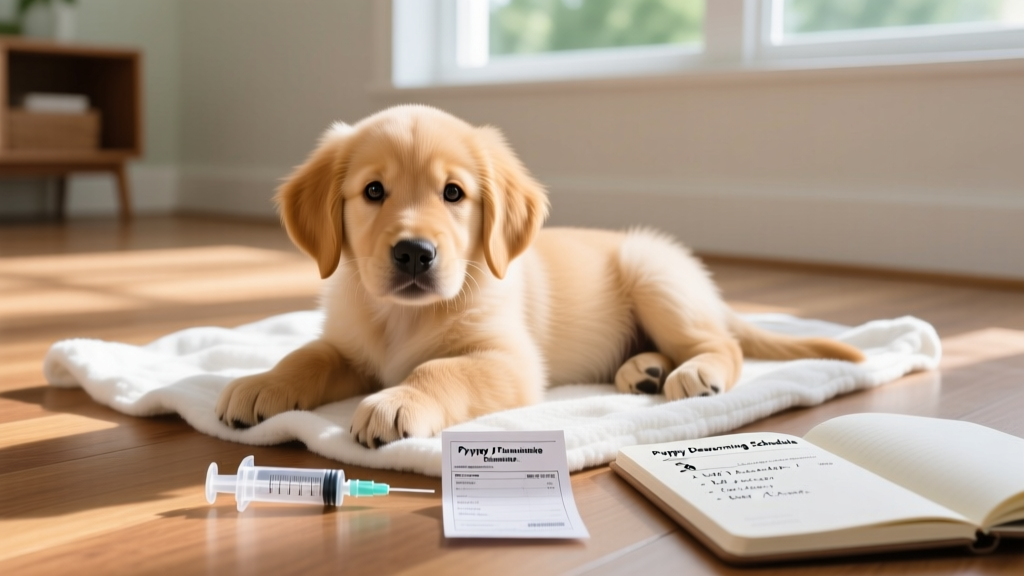
Why Pyrantel Pamoate Matters in Your Puppy's First Weeks
If you've just brought home a new puppy — or you're preparing to — you've probably heard the term "deworming" tossed around at the breeder's house or your first vet visit. At the center of most puppy deworming protocols is pyrantel pamoate, a broad-spectrum anthelmintic (anti-parasitic) medication that targets two of the most common intestinal parasites in young dogs: roundworms (Toxocara canis) and hookworms (Ancylostoma caninum).
According to the Merck Veterinary Manual, nearly all puppies are born with or acquire roundworms through their mother's milk, making early deworming not just recommended — it's essential. Pyrantel pamoate works by paralyzing the worms' neuromuscular junctions, causing them to release their grip on the intestinal wall so they can be expelled through the feces.
Pyrantel Pamoate Dosing & Deworming Schedule by Age
Pyrantel pamoate is typically dosed at 5 mg per pound (10 mg/kg) of body weight, given orally as a liquid suspension or chewable tablet. The standard puppy deworming protocol recommended by the CDC and most veterinary parasitologists follows this timeline:
| Age | Typical Weight Range | Dose (mg) | Notes |
|---|---|---|---|
| 2 weeks | 0.5–1.5 lb (0.2–0.7 kg) | 2.5–7.5 mg | First dose — usually administered by breeder |
| 4 weeks | 1.5–4 lb (0.7–1.8 kg) | 7.5–20 mg | Second dose — coincides with weaning start |
| 6 weeks | 3–7 lb (1.4–3.2 kg) | 15–35 mg | Third dose — before first DHPP vaccine |
| 8 weeks | 5–12 lb (2.3–5.4 kg) | 25–60 mg | Fourth dose — at first vet visit / go-home age |
| 10 weeks | 8–18 lb (3.6–8.2 kg) | 40–90 mg | Fifth dose — if fecal exam shows continued infection |
| 12 weeks | 12–25 lb (5.4–11.3 kg) | 60–125 mg | Sixth dose — often combined with second DHPP |
After 12 weeks, most puppies transition to a monthly heartworm preventive that also covers intestinal parasites (e.g., Heartgard Plus, Interceptor Plus, or Simparica Trio). Your vet will perform a fecal flotation test at the 8-week and 12-week visits to confirm whether the deworming protocol has been effective.
Side Effects to Watch For
Pyrantel pamoate is considered one of the safest anthelmintics for puppies, but mild side effects can occur within 12–24 hours of dosing:
- Vomiting (most common — occurs in roughly 5–10% of puppies, especially on an empty stomach)
- Diarrhea or loose stools (as dying parasites pass through the GI tract)
- Visible worms in stool (this is actually a good sign — it means the medication is working)
- Temporary lethargy (usually resolves within 24 hours)
- Decreased appetite for one meal
Administering pyrantel pamoate with a small meal significantly reduces vomiting risk. If your puppy vomits within 30 minutes of dosing, contact your vet — they may recommend re-dosing.
Week-by-Week Puppy Milestone Timeline (Weeks 4–24)
Deworming is just one thread in a much larger tapestry of puppy development. Here's what to expect across every critical stage:
Weeks 4–8: The Breeder's Window
During this period, puppies are still typically with their breeder or foster. Key milestones include:
- Week 4: Second pyrantel dose. Weaning begins — puppies start lapping gruel (puppy kibble soaked in warm water or puppy milk replacer). Eyes fully open, hearing develops.
- Week 5: Social play with littermates intensifies. Puppies learn bite inhibition from siblings' yelps. First introduction to solid surfaces beyond the whelping box.
- Week 6: Third pyrantel dose. First DHPP vaccine administered. Puppies begin exploring novel textures (grass, tile, carpet). Fear imprint period begins — negative experiences can have lasting effects.
- Week 7: Human bonding accelerates. Puppies respond to their name (if consistently used). Basic handling exercises: paw touching, ear inspection, mouth opening.
- Week 8: Fourth pyrantel dose. Most puppies go to their new homes at 8–10 weeks. First car ride, crate introduction, and separation from littermates.
Weeks 8–12: The Adjustment Period
This is your puppy's transition into your household. Expect:
- Sleep: 18–20 hours per day is normal. Puppies this age tire quickly and need enforced naps.
- Potty frequency: Every 1–2 hours during the day, plus 1–2 overnight trips.
- Appetite: 3–4 meals per day. Temporary appetite dips in the first 48 hours are common due to stress.
- Behavior: Crying/whining at night (separation from littermates), mouthing everything, following you room to room.
Weeks 12–16: Building Confidence
- Second and third DHPP vaccines at 12 and 16 weeks.
- Rabies vaccine typically given at 12–16 weeks (varies by state law).
- Leash introduction: Start with a lightweight harness and a 4-foot leash indoors.
- Teething begins: Deciduous (baby) teeth start loosening around 12 weeks.
- Command learning: Sit, down, come, and name recognition become reliable with short (3–5 minute) training sessions.
Weeks 16–24: The Adolescent Shift
- Full vaccination status achieved approximately 2 weeks after the 16-week DHPP booster.
- Teething peak: Adult teeth erupt between 4–6 months. Chewing intensity increases dramatically.
- Fear period #2: Around 6–10 months, puppies may suddenly become fearful of previously familiar stimuli.
- Energy increase: Exercise capacity grows; structured activities (puppy classes, nosework) become important outlets.
6–12 Months: Adolescence
- Spay/neuter: Most veterinarians recommend between 6–12 months depending on breed size. Large breeds often benefit from waiting until 12–18 months for joint development.
- Training regression: Adolescent puppies may "forget" previously learned commands. Consistency and patience are critical.
- Social maturity: Breed-specific temperament traits become more pronounced. Herding breeds may start nipping at heels; terriers may show increased prey drive.
Feeding Schedule: Portions & Frequency by Age
Nutrition during puppyhood directly impacts skeletal development, immune function, and deworming recovery. Here's a feeding framework based on a standard AAFCO-approved puppy kibble (approximately 400 kcal/cup):
| Age | Estimated Weight | Meals/Day | Daily Portion (cups) | Notes |
|---|---|---|---|---|
| 4–6 weeks | 1–5 lb (0.5–2.3 kg) | 4–5 (gruel) | ½–1 cup gruel | Puppy kibble soaked in warm water/milk replacer |
| 6–8 weeks | 3–10 lb (1.4–4.5 kg) | 4 | ¾–1¼ cups | Transition to dry kibble by week 8 |
| 8–12 weeks | 5–15 lb (2.3–6.8 kg) | 3–4 | 1–2 cups | Monitor body condition score (BCS) weekly |
| 12–16 weeks | 10–25 lb (4.5–11.3 kg) | 3 | 1½–2½ cups | Growth spurt — appetite may spike |
| 4–6 months | 15–40 lb (6.8–18.1 kg) | 3 | 2–3½ cups | Adjust based on activity level and BCS |
| 6–12 months | 25–60 lb (11.3–27.2 kg) | 2 | 2½–4 cups | Transition to adult food at 10–12 months (small breeds) or 12–18 months (large breeds) |
Key feeding rules: Remove uneaten food after 15–20 minutes to establish meal-time structure. Never feed immediately before or after vigorous exercise (wait 30–60 minutes) to reduce bloat risk, particularly in deep-chested breeds. Always provide fresh water — puppies need approximately 1 oz of water per pound of body weight daily.
Vaccination Schedule: Core & Non-Core Protocols
Your puppy's vaccination timeline is designed to bridge the gap between maternal antibodies (which wane between 6–16 weeks) and the puppy's own developing immune response. The AAHA Canine Vaccination Guidelines recommend the following core protocol:
| Age | Vaccine | What It Protects Against | Estimated Cost |
|---|---|---|---|
| 6–8 weeks | DHPP #1 | Distemper, Hepatitis (Adenovirus-2), Parainfluenza, Parvovirus | $25–$45 |
| 10–12 weeks | DHPP #2 | Booster — same as above | $25–$45 |
| 12–14 weeks | Rabies | Rabies virus (legally required in all US states) | $20–$40 |
| 14–16 weeks | DHPP #3 | Final puppy booster — completes core series | $25–$45 |
| 12–16 weeks (optional) | Bordetella | Kennel cough — recommended if attending puppy classes or boarding | $25–$40 |
| 12–16 weeks (optional) | Leptospirosis | Bacterial infection from contaminated water — recommended for outdoor/active dogs | $30–$50 |
Important: Puppies are NOT considered fully protected until approximately 2 weeks after their final DHPP booster at 14–16 weeks. Until then, avoid high-traffic dog areas (dog parks, pet store floors, unvaccinated dog playdates). Controlled socialization with known-vaccinated dogs in clean environments is acceptable and encouraged.
The Socialization Window (Weeks 3–14): Your Puppy's Critical Period
The American Veterinary Society of Animal Behavior (AVSAB) identifies weeks 3–14 as the primary socialization window — a neurologically sensitive period when puppies form lasting associations with novel stimuli. Missing this window doesn't mean your dog can't be socialized later, but it does mean you'll work harder to build comfort.
Socialization Exposure Checklist
Aim for positive, low-pressure exposure to as many of the following as possible before 14 weeks. "Positive" means your puppy is relaxed, taking treats, and showing loose body language — not overwhelmed or cowering.
- Children of various ages (supervised)
- People wearing hats, sunglasses, hoodies, masks
- People using canes, wheelchairs, crutches
- People of different heights, body types, skin tones
- People with deep voices, high-pitched voices
- Grass, gravel, sand, metal grates, wet pavement
- Car rides (short trips, 5–10 minutes)
- Elevator rides, automatic doors
- Stairs (up and down, carpeted and bare)
- Vacuum cleaner, blender, hair dryer
- Thunderstorm recordings at low volume
- Doorbell, knocking, fireworks recordings
- Traffic, sirens, construction noise
- Paw handling, nail clipping (just tips)
- Ear inspection, teeth brushing introduction
- Being held in various positions
- Towel drying, brush/comb contact
- Fully vaccinated, calm adult dogs
- Other vaccinated puppies in structured classes
- Cats (if available and safe)
Potty Training: Realistic Timeline & Troubleshooting
Let's set realistic expectations: most puppies are not reliably house-trained until 4–6 months of age, and some small breeds take up to 8–10 months due to their smaller bladder capacity. The "potty trained in 3 days" claims you see online apply to adult dogs being re-homed — not puppies with immature sphincter control.
Bladder Capacity Rule of Thumb
A puppy can typically hold their bladder for approximately one hour per month of age, plus one. So:
- 8 weeks (2 months): ~3 hours maximum (realistically, every 1–2 hours)
- 12 weeks (3 months): ~4 hours maximum
- 16 weeks (4 months): ~5 hours maximum
- 6 months: ~7 hours (overnight sleep becomes possible)
Potty Training Log Template
Track your puppy's elimination patterns for the first two weeks. You'll quickly identify their natural rhythm:
| Time | Activity Trigger | Went Outside? | Result | Treat Given? |
|---|---|---|---|---|
| 6:30 AM | Wake up | Yes | Pee + poop | Yes (high-value) |
| 7:15 AM | After breakfast | Yes | Pee | Yes |
| 8:00 AM | After play session | No | Accident (pee on rug) | N/A |
Key triggers that predict elimination: within 10–20 minutes of eating or drinking, immediately after waking from a nap, after vigorous play, and after excitement (greeting visitors). Take your puppy to the same outdoor spot consistently — the scent of previous elimination stimulates them to go again.
Common Potty Training Problems
Problem: Puppy pees inside 5 minutes after coming back in from outside.
Cause: Puppy was distracted outside or didn't fully empty bladder.
Solution: Stand in one spot for 5 minutes with minimal stimulation. Use a consistent cue word ("go potty"). If nothing happens, crate for 10 minutes, then try again.
Problem: Puppy only pees on pee pads, won't go outside.
Cause: Over-reliance on indoor surface.
Solution: Gradually move the pad closer to the door over several days, then place it outside, then remove it. Reward heavily for outdoor elimination.
Crate Training Progression: Time Limits by Age
A crate is a management tool and a safe den — not a punishment space. The goal is for your puppy to voluntarily enter and relax. Here's a progressive timeline:
| Age | Daytime Max | Overnight Max | Training Focus |
|---|---|---|---|
| 8–10 weeks | 30–60 minutes | 3–4 hours | Positive association — meals in crate, door open |
| 10–12 weeks | 1–2 hours | 4–5 hours | Short absences — leave room, return before whining |
| 12–16 weeks | 2–3 hours | 5–6 hours | Leave house briefly, build duration gradually |
| 4–6 months | 3–4 hours | 6–8 hours | Settle training — relaxed resting in crate |
| 6+ months | 4–6 hours | 8 hours | Transition to open-door access when home |
Never crate a puppy longer than their bladder can hold. If you work full-time, arrange a midday visit from a dog walker, neighbor, or pet sitter. Puppies crated for excessively long periods develop anxiety, and the crate becomes associated with distress rather than comfort.
Teething Timeline & Relief Strategies (3–6 Months)
Puppies have 28 deciduous teeth that begin erupting at 3–4 weeks and are fully in by 6–8 weeks. Between 12–16 weeks, these baby teeth start falling out as 42 adult teeth push through. The process is usually complete by 6–7 months.
Teething Signs
- Increased chewing on furniture, shoes, hands
- Drooling more than usual
- Small spots of blood on toys or bedding (normal)
- Reluctance to eat hard kibble temporarily
- Finding baby teeth on the floor (many puppies swallow them — also normal and harmless)
Safe Teething Relief Options
- Frozen Kong Classic (puppy size): Fill with a mix of plain yogurt and mashed banana, freeze for 4+ hours. The cold numbs sore gums.
- Wet washcloth twist: Dampen a clean washcloth, twist into a rope, freeze. Supervise to prevent swallowing fabric pieces.
- Benebone Puppy Wishbone: Nylon chew designed for puppies (softer formula than adult version). Replace when deep grooves develop.
- Carrot sticks (frozen): Low-calorie, safe to swallow. Works well for small to medium breeds.
- Nylabone Puppy Chew (soft): Textured surface massages gums. Choose the appropriate size — too small is a choking hazard.
Avoid: Ice cubes (can fracture teeth in aggressive chewers), cooked bones (splinter risk), rawhide (choking and blockage risk), and any chew toy small enough to swallow whole.
Common Puppy Problems & Solutions
Puppy Biting & Nipping
Mouthing is normal puppy behavior — they explore the world with their mouths, and teething intensifies the urge. However, you need to teach bite inhibition (soft mouth) and eventually redirect away from skin entirely.
Protocol:
- When puppy teeth touch skin, say "ouch" in a calm, slightly high-pitched tone (mimics littermate yelp).
- Immediately withdraw attention for 5–10 seconds — stand up, fold arms, look away.
- When puppy calms, redirect to an appropriate chew toy. Praise and reward chewing the toy.
- If biting persists after 3 redirects, implement a 30-second "time-out" — calmly place puppy in their crate or a pen with a chew toy. This is not punishment; it's teaching that biting ends play.
Most puppies show significant improvement in bite inhibition by 16–20 weeks with consistent practice. If biting intensifies or breaks skin after 5 months, consult a certified force-free trainer (look for CPDT-KA or IAABC credentials).
Nighttime Whining
Common in the first 1–3 weeks home. Strategies that work:
- Place the crate in your bedroom for the first 2–4 weeks so your puppy can hear and smell you.
- Use a Snuggle Puppy (heat pack + heartbeat simulator) or a ticking clock wrapped in a towel.
- Take puppy out for a boring, quiet potty break if whining persists past 2 hours — keep lights low, no play, straight back to crate.
- Gradually move the crate further from your bed over successive weeks once puppy is settled.
Destructive Chewing
Puppies chew to explore, relieve teething discomfort, and burn energy. Management is the solution:
- Puppy-proof rooms by removing shoes, cords, and small objects.
- Provide 5–7 appropriate chew toys of varying textures, rotated every 3–4 days to maintain novelty.
- Use bitter apple spray on furniture legs as a deterrent (test on a hidden area first).
- Ensure adequate physical exercise and mental enrichment — a tired puppy chews less.
First-Year Cost Breakdown
Budgeting for a puppy's first year helps avoid financial surprises. Here's a realistic breakdown based on 2026 US veterinary pricing:
| Category | Low Estimate | High Estimate | Details |
|---|---|---|---|
| Veterinary (vaccines, exams, deworming, fecal tests) | $400 | $800 | 3–4 well-puppy visits, pyrantel doses, DHPP series, rabies, fecal flotation |
| Spay/Neuter | $300 | $800 | Varies significantly by dog size and clinic type (low-cost clinic vs. specialty hospital) |
| Food (puppy formula) | $300 | $700 | Based on AAFCO-approved kibble at $1.50–$3.50/lb; large breeds eat more |
| Heartworm/Flea/Tick Prevention | $200 | $450 | Monthly preventive starting at 8 weeks (e.g., Simparica Trio, NexGard Plus) |
| Supplies (crate, bed, bowls, leash, harness, toys) | $200 | $500 | Wire crate ($50–$90), stainless bowls ($15–$30), harness ($25–$50) |
| Training (puppy class + basic obedience) | $150 | $400 | 6–8 week group classes at $150–$250; private sessions $75–$150/hour |
| Pet Insurance (optional but recommended) | $360 | $720 | $30–$60/month; enroll at 8 weeks to cover congenital conditions |
| TOTAL FIRST YEAR | $1,910 | $4,370 | Does not include puppy purchase price or emergency vet visits |
Emergency fund note: Set aside an additional $500–$2,000 for unexpected illnesses. Puppies are prone to foreign body ingestion, gastrointestinal upset, and parasitic infections that may require unplanned vet visits. Pet insurance enrolled early can offset these costs significantly.
Frequently Asked Questions
When should I bring my puppy home?
The optimal age to bring a puppy home is 8–10 weeks. Puppies taken before 8 weeks miss critical littermate socialization that teaches bite inhibition and canine communication. Some breeders of smaller breeds prefer to keep puppies until 10–12 weeks for additional developmental stability. Always ensure the puppy has received at least their first DHPP vaccine and multiple pyrantel pamoate doses before pickup.
How often should I feed my puppy at 8 weeks?
At 8 weeks, feed 3–4 meals per day of a high-quality AAFCO-approved puppy food. Divide the daily portion equally across meals. For a 10-pound puppy, that's approximately 1–1½ cups total daily, so roughly ¼ to ⅓ cup per meal if feeding 4 times. Adjust based on your puppy's body condition score — you should be able to feel (but not prominently see) their ribs.
When will my puppy be fully potty trained?
Most puppies achieve reliable house training between 4–6 months of age, though small breeds (under 15 pounds adult weight) may take until 8–10 months due to smaller bladder capacity. "Reliable" means fewer than one accident per month. Consistency in schedule, supervision, and positive reinforcement for outdoor elimination are the biggest predictors of faster training.
What vaccines does my puppy need and when?
Core vaccines follow a 3-dose DHPP series at 6–8 weeks, 10–12 weeks, and 14–16 weeks, plus a rabies vaccine at 12–16 weeks. Non-core vaccines (bordetella, leptospirosis, Lyme) are recommended based on your puppy's lifestyle and geographic risk. Your vet will tailor the protocol to your area and your dog's exposure risk.
How do I stop puppy biting and nipping?
Use a consistent redirect protocol: when teeth touch skin, say "ouch," withdraw attention for 5–10 seconds, then offer an appropriate chew toy. If biting continues after 2–3 redirects, implement a brief 30-second time-out in a pen or crate with a chew. This teaches that biting ends interaction. Never hit, hold the mouth shut, or use aversive techniques — these increase fear and can escalate biting. Most puppies show marked improvement by 16–20 weeks with daily practice.
When can my puppy go outside and meet other dogs?
Your puppy can go outside in your own yard immediately (assuming no known parvo exposure). However, avoid public areas where unvaccinated dogs have been until 2 weeks after the final DHPP booster (typically around 18 weeks). Socialization with known, fully vaccinated dogs in clean, controlled environments is safe and encouraged starting at 8 weeks. Puppy socialization classes that require proof of first DHPP vaccine are generally considered safe by the AVSAB.
Can I give pyrantel pamoate without a vet visit?
While pyrantel pamoate is available over the counter in some formulations (e.g., Nemex-2 liquid suspension), it's strongly recommended to work with your veterinarian. Your vet will confirm the correct dose based on your puppy's exact weight, perform fecal testing to identify which parasites are present (pyrantel does NOT cover whipworms, tapeworms, or coccidia), and monitor for adverse reactions. Incorrect dosing can lead to ineffective treatment or side effects.
What if my puppy vomits after taking pyrantel pamoate?
If vomiting occurs within 30 minutes of dosing, the medication may not have been fully absorbed. Contact your veterinarian before re-dosing — they'll advise whether to administer another dose and may recommend giving it with food. Vomiting after 30 minutes is less concerning, as the medication has likely been absorbed. Mild GI upset for 12–24 hours is common and usually self-resolving.
Aaron Whyte
All our authors care for dogs every day — read more of their work on the authors page.


