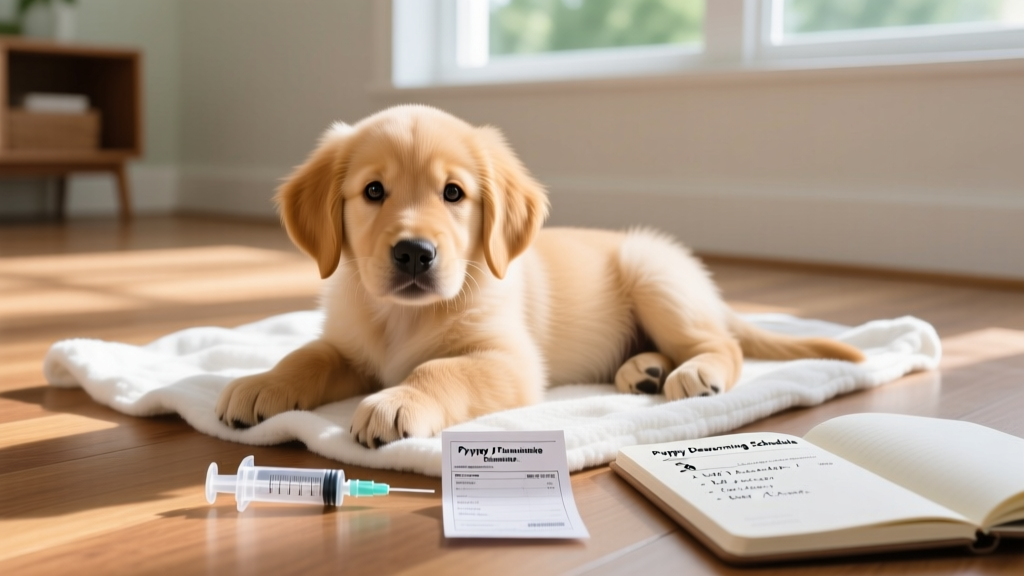
Puppy Wormer for Tapeworms: Complete Deworming & Puppy Care Timeline
Learn when to use puppy wormer for tapeworms, plus a complete age-by-age guide to feeding, vaccines, potty training, and first-year costs.

Bringing a new puppy home is thrilling — but the first few months demand precision. Among the most overlooked early-care tasks is parasite control, specifically knowing when and how to use a puppy wormer for tapeworms. Tapeworms (Dipylidium caninum) are the most common intestinal parasite puppies acquire from fleas, and standard dewormers like pyrantel pamoate do not cover them. This guide walks you through parasite prevention alongside every other critical milestone — feeding, vaccines, potty training, and socialization — so nothing falls through the cracks during your puppy's first year.
When Should I Bring My Puppy Home?
The consensus among veterinary behaviorists is clear: 8 weeks of age is the earliest a puppy should leave its mother and littermates. Many responsible breeders of toy and small breeds (Chihuahuas, Yorkshire Terriers, Pomeranians) keep puppies until 10–12 weeks to ensure adequate socialization and immune development. Larger breeds like Labrador Retrievers and German Shepherds typically go home at 8 weeks.
Before pickup day, confirm the breeder or rescue has completed:
- At least one deworming round (pyrantel pamoate at 2, 4, and 6 weeks is standard)
- First DHPP vaccine (if 6–8 weeks old)
- Fecal flotation test to check for existing parasites
- Flea treatment — critical because fleas transmit tapeworms
If your puppy arrives with visible "rice grain" segments around the anus or in bedding, these are tapeworm proglottids. You'll need a specific puppy wormer for tapeworms containing praziquantel, which we cover in detail below.
Tapeworm Treatment: Choosing the Right Puppy Wormer
Not all dewormers kill tapeworms. This is one of the most common mistakes new puppy owners make — assuming a broad-spectrum dewormer covers everything. Here's how the active ingredients break down:
| Active Ingredient | Targets | Safe for Puppies? | Common Brand Names |
|---|---|---|---|
| Praziquantel | Tapeworms (Dipylidium, Taenia) | Yes, from 4 weeks of age | Droncit, Drontal Plus |
| Pyrantel Pamoate | Roundworms, Hookworms | Yes, from 2 weeks of age | Nemex, Strongid |
| Fenbendazole | Roundworms, Hookworms, Whipworms, some Taenia | Yes, from 6 weeks of age | Panacur, Safe-Guard |
| Praziquantel + Pyrantel + Febantel | All major intestinal parasites | Yes, from 4 weeks (weight-dependent) | Drontal Plus |
According to the Merck Veterinary Manual, praziquantel is the gold standard for tapeworm treatment in dogs. A single oral dose of 5 mg/kg is typically sufficient, though reinfection is common if flea control isn't maintained simultaneously.
Age-by-Age Puppy Milestone Timeline
Here's what to expect across your puppy's first year, with concrete benchmarks rather than vague estimates.
Weeks 4–8 (Still with Breeder or Foster)
- Weight: Breed-dependent — toy breeds 1–3 lb (0.5–1.4 kg), large breeds 8–15 lb (3.6–6.8 kg)
- Deworming: Pyrantel pamoate at weeks 2, 4, 6; fecal test at week 6
- Vaccines: DHPP #1 at 6–8 weeks
- Socialization: Littermate play, human handling, exposure to household sounds
- Expected behavior: Nursing transitions to gruel/soft kibble; bite inhibition begins through sibling feedback
Weeks 8–12 (Home Transition Period)
- Weight gain: Roughly 5–10% of body weight per week depending on breed
- Deworming: If tapeworms identified, praziquantel single dose (5 mg/kg); repeat fecal at week 10
- Vaccines: DHPP #2 at 10–12 weeks; Bordetella optional at 10+ weeks
- Crate training: Introduce crate with door open; begin closing for 15–30 minutes while home
- Potty training: Take outside every 1–2 hours; expect 3–5 accidents per week
- Sleep: 18–20 hours per day is normal
Weeks 12–16 (Rapid Learning Phase)
- Vaccines: DHPP #3 at 14–16 weeks; Rabies at 12–16 weeks (legally required)
- Potty training: Accidents drop to 1–2 per week if schedule is consistent
- Crate time: Up to 3 hours during the day; 6–7 hours overnight
- Socialization window closes around week 14: Prioritize novel experiences before this deadline
- Bite inhibition: Nipping should decrease; redirect to chew toys consistently
Weeks 16–24 (Adolescence Begins)
- Teething peak: Adult teeth erupting (3–6 months); expect destructive chewing
- Spay/neuter: Typically scheduled at 5–6 months for most breeds (discuss timing with your vet — large breeds may wait until 12–18 months)
- Potty training: Most puppies are reliably house-trained by 4–6 months, though small breeds may take until 8 months
- Energy: Exercise capacity increases; structured walks of 5 minutes per month of age (e.g., 20 minutes at 4 months)
Months 6–12 (Young Adult Transition)
- Weight: Small breeds near adult size; large breeds reach 70–80% of adult weight
- Vaccines: DHPP booster at 12 months; Rabies booster per local law (1 or 3 year)
- Deworming: Quarterly fecal exams; monthly heartworm/intestinal parasite combo (Heartgard Plus, Interceptor Plus)
- Behavior: Testing boundaries, selective hearing — maintain training consistency
- Food transition: Small breeds switch to adult food at 9–12 months; large breeds at 12–18 months
Feeding Schedule: Exact Portions by Age and Weight
Feeding amounts depend on your puppy's projected adult weight and the caloric density of your chosen food. The table below uses a standard AAFCO-approved puppy kibble averaging 400 kcal/cup as a baseline. Always check your specific food's feeding chart and adjust based on body condition score (BCS) — your puppy should have a visible waist when viewed from above and ribs you can feel but not see.
| Puppy Age | Meals Per Day | Toy/Small Breed (5–20 lb adult) | Medium Breed (20–50 lb adult) | Large Breed (50–100 lb adult) |
|---|---|---|---|---|
| 8–12 weeks | 4 meals/day | ¼–½ cup/day total | ¾–1 cup/day total | 1½–2½ cups/day total |
| 3–6 months | 3 meals/day | ½–¾ cup/day total | 1–2 cups/day total | 2–4 cups/day total |
| 6–12 months | 2 meals/day | ½–1 cup/day total | 1½–2½ cups/day total | 3–5 cups/day total |
Large breed note: Feed a large-breed-specific puppy formula (calcium:phosphorus ratio of 1.1:1 to 1.4:1) to reduce risk of developmental orthopedic diseases like hip dysplasia. The AKC recommends keeping large-breed puppies lean — a BCS of 4/9 rather than 5/9.
Vaccination Schedule: Exact Weeks and Vaccine Names
| Age | Vaccine | What It Protects Against | Typical Cost |
|---|---|---|---|
| 6–8 weeks | DHPP #1 | Distemper, Hepatitis (Adenovirus), Parainfluenza, Parvovirus | $20–$40 |
| 10–12 weeks | DHPP #2; Bordetella (optional) | Same core diseases + Kennel Cough | $30–$60 |
| 14–16 weeks | DHPP #3; Rabies | Core booster + Rabies (legally mandated) | $40–$80 |
| 12 months | DHPP booster; Rabies booster | Immunity maintenance | $40–$90 |
The AVMA and AAHA (American Animal Hospital Association) classify DHPP and Rabies as core vaccines. Leptospirosis, Lyme, and Canine Influenza are non-core — your vet will recommend these based on geographic risk and lifestyle. Do not allow your puppy to interact with unknown dogs or visit dog parks until at least 7 days after the final DHPP at 14–16 weeks.
Potty Training Timeline: Realistic Expectations
Forget "potty trained in 3 days." Here's what actually happens based on bladder development and consistency:
| Age | Bladder Hold Time (Max) | Expected Accidents/Week | Training Focus |
|---|---|---|---|
| 8–10 weeks | 30–60 minutes | 5–10 | Establishing routine; take out every 30–60 min |
| 10–14 weeks | 1–2 hours | 2–5 | Verbal cue association ("go potty"); reward timing |
| 3–4 months | 2–3 hours | 1–3 | Door signaling (bell or scratch); reducing indoor cues |
| 4–6 months | 3–5 hours | 0–2 | Reliability testing; generalizing to new locations |
| 6–12 months | 5–8 hours | 0–1 | Maintenance; watch for regression during adolescence |
Troubleshooting setbacks: If accidents spike suddenly, rule out a urinary tract infection (common in female puppies) before assuming behavioral regression. A UTI urinalysis costs $30–$60 at most clinics. Also consider: did your schedule change? Did you increase crate time too fast? Puppies regress when routines shift.
Socialization Window (Weeks 3–14): Your Exposure Checklist
Research from the American Veterinary Society of Animal Behavior confirms that the primary socialization period closes around 12–14 weeks. Incomplete socialization during this window is the leading behavioral risk factor for fear-based reactivity later in life. Here's a structured checklist to work through before the window closes:
People (10+ different types)
- Children of different ages (supervised, calm interactions)
- People wearing hats, sunglasses, hoodies, masks
- People of different heights, builds, skin tones
- People using mobility aids (wheelchair, crutches, cane)
- People with deep voices, high voices, accents
Surfaces and Environments (10+ types)
- Gravel, sand, wet grass, metal grates, slippery tile
- Elevator rides, car rides (short, positive)
- Dark rooms, brightly lit rooms, rooms with echoes
- Automatic doors, revolving doors
Sounds (pair each with treats to build positive association)
- Vacuum cleaner, hair dryer, blender (start at low volume, distance)
- Thunderstorm recordings, fireworks audio (low volume, build gradually)
- Doorbell, knocking, clapping
- Car horns, sirens, construction noise (play from phone at low volume)
Handling Exercises
- Paw handling (prepare for nail trims)
- Ear touching (prepare for cleaning and exams)
- Mouth opening (prepare for tooth brushing and medication)
- Collar grabs (pair with high-value treats to prevent resource guarding)
- Being rolled gently onto back (prepare for vet exams)
Pre-vaccine safety: Before the final DHPP at 14–16 weeks, carry your puppy in public spaces rather than letting them walk on ground where unvaccinated dogs have been. You can still socialize by visiting friends' homes with known-vaccinated dogs, sitting outside shopping centers, and hosting puppy-friendly gatherings.
Teething Timeline and Safe Relief Strategies (3–6 Months)
Puppies have 28 deciduous (baby) teeth that begin erupting at 3–4 weeks and are fully in by 6–8 weeks. The 42 adult teeth begin replacing them starting at approximately 12–16 weeks, with the process completing around 6–7 months.
| Age | What's Happening | Symptoms | Safe Relief Options |
|---|---|---|---|
| 3–4 months | Incisors loosening | Increased chewing, drooling | Frozen wet washcloth (knotted), rubber KONG (puppy size) |
| 4–5 months | Canines and premolars erupting | Bleeding gums, appetite dips, nipping increases | Benebone puppy chew, frozen carrot sticks, Nylabone puppy |
| 5–7 months | Molars erupting; full adult set completing | Retained baby teeth possible (common in small breeds) | Textured dental chews (VOHC-approved), rope toys (supervised) |
Retained deciduous teeth: Small breeds — especially Chihuahuas, Pomeranians, and Yorkshire Terriers — frequently retain baby canines alongside adult teeth. If a baby tooth hasn't fallen out within 2 weeks of the adult tooth appearing, your vet will likely extract it during spay/neuter to prevent crowding and periodontal disease.
Crate Training Progression and Time Limits
The crate is your puppy's den, not a punishment tool. Maximum crated time follows a general rule: puppy's age in months + 1 = maximum hours (up to about 8 hours for adults). Here's a structured progression:
- 8–10 weeks: 30–60 minutes max while you're home; sleep in crate beside your bed at night. Expect 2–3 overnight potty breaks.
- 10–14 weeks: 1–2 hours during the day; 4–5 hours overnight (one potty break around 2–3 AM).
- 3–4 months: 2–3 hours during the day; 5–6 hours overnight (potty breaks may stop if puppy sleeps through).
- 4–6 months: 3–4 hours during the day; 7–8 hours overnight.
- 6+ months: 4–6 hours during the day is acceptable; never crate a dog for 8+ hours daily as routine.
If your puppy whines in the crate: First, rule out a potty need (take them out on leash, boring and calm). If they eliminate, they needed to go. If not, return to crate without reward or punishment. Do not let them out while actively whining — this reinforces the behavior. Wait for 3–5 seconds of silence before opening.
Common Puppy Problems and Solutions
Puppy Biting and Nipping
Every puppy mouths — it's how they explore. But unchecked nipping escalates. Use this protocol:
- When teeth touch skin, say "ouch" in a calm, neutral tone (not dramatic yelling).
- Immediately redirect to an appropriate chew toy.
- If puppy bites again within 30 seconds, stand up and leave the room for 15–30 seconds (removing attention = negative punishment in behavioral terms).
- Return and re-engage with a toy. Reward gentle play with continued interaction.
Expect 2–4 weeks of consistency before significant improvement. Never hold a puppy's mouth shut, alpha roll, or use physical punishment — these methods increase fear-based aggression according to position statements from the AVMA and AVSAB.
Excessive Chewing (Beyond Teething)
Destructive chewing between 6–12 months often signals insufficient mental stimulation, not just teething. Solutions:
- Provide 15–20 minutes of scent work or puzzle feeder meals daily
- Rotate toys every 3–4 days to maintain novelty
- Ensure adequate physical exercise (breed-appropriate duration)
- Use bitter apple spray on furniture legs as a deterrent, paired with providing acceptable alternatives nearby
Nighttime Whining
First 3–5 nights home, whining is expected — your puppy has never been alone. Place the crate in your bedroom, keep a worn t-shirt inside for your scent, and use a white noise machine or Snuggle Puppy (heartbeat toy). Gradually move the crate to the desired permanent location over 1–2 weeks.
First-Year Cost Breakdown
| Category | Low Estimate | Medium Estimate | High Estimate |
|---|---|---|---|
| Puppy purchase/adoption | $200 (rescue) | $1,500 (responsible breeder) | $4,000+ (rare breed/show) |
| Vaccinations (full puppy series) | $100 | $200 | $350 |
| Spay/neuter | $200 (low-cost clinic) | $500 | $900 (large breed, specialty) |
| Deworming (incl. tapeworm treatment) | $30 | $80 | $150 |
| Flea/tick/heartworm prevention (12 months) | $150 | $300 | $500 |
| Food (12 months) | $300 | $600 | $1,200 |
| Supplies (crate, bed, leash, bowls, toys) | $150 | $350 | $700 |
| Training (group classes or private) | $0 (DIY/YouTube) | $200 (6-week group) | $800 (private sessions) |
| Total First Year | $1,130 | $3,730 | $8,600 |
These figures do not include emergency veterinary visits. A single ER visit for parvovirus treatment can exceed $3,000–$7,000, which is why completing the vaccine series before high-risk exposure is non-negotiable. Pet insurance premiums for puppies average $30–$60/month and can offset catastrophic costs.
Frequently Asked Questions
How often should I feed my puppy at 8 weeks old?
Four meals per day, spaced roughly 4 hours apart during waking hours. For example: 7 AM, 11 AM, 3 PM, and 7 PM. Remove uneaten food after 15–20 minutes to establish a feeding routine that also aids potty training predictability (puppies typically need to eliminate 15–30 minutes after eating).
When can my puppy go outside and meet other dogs?
Your puppy can go outside in your own yard (if no unvaccinated dogs have access) immediately. For public spaces, dog parks, and playdates with unknown dogs, wait until 7 days after the final DHPP vaccine at 14–16 weeks. However, controlled socialization with known-vaccinated, healthy dogs in private settings is safe and encouraged from 8 weeks onward — the socialization window is too important to waste.
When will my puppy be fully potty trained?
Most puppies achieve reliable house training between 4–6 months of age. Toy and small breeds may take until 8–10 months due to smaller bladder capacity. "Fully trained" means zero accidents for 4+ consecutive weeks. If your puppy is still having frequent accidents past 6 months, consult your veterinarian to rule out medical causes before assuming a training failure.
How do I stop puppy biting and nipping?
Redirect to appropriate chew toys every time teeth contact skin. Use the "ouch" + withdrawal method described above. Provide at least 5 approved chew options of varying textures. Never use physical punishment — it damages trust and can escalate to defensive biting. Expect improvement within 2–4 weeks of absolute consistency from every household member.
What vaccines does my puppy need and when?
Core vaccines: DHPP series at 6–8, 10–12, and 14–16 weeks, with a booster at 12 months. Rabies at 12–16 weeks, booster per local law. Non-core vaccines (Bordetella, Leptospirosis, Lyme, Canine Influenza) depend on your geographic location and your puppy's lifestyle — your veterinarian will recommend based on risk assessment.
My puppy has tapeworms — can I treat at home?
Praziquantel is available over-the-counter in products like Bayer Expert Care Tapeworm Dewormer for Dogs, but we strongly recommend a veterinary visit first. Your vet needs to confirm the parasite type via fecal exam, determine the correct dose by weight (5 mg/kg for praziquantel), and prescribe concurrent flea treatment. OTC products are sometimes dosed incorrectly for very small puppies. A vet visit for deworming + fecal exam typically costs $50–$120.
Aaron Whyte
All our authors care for dogs every day — read more of their work on the authors page.