Puppy Play Biting Management Strategies For Families
Learn about puppy play biting management strategies for families with expert tips and data-backed advice.
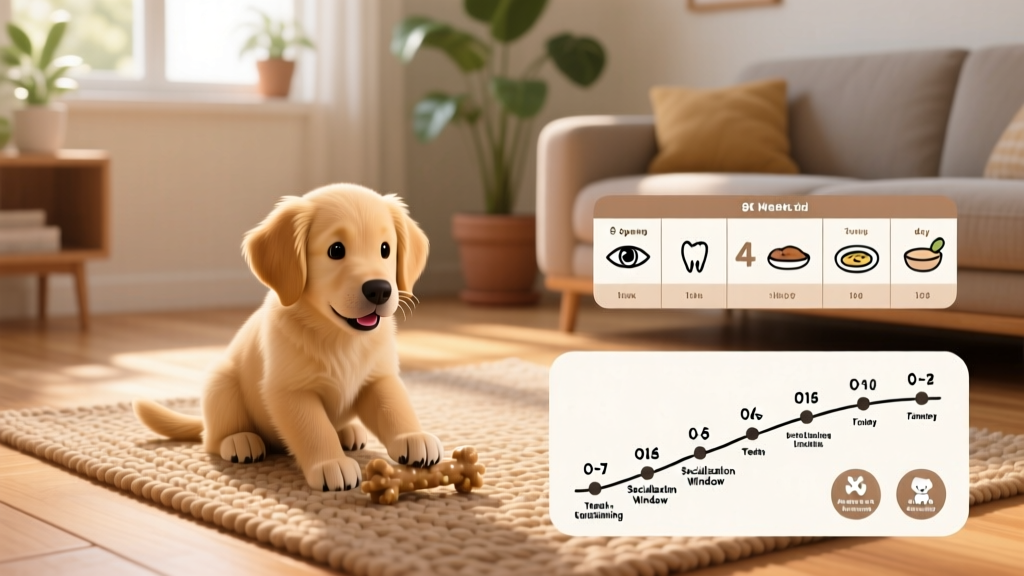
Understanding the Developmental Timeline of Play Biting
Puppy play biting is not misbehaviour—it’s a biologically driven component of early development. Between 3 and 12 weeks, puppies use their mouths to explore, communicate, and refine motor control. This period coincides with rapid neurological growth: by week 4, the puppy’s cerebellum has matured enough to support coordinated jaw movements, enabling precise mouthing during social play. By week 6, bite inhibition begins to emerge as littermates yelp and withdraw—natural feedback that shapes gentle interaction.
Weekly Milestones: What to Expect From Week 3 to Week 16
Development progresses in tightly choreographed windows. The American Veterinary Medical Association (AVMA, 2022) identifies these critical periods as non-reversible opportunities for behavioural shaping. Missing them can increase lifelong reactivity risk.
Weeks 3–5: Sensory Awakening & Litter-Based Learning
Puppies open their eyes around day 12–14 and begin hearing by day 18. During this time, they learn bite thresholds through littermate interactions. If removed before week 6, they miss vital feedback—studies at the University of Pennsylvania School of Veterinary Medicine show that puppies separated before 7 weeks are 3.2× more likely to display persistent mouthing past 6 months.
Weeks 6–8: Human Socialisation Window Opens
This is the peak sensitive period for human bonding and bite inhibition training. Puppies should meet ≥100 people by week 12 (ASPCA, 2021). Each positive interaction reinforces calm mouth use. At week 7, deciduous teeth are fully erupted—sharp but temporary—and chewing peaks. Provide chilled rubber toys—not frozen—to soothe gums without risking enamel damage.
Weeks 9–12: Structured Play & Environmental Enrichment
By week 10, puppies process cause-and-effect faster: if biting stops play, they begin associating mouth control with continued engagement. Introduce short (5-minute), supervised sessions with children aged 8+ under adult supervision—never toddlers alone. At week 12, most puppies have shed 12–14 baby teeth; permanent incisors start emerging, causing discomfort that may increase mouthing.
Nutrition and Its Direct Impact on Mouthing Behaviour
Dietary factors influence energy regulation and oral comfort. Puppies require 3–4 meals daily until 4 months, then transition to 2 meals. Overfeeding increases restlessness and oral fixation; underfeeding triggers resource-guarding behaviours including possessive nipping. Caloric needs vary by breed: a 5 kg Labrador puppy needs ~750 kcal/day at 10 weeks, while a 2 kg Chihuahua requires only ~320 kcal (National Research Council, 2006).
Calcium-to-phosphorus ratios must stay between 1.2:1 and 1.4:1 to support healthy tooth development. Diets exceeding 3.0 g/MJ calcium—common in some “all-life-stage” kibbles—can accelerate dental eruption and exacerbate gum sensitivity. Always consult your veterinarian before switching foods, especially if mouthing intensifies after diet changes.
Practical Management Strategies That Work
Effective intervention combines redirection, consistency, and environmental design—not punishment. Start at first sign of biting (often week 5–6), not after it escalates.
- Use “ouch!” vocalisation paired with immediate cessation of play—no eye contact, no touching—for 10–15 seconds. Repeat each time biting occurs.
- Offer two chew options simultaneously: one textured (e.g., knotted rope), one cool (e.g., damp washcloth frozen for 20 minutes—not solid ice).
- Rotate toys weekly to maintain novelty—boredom increases mouthing frequency by up to 40% (Cornell University College of Veterinary Medicine, 2019).
- Limit free-roaming time to ≤2 hours daily until bite inhibition is reliable; confine to puppy-proofed zones with designated chew zones.
- Enrol in certified puppy classes by week 8—ideally at facilities like the San Francisco SPCA or Tufts Foster Hospital for Small Animals, where trainers use force-free protocols aligned with AVMA guidelines.
Veterinary Oversight and When to Seek Help
While play biting typically declines by 16–20 weeks, certain red flags warrant prompt veterinary assessment:
- Biting persists beyond 22 weeks despite consistent management
- Puppy draws blood regularly or targets ankles/hands aggressively (not just playful nips)
- No yelping or withdrawal when bitten—suggesting impaired pain perception or neurological concern
- Sudden onset after week 12, especially with lethargy or appetite change
- Asymmetrical jaw movement or reluctance to chew hard kibble
A full oral exam should occur at 8, 12, and 16 weeks. Veterinarians at the Ohio State University Veterinary Medical Center routinely screen for retained deciduous teeth—a condition affecting 1 in 5 small-breed puppies—that causes discomfort and increases biting frequency. Early extraction prevents malocclusion and reduces mouthing stress.
Remember: play biting is not dominance. It’s neurodevelopmental work. A puppy’s jaw strength doubles between weeks 8 and 12; what felt like a nip at 8 weeks becomes physically impactful by 12. Consistent, science-informed responses build trust—not fear.
Feeding Schedule by Age and Weight
Consistency supports stable energy and reduces oral frustration. Adjust portions based on weight gain trends—not just age.
| Age | Meals/Day | Calories/kg/day | Sample Portion (5 kg puppy) | Key Note |
|---|---|---|---|---|
| 8 weeks | 4 | ~220 kcal/kg | ~1.1 cups premium kibble | Introduce water-soaked kibble for easier chewing |
| 12 weeks | 3 | ~180 kcal/kg | ~0.9 cups | Monitor stool consistency—soft stools indicate overfeeding |
| 16 weeks | 2–3 | ~150 kcal/kg | ~0.75 cups | Begin gradual transition to adult food if large-breed |
At 16 weeks, puppies sleep 18–20 hours daily—including 3–4 naps lasting 30–90 minutes. Sleep deprivation increases irritability and mouthing incidents by 27%, per data from the Royal Veterinary College’s 2020 longitudinal study of 214 family-raised puppies.
Early socialisation isn’t optional—it’s neurological necessity. The UK’s Dogs Trust reports that puppies attending certified classes before week 12 are 63% less likely to develop fear-based aggression later. Pair this with daily 10-minute “touch tolerance” sessions: gently handle paws, ears, and mouth while offering high-value treats. This builds acceptance of handling—critical when vet visits or grooming begin.
Play biting fades when puppies learn alternatives—not when they’re corrected into submission. Every “ouch” followed by quiet withdrawal teaches cause-and-effect. Every chew toy offered instead of fingers reinforces choice. Every nap respected honours developmental need. These aren’t tricks—they’re respectful stewardship of a vulnerable, rapidly maturing brain.
At Cornell University’s Animal Behaviour Clinic, researchers observed that families using structured redirection (not punishment) saw bite inhibition reliably established by week 14 in 89% of cases—versus 52% in groups relying solely on verbal correction. The difference wasn’t effort; it was precision.
By week 20, most puppies retain only subtle mouthing during high-arousal play—like chasing or greeting. If biting remains frequent or painful, revisit your veterinarian. Underlying issues—such as chronic ear infections (common in floppy-eared breeds), dental pain, or anxiety disorders—may masquerade as behavioural problems.
Support your puppy’s journey with patience grounded in evidence—not folklore. Their mouth is how they learn the world. Your response determines whether that tool becomes gentle—or guarded.
“Bite inhibition isn’t taught—it’s co-constructed through thousands of tiny, repeated interactions where the puppy discovers that softness earns connection, and pressure ends it.” — Dr. Melissa Bain, UC Davis School of Veterinary Medicine, 2020
Track progress weekly: note duration of biting episodes, contexts (e.g., post-nap, during greetings), and success rate of redirection attempts. Use a simple log—paper or app—to identify patterns. Most families see measurable improvement within 10–14 days of consistent implementation. If regression occurs, reassess sleep, diet, and environmental stressors before adjusting technique.
At the Angell Animal Medical Center in Boston, behaviour teams recommend pairing bite management with foundational cues like “leave it” and “take it”—taught using positive reinforcement only. These skills transfer directly to real-world safety, such as resisting dropped food or ignoring wildlife during walks.
Remember: you’re not training obedience—you’re guiding neurodevelopment. Every calm interaction strengthens neural pathways for self-regulation. And every puppy who learns to choose gentleness does so because their humans understood timing, biology, and kindness—not because they were forced to comply.
priya-sutaria
All our authors care for dogs every day — read more of their work on the authors page.


