2026 Service Dog Puppy Socialization: Public Access Guide
Discover the 2026 protocols for raising a mobility service dog puppy, focusing on joint-safe conditioning and public access desensitization.
The Foundation of a Mobility Service Dog Puppy
Raising a mobility or psychiatric service dog puppy is a profound responsibility that extends far beyond basic pet obedience. In 2026, the landscape of working dog development has evolved significantly, incorporating advanced canine cognitive science and updated veterinary orthopedics. Unlike a standard household pet, a future service dog must possess an unshakable temperament, exceptional environmental neutrality, and the physical stamina to assist a handler with disabilities. According to Assistance Dogs International (ADI), the attrition rate for service dog candidates remains high, often due to inadequate early socialization or preventable orthopedic injuries during the critical growth phases. Therefore, implementing a structured, science-backed puppy care protocol from day one is essential for success.
The American Kennel Club emphasizes that early exposure to diverse environments is the cornerstone of a reliable working dog. However, for mobility service dogs, this exposure must be carefully curated to include medical environments, mobility aids, and complex auditory landscapes. This comprehensive guide outlines the definitive 2026 protocols for raising a service dog puppy, focusing on joint preservation, public access desensitization, and cognitive enrichment.
Joint-Safe Physical Conditioning for Growing Puppies
One of the most critical mistakes novice handlers make is over-exercising a working breed puppy in an attempt to build stamina. Breeds commonly selected for mobility work, such as Labrador Retrievers, Golden Retrievers, and German Shepherds, are prone to hip and elbow dysplasia. The American Veterinary Medical Association (AVMA) notes that a puppy's growth plates remain open and vulnerable to repetitive stress until they are fully mature, which can be anywhere from 14 to 24 months depending on the breed.
The 2026 Protocol for Paw and Joint Care
To protect your future working dog's orthopedic foundation, adhere to the following conditioning rules during the first year:
- The 5-Minute Rule: Limit structured, leashed walking to five minutes per month of age, twice a day. A 12-week-old puppy should only engage in 15 minutes of continuous leashed walking per session.
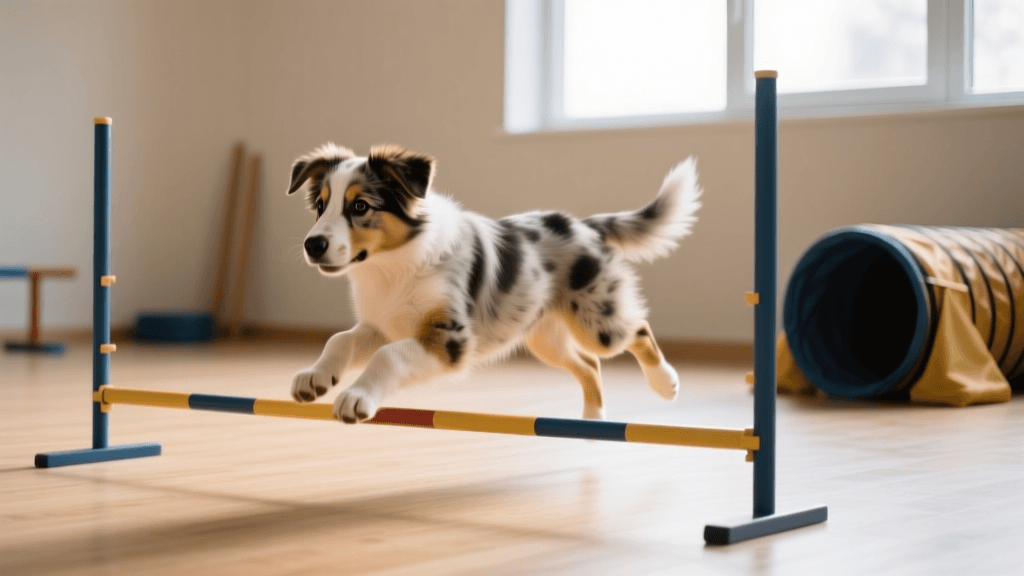
- Avoid Repetitive Impact: Strictly prohibit fetching frisbees, jumping into vehicles, or running on hard pavement. Use ramps for all vehicle and bed entries.
- Surface Variation: Walk your puppy on diverse, yielding surfaces such as grass, sand, and dirt trails to build proprioception and strengthen the small stabilizing muscles around the joints without causing impact trauma.
- Paw Pad Conditioning: Apply a high-quality, veterinary-approved paw wax weekly to prevent cracking and build resilience against hot asphalt and freezing winter salts.
Diet and Nutrition for Working Breed Puppies
Proper nutrition is the fuel that drives both physical growth and cognitive development. In 2026, veterinary nutritionists emphasize the importance of feeding large-breed puppies a diet specifically formulated to control their growth rate. Rapid growth can lead to developmental orthopedic diseases such as osteochondritis dissecans (OCD) and hypertrophic osteodystrophy (HOD).
Look for a puppy food that meets the Association of American Feed Control Officials (AAFCO) guidelines for large-breed growth. The calcium-to-phosphorus ratio should be strictly maintained between 1.1:1 and 1.4:1. Avoid supplementing with extra calcium or vitamin D, as this can disrupt the natural bone remodeling process. Feed your puppy three measured meals a day until they are six months old, then transition to two meals a day to maintain stable blood sugar levels, which is crucial for maintaining focus during long public access training sessions.
Public Access Socialization: Beyond Basic Obedience
A pet dog needs to be comfortable around other dogs and people. A service dog must be entirely indifferent to crutches, wheelchairs, oxygen tanks, dropped medications, and sudden loud noises. The American Kennel Club (AKC) stresses that public access training is not about teaching a dog to perform tricks in public; it is about teaching the dog to remain calm, focused, and unobtrusive in chaotic environments.
The Medical Desensitization Plan
Future mobility dogs must not exhibit fear or prey drive toward medical equipment. Begin desensitization at home using positive reinforcement:
- Mobility Aids: Lean crutches against the wall in the puppy's play area. Reward the puppy for sniffing the rubber tips. Gradually progress to walking with the crutches, dropping them intentionally, and rewarding the puppy for remaining relaxed.
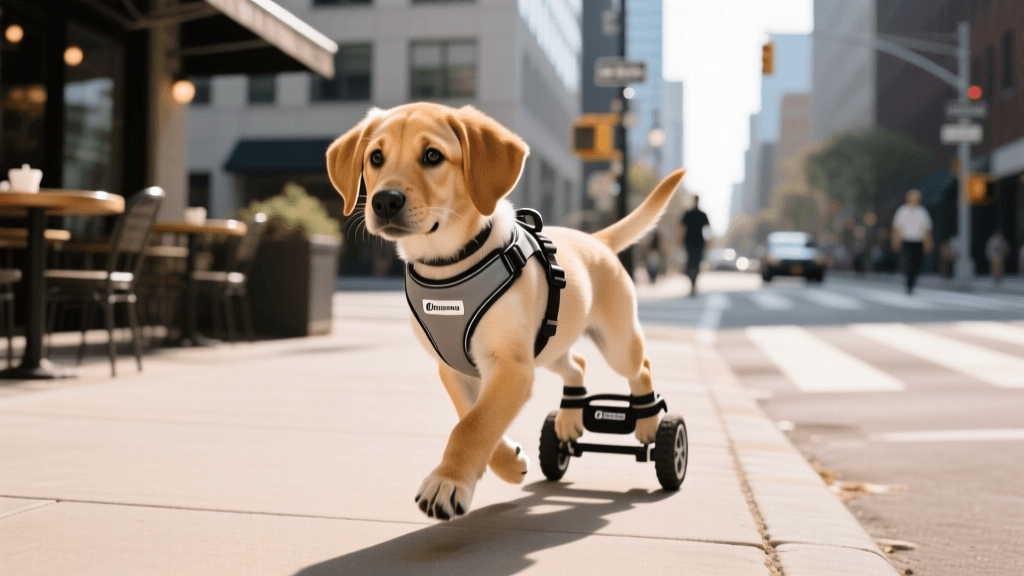
- Wheelchairs and Scooters: If you or a family member uses a wheelchair, allow the puppy to investigate it while it is stationary. Use high-value treats to create a positive association with the sound of the motor and the movement of the wheels.
- Dropped Items: Service dogs are often tasked with retrieving dropped items. Practice dropping safe objects (like a plastic pill bottle or a set of keys) and rewarding the puppy for investigating rather than startling.
- Auditory Neutrality: Play recordings of hospital alarms, dropping metal trays, and automatic door chimes at a low volume while feeding the puppy. Gradually increase the volume over several weeks.
8-Week to 16-Week Public Access Schedule
Follow this structured timeline to safely introduce your puppy to public environments without overwhelming their developing nervous system:
- 8 to 10 Weeks: Focus on the home environment, veterinary clinics, and quiet outdoor patios. Introduce different floor textures (tile, linoleum, grates) and the sound of medical equipment.
- 10 to 12 Weeks: Visit outdoor shopping centers, hardware stores (which typically allow leashed dogs), and quiet parks. Practice settling on a training mat while the handler sits on a bench.
- 12 to 14 Weeks: Introduce public transit (buses or trains) during off-peak hours. Practice elevator rides and proximity to escalators. Begin interacting with strangers who are using canes or walkers.
- 14 to 16 Weeks: Navigate complex auditory environments such as food courts, pharmacies, and grocery stores. Focus on maintaining eye contact with the handler despite heavy foot traffic and shopping carts.
Essential Gear for Service Dog Puppy Rearing in 2026
Equipping your puppy with the correct gear is vital for safety, communication, and physical development. The following table outlines the top recommended equipment for service dog candidates in 2026.
| Gear Type | Brand / Model | Purpose | Est. Cost | Key Feature |
|---|---|---|---|---|
| Body Harness | Ruffwear Web Master | Early body awareness and safe vehicle loading | $90 | Dual leash attachment points and padded handle |
| GPS Tracker | Whistle Go (2026 Ed.) | Real-time location and health monitoring | $130 | Integrated escape alerts and activity tracking |
| Training Mat | Kurgo Ruffwear Mat | Teaching the settle and place commands | $45 | Non-slip backing and machine washable |
| Puzzle Toy | Outward Hound Dog Brick | Cognitive enrichment and problem-solving | $25 | Multiple difficulty levels to prevent boredom |
| High-Value Treats | Zuke's Mini Naturals | Rapid reinforcement in high-distraction areas | $15 | Low calorie (under 3 kcal) to prevent obesity |
Cognitive Enrichment and Problem Solving
Working dogs are bred to think, analyze, and solve problems. A bored puppy will develop destructive habits and anxiety, which are immediate disqualifiers for service work. Mental fatigue is just as important as physical exercise. In 2026, canine behaviorists strongly advocate for shaping behaviors rather than simply luring them.
Use a clicker to mark desired behaviors and encourage your puppy to figure out what earns the reward. For example, place a cardboard box on the floor and click for any interaction with the box—looking at it, sniffing it, pawing it, and eventually stepping inside it. This builds a confident, creative thinker who will not panic when faced with a novel task in the field. Incorporate daily scent work by hiding treats around the living room, allowing the puppy to use their nose to hunt for their meals.
Tracking Milestones with Modern Canine Tech
Documentation is a legal and practical necessity for service dog handlers. Maintain a detailed digital journal tracking your puppy's socialization outings, including the location, duration, environmental triggers, and the puppy's stress levels. Many handlers in 2026 utilize specialized canine training apps to log these metrics, which can be invaluable if you ever need to prove your dog's public access training history to a landlord or business owner.
Additionally, utilize the health monitoring features on modern GPS collars to track your puppy's sleep quality and daily activity levels. A sudden drop in activity or restless sleep can be an early indicator of illness or joint pain, allowing you to consult your veterinarian before a minor issue becomes a career-ending injury.
Conclusion
Raising a mobility service dog puppy requires immense dedication, patience, and a strict adherence to modern veterinary and behavioral protocols. By prioritizing joint safety, executing a meticulous medical desensitization plan, and providing robust cognitive enrichment, you lay the groundwork for a reliable, resilient partner. Remember that the goal of the first year is not perfection, but the cultivation of a confident, neutral, and eager-to-work canine companion ready to navigate the complexities of the human world.
robin-maitland
All our authors care for dogs every day — read more of their work on the authors page.