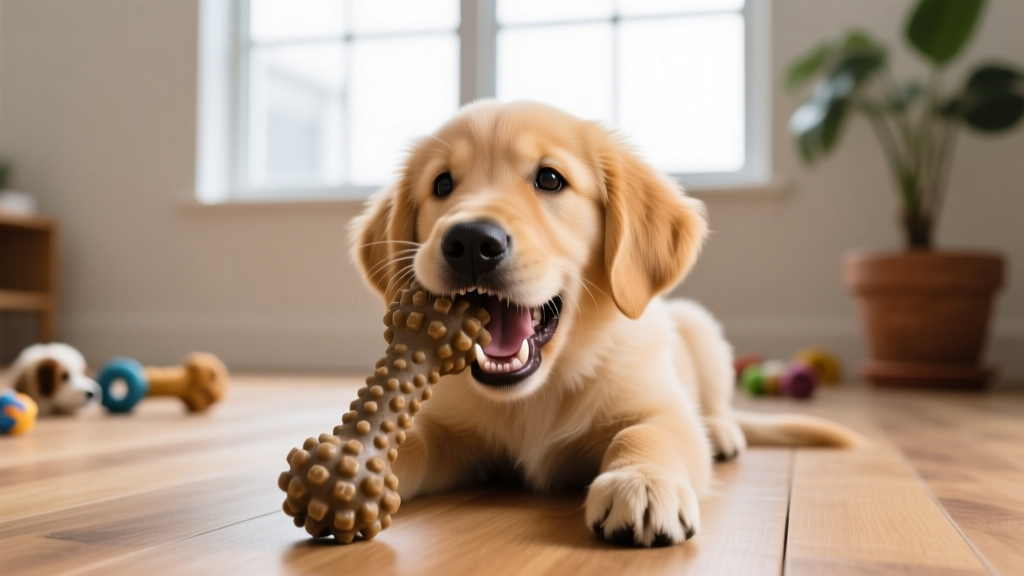
Adorable Golden Retriever Puppies: Week-by-Week Growth & Care Guide
Everything you need to raise adorable golden retriever puppies: milestones, feeding schedules, vaccination timelines, potty training, and first-year costs.

Golden Retrievers consistently rank among the top three most popular breeds in the United States, and for good reason. Those adorable golden retriever puppies grow into gentle, intelligent, deeply loyal companions. But behind those floppy ears and wagging tails is a puppy-raising journey that demands preparation, patience, and breed-specific knowledge.
This guide walks you through every developmental stage from the moment you bring your Golden home through their first birthday — with exact feeding amounts, vaccination weeks, crate time limits, and realistic cost expectations for 2026.
When to Bring Your Golden Retriever Puppy Home
The American Kennel Club recommends puppies stay with their littermates and dam until at least 8 weeks of age. For Golden Retrievers specifically, many reputable breeders hold puppies until 8 to 10 weeks. This extra time allows critical bite inhibition learning from siblings and reduces separation anxiety later.
Before pickup day, have these ready:
- A 36-inch wire crate (they'll grow into it; use a divider panel for the first months)
- Stainless steel bowls — 2-quart capacity minimum for food and water
- Puppy-specific large-breed formula kibble (match what the breeder feeds for a gradual transition)
- Enzymatic cleaner for accidents (Nature's Miracle or Rocco & Roxie)
- A martingale collar with ID tag and a 6-foot nylon leash
Golden Retriever Puppy Milestones: Weeks 4 Through 12 Months
Understanding what's developmentally normal at each stage prevents unnecessary panic and helps you set realistic expectations.
Weeks 4–8 (With the Breeder)
Eyes and ears fully open by week 4. Puppies begin weaning onto soft kibble mush. Littermate play teaches bite inhibition — yelping siblings signal when bites are too hard. By week 7, puppies can learn their name and basic recall with food rewards. Weight range: 4–10 lb (1.8–4.5 kg).
Weeks 8–12 (Home Transition)
Expect crying the first 2–3 nights in the crate. Bladder capacity is roughly 1 hour per month of age (so a 2-month-old holds it about 2 hours max). Weight gain accelerates: expect 2–2.5 lb (0.9–1.1 kg) per week. This is the peak socialization window — expose your puppy to 100+ new experiences before week 14.
Weeks 12–16 (Learning Phase)
Attention span extends to 5–10 minute training sessions. Puppies can learn sit, down, touch, and loose-leash walking basics. Fear periods may occur around week 12 — sudden skittishness toward previously familiar objects is normal. Weight: 20–30 lb (9–14 kg).
Weeks 16–24 (Adolescent Awkwardness)
Teething peaks between 4–6 months. You'll find baby teeth on the floor. Chewing intensity increases — provide frozen Kong toys stuffed with peanut butter (xylitol-free). Males may begin leg-lifting behavior. Weight: 35–55 lb (16–25 kg).
Months 6–12 (Teenage Phase)
Sexual maturity arrives. Spay/neuter is typically performed between 6–12 months (discuss timing with your vet — the AVMA recommends individualized timing for large breeds). Energy remains high but focus improves. Males reach 55–70 lb (25–32 kg); females reach 50–65 lb (23–29 kg) by month 12.
Feeding Schedule for Golden Retriever Puppies
Golden Retrievers are large-breed dogs, which means their growth rate must be carefully managed. Rapid growth increases the risk of hip dysplasia and elbow dysplasia. Always feed a food labeled for large-breed puppies — these formulas contain controlled calcium and phosphorus ratios (calcium at 1.0–1.6% on a dry matter basis per Merck Veterinary Manual).
| Age | Meals Per Day | Approx. Cups Per Day (Large-Breed Puppy Kibble) | Expected Weight |
|---|---|---|---|
| 8–12 weeks | 3–4 | 1.5–2 cups | 10–20 lb (4.5–9 kg) |
| 3–4 months | 3 | 2–3 cups | 20–30 lb (9–14 kg) |
| 4–6 months | 2–3 | 3–4 cups | 30–50 lb (14–23 kg) |
| 6–12 months | 2 | 3.5–5 cups | 50–70 lb (23–32 kg) |
These amounts assume a kibble with approximately 350–400 kcal/cup. Always check your specific food's feeding chart and adjust based on body condition score — you should feel ribs without pressing hard, and see a visible waist from above.
How often should I feed my puppy at each age? Three to four small meals daily until 12 weeks, then three meals until 4 months, then transition to two meals by 6 months. Free-feeding leads to rapid weight gain in Goldens, which stresses developing joints.
Vaccination Schedule: Protecting Your Puppy
Golden Retriever puppies receive maternal antibodies from colostrum that gradually wane. Vaccinations are timed to fill immunity gaps. Your veterinarian will tailor this schedule, but the standard protocol follows AVMA guidelines:
| Age (Weeks) | Vaccines Administered | Notes |
|---|---|---|
| 6–8 | DHPP (Distemper, Hepatitis, Parainfluenza, Parvovirus) | First dose; may include Bordetella |
| 10–12 | DHPP booster + Bordetella + Leptospirosis (if recommended) | Lifestyle-dependent; discuss with vet |
| 14–16 | DHPP final booster + Rabies (at 12–16 weeks per state law) | Full immunity ~2 weeks after final DHPP |
| 12 months | DHPP booster + Rabies booster | Then every 1–3 years depending on vaccine type |
When can my puppy go outside and meet other dogs? Until your puppy has completed the full DHPP series (typically 16 weeks), avoid high-risk areas like dog parks, pet store floors, and unknown dogs. You can carry your puppy into public spaces, visit vaccinated friend's dogs, and walk on your own property. The socialization window closes around 14 weeks, so controlled exposure is essential during this vulnerable period.
Socialization Checklist: The Critical 3-to-14-Week Window
The AKC emphasizes that the primary socialization period for puppies runs from approximately 3 to 14 weeks. What your Golden Retriever puppy experiences — or doesn't experience — during this window shapes their adult temperament permanently.
Golden Retriever Puppy Socialization Checklist
Aim for positive, reward-based exposure to as many of these as possible before week 14:
- Surfaces: Grass, gravel, sand, wet pavement, metal grates, wooden decks, tile floors
- Sounds: Vacuum cleaner, thunderstorm recordings (low volume), doorbell, traffic, children laughing, clippers, hair dryer
- People: Tall men, children under 5, people in hats/sunglasses, delivery workers, wheelchair users, people with canes
- Handling: Paw touching, ear inspection, mouth opening, nail trimming simulation, being held on side, collar grabbing
- Animals: Fully vaccinated adult dogs (calm temperament), cats (supervised), livestock if rural
- Environments: Car rides, vet clinic lobby (happy visit, no shots), pet-friendly store parking lot, outdoor café, friend's house
- Objects: Umbrellas opening, plastic bags rustling, brooms, bicycles, skateboards, balloons
Pair every new experience with high-value treats (boiled chicken, cheese bits). If your puppy shows fear, increase distance and reduce intensity — never force exposure.
Potty Training Timeline and Realistic Expectations
Golden Retrievers are generally eager to please, which helps with house training — but their large bladders take time to mature. Here's what to actually expect:
When will my puppy be fully potty trained? Most Golden Retriever puppies achieve reliable house training between 4 and 6 months of age, though occasional accidents are normal until 8–10 months. Some males take longer, especially if marking behavior emerges.
| Age | Max Bladder Hold Time | Potty Trip Frequency | What to Expect |
|---|---|---|---|
| 8–10 weeks | 1–2 hours | Every 30–60 min when awake | Multiple accidents daily; normal |
| 10–14 weeks | 2–3 hours | Every 1–2 hours | Fewer accidents if schedule is consistent |
| 3–4 months | 3–4 hours | Every 2–3 hours | Starts signaling (whining, circling at door) |
| 4–6 months | 4–6 hours | Every 3–4 hours | Reliable with routine; occasional regression possible |
| 6–12 months | 6–8 hours | Every 4–6 hours | Fully trained barring UTI or marking issues |
Troubleshooting common potty problems:
- Submissive urination when greeted: Ignore your puppy for the first 30 seconds upon entering. Greet calmly at their level without leaning over them. This resolves by 6–8 months for most Goldens.
- Nighttime accidents: Remove water 2 hours before bedtime. Set a 3 AM alarm for puppies under 12 weeks. Take them directly outside on leash, no play, then back to crate.
- Regression after seeming trained: Rule out urinary tract infection with your vet. Then revisit basics — increase potty frequency for one week and reward heavily.
Crate Training Progression and Time Limits
A crate is your Golden's safe den — not a punishment space. Introduce it with the door open, meals inside, and treat scatter games from day one.
Maximum crate time by age:
- 8–10 weeks: 30–60 minutes during the day; 2–3 hours overnight (expect one potty break)
- 10–14 weeks: 1–2 hours during the day; 4–5 hours overnight
- 3–4 months: 2–3 hours during the day; 5–6 hours overnight
- 4–6 months: 3–4 hours during the day; 6–7 hours overnight
- 6–12 months: 4–5 hours during the day; up to 8 hours overnight
Golden Retrievers are social dogs. Crating beyond these limits leads to anxiety, whining, and destructive behavior when released. If you work full-time, arrange a midday dog walker or puppy daycare by 4 months of age.
Teething Timeline and Safe Relief Strategies
Golden Retriever puppies begin losing baby teeth around 12–16 weeks, with adult teeth fully erupted by 6–7 months. This is the peak destructive chewing phase.
Safe Teething Relief Options
- Kong Classic (red, size Medium for puppies over 25 lb): Stuff with canned pumpkin (plain, not pie filling) and freeze for 2 hours. Provides 20–30 minutes of soothing chewing.
- Benebone Wishbone (puppy formula): Softer nylon designed for developing teeth. Replace when edges become sharp or pieces chip off.
- Frozen washcloth: Wet a clean washcloth, twist into a rope, freeze. Supervise use — remove when pieces start tearing off.
- West Paw Toppl: Interlocking treat toy that can be frozen. Dishwasher safe.
Avoid: Raw bones (splintering risk, tooth fractures), ice cubes (can crack teeth in powerful chewers like Goldens), and any toy small enough to swallow whole.
Common Golden Retriever Puppy Problems and Solutions
How do I stop puppy biting and nipping? Golden Retrievers are mouthy by nature — they were bred to carry game softly. Puppy nipping peaks between 8–16 weeks and gradually decreases with consistent management:
- When teeth touch skin, say "ouch" in a calm voice and immediately withdraw attention for 10–15 seconds (stand up, turn away, or step behind a baby gate).
- Redirect to an appropriate chew toy the moment you re-engage.
- Ensure your puppy gets 2–3 structured play sessions daily — overtired puppies bite more, not less.
- Teach "leave it" and "drop it" using positive reinforcement with high-value trade-ups.
Excessive whining in the crate: Distinguish between protest whining (ignore; it extinguishes within 3–7 nights) and potty whining (take outside immediately if it's been 2+ hours). A Snuggle Puppy heartbeat toy (~$35–45) helps many Golden puppies settle during the first week.
Destructive chewing: Goldens explore the world with their mouths. Puppy-proof by removing shoes, remote controls, and children's toys from floor level. Provide a rotation of 5–7 approved chew toys to maintain novelty. A Kong Wobbler filled with kibble provides 15–20 minutes of mental stimulation that reduces boredom chewing.
First-Year Cost Breakdown for a Golden Retriever Puppy
Budgeting accurately prevents surprises. These estimates reflect 2026 pricing for a single Golden Retriever puppy in the United States:
| Category | Low Estimate | Mid Estimate | High Estimate |
|---|---|---|---|
| Puppy purchase (responsible breeder) | $2,000 | $3,000 | $5,000+ |
| Veterinary (vaccines, spay/neuter, exams, heartworm test) | $600 | $900 | $1,400 |
| Food (large-breed puppy formula, 12 months) | $500 | $750 | $1,100 |
| Supplies (crate, bed, bowls, leash, collar, toys, grooming tools) | $300 | $500 | $800 |
| Training (group classes + puppy kindergarten) | $150 | $350 | $700 |
| Preventive medications (flea/tick, heartworm — 12 months) | $250 | $400 | $600 |
| Pet insurance (optional but recommended) | $400 | $600 | $900 |
| Total First Year | $4,200 | $6,500 | $10,500 |
Golden Retrievers are predisposed to hip dysplasia, elbow dysplasia, and certain cardiac conditions. Pet insurance purchased during puppyhood (before any pre-existing conditions develop) typically costs $40–75/month and can offset the $3,000–$7,000 cost of hip surgery if needed later in life.
Frequently Asked Questions
When should I start grooming my Golden Retriever puppy?
Begin handling your puppy's paws, ears, and mouth from week one at home. Schedule the first professional grooming visit around 12–16 weeks (after initial vaccinations) for a "puppy intro" session — bath, light brush, nail trim, and positive exposure to dryers and clippers. Goldens need brushing 3–4 times per week at home to prevent matting in their feathering (chest, legs, tail). A slicker brush and undercoat rake are essential tools.
How much exercise does a Golden Retriever puppy need?
Follow the 5-minutes-per-month-of-age rule: a 4-month-old gets roughly 20 minutes of structured exercise per day, split into two sessions. Avoid forced running, jumping from heights, or repetitive fetch on hard surfaces until growth plates close (12–18 months). Free play in a fenced yard doesn't count toward this limit — let them self-regulate.
Should I get pet insurance for my Golden Retriever puppy?
Strongly recommended. Golden Retrievers have a higher-than-average cancer rate (hemangiosarcoma, lymphoma) and orthopedic risks. Enrolling at 8–10 weeks, before any conditions are documented, ensures the broadest coverage. Compare providers like Trupanion, Healthy Paws, and Embrace — look for policies covering hereditary conditions without per-incident caps.
My Golden puppy is eating everything outside — is this normal?
Yes, Goldens are notorious scavengers. Teach "leave it" and "drop it" immediately. On walks, scan the ground ahead and redirect before they pick up items. If your puppy ingests something potentially toxic (chocolate, xylitol, rodenticide, grapes/raisins), call the ASPCA Animal Poison Control Center at (888) 426-4435 immediately (a consultation fee applies) and head to your nearest emergency vet.
Veterinary Disclaimer
This guide provides general educational information. Every puppy is an individual. Always consult your veterinarian before making decisions about vaccination schedules, diet changes, medication, or spay/neuter timing. Your vet knows your puppy's specific health history and local disease risks.
Aaron Whyte
All our authors care for dogs every day — read more of their work on the authors page.