Doxie Puppies: The Complete Week-by-Week Growth & Care Guide
Everything you need to raise healthy doxie puppies: week-by-week milestones, feeding charts, potty training timelines, vaccination schedules, and first-year costs.

Dachshund puppies — affectionately called doxie puppies — are among the most recognizable dogs on the planet. Those oversized paws, impossibly long bodies, and bold personalities make them irresistible. But raising a doxie puppy comes with breed-specific challenges that generic puppy guides simply don't address: fragile spines prone to intervertebral disc disease (IVDD), a stubborn streak that tests even experienced owners during potty training, and a socialization window that demands intentional exposure work before 14 weeks of age.
This guide walks you through every critical stage from 4 weeks to 12 months, with exact feeding portions, vaccination timing, crate training limits, and realistic cost expectations. Whether you're picking up your puppy from a responsible breeder or bringing home a rescue doxie, you'll find actionable specifics — not vague generalities.
When Should You Bring a Doxie Puppy Home?
The ideal age to bring a Dachshund puppy home is 8 to 10 weeks. Reputable breeders registered with the American Kennel Club will not release puppies before 8 weeks because the critical litter-socialization period (weeks 5-8) teaches bite inhibition, canine body language, and hierarchy through sibling interaction.
Bringing a doxie puppy home before 8 weeks increases the risk of:
- Resource guarding — puppies removed too early often develop food or toy possessiveness because they missed the natural sharing dynamics of litter play
- Separation anxiety — Dachshunds are already predisposed to velcro-dog behavior; early removal amplifies attachment insecurity
- Poor bite inhibition — siblings teach each other how hard is too hard; humans are poor substitutes for this feedback loop
If you're adopting from a rescue and the puppy is available at 6-7 weeks due to surrender circumstances, don't feel guilty — just compensate with extra structured socialization and supervised puppy playdates starting at 10 weeks.
Doxie Puppy Milestones: Week-by-Week Timeline
Dachshunds mature at a slightly different pace than many breeds. Their long spine and short legs mean physical milestones (stairs, jumping, long walks) need careful management to protect developing vertebrae.
Weeks 4-8: The Litter Socialization Window
At this stage, your puppy is still with the breeder. Eyes and ears are fully functional, baby teeth are erupting, and the puppy is learning canine communication through play. The breeder should be introducing:
- Varied floor textures (tile, carpet, grass) to build confidence on different surfaces
- Gentle handling of paws, ears, and mouth to prepare for grooming and vet exams
- First solid food introduction (gruel consistency) around week 4, transitioning to soft kibble by week 6
- First deworming at 2, 4, 6, and 8 weeks per Merck Veterinary Manual parasite protocols
Weeks 8-12: Home Adjustment and Bonding
This is when your doxie puppy arrives home. Expect:
- Weight: 2-5 lb (0.9-2.3 kg) depending on miniature vs. standard variety
- Sleep: 18-20 hours per day — puppies this age need frequent naps
- Bladder capacity: approximately 1 hour per month of age (so a 2-month-old needs a potty break every 2 hours, including overnight)
- First vet visit: schedule within 48-72 hours of pickup for a wellness exam and fecal test
Weeks 12-16: Confidence Building and Foundation Training
- Weight: 4-8 lb (1.8-3.6 kg)
- Teething begins: baby teeth start loosening around 12-14 weeks
- Training readiness: attention span extends to 5-10 minute sessions; ideal time to introduce "sit," "come," and name recognition using food lures
- Fear imprint period (8-11 weeks) ends: traumatic experiences during this window can create lasting phobias — handle vet visits and grooming introductions with high-value treats and calm energy
Weeks 16-24: The Adolescent Shift
- Weight: 8-16 lb (3.6-7.3 kg) for standard; 5-8 lb (2.3-3.6 kg) for miniature
- Adult teeth: fully erupted by 6 months (42 teeth)
- Spay/neuter window: most veterinarians recommend 6 months for Dachshunds, though some orthopedic specialists advocate waiting until 9-12 months for growth plate closure — consult your veterinarian for your individual dog
- Energy surge: expect increased chewing, mouthing, and testing of household rules
Months 6-12: Approaching Maturity
- Weight: approaching adult size — standard Dachshunds reach 16-32 lb (7.3-14.5 kg); miniatures reach 8-11 lb (3.6-5 kg)
- Exercise: can begin longer leash walks (20-30 minutes), but avoid repetitive stair climbing, jumping on/off furniture, and agility equipment until 12-14 months when growth plates close
- Behavior: adolescent regression is normal — commands your puppy "knew" at 4 months may seem forgotten; stay consistent with positive reinforcement
Feeding Schedule: Exact Portions by Age and Weight
Dachshunds are prone to obesity, which directly accelerates IVDD and joint degeneration. Overfeeding a doxie puppy is one of the most common — and most damaging — mistakes new owners make. Use this chart as a starting point and adjust based on your puppy's body condition score (you should feel ribs without pressing hard, and see a visible waist from above).
| Puppy Age | Meals Per Day | Daily Portion (Standard Doxie) | Daily Portion (Miniature) | Food Type |
|---|---|---|---|---|
| 8-12 weeks | 4 meals | ½ to ¾ cup | ⅓ to ½ cup | Puppy kibble, softened with warm water |
| 3-6 months | 3 meals | ¾ to 1 cup | ½ to ⅔ cup | Dry puppy kibble |
| 6-12 months | 2 meals | 1 to 1¼ cups | ⅔ to ¾ cup | Transition to adult food at 10-12 months |
Food selection criteria: Choose an AAFCO-certified small-breed puppy formula. Look for a named animal protein as the first ingredient (chicken, lamb, or salmon), minimum 22% protein and 8% fat for growth, and kibble sized for small mouths. Brands consistently meeting these standards include Royal Canin Dachshund Puppy, Hill's Science Diet Small Paws Puppy, and Purina Pro Plan Small Breed Puppy.
Transition tip: When switching foods (from breeder's brand to your choice), mix 25% new food with 75% old food for 3 days, then 50/50 for 3 days, then 75/25 for 3 days. Sudden changes cause diarrhea — and with a doxie puppy's small digestive tract, diarrhea can escalate to dehydration quickly.
Vaccination Schedule for Doxie Puppies
Dachshund puppies follow the standard core vaccine protocol, but their small size means vaccine reactions — while uncommon — deserve extra monitoring. Ask your vet about splitting combination vaccines across two visits if your puppy has shown sensitivity.
| Age | Vaccine | Notes |
|---|---|---|
| 6-8 weeks | DHPP (Distemper, Hepatitis, Parainfluenza, Parvovirus) — 1st dose | Often given by breeder before pickup |
| 10-12 weeks | DHPP — 2nd dose + Bordetella (optional) | Bordetella recommended if attending puppy classes |
| 14-16 weeks | DHPP — 3rd dose + Rabies | Rabies required by law in most US states |
| 12-16 months | DHPP booster + Rabies booster | Then every 1-3 years per local regulations |
Lifestyle vaccines to discuss with your veterinarian:
- Leptospirosis: recommended if you live in areas with standing water, wildlife exposure, or urban rat populations
- Lyme disease: recommended in the Northeast, Upper Midwest, and Pacific Coast where Ixodes ticks are prevalent
- Canine influenza (H3N2/H3N8): recommended if your puppy will be boarded, attend daycare, or participate in dog sports
Potty Training Your Doxie Puppy: Timeline and Troubleshooting
Here's the honest truth that many Dachshund resources downplay: doxie puppies are among the most difficult breeds to house-train. Their small bladders, stubborn temperament, and sensitivity to cold or wet weather mean that realistic potty training timelines stretch to 4-6 months for reliable daytime control and up to 8-12 months for full overnight reliability. Some Dachshunds never achieve 100% reliability in bad weather without a covered potty area.
When will my puppy be fully potty trained? Expect accidents until at least 5-6 months. "Fully trained" for a Dachshund means fewer than 1-2 accidents per month by 8 months, not zero accidents at 3 months.
Potty Training Schedule by Age
| Age | Potty Break Frequency | Overnight Expectation |
|---|---|---|
| 8-10 weeks | Every 1-2 hours + after every meal, nap, and play session | 1-2 overnight wake-ups expected |
| 10-14 weeks | Every 2-3 hours | 1 overnight break still needed |
| 3-4 months | Every 3-4 hours | May sleep 5-6 hours overnight |
| 5-6 months | Every 4-5 hours | Sleeping 7-8 hours overnight (most puppies) |
Dachshund-Specific Potty Training Tips
- Use a consistent door and verbal cue ("go potty" or "do your business") — Dachshunds respond well to routine and pattern recognition
- Rain gear investment: many doxies refuse to go outside in rain. A covered potty patch on a balcony or porch, or a dog raincoat, can prevent weather-related regression
- Bell training: hang a bell on the door handle and teach your puppy to ring it — Dachshunds' intelligence makes them quick learners for this technique
- Enzymatic cleaner is non-negotiable: use Nature's Miracle or Rocco & Roxie on every accident spot. Regular household cleaners don't eliminate the uric acid crystals that dogs can smell, leading to repeat accidents in the same location
- Never punish accidents: rubbing a puppy's nose in it or yelling creates fear of eliminating in front of you, leading to hiding behind furniture to potty — a common Dachshund problem
Socialization Window: Weeks 3-14 Exposure Checklist
The primary socialization period for puppies closes around 14 weeks. For doxie puppies — a breed prone to wariness of strangers, reactivity to other dogs, and noise sensitivity — this window is absolutely critical. Under-socialized Dachshunds develop fear-based barking, lunging, and biting at rates significantly higher than well-exposed puppies.
Before full vaccination, carry your puppy in a sling or backpack for exposures rather than placing them on public ground where parvovirus risk exists.
Do you need to socialize before vaccines are complete?
Yes — carefully. The AVMA and the American Veterinary Society of Animal Behavior both recommend socialization begin before full vaccination, with appropriate precautions (avoiding dog parks and high-traffic areas until the final DHPP at 14-16 weeks).
Socialization Exposure Checklist
- ☐ Surfaces: grass, gravel, tile, metal grates, wet pavement, sand, carpet, stairs (carry up/down to protect spine until 12+ months)
- ☐ People: men with beards, people wearing hats/sunglasses, children (supervised), people in wheelchairs, delivery workers, people carrying umbrellas
- ☐ Sounds: vacuum cleaner, doorbell, thunderstorm recordings (start at low volume with treats), traffic, construction, fireworks audio, clapping
- ☐ Animals: vaccinated adult dogs (playdates), cats (supervised), livestock if rural, birds
- ☐ Handling: paw touching, ear inspection, mouth opening, nail clipping simulation, being lifted and held, harness and collar application
- ☐ Environments: car rides (short trips to fun destinations), pet-friendly stores, outdoor cafés, vet clinic waiting room (positive visits with treats, no procedures), groomer's table
- ☐ Objects: open umbrellas, plastic bags blowing, balloons, bicycles, skateboards, trash cans
Rule of thumb: aim for 5-10 new positive experiences per week during the 8-14 week window. Pair every new stimulus with high-value treats (boiled chicken, cheese bits) so your puppy builds positive associations.
Crate Training Progression and Time Limits
Crate training is especially valuable for doxie puppies because it accelerates potty training (dogs avoid soiling their sleeping space) and prevents destructive chewing during unsupervised hours. Dachshunds' burrowing instinct actually makes them natural crate enthusiasts — they love enclosed, den-like spaces.
| Puppy Age | Maximum Crate Time (Day) | Maximum Crate Time (Night) |
|---|---|---|
| 8-10 weeks | 1-2 hours | 2-3 hours (set alarm) |
| 11-14 weeks | 2-3 hours | 3-4 hours |
| 3-4 months | 3-4 hours | 5-6 hours |
| 5-6 months | 4-5 hours | 7-8 hours |
Crate sizing for Dachshunds: Get a crate sized for your puppy's expected adult weight. For standard Dachshunds, a 24-inch crate works; for miniatures, an 18-22 inch crate. Use a divider panel in a larger crate during puppy months — the space should be just large enough for the puppy to stand, turn around, and lie down. Too much space invites pottying in one corner and sleeping in another.
Making the crate appealing: Feed meals inside the crate, provide a frozen Kong stuffed with puppy-safe peanut butter (xylitol-free — xylitol is highly toxic to dogs), and drape a blanket over the top to create a den feel. Dachshunds love to burrow, so a soft blanket inside satisfies this instinct.
Teething Timeline and Relief Strategies
Doxie puppies begin losing baby teeth around 12-14 weeks, with the process completing by 6 months. The peak discomfort period — and peak destructive chewing — occurs between 3 and 5 months.
Signs your doxie puppy is teething:
- Increased chewing on furniture, shoes, hands, and cords
- Visible gaps where baby teeth have fallen out
- Bloody drool or blood-tinged chew toys (normal in small amounts)
- Reluctance to eat hard kibble (soften with warm water during peak discomfort)
- Whining or pawing at the mouth
Safe chew recommendations by stage:
- 3-4 months: frozen wet washcloths (knot one end, soak in water, freeze), Nylabone Puppy Chew (soft texture), Benebone Puppy Wishbone
- 4-6 months: Kong Classic Puppy (rubber, stuff with frozen yogurt and blueberries), bully sticks (supervised only — remove when small enough to swallow), Earth Animal No-Hide chews
- Avoid: rawhide (choking and intestinal blockage risk), antlers and weight-bearing bones (tooth fracture risk for small jaws), any chew small enough to swallow whole
Common Doxie Puppy Problems and Solutions
Puppy Biting and Nipping
Dachshund puppies were bred to grab and shake prey (badgers, rabbits), so mouthing and nipping are deeply ingrained behaviors. How do you stop puppy biting?
- Redirect to a toy: when teeth touch skin, say "ouch" in a calm voice, withdraw attention for 10 seconds, then offer an appropriate chew toy
- Time-outs: if nipping continues after 2-3 redirects, calmly place the puppy in a playpen for 30-60 seconds to reset — this is not punishment, it's removing the reward (your attention)
- Satisfy the prey drive: flirt pole sessions (wand toy with a lure dragged along the ground) give doxie puppies an outlet for their grab-and-shake instinct without using human hands
- Never use physical punishment: holding the mouth shut, alpha rolling, or tapping the nose increases fear and can escalate to defensive biting. Force-free, positive reinforcement methods are the only approach supported by the American Veterinary Society of Animal Behavior
Excessive Whining and Crying
Dachshunds are vocal dogs. Puppy whining peaks during the first 2-3 weeks home and typically stems from:
- Separation distress: gradual desensitization to alone time (start with 5 minutes, build to 30 minutes over weeks) prevents full-blown separation anxiety
- Potty urgency: whining at the crate door often means they need to go out — respond immediately to reinforce the communication
- Overtiredness: paradoxically, overtired puppies cry more. Enforce nap times in the crate if your puppy has been awake for more than 2 hours
Destructive Chewing
Beyond teething, doxie puppies chew out of boredom and scent-seeking behavior (they're hounds). Solutions:
- Rotate toys weekly to maintain novelty — a box of 15 toys, with 4-5 available at a time, keeps interest high
- Provide scent-work enrichment: snuffle mats, treat-stuffed Kongs, and cardboard box shredding (supervised) satisfy the Dachshund's hunting instincts
- Puppy-proof at doxie height: anything within 18 inches of the floor is fair game — secure cords, shoes, and small objects
First-Year Cost Breakdown for a Doxie Puppy
Budgeting realistically prevents surrender and ensures your puppy gets proper care. These figures reflect 2026 US pricing ranges for a standard or miniature Dachshund.
| Category | Low Estimate | High Estimate | Details |
|---|---|---|---|
| Puppy purchase/adoption | $300 (rescue) | $3,500 (AKC breeder) | Show-line and rare colors (dapple, English cream) command premium |
| Veterinary care (year 1) | $500 | $1,200 | 3-4 wellness visits, vaccines, fecal tests, spay/neuter ($300-$600) |
| Food | $250 | $500 | Premium small-breed puppy formula, ~$30-$50/month |
| Supplies (initial) | $200 | $500 | Crate, bed, harness (not collar — harnesses protect the spine), leash, bowls, toys, gates |
| Training | $0 (self-guided) | $600 | Group puppy class ($150-$250), private sessions ($75-$125/hour) |
| Pet insurance (annual) | $350 | $700 | Strongly recommended for Dachshunds due to IVDD risk (surgery: $3,000-$8,000) |
| Preventives (flea/tick/heartworm) | $200 | $400 | NexGard, Simparica Trio, or similar — year-round in most US regions |
| TOTAL First Year | $1,800 | $7,400 | Excluding emergency veterinary care |
Why pet insurance matters for Dachshunds: IVDD affects approximately 25% of Dachshunds during their lifetime, typically between ages 3-7. Surgical treatment for a herniated disc ranges from $3,000 to $8,000 per episode. Enrolling your puppy in a policy like Trupanion, Healthy Paws, or Fetch while they're young (before any back symptoms appear) ensures coverage for this breed-defining condition. Pre-existing condition exclusions mean waiting until symptoms appear is too late.
When Can Your Doxie Puppy Go Outside and Meet Other Dogs?
This is one of the most common questions new doxie puppy owners ask, and the answer requires balancing disease risk against socialization urgency.
- Private yard: safe immediately if no unknown dogs have access to the yard
- Carried outings (sling/backpack): safe immediately — expose your puppy to the sights and sounds of the world without ground contact
- Public sidewalks and parks: wait until 1 week after the final DHPP vaccine at 14-16 weeks (approximately 15-17 weeks of age)
- Puppy classes: many veterinary behaviorists recommend starting at 10-12 weeks (after the second DHPP) in controlled environments where all puppies are vaccinated — the socialization benefit outweighs the low disease risk in these settings
- Dog parks: avoid entirely until at least 16-17 weeks (full vaccination) and ideally until 6+ months when your puppy has developed confidence and recall skills. Dog parks carry high risk for a small, long-backed breed — a single rough interaction with a larger dog can cause spinal injury
Frequently Asked Questions About Doxie Puppies
How often should I feed my 10-week-old doxie puppy?
Four meals per day, spaced roughly 4 hours apart during waking hours (e.g., 7 AM, 11 AM, 3 PM, 7 PM). Each meal should be approximately 2-3 tablespoons of high-quality small-breed puppy kibble, softened with warm water. Remove uneaten food after 15-20 minutes to establish meal-time routines rather than free-feeding.
My doxie puppy keeps biting my ankles — is this normal?
Yes, and it's especially common in herding-adjacent and terrier-type breeds like Dachshunds. Ankle-biting is a combination of prey drive (moving feet trigger the chase instinct) and teething discomfort. Redirect to a tug toy, and avoid walking away quickly (which escalates the chase). Instead, stop moving entirely — a stationary target is boring to a puppy. Reward calm walking beside you with treats at ankle level.
Should I use a collar or harness for my doxie puppy?
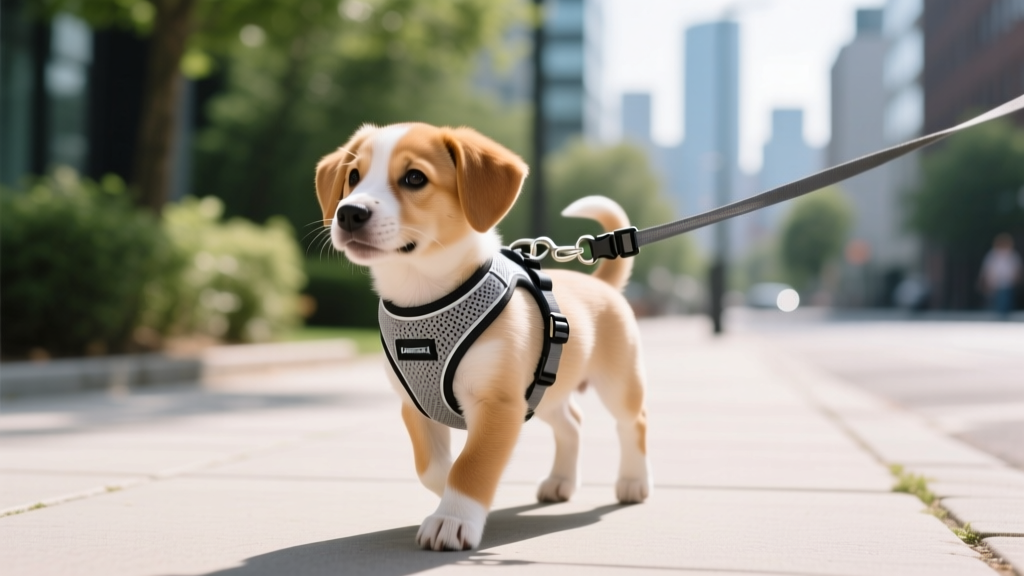
Always use a harness for leash walking. Dachshunds' long spines make them vulnerable to tracheal and cervical damage from collar pressure, especially when they pull. A front-clip harness (like the Ruffwear Front Range or Blue-9 Balance Harness) redirects pulling sideways and distributes pressure across the chest. Reserve collars for ID tags only.
How do I know if my doxie puppy is a miniature or standard?
The AKC standard defines miniature Dachshunds as 11 lb (5 kg) or under at maturity, and standard Dachshunds as 16-32 lb (7.3-14.5 kg). At 8 weeks, miniature puppies typically weigh 2-3 lb while standard puppies weigh 4-5 lb. Your breeder should know the expected size based on the parents' weights. There is no separate "tweenie" AKC classification, though some breeders use the term informally for dogs in the 12-15 lb range.
When should I start grooming my doxie puppy?
Introduce handling (paw touching, ear inspection, brushing) from week one home. For smooth-coated Dachshunds, weekly brushing with a rubber grooming mitt is sufficient. Wirehaired varieties need hand-stripping or clipping every 6-8 weeks starting around 6 months. Longhaired Dachshunds need brushing 3-4 times per week to prevent matting behind the ears and on the leg feathering. Professional grooming visits should start by 4-5 months as positive, treat-rewarded experiences — not full haircuts, just getting comfortable on the grooming table.
Can doxie puppies eat human food?
Some human foods are safe as occasional treats (plain cooked chicken, blueberries, carrots, plain pumpkin), but many are toxic. Never feed grapes, raisins, onions, garlic, macadamia nuts, chocolate, xylitol (found in sugar-free gum and peanut butter), or cooked bones. Treats should not exceed 10% of daily caloric intake. Always consult your veterinarian before making significant dietary changes or introducing supplements.
Raising a doxie puppy is a rewarding but demanding commitment. Their intelligence, loyalty, and clownish personalities make them extraordinary companions — but their spinal fragility, stubbornness during training, and long puppyhood require patience and informed care. Bookmark this guide, revisit each section as your puppy grows, and always consult your veterinarian when health questions arise. Your doxie is counting on you to make decisions that protect that long, wonderful spine for the 12-16 years you'll share together.
Anouk Beaumont
All our authors care for dogs every day — read more of their work on the authors page.