Alaskan Malamute Puppy: Complete Week-by-Week Care Guide
Complete Alaskan Malamute puppy guide covering milestones, feeding schedules, vaccination timelines, potty training, socialization, and first-year costs.
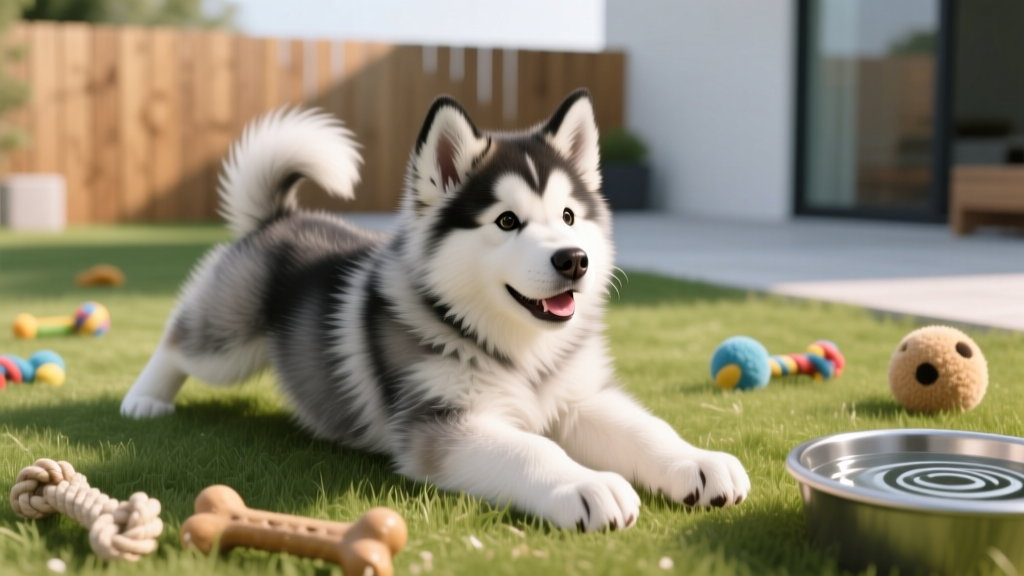
Bringing home an Alaskan Malamute puppy means signing up for one of the most rewarding—and demanding—experiences in dog ownership. These Arctic-origin working dogs grow rapidly, think independently, and test every boundary you set. Generic puppy advice won't cut it here. Malamute puppies have breed-specific nutritional needs tied to their large-frame growth curve, a narrow socialization window that shapes their lifelong temperament, and exercise restrictions that protect developing joints prone to hip dysplasia.
This guide maps out exactly what to expect from week 4 through month 12, with concrete numbers for feeding, crate time, vaccination dates, and training milestones. Whether you're on a breeder's waitlist or have your deposit down, use this as your operating manual.
When Should You Bring Your Alaskan Malamute Puppy Home?
The American Kennel Club and most responsible breeders agree: 8 weeks is the earliest acceptable age to bring a Malamute puppy home, and many reputable breeders hold puppies until 9 or even 10 weeks. Here's why the extra week or two matters for this breed specifically:
- Weeks 6–8: Littermate interactions teach bite inhibition. Malamutes are mouthy dogs by nature—puppies that leave too early miss critical feedback from siblings about how hard is too hard.
- Week 7–8 fear period: A developmental fear imprint window peaks around week 8. A skilled breeder manages the puppy's environment during this time to avoid single-event trauma that can create lasting phobias.
- First vaccination: Most breeders administer the first DHPP (distemper, hepatitis, parainfluenza, parvovirus) shot at 6–8 weeks. Bringing a puppy home before this first vaccine leaves a dangerous immunity gap.
Alaskan Malamute Puppy Milestones: Week by Week
Malamute puppies develop on a predictable timeline, but their large-breed growth rate means joint protection and calorie management start early. Here's what each developmental window looks like in practical terms.
Weeks 4–8 (Still With the Breeder)
- Eyes and ears fully functional; puppy responds to name and simple sounds
- Deciduous teeth (28 total) fully erupted—chewing behavior intensifies
- Solid food introduced: breeders typically offer high-quality large-breed puppy kibble softened with warm water, 3–4 small meals daily
- Weight range: 8–15 lb (3.6–6.8 kg) depending on litter size and genetics
- First deworming protocol typically complete (pyrantel pamoate at 2, 4, and 6 weeks)
Weeks 8–12 (Home Transition & Bonding)
- Expect 2–4 nights of crying in the crate—this is normal separation from littermates
- Puppy begins recognizing household routines; keep feeding, potty, and sleep times rigidly consistent
- Weight gain: roughly 2–3 lb (0.9–1.4 kg) per week during this phase
- Attention span: 2–5 minutes per training session, maximum
- Introduce collar and lightweight leash indoors; do not force outdoor walks yet due to incomplete vaccination
Weeks 12–16 (Confidence Building & Rules)
- Fear period often hits around 12–14 weeks—puppy may suddenly react to previously normal stimuli (trash cans, shadows, loud noises) with cowering or barking
- Do not force exposure; let puppy observe from a distance and reward calm behavior
- Weight: 25–35 lb (11–16 kg); growth plates remain wide open
- Begin structured training: sit, down, recall, and "drop it" using food lures and marker words
- Exercise limit: 5 minutes of structured walking per month of age (so ~15 minutes max at 3 months)
Weeks 16–24 (Adolescence Begins)
- Teething peaks around 4–5 months—expect destroyed shoes, baseboards, and furniture legs without proper chew management
- Adult teeth (42 total) push in; baby teeth should fall out naturally. Retained deciduous teeth are common in large breeds and may need veterinary extraction if they haven't shed by 6 months
- Weight: 35–55 lb (16–25 kg); you'll see long-legged, gangly proportions
- Independence surges: recall reliability often drops. Keep your Malamute on a long line (15–30 ft) in unfenced areas
- Begin leash manners training with a front-clip harness (e.g., Ruffwear Front Range) before pulling habits cement
Months 6–12 (Juvenile to Young Adult)
- Sexual maturity: females may experience first estrus (heat) between 6–10 months; males begin marking and showing interest in intact females
- Discuss spay/neuter timing with your veterinarian—current large-breed research from UC Davis suggests delaying until 12–18 months to allow growth plate closure and reduce joint disorder risk
- Weight: males reach 50–70 lb (23–32 kg), females 40–55 lb (18–25 kg) by 12 months, though full adult weight (males 75–85 lb, females 65–75 lb) isn't reached until 18–24 months
- Exercise capacity increases but avoid repetitive high-impact activities (jogging on pavement, agility jumps) until growth plates close, typically around 14–18 months—confirmed via veterinary X-ray
- Coat transition: the puppy coat begins shedding around 8–10 months, replaced by the dense double coat Malamutes are known for. Invest in an undercoat rake (e.g., Furminator Large Short Hair or Chris Christensen Big G slicker brush)
Feeding Schedule: Exact Portions by Age and Weight
Malamute puppies need a large-breed puppy formula—not standard puppy food. Large-breed formulas are restricted in calcium (1.0–1.8% on a dry matter basis) and phosphorus to prevent developmental orthopedic diseases like hypertrophic osteodystrophy and osteochondrosis. The Merck Veterinary Manual outlines why excess calcium and rapid growth directly contribute to skeletal abnormalities in large and giant breeds.
Recommended foods that meet AAFCO large-breed puppy growth standards include Purina Pro Plan Large Breed Puppy, Royal Canin Giant Puppy, or Hill's Science Diet Large Breed Puppy. Feed measured amounts—free-feeding a Malamute puppy almost guarantees overeating and excess weight on developing joints.
| Age | Meals Per Day | Estimated Cups/Day (Large Breed Puppy Kibble) | Expected Weight Range |
|---|---|---|---|
| 8–12 weeks | 3–4 | 1.5–2.5 cups | 15–22 lb (7–10 kg) |
| 3–4 months | 3 | 2.5–3.5 cups | 22–35 lb (10–16 kg) |
| 5–6 months | 2–3 | 3.5–4.5 cups | 35–50 lb (16–23 kg) |
| 7–9 months | 2 | 4–5.5 cups | 50–65 lb (23–29 kg) |
| 10–12 months | 2 | 4.5–5.5 cups | 60–75 lb (27–34 kg) |
Important: These are starting points. Adjust based on your puppy's body condition score (BCS). You should be able to feel ribs without pressing hard, and see a visible waist when looking from above. A BCS of 4–5 out of 9 is ideal for a growing Malamute. Consult your veterinarian if you're unsure—most vets will assess BCS during wellness visits at no extra charge.
Vaccination Schedule for Your Alaskan Malamute Puppy
Your puppy's vaccination protocol follows a standard timeline, but Malamutes in areas with high parvovirus prevalence (the southern US, urban environments) may need an extended series. Your veterinarian will tailor this based on local disease risk. Always consult your veterinarian for the exact protocol appropriate for your area.
| Age | Vaccine | What It Protects Against |
|---|---|---|
| 6–8 weeks | DHPP (1st dose) | Distemper, Adenovirus (hepatitis), Parainfluenza, Parvovirus |
| 10–12 weeks | DHPP (2nd dose) | Booster for above; immunity still incomplete |
| 10–12 weeks | Bordetella (optional, recommended if attending puppy classes) | Kennel cough (Bordetella bronchiseptica) |
| 14–16 weeks | DHPP (3rd dose) | Final puppy booster; full immunity develops ~2 weeks after |
| 14–16 weeks | Rabies (required by law) | Rabies virus; timing varies by state (some require 12 weeks minimum) |
| 12–16 months | DHPP + Rabies booster | First adult booster; then every 1–3 years per local law and vet recommendation |
Non-core vaccines to discuss with your vet: Leptospirosis (especially if your Malamute will hike near standing water or live in areas with wildlife), Lyme disease (tick-endemic regions like the Northeast and Upper Midwest), and canine influenza (H3N2/H3N8) if your dog will be in boarding or daycare settings.
Socialization Window: Weeks 3–14 Exposure Checklist
The primary socialization period for puppies closes between 12 and 14 weeks. After this window, unfamiliar stimuli trigger fear rather than curiosity. For Alaskan Malamutes—a breed with strong prey drive, same-sex dog aggression tendencies, and wariness of strangers—this window is arguably the single most important investment you'll make.
Aim for positive exposure to 100 new experiences before 14 weeks. "Positive" means the puppy is relaxed or curious, not overwhelmed. If your puppy tucks their tail, freezes, or tries to flee, increase distance and let them observe. Reward calm attention with small treats (Zuke's Mini Naturals or kibble pieces work well).
Socialization Checklist for Malamute Puppies
| Category | Specific Exposures |
|---|---|
| Surfaces | Gravel, wet grass, metal grates, wooden decks, tile floors, sand, snow |
| Sounds | Vacuum cleaner, thunderstorms (play recordings at low volume), car horns, doorbells, children shouting, clippers |
| People | Men with beards, people wearing hats/sunglasses, children under 5, elderly people with walkers, people in uniforms, delivery drivers |
| Animals | Fully vaccinated adult dogs (various sizes), cats (supervised), livestock if accessible (Malamutes have high prey drive—early exposure helps) |
| Handling | Ear touching, paw handling, mouth opening, nail clipping practice, being held on side (grooming prep), wearing a harness |
| Environments | Car rides (short, positive), pet-friendly store parking lots, outdoor café patios, veterinary clinic (happy visits with treats, no procedures) |
| Objects | Umbrellas opening, plastic bags rustling, bicycles passing, skateboards, lawn mowers at a distance |
Breed-specific priority: Malamutes have a well-documented prey drive toward small animals. Introduce your puppy to cats, rabbits, and small dogs in calm, controlled settings during this window. It won't eliminate prey drive entirely—this is genetics—but early positive association reduces reactive chasing later. Always supervise Malamute-cat interactions regardless of early socialization.
Potty Training Timeline: Realistic Expectations
Alaskan Malamutes are not notoriously difficult to house-train compared to some breeds, but their physical bladder capacity and your consistency determine the timeline. Here's what's realistic:
- 8–10 weeks: Accidents every 1–2 hours. You are taking the puppy out, not waiting for them to signal.
- 10–14 weeks: Beginning to hold for 2–3 hours during the day; may wake once at night to eliminate.
- 4–5 months: Holding 3–4 hours during the day; sleeping through the night (6–8 hours) becomes common.
- 6–7 months: Reliable during the day with access every 4–5 hours; occasional accidents if routine changes.
- Fully reliable: Most Malamute puppies are consistently house-trained by 6–8 months, though males may begin leg-lifting and marking indoors around this age—manage with supervision and interruption, not punishment.
The protocol that works:
- Take puppy to the same outdoor spot immediately after waking, eating, drinking, playing, and every 1–2 hours otherwise.
- Use a consistent cue word ("go potty" or "do your business") while they eliminate, then reward immediately with a treat and verbal praise.
- Between outings, puppy is either supervised 100% (eyes on them) or in their crate. Unsupervised roaming guarantees accidents.
- Clean accidents with an enzymatic cleaner (Nature's Miracle or Rocco & Roxie) to eliminate scent markers that attract repeat elimination.
Troubleshooting Common Potty Problems
- Submissive/excitement urination: Common in young Malamutes when greeting people. Ignore the puppy for the first 30 seconds of arrival, greet calmly at their level, and avoid direct eye contact until they settle. Do not scold—this worsens the behavior.
- Crate accidents: If your puppy soils the crate, the crate may be too large (they eliminate in one corner and sleep in another). Use a divider to limit space to just enough room to stand, turn, and lie down.
- Regression at 4–5 months: Often coincides with teething discomfort or a fear period. Return to a tighter supervision schedule for 1–2 weeks.
Crate Training Progression and Time Limits
A crate is essential for Malamute puppies. These are powerful, intelligent dogs who will dismantle your home without confinement training. Start the day you bring them home and build duration gradually.
| Age | Maximum Crate Time (Daytime) | Maximum Crate Time (Overnight) |
|---|---|---|
| 8–10 weeks | 1–2 hours | 3–4 hours (set alarm for potty break) |
| 11–14 weeks | 2–3 hours | 5–6 hours |
| 4–5 months | 3–4 hours | 7–8 hours |
| 6+ months | 4–5 hours | 8 hours |
Progression steps:
- Week 1: Crate door open, feed meals inside, toss treats in, let puppy nap in it voluntarily. Place crate in your bedroom at night so the puppy doesn't feel isolated.
- Week 2: Close door during meals, open immediately after. Begin 5-minute closed-door sessions while you sit nearby.
- Week 3: Extend to 15–30 minutes while you remain in the room but don't interact. Practice leaving the room for 1–2 minutes.
- Week 4+: Build duration in increments of 15–30 minutes. Always exercise and potty the puppy before crating. Provide a safe chew (frozen Kong stuffed with puppy-safe peanut butter—verify xylitol-free—or a Benebone puppy chew).
Crate sizing: Purchase a 42-inch or 48-inch wire crate (e.g., MidWest iCrate or Frisco Double Door) with an adjustable divider panel. Your adult male Malamute will likely need the 48-inch size (dog should stand without head touching top, turn around, and stretch out). The divider lets you grow the space as the puppy grows, preventing the too-large-crate potty problem.
Teething Timeline and Relief Strategies
Malamute puppies begin losing their 28 deciduous teeth around 3.5–4 months, with the process typically complete by 6–7 months. During this window, chewing is not misbehavior—it's a physiological need. The gums are inflamed, and pressure from biting relieves pain.
Teething Phases
- 3–4 months: Incisors loosen first. You may find tiny teeth in bedding or toys. Drooling increases.
- 4–5 months: Canines and premolars shed. Chewing intensity peaks. This is when baseboards, furniture, and hands become targets.
- 5–7 months: Molars erupt. Some puppies develop "retained deciduous teeth" (baby tooth doesn't fall out while adult tooth comes in alongside it). If a double tooth persists past 2 weeks, your vet may need to extract the baby tooth under brief sedation to prevent misalignment.
Safe Chew Recommendations
- Frozen washcloths: Wet a clean washcloth, twist into a rope, freeze. The cold numbs gums and the texture satisfies chewing. Supervise to prevent swallowing fabric pieces.
- Kong Classic (puppy rubber, pink or blue): Stuff with a mix of plain yogurt and mashed banana, then freeze. Provides 20–30 minutes of focused chewing.
- Nylabone Puppy Chew (soft flex material): Designed for deciduous teeth; harder adult Nylabones can fracture puppy teeth.
- Bully sticks (6-inch, odor-free): Highly digestible single-ingredient chew. Supervise and remove when it becomes small enough to swallow whole.
- Carrots (whole, large): Cold, crunchy, low-calorie. Most puppies gnaw rather than bite through.
Common Malamute Puppy Problems and Solutions
Puppy Biting and Nipping
Malamute puppies are among the most mouthy breeds you'll encounter. This is not aggression—it's how they explore, play, and communicate. However, an 8-week-old Malamute's needle teeth on your ankles is a preview of what a 70-pound adolescent will do if you don't address it now.
How to stop puppy biting:
- Redirect: The instant teeth touch skin, say "ouch" in a calm, flat tone (not a yelp—yelping can escalate arousal in some Malamutes), then immediately offer an appropriate chew toy. Praise when they bite the toy.
- Time-outs: If redirecting fails after 2 attempts, stand up, cross your arms, and ignore the puppy for 15–30 seconds. If they continue, calmly place them in a playpen or crate for a 1-minute cool-down. This teaches that biting ends play.
- Pre-empt with exercise: Overtired puppies bite more. A Malamute puppy needs 15–20 minutes of structured activity (training, puzzle toys, sniffing walks) followed by enforced nap time in the crate. Puppies need 18–20 hours of sleep per day.
- Never use physical punishment: Alpha rolls, muzzle grabbing, or holding the mouth shut damage trust and can create defensive aggression. Positive reinforcement and management are the only methods supported by the American Veterinary Society of Animal Behavior.
Whining and Vocalization
Malamutes are famously vocal—they "talk," howl, woo-woo, and whine. Crate whining in the first 2 weeks is adjustment-related and typically resolves with consistency. Beyond that, distinguish between:
- Needs-based whining: Puppy needs to potty, is in pain, or is genuinely distressed. Always check.
- Attention-based whining: Puppy is bored and demanding interaction. Ignore completely (no eye contact, no talking, no touching) until silence, then reward the quiet.
- Separation anxiety: Persistent howling, destruction, and elimination when alone, even after adjustment period. This requires a structured desensitization protocol—consult a certified professional dog trainer (CPDT-KA or IAABC credentialed).
Destructive Chewing
A bored Malamute puppy is a demolition crew. Solutions are management-based:
- Remove access to chewable items using baby gates and closed doors. Don't leave shoes, remotes, or books within reach.
- Provide 4–5 approved chews rotated daily to maintain novelty.
- Ensure adequate physical and mental exercise: 5 minutes of structured walking per month of age, plus 10–15 minutes of training or puzzle toys (Kong Wobbler, Outward Hound Nina Ottosson puzzles) per day.
Digging
Malamutes dig by instinct—it's how they create cooling pits in summer and sheltered nests in winter. Rather than eliminate the behavior, redirect it:
- Build a designated digging pit (a sandbox or a 4×4 ft area with loose soil). Bury toys and treats to encourage use.
- Supervise yard time and redirect to the pit when digging starts elsewhere.
- Ensure adequate shade and water outdoors—overheated Malamutes dig to reach cool earth.
First-Year Cost Breakdown for an Alaskan Malamute
Budgeting accurately prevents unpleasant surprises. Malamutes are expensive large-breed dogs, and costs cluster in the first year due to initial setup and puppy-phase veterinary care.
| Category | Estimated Cost Range (USD) | Notes |
|---|---|---|
| Puppy purchase (responsible breeder) | $1,500–$3,500 | OFA-tested parents, health guarantee, AKC registration. Adoption from breed rescue: $300–$600. |
| Veterinary care (wellness visits, vaccines, deworming, fecal tests) | $600–$1,200 | 4–5 wellness visits in year one. Does not include spay/neuter. |
| Spay/neuter | $400–$900 | Large-breed surgery costs more; delayed timing (12–18 months) may fall in year two. |
| Food (large-breed puppy formula) | $600–$900 | Based on premium brands at $55–$75 per 30-lb bag, lasting ~3–4 weeks. |
| Heartworm/flea/tick prevention (year-round) | $200–$400 | Simparica Trio, NexGard, or Interceptor Plus; weight-based dosing increases as puppy grows. |
| Supplies (crate, bed, leash, harness, bowls, gates, grooming tools) | $350–$700 | 42–48" crate ($60–$100), orthopedic bed ($80–$150), grooming tools ($50–$120). |
| Training (group puppy class + basic manners) | $200–$600 | 6-week group classes: $150–$250. Private sessions if needed: $80–$150/hour. |
| Pet insurance (optional but recommended) | $400–$800/year | Enroll before pre-existing conditions develop. Providers like Trupanion, Healthy Paws, or Figo. Hip dysplasia coverage is critical for this breed. |
| Microchipping | $25–$50 | Often done at spay/neuter or a wellness visit. |
Estimated first-year total (excluding puppy purchase): $2,775–$6,150, depending on your region, veterinary pricing, and whether you opt for insurance and private training.
Annual ongoing costs after year one: $1,800–$3,200 (food, preventive medications, annual vet visit, grooming supplies, insurance renewal). Malamutes are relatively low-maintenance for grooming if you commit to brushing 2–3 times per week, but professional deshedding sessions during biannual coat blows run $80–$150 each.
Frequently Asked Questions
How often should I feed my Alaskan Malamute puppy at each age?
At 8–12 weeks, feed 3–4 meals per day. At 3–4 months, reduce to 3 meals. At 5–6 months, transition to 2–3 meals. From 7 months onward, feed 2 meals daily. Never feed a single large meal to a deep-chested breed like the Malamute—splitting food into two meals reduces bloat (gastric dilatation-volvulus) risk.
When will my Alaskan Malamute puppy be fully potty trained?
Most Malamute puppies achieve reliable daytime house training by 6–8 months, with overnight reliability often coming earlier (4–6 months). Males may have marking setbacks around sexual maturity. Consistency in schedule and supervision is the single biggest factor in how quickly your puppy becomes reliable.
What vaccines does my Malamute puppy need and when?
The core protocol is DHPP at 6–8 weeks, 10–12 weeks, and 14–16 weeks, plus rabies at 14–16 weeks. Bordetella is recommended if attending group classes. Your vet may add leptospirosis or Lyme based on regional risk. Full DHPP immunity is achieved approximately 2 weeks after the 14–16 week dose.
How do I stop my Malamute puppy from biting and nipping?
Use a three-part approach: redirect to appropriate chews the instant teeth touch skin, implement brief time-outs (15–30 seconds of ignoring) when redirecting fails, and ensure the puppy gets adequate sleep (18–20 hours/day) and structured activity. Overtired puppies bite more. Never use physical punishment. Puppy biting typically decreases significantly by 5–6 months as adult teeth come in and impulse control improves.
When can my Malamute puppy go outside and meet other dogs?
Your puppy can go into your own private yard immediately. For public spaces and dog-dog introductions, wait until 2 weeks after the final DHPP booster (typically around 18 weeks of age). However, socialization cannot wait that long—carry your puppy in public spaces, arrange playdates with known-vaccinated dogs in private settings, and attend puppy classes that require proof of at least one DHPP dose and a clean fecal test.
Are Alaskan Malamutes good with children?
Well-socialized Malamutes are generally gentle and tolerant with children in their own family. However, their size (a 6-month-old Malamute can weigh 50+ lb) makes them a knocking-over risk for toddlers. Always supervise interactions, teach children not to approach the dog while eating or sleeping, and never leave any dog alone with children under 10. Malamutes tend to be more aloof with unfamiliar children compared to breeds like Golden Retrievers.
Anouk Beaumont
All our authors care for dogs every day — read more of their work on the authors page.