Canine Science
The science behind how dogs think, feel, and live — evidence-based deep dives.

Crested Dog Genetics: The Science Behind the Hairless Crest Trait
Explore the science behind crested dog coat genetics, the FOXI3 gene mutation, evolutionary origins, and what hairless crested traits mean for health and daily care.
Aaron Whyte
Why Does My Dog Lay on Me? The Science Behind Canine Contact-Seeking
Discover why your dog lays on you — from oxytocin bonding and pack evolution to breed traits and when clingy behavior signals a problem.
Tom Renshaw
How Dog Ages in Human Years Really Work
Discover how dog ages in human years actually work. Learn the epigenetic science, breed-size variations, and what your dog's true age means for their care.
Aaron Whyte
What Kills Ticks on Dogs Instantly? Fast-Acting Tick Control
What kills ticks on dogs instantly? We break down the science of fast-acting tick treatments, physiological mechanisms.
Aaron Whyte
Why Are My Dog's Eyes Watering? The Science Behind Canine Tearing
Discover why dogs' eyes water, the science of canine tear production, epiphora causes, breed risks, and when watery eyes signal a veterinary problem.
Dr. Hannah Wickes
What Is Lethargy in Dogs?
What is lethargy in dogs? Learn the physiological mechanisms, evolutionary roots, breed variations, and red-flag symptoms that separate normal rest from illness.
Tom Renshaw
The Cockalier Dog: Science Behind This Cavalier-Cocker Spaniel Cross
Explore the science behind the Cockalier dog — genetics, temperament, behavior, and health traits of this Cavalier King Charles and Cocker Spaniel mix.
Aaron Whyte
Dog Cough Medicine
Explore the science behind canine coughing, how dog cough medicine works physiologically, and what research reveals about safe, effective treatment options.
Anouk Beaumont
What Breed of Dog Was Turner and Hooch?
Discover the breed of dog Turner and Hooch made famous — the Dogue de Bordeaux. Learn about its science, temperament, health risks, and care needs.
Beth Carrasco
What Is the Highest Breed of Dog? Tallest Breeds Ranked by Science
What is the highest breed of dog? We rank the tallest dog breeds by withers height, explore the genetics of canine gigantism, and explain health implications.
Marcus Aldridge
The Science Behind Raincoats for Dogs: Thermoregulation,
Explore the canine science behind raincoats for dogs — how thermoregulation, coat biology, and evolutionary traits determine whether your dog actually needs one.
Anouk Beaumont
Dogs With Curled Tails: The Science Behind the Curl and What It Means
Why do dogs with curled tails have this trait? Explore the genetics, evolutionary history, breed variations, and health implications of the curled canine tail.
Jonas Cole
How Old Is 5 Years in Dog Years? The Science of Canine Aging
How old is 5 years in dog years? Science says it's not a simple 7x multiplier. Learn the real formula, breed variations, and what aging means for your dog.
Marcus Aldridge
How Long Does a Dog's Period Last? The Complete Estrus Cycle Guide
Learn how long a dog's period lasts, the four stages of the canine estrus cycle, breed variations, and what to expect.
Aaron Whyte
Arthritic Dog Treatment: The Science of Pain, Mobility, and Recovery
Explore the science behind arthritic dog treatment.
Dr. Hannah Wickes
Why Do Dogs Noses Get Wet? The Science Behind That Cold, Damp Snout
Why do dogs noses get wet? Explore the science of canine nasal moisture, from scent detection advantages to thermoregulation and health signals.
Marcus Aldridge
Activated Charcoal for Dogs: Science, Safety, and
Evidence-based guide to activated charcoal for dogs: how it works, when vets use it, correct dosing, risks, and why you should never self-administer.
Priya Sutaria
Causes, Symptoms, and What Owners Need to Know
Horner's syndrome in dogs causes a droopy eye, sunken appearance, and small pupil.
Dr. Hannah Wickes
How Do I Know If My Dog Loves Me? The Science Behind Canine Affection
How do I know if my dog loves me? Discover the science-backed signs of canine affection, oxytocin research, and what your dog's behavior really means.
Robin Maitland
Night Vision of the Dog in the Nighttime: How Dogs See After Dark
Discover the science behind the night vision of the dog in the nighttime — tapetum lucidum, rod density, and what it means for your dog's after-dark behavior.
Dr. Hannah Wickes
Dog Pimples on Chin: Causes, Science, and Treatment Guide
Why do dog pimples on the chin appear? Explore the science behind canine acne, breed risks, treatment options, and when to see your veterinarian.
Dr. Hannah Wickes
Where Do Dogs Like to Be Pet? The Science Behind Touch Preferences
Discover where dogs like to be pet based on canine science. Learn the physiology, evolutionary roots, and breed variations behind touch preferences.
Aaron Whyte
What Happens When a Dog Is Spayed
What happens when a dog is spayed? Explore the physiology, hormonal science, evolutionary context, and practical implications of canine ovariohysterectomy.
Priya Sutaria
Chinese Fighting Dog: Genetics, Behavior, and Responsible Ownership
Explore the science behind the Chinese fighting dog breed.
Tom Renshaw
Why Your Dog Keeps Licking Butt: Canine Science Explained
Why does your dog keep licking their butt or yours? Explore the evolutionary science, anal gland biology, and when this behavior signals a medical problem.
Jonas Cole
How Dogs and Cats Live Together: The Science of Interspecies Bonding
The science of how dogs and cats live together peacefully. Learn about evolutionary roots, communication signals, and practical steps for a harmonious
Robin Maitland
Dog Gym Science: Why Canine Fitness Training Actually Works
The science behind dog gym workouts: how canine fitness training builds muscle, prevents injury, and supports longevity — backed by veterinary research.
Robin Maitland
Why Dogs Love Squeaky Toys: The Canine Science Behind the Obsession
The science behind why dogs love squeaky toys — from prey drive evolution to dopamine release, breed differences, safety tips, and when squeaky toy
Aaron Whyte
Signs a Dog Is Dying: The Science Behind End-of-Life Changes
Understand the physiological and behavioral signs a dog is dying, rooted in canine science. Learn what's happening in your dog's body and how to respond.
Jonas Cole
Excessive Dog Licking: The Canine Science Behind Why...
Excessive dog licking explained through canine science — evolutionary roots, neurological mechanisms, breed patterns, and when compulsive licking signals a vet visit.
Beth Carrasco
Dogo Argentina Prey Drive Science: Why This Catch-Dog Hunts Big Game
Explore the canine science behind the Dogo Argentina prey drive — evolutionary origins, physiological mechanisms, and practical guidance for owners.
Robin Maitland
LGD Dog Behavior: The Science Behind Livestock Guardian Instincts
Explore the science behind LGD dog behavior
Anouk Beaumont
What Are the Benefits of Owning Dog? The Science Behind...
Discover what are the benefits of owning a dog through peer-reviewed science — from oxytocin loops and stress reduction to cardiovascular and mental health outcomes.
Beth Carrasco
Dogs With an Underbite: The Science, Breeds, and Health Implications
Everything about dogs with an underbite: the genetics, evolutionary origins, breed predispositions, dental health risks, and what owners need to know.
Tom Renshaw
Painkillers for Dogs: The Science of Canine Pain Relief Explained
How do painkillers for dogs work? Explore the science behind canine pain perception, safe medications, and why human painkillers can be fatal.
Dr. Hannah Wickes
Electronic Fence Dog Training: The Canine Science Behind Containment
How electronic fence dog systems affect canine behavior, cognition, and welfare — what the science says about invisible containment for dogs.
Jonas Cole
Do Dogs Feel Guilt? The Science Behind the Guilty Look
Do dogs feel guilt when they misbehave? Canine science reveals what research says about the guilty look, secondary emotions, and what your dog really experiences.
Dr. Hannah Wickes
How to Get Dogs to Take Pills: The Science Behind Pill:...
Learn the science behind why dogs spit out pills and discover evidence-based techniques on how to get dogs to take pills without the battle.
Beth Carrasco
Hotspot Dogs: The Science Behind Why Certain Breeds Develop Hot Spots
Why are some dogs prone to hot spots? Explore the canine science, breed predispositions, physiological mechanisms.
Tom Renshaw
How Long Is a Dog on Period? The Complete Canine Estrus Cycle Guide
How long is a dog on period?
Dr. Hannah Wickes
Cosequin DS for Dogs: The Science Behind Joint Supplements
How Cosequin DS for dogs works at the cellular level, what the research says about glucosamine and chondroitin, and when joint supplements actually help.
Robin Maitland
Glen Powell's Dog Brandy: The Science Behind Viral Canine Fame
Explore the science behind Glen Powell's dog Brandy and viral canine fame — attachment, social media behavior, and what celebrity dogs teach us about bonding.
Anouk Beaumont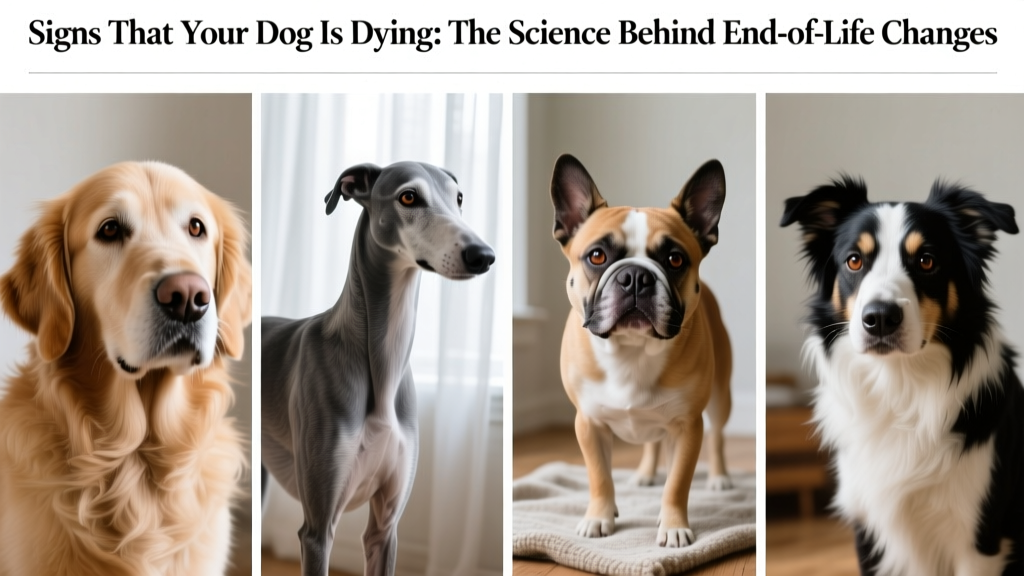
Signs That Your Dog Is Dying: The Science Behind End-of-Life Changes
Understand the physiological and behavioral signs that your dog is dying, backed by veterinary science. Learn what to expect, how to help.
Dr. Hannah Wickes
Why Does My Dog Nibble on Me? The Canine Science Behind Cobbing
Discover why your dog nibbles on you with gentle front-teeth bites. Learn the science, evolutionary roots, and when cobbing signals a problem.
Priya Sutaria
Hungarian Whistler Dog: The Science Behind the Puli's Herding Whistle
Discover the science behind the Hungarian Whistler Dog — how the Puli breed uses vocalization, herding instinct, and unique corded coats to work livestock.
Dr. Hannah Wickes
Cerenia for Dogs
How Cerenia (maropitant citrate) works in dogs, the neuroscience of canine vomiting, dosing by weight, side effects, and when to call your vet.
Priya Sutaria
Itraconazole for Dogs: Antifungal Science, Dosing &
Learn how itraconazole for dogs works to treat fungal infections, including dosing, side effects, pharmacokinetics, and when to call your veterinarian.
Robin Maitland
Dog Keeps Throwing Up: The Science Behind Canine Vomiting
Why your dog keeps throwing up explained through canine physiology, evolutionary biology, and veterinary science — plus when to worry and what to do.
Priya Sutaria