12 Best Small to Medium-Sized Dog Breeds for Apartments &
Compare 12 top small to medium-sized dog breeds by energy, space needs, and family fit. Includes decision framework, cost data, and breed profiles.

Why Small to Medium-Sized Dog Breeds Are Winning Hearts in 2026
Small to medium-sized dog breeds — generally those weighing between 10 and 55 lb (4.5–25 kg) — dominate adoption lists and breeder waitlists for good reason. They fit apartment leases that cap dogs at 40–50 lb, they travel well in airline cabins or car carriers, and their food bills run $30–$60/month compared to $80–$150/month for large breeds. But "small to medium" covers a massive range of temperaments, energy levels, and health profiles. A Jack Russell Terrier and a Basset Hound both fit the weight range — yet they're polar opposites in daily life.
This guide cuts through the noise. We've selected 12 breeds based on criteria that actually matter for real households, compared them across five measurable attributes, and built a decision framework so you can match a breed to your specific living situation — whether that's a 600-square-foot studio or a suburban home with a fenced yard.
How We Selected These Breeds: Our Criteria
Selection Criteria for This List
- Weight range: 10–55 lb (4.5–25 kg) at adult maturity. This covers AKC "small" (under 22 lb) and "medium" (22–55 lb) classifications.
- Apartment viability: Must be adaptable to indoor living without a yard, based on AKC temperament standards and breed club recommendations.
- Family compatibility: Must score well with children (ages 6+) and tolerate typical household noise and activity.
- Trainability: Must respond well to positive reinforcement methods. Breeds with extreme independence or handler-sensitivity that requires professional-level skill were excluded.
- Health accessibility: Must have at least 2–3 responsible breeders performing OFA or PennHIP health screenings, or be widely available through breed-specific rescues.
- First-owner feasibility: At least 6 of the 12 breeds must be suitable for first-time dog owners without prior training experience.
Breeds were grouped into three lifestyle categories: Low-Energy Companions (ideal for apartments and relaxed schedules), Moderate-Energy All-Rounders (balanced for active but not extreme owners), and High-Energy Athletes (for owners who hike, run, or do dog sports). This grouping prevents the common mistake of matching a high-drive breed with a sedentary household.
Low-Energy Companions: Best for Apartments & Quiet Homes
1. Cavalier King Charles Spaniel
Size Class: Small | 13–18 lb (6–8 kg), 12–13 in tall
Key Trait: Lowest exercise requirement on this list — 20–30 minutes of gentle walking daily is sufficient.
Cavaliers are the gold standard for lap-dog companionship. They bond intensely with their owners, tolerate apartment noise well, and rarely bark without cause. The trade-off is significant health concerns: mitral valve disease affects over 50% of Cavaliers by age 5, according to the AKC breed standard. Budget $200–$400/month for cardiac monitoring after age 4. Purchase price from an OFA-screened breeder: $2,500–$4,000. Rescue availability: moderate through ACKCSC rescue network.
2. French Bulldog
Size Class: Small | 16–28 lb (7–13 kg), 11–13 in tall
Key Trait: Brachycephalic (flat-faced) structure means they literally cannot over-exercise — built-in energy regulation.
Frenchies are the AKC's most popular breed as of 2025, and their apartment-friendliness is a major reason. They need only 15–25 minutes of activity daily, but owners must manage heat exposure carefully: any temperature above 80°F (27°C) risks respiratory distress due to brachycephalic obstructive airway syndrome (BOAS). Expect $3,500–$6,000 from a health-tested breeder; pet insurance is strongly recommended ($50–$90/month) due to common spinal and respiratory issues.
3. Basset Hound
Size Class: Medium | 40–65 lb (18–29 kg), 11–15 in tall
Key Trait: Extremely low indoor energy despite medium weight — a 30-minute sniff-walk satisfies their primary drive (scent tracking).
Bassets are couch potatoes indoors but need mentally stimulating walks where they can follow their nose. Their droopy build predisposes them to intervertebral disc disease (IVDD) — avoid stairs and use a ramp for furniture access. Barking is moderate but their deep howl carries through apartment walls, making them better suited to ground-floor units or townhomes. Purchase: $1,000–$2,500. Annual joint supplements (glucosamine/chondroitin, ~$120/year) are recommended from age 3.
4. Shih Tzu
Size Class: Small | 9–16 lb (4–7 kg), 8–11 in tall
Key Trait: Bred purely for companionship — zero working drive means no frustration from unmet instinctual needs.
Shih Tzus are one of the few breeds with no job-driven behaviors to manage. They don't chase, herd, or guard — they simply want to be near you. Grooming is the main commitment: daily brushing for a full coat, or a $50–$80 professional clip every 6–8 weeks. They're also brachycephalic but less extremely than Frenchies. Purchase: $1,200–$3,000. Rescue availability is high — they're commonly surrendered when owners underestimate grooming needs.
Moderate-Energy All-Rounders: Balanced for Active but Not Extreme Owners
5. Miniature American Shepherd (Miniature Australian Shepherd)
Size Class: Medium | 20–40 lb (9–18 kg), 13–18 in tall
Key Trait: Full herding-breed intelligence in a manageable size — excels at agility, obedience, and trick training.
Mini Americans give you the Aussie experience without the 50–70 lb size. They need 45–60 minutes of combined physical and mental exercise daily — a 30-minute walk plus a 15-minute training session or puzzle toy rotation works well. They're sensitive dogs that respond poorly to harsh corrections; force-free, positive reinforcement methods produce the best results. Health screening should include OFA hips, eyes, and MDR1 gene testing (a mutation affecting drug sensitivity common in herding breeds). Purchase: $1,800–$3,500.
6. Cocker Spaniel
Size Class: Medium | 20–30 lb (9–14 kg), 13.5–15.5 in tall
Key Trait: Versatile energy — happy with a 40-minute walk or a longer hike, making them adaptable to varying owner schedules.
American Cocker Spaniels are sporting dogs at heart but have been bred toward companionship for decades. They're highly social, do well with children, and their moderate size fits most living situations. Ear care is critical: their long, heavy ears trap moisture and debris, leading to chronic otitis (ear infections) in an estimated 30–40% of the breed. Weekly ear cleaning with a veterinarian-recommended solution and thorough drying after swimming are non-negotiable. Purchase: $1,500–$3,000.
7. Welsh Corgi (Pembroke)
Size Class: Medium | 25–30 lb (11–14 kg), 10–12 in tall
Key Trait: Big-dog personality in a compact body — alert, vocal, and confident without the space requirements of a large herding breed.
Pembroke Welsh Corgis are internet-famous for good reason: they're expressive, trainable, and endlessly entertaining. However, they're also herding dogs that will nip at heels and attempt to manage household movement if not given appropriate outlets. A 40–50 minute daily walk plus structured training sessions channel this drive productively. Their long backs make them IVDD-prone — maintain lean body condition (ribs easily palpable, visible waist from above) to reduce spinal stress. Purchase: $2,000–$4,000 from an OFA-screened breeder.
8. Beagle
Size Class: Small-Medium | 20–30 lb (9–14 kg), 13–15 in tall
Key Trait: Exceptional scent drive provides built-in entertainment — sniffari walks tire them out more effectively than pure physical exercise.
Beagles are pack-oriented, friendly, and remarkably sturdy for their size. They need 40–60 minutes of activity daily, with at least half devoted to scent exploration. The challenge: recall training is genuinely difficult because their nose overrides obedience once they're on a trail. Plan to walk on-leash in unfenced areas permanently. Their vocalization (the iconic beagle howl) is a consideration for apartment living — they're better suited to homes with some buffer space. Purchase: $800–$2,000. Rescue availability is very high.
High-Energy Athletes: For Owners Who Hike, Run, or Compete
9. Jack Russell Terrier (Parson Russell Terrier)
Size Class: Small | 13–17 lb (6–8 kg), 12–14 in tall
Key Trait: Pound-for-pound highest energy and stamina on this list — can hike 5+ miles and still want to play fetch afterward.
JRTs are not casual pets. They're working terriers bred to chase foxes underground, and that drive persists in every modern specimen. They need 60–90 minutes of vigorous activity daily, plus mental challenges like earthdog trials, agility, or advanced trick training. Understimulated JRTs develop destructive behaviors, excessive barking, and reactivity. In the right home with an active owner, they're extraordinary companions — athletic, clever, and deeply bonded. Purchase: $1,200–$2,500. Not recommended for first-time owners.
10. Border Terrier
Size Class: Small | 11.5–15.5 lb (5–7 kg), 12–15 in tall
Key Trait: Highest "off-switch" ratio among terriers — energetic outdoors but genuinely calm indoors after exercise.
Border Terriers offer terrier energy without the terrier chaos that makes JRTs challenging. A 45–60 minute hike or structured play session satisfies them, and they settle well at home afterward. Their wiry coat requires hand-stripping 2–3 times per year ($60–$100 per session) or clipping every 8 weeks. They're less common than other breeds on this list, so expect a 6–12 month waitlist from responsible breeders. Purchase: $1,500–$3,000.
11. Whippet
Size Class: Medium | 25–40 lb (11–18 kg), 18–22 in tall
Key Trait: Sprint-and-snooze energy pattern — one 20-minute off-leash run in a fenced area satisfies their daily physical needs.
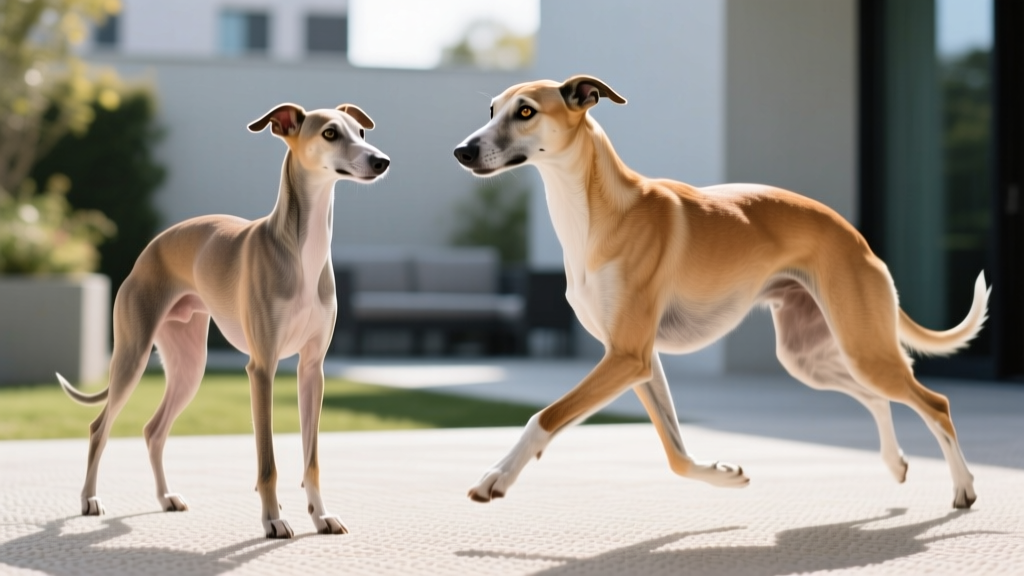
Whippets are sighthounds that explode into 35-mph sprints, then curl up on the couch for hours. This pattern makes them surprisingly apartment-friendly despite their athleticism — provided you have access to a securely fenced area (minimum 5-foot fence; they can clear 4-foot barriers easily). They're thin-skinned and cold-sensitive, requiring a dog coat when temperatures drop below 50°F (10°C). Health is generally excellent; cardiac screening is the primary recommendation. Purchase: $1,500–$3,000.
12. Nova Scotia Duck Tolling Retriever
Size Class: Medium | 35–50 lb (16–23 kg), 17–21 in tall
Key Trait: Smallest retriever breed — gives you the Golden Retriever temperament with half the size and double the energy.
Tollers are the hidden gem of medium-sized sporting dogs. They retrieve, swim, hike, and excel at dog sports, but fit comfortably in a car or apartment elevator. They need 60–75 minutes of vigorous activity daily and thrive with jobs: carrying a backpack on hikes, fetching morning slippers, or competing in dock diving. Their "Toller scream" (a high-pitched vocalization when excited) is something to research before committing — it's loud and startling. Health screenings should include OFA hips, elbows, eyes, and PRA (progressive retinal atrophy) genetic testing. Purchase: $2,500–$4,500. Waitlists of 12–18 months are common.
Side-by-Side Comparison: All 12 Breeds at a Glance
| Breed | Weight (lb/kg) | Daily Exercise | Apartment Suitability | Barking Level | First-Owner Friendly | Est. Annual Cost |
|---|---|---|---|---|---|---|
| Cavalier King Charles Spaniel | 13–18 / 6–8 | 20–30 min | Excellent | Low | Yes | $2,400–$4,800 |
| French Bulldog | 16–28 / 7–13 | 15–25 min | Excellent | Low | Yes | $3,000–$6,000 |
| Basset Hound | 40–65 / 18–29 | 30 min | Good (ground floor) | Moderate (howl) | Yes | $1,800–$3,000 |
| Shih Tzu | 9–16 / 4–7 | 20–30 min | Excellent | Low-Moderate | Yes | $2,000–$3,600 |
| Mini American Shepherd | 20–40 / 9–18 | 45–60 min | Good | Moderate | Moderate | $2,000–$3,500 |
| Cocker Spaniel | 20–30 / 9–14 | 40 min | Good | Moderate | Yes | $2,200–$3,800 |
| Pembroke Welsh Corgi | 25–30 / 11–14 | 40–50 min | Good | High | Moderate | $2,000–$3,500 |
| Beagle | 20–30 / 9–14 | 40–60 min | Fair | High (howl) | Yes | $1,500–$2,800 |
| Jack Russell Terrier | 13–17 / 6–8 | 60–90 min | Fair | High | No | $1,500–$2,500 |
| Border Terrier | 11.5–15.5 / 5–7 | 45–60 min | Good | Moderate | Yes | $1,800–$3,200 |
| Whippet | 25–40 / 11–18 | 20 min sprint + rest | Good | Low | Yes | $1,500–$2,800 |
| Nova Scotia Duck Tolling Retriever | 35–50 / 16–23 | 60–75 min | Fair | High (scream) | Moderate | $2,200–$4,000 |
Annual costs include food, routine veterinary care, grooming, preventatives (heartworm/flea/tick), and pet insurance. Emergency care and major medical events are not included. Source estimates based on ASPCA cost guidelines adjusted for 2026 veterinary pricing.
Decision Framework: Which Breed Fits Your Life?
Choosing between these breeds comes down to three variables: your available time, your living space, and your activity tolerance. Use this framework to narrow your top 3:
- Step 1 — Calculate your daily exercise budget. Honestly assess how many minutes per day you can commit to structured dog activity (walking, playing, training). If the answer is under 30 minutes: choose from Group 1 (Cavalier, Frenchie, Shih Tzu, Basset). If 30–60 minutes: Group 2 breeds fit. If 60+ minutes: consider Group 3.
- Step 2 — Audit your noise tolerance and lease restrictions. If you live in an apartment with shared walls and thin floors, eliminate high-barking breeds: Corgi, Beagle, JRT, and Toller. That leaves Cavalier, Frenchie, Shih Tzu, Whippet, and Border Terrier as your quietest options.
- Step 3 — Assess your grooming commitment. If daily brushing is unrealistic, avoid the Shih Tzu (full coat) and Cocker Spaniel (requires professional grooming every 6–8 weeks at $60–$100/session). Short-coated breeds (Whippet, Beagle, JRT, Frenchie) need only weekly brushing and occasional baths.
- Step 4 — Factor in health cost tolerance. If you want to minimize surprise veterinary bills, prioritize breeds with lower genetic disease burdens: Whippet, Border Terrier, and Beagle have the fewest breed-specific health concerns. Cavaliers and Frenchies require the highest health-care budgets.
- Step 5 — Consider your household composition. Families with children under 10 should avoid very small breeds (Shih Tzu, JRT) that can be injured by rough handling, and very vocal breeds that may startle young children. Cocker Spaniels, Mini Americans, and Tollers are the strongest family picks in this weight range.
Quick recommendation summary:
- Best overall apartment dog: Cavalier King Charles Spaniel — lowest exercise needs, minimal barking, strong bonding.
- Best for active singles/couples: Mini American Shepherd — highly trainable, athletic, emotionally attuned.
- Best for families with kids: Cocker Spaniel — patient, sturdy, social, and adaptable to schedule changes.
- Best low-maintenance health profile: Whippet — minimal genetic issues, simple grooming, long lifespan (12–15 years).
- Best for experienced owners seeking a challenge: Jack Russell Terrier — unmatched athleticism and intelligence in a small package.
Honorable Mentions & Breeds to Approach with Caution
Honorable mentions that narrowly missed the top 12:
- Boston Terrier — Excellent apartment dog, but brachycephalic health issues and limited responsible breeder availability pushed them to an honorable mention.
- Australian Kelpie — Extraordinary working ability, but their 90+ minute exercise requirement and intense herding drive make them unsuitable for most pet homes.
- Dachshund — Wonderful personality, but IVDD prevalence (estimated 25% lifetime risk per Merck Veterinary Manual) and notoriously difficult house-training place them in the "know what you're getting into" category.
Breeds to approach with caution for this size range:
- Australian Cattle Dog — Often marketed as "medium-sized," but their working drive is extreme. Without a job, they develop severe behavioral problems. Best suited to farm/ranch environments.
- Shiba Inu — Beautiful and compact, but their cat-like independence, poor recall reliability, and same-sex aggression make them challenging for all but experienced owners.
- Chihuahua — At 3–6 lb, they fall below our 10-lb minimum. More critically, their fragility makes them unsuitable for homes with young children or large dogs, and their temperament varies wildly depending on socialization quality.
Frequently Asked Questions
What qualifies as a "small to medium" dog breed?
The AKC doesn't use a formal "small to medium" category, but the general consensus among veterinarians and breed registries places small breeds at under 22 lb (10 kg) and medium breeds at 22–55 lb (10–25 kg). This list uses a combined 10–55 lb (4.5–25 kg) range to capture breeds that span both categories.
Why is the French Bulldog on this list despite its health problems?
The Frenchie's inclusion reflects reality: they're the most popular breed in the US, and many owners specifically seek them out. Rather than exclude them, we've been transparent about their health costs (BOAS, spinal issues, heat intolerance) so prospective owners can budget and plan accordingly. If you choose a Frenchie, buy only from a breeder who performs BOAS grading and spinal imaging, and budget for pet insurance from day one.
How do these breeds compare on lifespan?
Smaller breeds in this list generally live longer: Cavalier (12–15 years), Shih Tzu (10–18 years), Whippet (12–15 years), Border Terrier (12–15 years). Medium breeds trend slightly lower: Basset Hound (10–12 years), Cocker Spaniel (10–14 years), Toller (12–14 years). The French Bulldog is the outlier with a shorter average lifespan of 10–12 years due to breed-specific health challenges.
Can I find these breeds in shelters or rescues?
Yes — Beagles, Cocker Spaniels, Basset Hounds, and Dachshunds are commonly available through breed-specific rescues. Purebred Cavaliers and Frenchies are rarer in rescue due to high demand and breeder take-back clauses. Mixed breeds that include these breeds are widely available and often benefit from hybrid vigor. Check Petfinder or the AKC breed club rescue directories to search by breed and location.
What's the biggest mistake people make when choosing a small to medium breed?
Matching energy level to lifestyle. A Jack Russell Terrier in a sedentary apartment home will develop behavioral problems within weeks. A Cavalier forced to hike 5 miles daily will suffer physically. The breed's exercise needs must align with what you can realistically provide — not what you aspire to provide. Be honest about your current routine, not your idealized version of it.
Should I get pet insurance for a small to medium breed?
For breeds with high genetic disease risk (Cavalier, Frenchie, Corgi, Dachshund), pet insurance is strongly recommended. Average monthly premiums for a puppy enrolled at 8–12 weeks range from $35–$90/month depending on breed and coverage level. For lower-risk breeds (Whippet, Border Terrier, Beagle), insurance is still worthwhile for accident and emergency coverage, but the cost-benefit analysis is less clear-cut. Always enroll before pre-existing conditions develop.
This guide is for informational purposes. Always consult your veterinarian before making health-related decisions for your dog, and work with reputable breeders who provide health clearances from OFA, PennHIP, or equivalent organizations.
Robin Maitland
All our authors care for dogs every day — read more of their work on the authors page.