Italian Greyhound vs Whippet: Which Sighthound Fits Your Life?
Italian Greyhound vs Whippet side-by-side: size, temperament, health risks, costs, and lifestyle fit to help you choose the right sighthound.
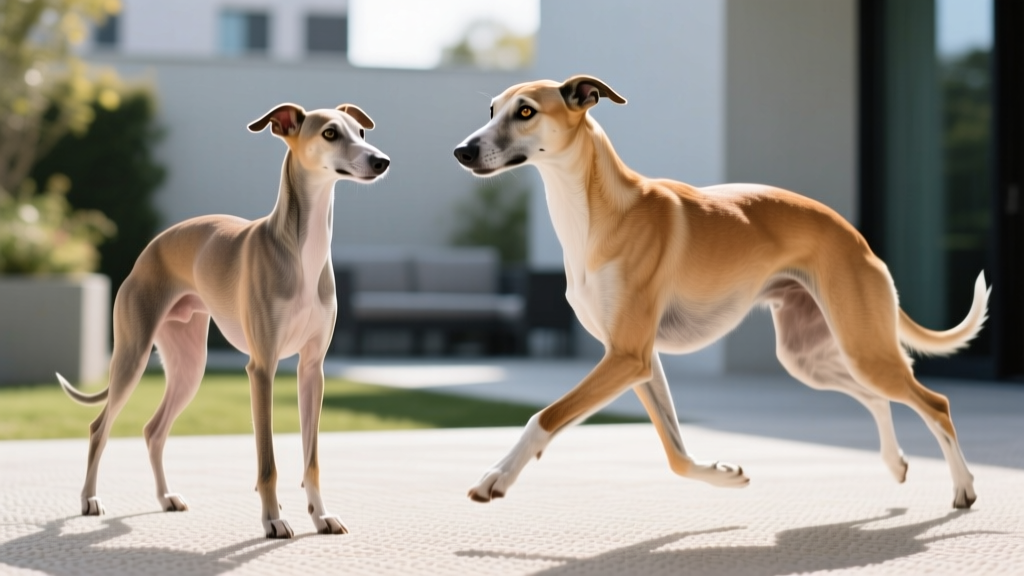
At a Glance: Italian Greyhound vs Whippet
If you've fallen for the sleek silhouette of a sighthound, you've probably narrowed your search to two breeds that look like they share a designer: the Italian Greyhound and the Whippet. Both are elegant, affectionate, and deceptively fast. But beneath the similar outlines, these breeds diverge in meaningful ways — from how they handle cold weather to how they behave around toddlers.
This comparison breaks down every decision-relevant category with specific numbers, real cost ranges, and breed-standard data sourced from the AKC Italian Greyhound standard and the AKC Whippet standard.
| Attribute | Italian Greyhound | Whippet |
|---|---|---|
| Weight | 7–14 lb (3.2–6.4 kg) | 25–40 lb (11–18 kg) |
| Height | 13–15 in (33–38 cm) | 18–22 in (46–56 cm) |
| Lifespan | 14–15 years | 12–15 years |
| Energy Level | Moderate (30–45 min/day) | Moderate-High (45–60 min/day) |
| Grooming Needs | Minimal — weekly wipe-down | Minimal — weekly brush |
| Trainability | Moderate (sensitive, slow housebreak) | Moderate-High (eager, faster to learn) |
| Barking Level | Moderate-High (alert barker) | Low-Moderate (quieter overall) |
| Apartment Suitability | Excellent | Good (needs outdoor sprint space) |
| Family Fit | Best with older children (8+) | Good with gentle children (5+) |
| Cold Tolerance | Very Low — coat required below 50°F (10°C) | Low — coat recommended below 45°F (7°C) |
| Purchase Price Range | $1,500–$3,500 | $1,000–$2,500 |
| Annual Care Cost | $1,400–$2,200 | $1,600–$2,600 |
Head-to-Head: Category Winners
Size & Space Requirements — Winner: Depends on Your Home
The Italian Greyhound (IG) is a true toy-sized sighthound, topping out around 14 lb. They thrive in studios and one-bedroom apartments where floor space is limited. The Whippet, at roughly three times the weight, needs room to stretch — both indoors and out. A Whippet in a small apartment can work, but you'll need reliable access to a fenced area or open field for daily sprinting. Choose the IG if space is tight; choose the Whippet if you have a yard or nearby park.
Exercise Needs — Winner: Italian Greyhound (Lower Demand)
IGs need roughly 30–45 minutes of activity daily, typically satisfied with two brisk leash walks and a short indoor play session. Whippets require 45–60 minutes, and critically, they need opportunities for unleashed sprinting in a securely fenced area at least 3–4 times per week. A Whippet that only gets leash walks will become restless and may develop destructive habits. Both breeds are sprinters, not endurance athletes — neither will join you on a 5-mile run.
Trainability — Winner: Whippet
Whippets tend to be more biddable and respond faster to positive reinforcement training. Italian Greyhounds are intelligent but notoriously stubborn, particularly with housebreaking. Many IG owners report 6–12 months of consistent potty training before reliability, and some IGs never become fully reliable indoors in cold or wet weather. Whippet puppies typically achieve house-training reliability within 3–4 months with a consistent schedule. Both breeds respond poorly to harsh corrections — use only force-free, reward-based methods.
Family & Child Compatibility — Winner: Whippet
Whippets are sturdier and more tolerant of the clumsy handling that comes with younger children. An Italian Greyhound's fine-boned frame is genuinely fragile — a toddler falling on an IG or a child picking one up incorrectly can result in a broken leg. Veterinary orthopedic specialists see a disproportionate number of tibial and radial fractures in young Italian Greyhounds. Whippets, while still lean, have substantially more bone mass and can handle gentle play with children ages 5 and up. For families with kids under 8, the Whippet is the safer choice.
Cold Weather Tolerance — Winner: Whippet (Marginally)
Neither breed handles cold well — both have single coats with minimal body fat. However, the IG's smaller body mass means they lose heat faster. Expect to put a fitted dog coat on your Italian Greyhound any time temperatures drop below 50°F (10°C). Whippets can tolerate slightly cooler conditions, around 45°F (7°C), before needing a layer. In winter climates, budget $40–$80 per year for properly fitted sighthound coats and fleece-lined pajamas for indoor warmth.
Health & Longevity — Winner: Whippet (Fewer Breed-Specific Issues)
Both breeds are relatively healthy, but the Italian Greyhound carries a higher burden of breed-specific conditions (detailed in the health section below). Whippets have fewer hereditary issues overall, though they are not without risk. Lifespan is comparable, with both breeds commonly reaching 13–15 years with proper care.
What Italian Greyhounds and Whippets Share
Before focusing on differences, it's worth understanding why these breeds attract the same owners. The similarities are substantial:
- Sighthound temperament: Both breeds have a strong prey drive and will chase small animals, cats, and fast-moving objects. Neither can be trusted off-leash in unfenced areas — their instinct to pursue overrides recall training.
- Velcro-dog attachment: Both breeds bond intensely with their people and suffer when left alone for long hours. Separation anxiety is common in both if not gradually conditioned from puppyhood.
- Low-shedding coats: Both have short, fine, single coats that shed minimally. Neither breed produces heavy dander, though no dog is truly hypoallergenic.
- Couch-sprinter duality: Both breeds are famously lazy indoors — they will burrow under blankets and sleep 14–18 hours per day — but transform into explosive athletes when given open space.
- Sensitivity to anesthesia: Both breeds, like many sighthounds, have lower body fat percentages that affect how they metabolize certain anesthetic agents. Always ensure your veterinarian is experienced with sighthound anesthesia protocols (the Merck Veterinary Manual notes sighthounds may require modified protocols for thiobarbiturates and propofol).
- Dental vulnerability: Both breeds are prone to periodontal disease earlier than average. Daily tooth brushing and professional cleanings every 12–18 months are strongly recommended.
The Dealbreakers: Key Differences That Should Drive Your Decision
Fragility Factor
This is the single biggest practical difference. Italian Greyhounds have exceptionally fine bones. Leg fractures — particularly of the radius, ulna, and tibia — are common in IGs under 2 years old, often from jumping off furniture or being stepped on. Some veterinary orthopedic surgeons estimate that up to 10–15% of Italian Greyhounds will experience a long-bone fracture during their lifetime. Whippets, while still slender, have considerably more skeletal robustness and rarely suffer spontaneous fractures from normal household activity.
Housebreaking Difficulty
If you work long hours or live in a high-rise without immediate outdoor access, understand that Italian Greyhounds are among the most difficult breeds to house-train. Their small bladders, combined with a dislike of cold and wet surfaces, mean many IG owners rely on indoor potty pads permanently. Whippets are significantly easier in this regard — standard crate-training methods typically produce reliable results within a few months.
Vocalization
Italian Greyhounds tend to be more vocal — they will alert-bark at doorbells, passing dogs, and unusual sounds. Whippets are notably quieter, often described as "silent" dogs that rarely bark without strong provocation. If you live in an apartment with thin walls or noise-sensitive neighbors, the Whippet's quietness is a meaningful advantage.
Prey Drive Intensity
Both breeds will chase, but Whippets — being larger and faster (capable of 35 mph / 56 km/h sprints) — cover more ground more quickly when they bolt. An IG that spots a squirrel might get 50 feet away before remembering you exist; a Whippet can cover 200 feet in the same time. Secure fencing is non-negotiable for both, but a Whippet requires a minimum 5-foot (1.5 m) fence, as they can clear shorter barriers. IGs typically need a 4-foot (1.2 m) fence, though some will attempt to climb.
Breed-Specific Health Risks Compared
Both breeds benefit from the general good health associated with well-bred sighthounds, but each carries distinct hereditary risks. Always request OFA (Orthopedic Foundation for Animals) health clearances from any breeder.
| Condition | Italian Greyhound Risk | Whippet Risk |
|---|---|---|
| Progressive Retinal Atrophy (PRA) | Moderate — DNA test available | Moderate — DNA test available |
| Patellar Luxation | Moderate-High | Low-Moderate |
| Legg-Calvé-Perthes Disease | Moderate (toy breed predisposition) | Low |
| Hip Dysplasia | Low | Low-Moderate |
| Long-Bone Fractures | High (juvenile especially) | Low |
| Periodontal Disease | High — often by age 3–4 | Moderate — often by age 5–6 |
| Color Dilution Alopecia | Moderate (blue/fawn coats) | Low |
| Hypothyroidism | Low | Low-Moderate |
| Heart Murmurs / Mitral Valve Disease | Low-Moderate (senior onset) | Low |
| Deafness (congenital) | Low | Low (higher in double-merle, which is an unethical breeding) |
Bottom line: The Italian Greyhound carries more breed-specific health risks, particularly orthopedic fragility and dental disease. Budget-conscious owners should factor in higher potential veterinary costs for IGs over a 14-year lifespan. Consult your veterinarian about breed-appropriate screening schedules — the AKC recommends specific health tests for each breed before breeding.
Cost of Ownership: Italian Greyhound vs Whippet
Purchase or Adoption Price
- Italian Greyhound puppy (responsible breeder): $1,500–$3,500. Show-line puppies from champion bloodlines may reach $4,000+. Adoption through breed rescue: $300–$600.
- Whippet puppy (responsible breeder): $1,000–$2,500. Show-line puppies: up to $3,000. Adoption through breed rescue: $300–$500.
Italian Greyhounds tend to be more expensive partly because litter sizes are smaller (typically 2–4 puppies vs. 4–8 for Whippets), creating lower supply.
Annual Care Costs
| Expense Category | Italian Greyhound | Whippet |
|---|---|---|
| High-Quality Food | $300–$450 (smaller appetite) | $450–$700 |
| Routine Veterinary Care | $500–$800 | $500–$750 |
| Dental Cleanings (annual/biannual) | $400–$800 (more frequent need) | $300–$600 |
| Pet Insurance | $40–$70/month ($480–$840/yr) | $35–$60/month ($420–$720/yr) |
| Clothing & Cold-Weather Gear | $100–$200/yr | $60–$150/yr |
| Grooming | $0–$100 (nail trims, wipes) | $0–$100 |
| Training Classes | $150–$300 | $150–$300 |
| Estimated Annual Total | $1,930–$3,490 | $1,880–$3,320 |
The cost difference is modest year-to-year, but Italian Greyhounds tend to incur higher dental and orthopedic expenses over their lifetime. Pet insurance is strongly recommended for both breeds — look for policies that cover hereditary conditions without per-incident caps.
Lifestyle Matching: Which Sighthound Is Right for You?
Choose the Italian Greyhound If:
- You live in a small apartment or condo with limited outdoor space.
- Your household has no children under 8, or your older children understand gentle handling.
- You work from home or can arrange midday potty breaks — IGs need frequent bathroom access.
- You don't mind a longer housebreaking process and are comfortable using indoor potty pads as a backup.
- You want a true lap dog that will burrow under covers and stay glued to your side.
- You enjoy dressing your dog in functional clothing (coats, pajamas, boots for hot pavement).
Choose the Whippet If:
- You have access to a securely fenced yard or nearby open field for regular sprinting.
- Your family includes children ages 5+ who can interact gently with a dog.
- You want a quieter dog that won't alert-bark at every passerby.
- You prefer a more straightforward housebreaking experience.
- You want a dog sturdy enough for gentle hiking and outdoor adventures (in moderate weather).
- You're interested in canine sports like lure coursing, agility, or flyball — Whippets excel in these.
Choose Neither If:
- You're away from home 8+ hours daily without a pet sitter or dog walker — both breeds are prone to separation distress.
- You have outdoor cats or small livestock — the prey drive in both breeds is intense and generally non-negotiable.
- You live in a climate with extreme cold and aren't prepared to manage coats, boots, and limited outdoor time for 4–5 months of the year.
Frequently Asked Questions
Can Italian Greyhounds and Whippets live together?
Yes — both breeds are highly social with other dogs and often enjoy a sighthound companion. The main consideration is size difference during play: a 35-lb Whippet can accidentally injure a 10-lb IG during roughhousing. Supervise initial interactions and ensure the IG has a safe retreat space.
Are either of these breeds good for first-time dog owners?
Whippets are generally more forgiving of first-time owner mistakes, particularly around housebreaking and basic training. Italian Greyhounds can work for patient, well-researched first-time owners, but the combination of fragility, housebreaking difficulty, and sensitivity makes them a more demanding choice for someone without prior dog experience.
Do Italian Greyhounds or Whippets shed a lot?
Neither breed sheds heavily. Both have short, fine single coats that produce minimal loose hair. You'll find occasional hairs on dark clothing, but neither breed will coat your furniture. Weekly wiping with a damp cloth or rubber grooming mitt keeps shedding virtually invisible.
Which breed is more prone to separation anxiety?
Both breeds are susceptible, but Italian Greyhounds tend to be slightly more prone due to their intense bonding behavior. Neither breed should be crated for more than 4–5 hours at a stretch during the workday. Gradual desensitization training from puppyhood and providing a canine companion are the most effective prevention strategies.
Can either breed be off-leash in open areas?
No. Both Italian Greyhounds and Whippets have a visual prey drive that overrides recall training. When they see something moving at distance, they will run — and they are faster than you. Only allow off-leash exercise in fully enclosed areas with fencing at least 5 feet (1.5 m) high for Whippets and 4 feet (1.2 m) for IGs. GPS collars are a useful backup but not a substitute for physical barriers.
Should I get an Italian Greyhound or a Whippet?
The answer depends on your living situation and household composition. If you're in a compact apartment, want a lower-exercise companion, and don't have small children, the Italian Greyhound is likely the better fit. If you have more space, want a sturdier family dog, and can provide regular sprinting opportunities, the Whippet is probably the stronger match. Visit breed-specific rescues to meet adults of both breeds before committing — temperament varies individually, and meeting dogs in person often clarifies the decision better than any written comparison.
Jonas Cole
All our authors care for dogs every day — read more of their work on the authors page.


