Bringing Home a Winter Puppy: Cold-Weather Prep & Essentials
Learn how to prepare your home and gear for a new winter puppy. Discover cold-weather potty training tips, essential winter gear, and safety advice.
Preparing Your Home for a Winter Arrival
When you decide to adopt or purchase a dog during the winter months, you are signing up for a unique set of challenges and heartwarming moments. The image of a fluffy puppy bounding through freshly fallen snow is a staple of holiday movies, but the reality of winter dog ownership requires meticulous preparation, specialized gear, and a lot of patience. Whether you are bringing home an eight-week-old Labrador Retriever or adopting a senior Greyhound from a local shelter, the cold months demand a proactive approach to your new pet's care. In this comprehensive guide, we will walk you through the exact steps to prepare your home, the essential gear you need to purchase before day one, and the proven strategies for mastering winter potty training.
Managing Indoor Humidity and Temperature
Winter heating systems strip moisture from the air, creating a dry indoor environment that can lead to respiratory irritation, dry skin, and static electricity in your new dog's coat. To combat this, invest in a high-capacity cool-mist humidifier, such as the Crane Drop Ultrasonic Humidifier (approximately $50). Place it in the room where your dog will spend the most time, aiming to maintain indoor humidity levels between 30% and 50%. Additionally, ensure that your dog's bed is not placed directly next to a drafty exterior door or directly over a blasting floor vent, as extreme temperature fluctuations can stress a puppy's developing immune system.
The Entryway Paw-Washing Station
Snow, ice, and toxic de-icing salts are inevitable winter hazards. Before your dog even steps foot in your home, set up a dedicated paw-washing station in your entryway or mudroom. You will need a heavy-duty absorbent microfiber towel, a silicone paw-cleaning cup like the MudBuster Portable Paw Cleaner (approximately $25), and a pet-safe, leave-in paw balm. Washing your dog's paws with lukewarm water immediately after a winter walk prevents them from licking toxic salts off their toes and stops corrosive ice melt from damaging your hardwood floors.
Essential Cold-Weather Gear for New Dogs
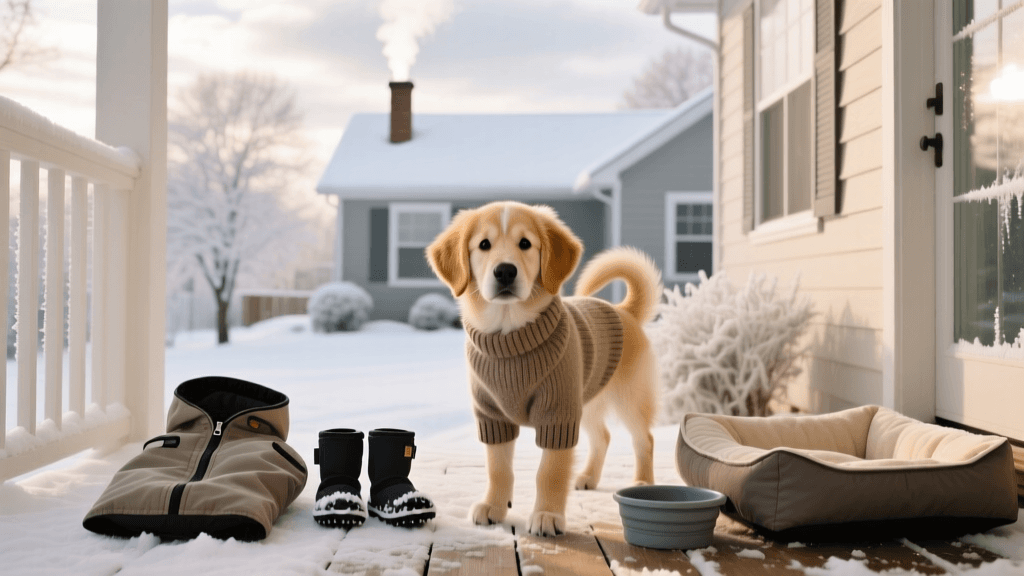
Not all dogs are biologically equipped for freezing temperatures. While a Siberian Husky or Alaskan Malamute might thrive in the snow, short-haired breeds, small toy breeds, and senior dogs with arthritis need immediate physical protection. Before bringing your new companion home, ensure you have the following cold-weather gear ready.
| Gear Type | Purpose | Estimated Cost | Recommended Brand |
|---|---|---|---|
| Insulated Coat | Core warmth and wind protection | $70 - $110 | Ruffwear Overcoat Fuse |
| Paw Wax | Barrier against ice, snow, and salt | $15 - $25 | Musher's Secret Dog Paw Wax |
| Dog Booties | Traction and frostbite prevention | $60 - $90 | Ruffwear Polar Trex |
| Heated Bed | Joint and muscle comfort indoors | $40 - $60 | K&H Pet Products Thermo-Snuggly |
| Long-Line Leash | Potty training in shoveled areas | $20 - $35 | Biothane Waterproof Long Line |
When fitting a winter coat, ensure it covers the dog's chest and back without restricting the movement of their hind legs or interfering with their harness. For paw protection, Musher's Secret wax is an excellent alternative to booties for dogs that refuse to wear shoes. Apply a generous, pea-sized layer to each paw pad ten minutes before heading outside to create a semi-permeable shield against ice buildup.
Winter Potty Training: The Ultimate Test
Potty training a new puppy or adult rescue dog is challenging under the best circumstances; doing it in freezing temperatures is an extreme sport. Dogs, especially puppies, will often refuse to eliminate in deep snow, or they will rush to finish and dart back inside, leading to incomplete emptying and subsequent indoor accidents. To succeed, you must manipulate the environment to set your dog up for success.
Create a Shoveled "Potty Patch"
Do not expect a small puppy to trudge through two feet of powder to do their business. Designate a specific 4x4 foot or 5x5 foot area in your yard as the official "potty patch." Shovel this area down to the grass or dirt, and consider laying down a layer of straw or a large outdoor tarp to provide a textured, dry surface that feels familiar to the dog. Always lead your dog to this exact same spot on a leash during every potty break to build a strong scent association.
Use a Long-Line Leash and High-Value Rewards
Slippery nylon leashes freeze and become difficult to handle. Invest in a 15-foot Biothane long-line leash, which remains flexible in sub-zero temperatures and is easy to wipe clean. When your dog successfully eliminates in the cold, immediately reward them with a high-value, soft treat that won't freeze solid in your pocket. Zuke's Mini Naturals (under 3 calories per treat) are perfect for this. Deliver the treat the exact second they finish, accompanied by enthusiastic verbal praise, before rushing them back to the warmth of the house.
Health, Toxicity, and Safety Considerations
The winter season introduces several hidden environmental hazards that can be fatal to curious puppies and newly adopted dogs exploring their new territory.
The Hidden Dangers of Ice Melt and Antifreeze
Many commercial ice melts contain calcium chloride, sodium chloride, or potassium chloride. When ingested, these salts can cause severe gastrointestinal distress, vomiting, and even neurological tremors. According to the ASPCA's Cold Weather Safety guidelines, pet owners should strictly avoid chemical de-icers and opt for pet-safe alternatives made from urea or magnesium chloride, or simply use sand and non-clumping kitty litter for traction on icy walkways.
Furthermore, The Humane Society of the United States (HSUS) warns that automotive antifreeze is a deadly winter hazard. Ethylene glycol-based antifreeze has a sweet taste that is highly attractive to dogs, but even a few laps from a driveway puddle can cause acute, irreversible kidney failure. Always clean up garage spills immediately and consider switching to a propylene glycol-based antifreeze, which is significantly less toxic to pets and wildlife.
Recognizing Hypothermia and Frostbite
Puppies and small breeds lose body heat much faster than adult, large-breed dogs. Veterinary experts at PetMD's veterinary cold-weather care tips note that prolonged exposure to freezing temperatures can lead to hypothermia. Watch for early warning signs such as violent shivering, lethargy, pale or gray gums, and a reluctance to keep walking. If you notice any of these symptoms, pick up your dog immediately, wrap them in a pre-warmed blanket, and seek veterinary care. Frostbite most commonly affects the tips of the ears, the tail, and the paw pads; if the skin appears pale, hard, or cold to the touch, do not rub the area, as this can cause severe tissue damage. Instead, apply warm (not hot) compresses and contact your veterinarian.
Conclusion
Getting a dog in the winter requires a shift in mindset. You are no longer just training a new pet; you are managing their microclimate, protecting them from environmental toxins, and ensuring their physical comfort in harsh conditions. By preparing your home with proper humidity and paw-washing stations, investing in high-quality insulated gear, and employing strategic winter potty training methods, you can ensure your new dog's first months are safe, healthy, and deeply bonded. Embrace the snow, stay prepared, and enjoy the unparalleled coziness of cuddling with your new best friend by the fire.
tom-renshaw
All our authors care for dogs every day — read more of their work on the authors page.