Winter Dog Training: Indoor Agility and Scent Work
Keep your dog engaged this winter with indoor agility and scent work training. Learn setup tips, equipment costs, and step-by-step exercises.
Beating the Winter Blues: Why Indoor Training Matters
When the temperature drops, daylight hours dwindle, and winter storms roll in, maintaining your dog's regular exercise and training routine can become a significant challenge. Many dog owners notice a sharp decline in their pet's physical activity during the colder months, which often leads to pent-up energy, destructive chewing, excessive barking, and general restlessness. While outdoor walks are still necessary for bathroom breaks and brief physical exertion, relying solely on them during freezing weather is neither safe nor sufficient for high-energy or working breeds.
Transitioning your training focus to indoor activities is the perfect seasonal strategy. By utilizing the space inside your home, you can provide intense mental and physical stimulation that rivals a long outdoor run. According to experts at Fear Free Happy Homes, indoor enrichment is critical for preventing behavioral issues that arise from winter boredom. Two of the most effective, space-efficient, and mentally taxing indoor training disciplines are indoor agility and scent work (nosework). This guide will walk you through setting up a winter training program, complete with equipment measurements, cost breakdowns, and step-by-step conditioning exercises.
Indoor Agility: Building a Living Room Obstacle Course
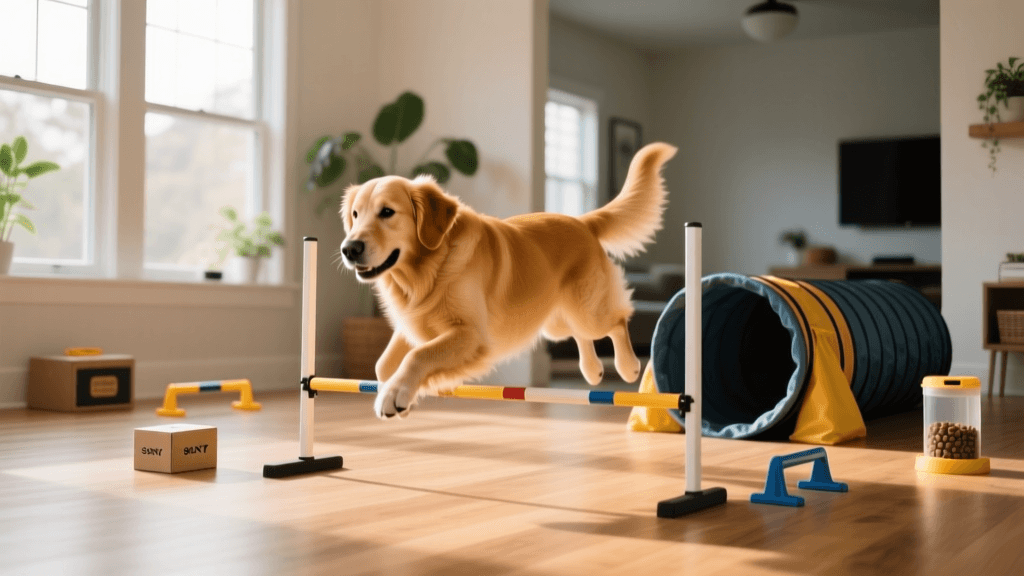
Agility training is not just for large outdoor fields. With a bit of creativity, you can create a highly effective micro-agility course in your living room, hallway, or basement. Indoor agility focuses heavily on handling, body awareness, and close-quarters obedience, which translates beautifully to outdoor performance once spring arrives.
Space Requirements and Safety Prep
Before setting up your course, clear a minimum area of 10 by 15 feet. Ensure all slippery rugs are removed or secured with non-slip padding to prevent joint injuries or muscle strains. If you have hardwood or tile floors, consider laying down interlocking foam puzzle mats (usually costing around $30 to $50 for a 10x10 ft set) to provide adequate traction for your dog's paws during quick turns and jumps.
DIY Indoor Agility Equipment
You do not need to spend hundreds of dollars on professional gear for indoor practice. Here is how to build safe, effective indoor obstacles:
- Adjustable PVC Jumps: Purchase a 10-foot length of 1/2-inch PVC pipe and four 3-way corner joints from your local hardware store (total cost: under $15). Cut the pipe into four 24-inch vertical uprights and two 36-inch horizontal crossbars. Use painter's tape to mark the heights. For indoor safety, never use heavy wooden poles; if your dog misjudges a jump, the lightweight PVC will easily dislodge without causing injury.
- Play Tunnels: While professional agility tunnels are 26 inches in diameter and 15 feet long, indoor spaces require smaller alternatives. Purchase a collapsible children's play tunnel (typically 18 to 24 inches in diameter and 6 feet long) for about $25 to $40. These are perfect for teaching tunnel entry commands and building confidence in tight spaces.
- Weave Pole Alternatives: Full weave poles require too much linear space for most homes. Instead, use 6-ounce paper cups or small traffic cones spaced 24 inches apart in a straight line. Teach your dog to weave through them at a slow walking pace, rewarding heavily for foot placement accuracy.
Scent Work: The Ultimate Winter Mental Workout
If agility provides the physical outlet, scent work provides the mental exhaustion. A dog's olfactory system is incredibly complex, and processing scents requires a massive amount of cognitive energy. The American Kennel Club (AKC) recognizes Scent Work as an official sport, noting that it builds confidence and strengthens the bond between dog and handler. Just 15 minutes of intense sniffing can tire a dog out as much as a one-hour walk.
Getting Started with Essential Oils
While you can start by hiding treats, true scent work utilizes specific essential oils recognized in competitive nosework: Birch, Anise, and Clove. For beginners, Birch is the standard starting scent.
Step-by-Step: The Box Game
The foundational exercise for scent work is the 'Box Game,' which teaches the dog to search systematically and alert you when they find the target odor.
- Prepare the Scent Kit: You will need a 15ml bottle of 100% pure Birch essential oil, a pack of cotton swabs, and a small glass jar with a screw-top lid. Place two drops of the Birch oil onto a cotton swab, break it in half, and place it inside the glass jar. (Cost: Approximately $15 for a high-quality therapeutic grade oil).
- Set the Search Area: Gather 4 to 6 identical cardboard boxes (shoe boxes work perfectly). Place them in a circle or a scattered pattern in your living room.
- Hide the Scent:While your dog is in another room, place the open glass jar containing the scented swab into one of the boxes. Ensure the jar is secured so the dog cannot ingest the cotton or oil.
- The Search Command: Bring your dog into the room, point to the boxes, and give your search cue, such as 'Find it.'
- Mark and Reward: The moment your dog's nose enters the box containing the scent and they pause to investigate, use a marker word like 'Yes!' or a clicker, and immediately deliver a high-value treat (like freeze-dried liver or boiled chicken) directly into that box. This teaches the dog that the odor predicts the reward.
Equipment and Cost Comparison Chart
Deciding between DIY and commercial equipment depends on your budget, available space, and long-term training goals. Below is a structured comparison to help you plan your winter training purchases.
| Equipment Type | DIY / Budget Option | Commercial / Pro Option | Space Required |
|---|---|---|---|
| Agility Jumps | 1/2-inch PVC & Painter's Tape ($15) | Adjustable Aluminum Agility Jump ($80 - $120) | 4x4 ft clearance per jump |
| Tunnels | Children's Play Tunnel ($25) | AKC-Regulation 15ft Nylon Tunnel ($150+) | 6ft to 15ft linear space |
| Weave Poles | Paper Cups / Traffic Cones ($5) | Stick-in-the-Ground Weave Poles ($90) | 20ft linear (Pro) / 10ft (DIY) |
| Scent Work Kit | Birch Oil & Cotton Swabs ($15) | Official Nosework Starter Kit ($45) | Any room (10x10 ft minimum) |
| Non-Slip Flooring | Yoga Mats / Towels ($10) | Interlocking Foam Puzzle Mats ($40) | Varies by room size |
Structuring Your Winter Training Sessions
Indoor training requires a different approach than outdoor sessions. Because the environment is highly familiar and space is constrained, dogs can become frustrated or over-aroused more quickly. The ASPCA emphasizes that adapting your routine to the season is vital for your dog's physical and mental well-being.
Timing and Frequency
Keep your indoor sessions short and highly focused. Aim for 15 to 20 minutes per session, two to three times a day. This prevents mental fatigue and keeps your dog eager for the next round. For scent work, limit the search to 3 to 5 minutes at a time; the cognitive load is immense, and you want to end the game while the dog is still highly motivated.
Warm-Up and Cool-Down
Even indoors, jumping and weaving require physical exertion. Spend the first 3 minutes doing basic obedience warm-ups, such as hand touches, spins, and figure-eight leg weaves to get your dog's blood flowing and focus locked onto you. After the session, practice a 5-minute 'settle' or 'place' command on a raised cot or mat to teach your dog how to transition from high-drive working mode back to a relaxed indoor state.
Conclusion
Winter does not have to mean a hiatus from your dog's training progress. By embracing seasonal care and shifting your focus to indoor agility and scent work, you can transform the darkest, coldest months into your most productive training season. With minimal financial investment and a bit of living room rearrangement, you can provide your dog with the physical exercise and mental enrichment they need to stay happy, healthy, and well-behaved until the spring thaw arrives.
robin-maitland
All our authors care for dogs every day — read more of their work on the authors page.