Winter Dog Paw Care: Protecting Pups From Snow, Ice, and Salt
Learn essential winter dog paw care tips to protect your pup from snow, ice, and toxic salt. Discover the best paw balms and booties for cold weather.
The Hidden Dangers of Winter Walks
Winter transforms the outdoors into a beautiful, snowy wonderland, but it also introduces a host of hidden hazards for your four-legged best friend. While many dogs love bounding through fresh powder, the combination of freezing temperatures, abrasive ice, and chemical de-icers can wreak havoc on their sensitive paws. As a responsible dog owner, understanding the nuances of seasonal canine care is critical to maintaining your dog's overall health and wellbeing. Neglecting winter paw care can lead to painful cracks, chemical burns, frostbite, and even systemic toxicity if your dog licks contaminated paws after a walk.
In this comprehensive guide, we will explore the anatomy of your dog's paws, the specific threats posed by winter weather, and actionable routines to keep your pup safe, comfortable, and happy all season long. Whether you are navigating city sidewalks coated in rock salt or hiking through deep backcountry snow, these expert-backed strategies will ensure your dog's paws remain in peak condition.
Understanding Your Dog's Paw Anatomy
To properly care for your dog's paws in the winter, it helps to understand how they are built. A dog's paw pad is composed of a thick layer of skin called the stratum corneum, which sits over a layer of specialized adipose (fat) tissue. This fat is uniquely adapted to resist freezing, providing natural insulation against cold surfaces. Furthermore, dogs have a specialized circulatory system in their extremities that helps conserve heat by keeping the blood in their paws slightly cooler than their core body temperature, minimizing heat loss to the environment.
However, this natural insulation is not foolproof. Domestic dogs, especially those with thin coats, short legs, or underlying health conditions, are highly susceptible to environmental extremes. The pads can dry out, crack, and bleed when exposed to the harsh, low-humidity air of winter, making a proactive seasonal care routine absolutely essential.
How Cold is Too Cold? A Temperature Guide
There is no single temperature threshold that applies to all dogs. A Siberian Husky will tolerate freezing conditions far better than a Chihuahua or a Greyhound. Factors such as breed, coat density, body fat percentage, age, and acclimatization all play a role. However, as a general rule, the risk of paw damage and hypothermia increases significantly as the mercury drops. Below is a structured guide to help you gauge outdoor safety based on temperature.
| Temperature Range | Risk Level | Recommended Action for Paw Care |
|---|---|---|
| 32°F to 25°F (0°C to -4°C) | Low to Moderate | Safe for most healthy dogs. Monitor for ice ball buildup between toes. Apply a light paw balm before walks. |
| 24°F to 15°F (-5°C to -10°C) | Moderate to High | Limit walks to 15-20 minutes. Paw protection (booties or heavy wax) is highly recommended, especially on salted roads. |
| 14°F to 5°F (-11°C to -15°C) | High | High risk of frostbite. Booties are mandatory. Keep outdoor time under 10 minutes strictly for bathroom breaks. |
| Below 5°F (Below -15°C) | Extreme | Do not take your dog outside. Transition to indoor enrichment and potty pads if necessary. |
The Silent Threat of Ice Melt and Rock Salt
One of the most pervasive winter hazards is chemical ice melt. Municipalities and homeowners frequently use sodium chloride (rock salt) and calcium chloride to keep sidewalks and roads clear. These chemicals are highly irritating to canine skin. When a dog walks across treated surfaces, the salt can cause immediate chemical burns, leading to red, inflamed, and peeling paw pads.
The danger does not stop at the skin. Dogs naturally clean their paws by licking them after returning indoors. Ingesting rock salt and chemical de-icers can lead to severe gastrointestinal distress, vomiting, diarrhea, and in severe cases, sodium ion poisoning or neurological damage. According to the American Society for the Prevention of Cruelty to Animals (ASPCA), wiping your dog's paws with a damp towel immediately after winter walks is a crucial step to prevent them from ingesting these toxic substances. Whenever possible, opt for pet-safe ice melts containing calcium magnesium acetate or use sand for traction on your own property.
The Ultimate Winter Paw Care Routine
Protecting your dog's paws requires a three-step approach: preparation, protection, and post-walk recovery. Implementing this routine will drastically reduce the likelihood of winter-related paw injuries.
Step 1: Pre-Walk Preparation
Before the first snow even falls, get your dog accustomed to having their paws handled. During the winter, the hair between the paw pads can collect snow, forming painful 'ice balls' that stretch the skin and cause tearing. Use a pair of blunt-nosed grooming scissors to carefully trim the fur between and around the pads, keeping it flush with the pad surface (about 1/4 inch in length).
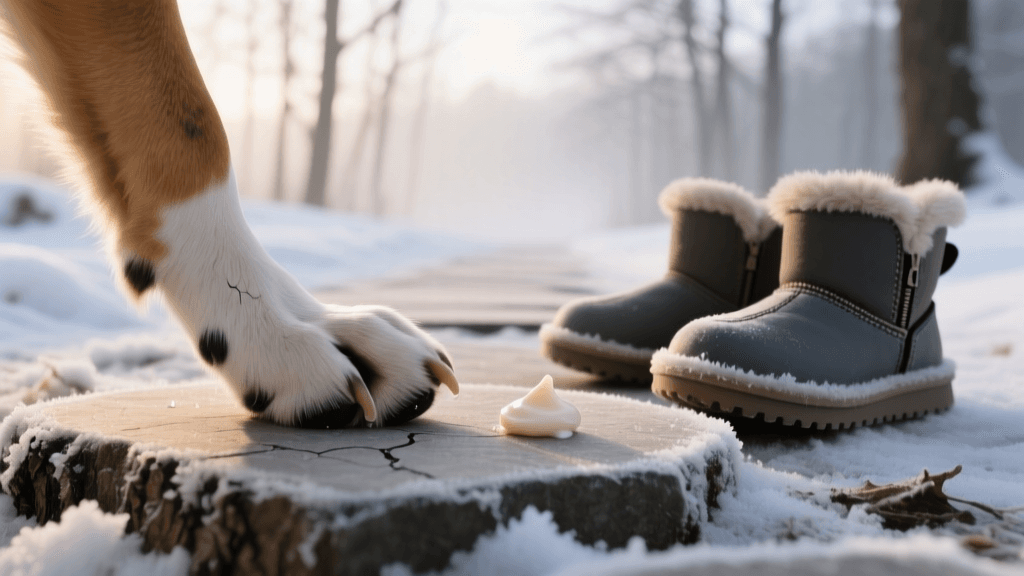
Next, apply a high-quality paw wax. Products like Musher's Secret (approximately $16 for a 2 oz tin) are made from natural food-grade waxes and oils. Rub a generous layer into the pads and between the toes about five minutes before heading outside. This creates a semi-permeable barrier that repels moisture and prevents salt from making direct contact with the skin.
Step 2: Post-Walk Cleanup
Never let your dog jump onto the couch or lick their paws immediately after a winter walk. Keep a designated 'paw station' by your front door. A portable paw washer, such as the Dexas MudBuster (costing around $15), is an excellent investment. Simply fill it with warm water and a drop of dog-safe shampoo, insert the paw, and twist gently to remove salt, dirt, and chemicals. Alternatively, use unscented, pet-safe grooming wipes. After washing, dry the paws thoroughly with a microfiber towel, paying special attention to the spaces between the toes to prevent fungal or bacterial growth caused by trapped moisture.
Paw Protection Showdown: Booties vs. Balms
When it comes to physical protection, dog owners generally choose between paw booties and protective balms. Both have their merits, but they serve slightly different purposes depending on your environment and activity level.
| Feature | Paw Booties (e.g., Ruffwear Grip Trex) | Paw Balms (e.g., Musher's Secret) |
|---|---|---|
| Average Cost | $75 - $95 per set of four | $15 - $25 per tin |
| Protection Level | Maximum (physical barrier against ice, salt, and sharp debris) | Moderate (chemical and moisture barrier, prevents drying) |
| Application Time | 2 to 5 minutes (requires adjusting Velcro straps) | 30 seconds (massage into pads) |
| Best Environment | Deep snow, jagged ice, heavily salted urban streets | Light snow, cold dry air, suburban neighborhoods |
| Dog Acceptance | Low initially (requires positive reinforcement training) | High (most dogs tolerate the massage) |
If you choose booties, ensure they have a durable, non-slip rubber sole and a secure closure system to prevent snow from sneaking in. Always introduce booties indoors, using high-value treats to build a positive association before venturing out into the snow.
Recognizing and Treating Cold Weather Injuries
Despite your best efforts, accidents can happen. It is vital to recognize the early signs of cold-weather injuries. According to veterinary guidelines outlined by the American Kennel Club (AKC), frostbite typically affects the extremities, including the paw pads, ears, and tail. Early signs of frostbite include skin that appears pale, gray, or bluish, and feels unusually cold or hard to the touch. As the area thaws, it may become red, swollen, and extremely painful.
If you suspect frostbite, do not rub the affected area, as this can cause severe tissue damage. Instead, bring your dog indoors immediately and soak the paws in warm (not hot) water, around 100°F (38°C), for 20 minutes. Wrap the paws in a clean, dry bandage and contact your veterinarian immediately for further treatment, which may include pain medication or antibiotics to prevent secondary infections.
For minor cracks and dryness, apply a veterinary-approved healing ointment containing ingredients like shea butter, vitamin E, and beeswax. Avoid human lotions, as they often contain ingredients that are toxic to dogs if ingested, and they can soften the pads too much, making them more prone to tearing.
Holistic Wellness: Nutrition and Indoor Enrichment
Winter paw care is not just about topical treatments; it also involves supporting your dog's skin and coat health from the inside out. The dry winter air depletes moisture from the skin, leading to brittle paw pads. Incorporating Omega-3 fatty acids into your dog's diet can significantly improve skin elasticity and reduce inflammation. Adding a pump of wild Alaskan salmon oil (typically 1,000 mg per 20 lbs of body weight, but always consult your vet for exact dosing) to their daily meals provides essential EPA and DHA, promoting resilient, healthy paw pads.
Furthermore, when the weather is simply too dangerous for outdoor walks, maintaining your dog's physical and mental wellbeing requires creative indoor activities. The American Veterinary Medical Association (AVMA) emphasizes the importance of adjusting your pet's exercise routine during extreme weather to prevent obesity and behavioral issues born from pent-up energy. Swap the daily walk for indoor enrichment: use snuffle mats to stimulate their foraging instincts, play hide-and-seek with their favorite toys, or freeze low-sodium chicken broth inside a KONG toy for a long-lasting, mentally stimulating treat.
Conclusion
Winter should be a season of joy, not a time of pain and discomfort for your canine companion. By understanding the unique vulnerabilities of your dog's paws, respecting temperature limits, and implementing a rigorous pre- and post-walk care routine, you can safely navigate the snowy months ahead. Whether you opt for the heavy-duty protection of rugged booties or the natural barrier of a high-quality paw wax, consistency is key. Prioritize your dog's holistic health through proper nutrition and indoor enrichment, and you will ensure that their paws remain tough, healthy, and ready for every adventure the seasons bring.
hannah-wickes
All our authors care for dogs every day — read more of their work on the authors page.