Dog Dental Care: Answers to Google's Most-Asked Questions
Discover answers to Google's most-asked dog dental care questions. Learn about teeth cleaning costs, best chews, and daily brushing routines.
Google's Most-Asked Questions About Dog Dental Care
When it comes to your dog's overall health, dental care is often the most overlooked aspect. According to the American Veterinary Medical Association (AVMA), over 80% of dogs show signs of periodontal disease by the age of three. As a pet parent, you likely have dozens of questions about keeping your pup's teeth clean, understanding veterinary costs, and choosing the right products. We analyzed Google's most-searched queries regarding canine dental health to bring you this comprehensive, actionable guide.
1. How Much Does Professional Dog Teeth Cleaning Cost?
The cost of a professional veterinary dental cleaning (prophylaxis) typically ranges from $300 to $1,200 or more. The wide price variance depends on your geographic location, the clinic's equipment, and most importantly, your dog's current dental health.
A standard cleaning under general anesthesia generally includes:
- Pre-anesthetic bloodwork: $80 - $150 (Ensures liver and kidneys can safely process anesthesia medications)
- IV fluids and monitoring: $50 - $100 (Maintains blood pressure, hydration, and provides emergency venous access)
- Scaling and polishing: $200 - $400 (Removes tartar above and below the gumline using ultrasonic equipment)
- Dental X-rays: $100 - $200 (Crucial for spotting hidden root infections, as 60% of the tooth lies below the gumline)
- Extractions (if needed): $50 - $300+ per tooth depending on the root structure and surgical complexity
Pro Tip: Never opt for an 'anesthesia-free' dental cleaning. The American Animal Hospital Association (AAHA) strongly advises against them. Anesthesia is required to place an endotracheal tube, which protects your dog's airway from inhaling aerosolized bacteria and water during the scaling process. Non-anesthetic cleanings only polish the visible crown while leaving disease-causing bacteria trapped beneath the gums.
2. Do Dog Dental Chews Actually Work?
Yes, but only if you choose the right ones. The mechanical scraping action of chewing can help reduce plaque and tartar buildup, but not all chews are created equal. To ensure efficacy, look for the Veterinary Oral Health Council (VOHC) seal of acceptance on the packaging.
VOHC-approved chews, such as Purina Pro Plan Dental Chews or Greenies, have undergone rigorous clinical trials to prove their effectiveness. When selecting a chew, consider the following:
- Size and Caloric Content: A regular Greenies chew contains about 90 calories. Adjust your dog's daily food intake accordingly to prevent obesity.
- Texture: The chew must be pliable enough to bend before breaking. Hard items like antlers, cooked bones, or rigid nylon toys can cause painful slab fractures in the carnassial teeth (the large chewing teeth in the back of the mouth).
- Timing: Give dental chews after meals when your dog is less ravenous, encouraging them to chew slowly and maximize the mechanical scraping action rather than gulping the treat whole.
3. How Often Should I Brush My Dog's Teeth?
The gold standard for at-home canine dental care is daily brushing. However, veterinary dentists agree that brushing a minimum of three to four times a week is required to make a meaningful impact on plaque prevention. Plaque hardens into calculus (tartar) within 24 to 48 hours, making it impossible to remove with a toothbrush once it calcifies.
Step-by-Step Brushing Guide
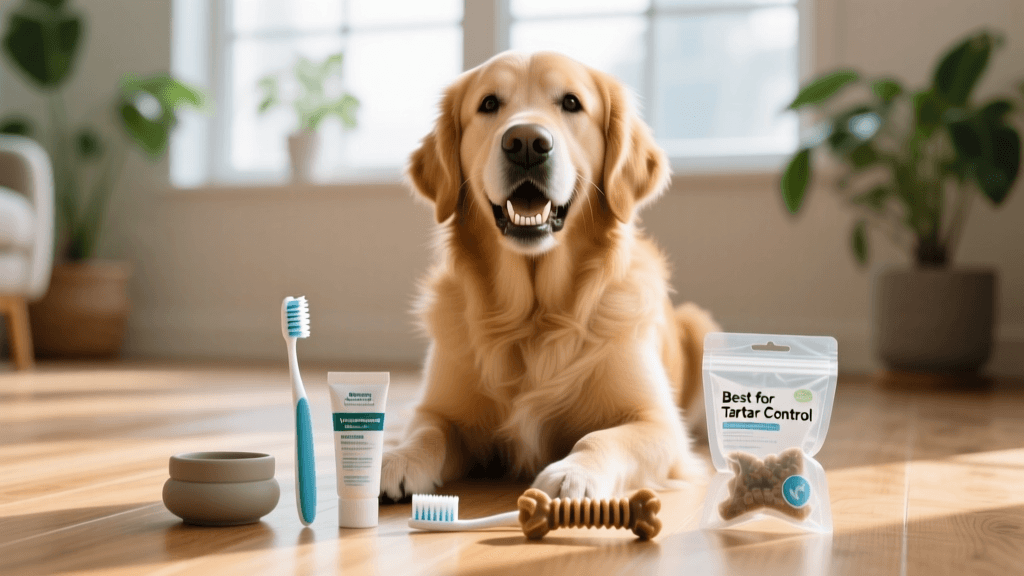
- Choose the right paste: Use an enzymatic toothpaste designed specifically for dogs, such as Virbac C.E.T. Enzymatic Toothpaste (approx. $12-$15 per tube). The dual-enzyme system continues to break down bacteria even after brushing stops.
- Select the right brush: A dual-headed dog toothbrush or a soft silicone finger brush works best for reaching the back molars and conforming to the gumline.
- Focus on the outside: Lift the upper lip and brush the outer surfaces of the teeth at a 45-degree angle to the gumline. The dog's tongue naturally cleans the inner surfaces of the teeth, so you do not need to force their mouth open.
- Keep it positive: Start with just 5-10 seconds per session, rewarding with praise and a small treat. Gradually increase the time to 30-60 seconds as your dog becomes accustomed to the routine.
4. Can I Use Human Toothpaste on My Dog?
Absolutely not. Human toothpaste contains ingredients that are highly toxic to dogs. The most dangerous is xylitol, an artificial sweetener that causes a rapid, life-threatening drop in blood sugar (hypoglycemia) and potential acute liver failure in canines. Furthermore, human toothpaste contains high levels of fluoride and foaming agents (like sodium lauryl sulfate) that are meant to be spit out. Since dogs naturally swallow their toothpaste, ingesting these compounds can lead to severe gastrointestinal upset, vomiting, and systemic toxicity.
5. What Are the Signs and Stages of Dental Disease?
Dogs are stoic animals and rarely show signs of dental pain until the disease is advanced. Watch for these subtle indicators of periodontal disease:
- Persistent bad breath (halitosis)
- Red, swollen, or bleeding gums
- Dropping food while eating or chewing on only one side of the mouth
- Pawing at the face or rubbing the muzzle on furniture
- Reluctance to play with hard toys or fetch
- Visible yellow or brown tartar crust along the gumline
The 4 Stages of Periodontal Disease
Veterinarians classify dental disease into four distinct stages:
- Stage 1 (Gingivitis): Inflammation of the gums caused by plaque buildup. Fully reversible with professional cleaning and home care.
- Stage 2 (Early Periodontitis): Less than 25% attachment loss of the tooth. Gums begin to recede, and tartar is heavily present.
- Stage 3 (Moderate Periodontitis): 25% to 50% attachment loss. Chronic pain begins, and bone loss is visible on X-rays.
- Stage 4 (Advanced Periodontitis): Greater than 50% attachment loss. Teeth are loose, and bacteria can enter the bloodstream, potentially damaging the heart valves, liver, and kidneys.
6. Are Dental Water Additives Safe and Effective?
Dental water additives, such as TropiClean or Healthy Mouth, are safe for daily use and can be a helpful supplementary tool, especially for dogs that absolutely refuse toothbrushing. These additives typically contain ingredients like zinc gluconate, chlorhexidine, or natural enzymes that help alter the pH of the mouth and reduce bacterial load. However, they should never replace brushing or professional cleanings. Think of water additives like mouthwash for humans: they freshen breath and provide mild plaque control, but they cannot remove existing tartar or replace mechanical brushing.
Comparison: Professional vs. At-Home Dental Care
To maintain optimal oral health, a combination of professional veterinary care and consistent at-home routines is required. Below is a comparison of the most common dental care methods.
| Method | Estimated Cost | Frequency | Effectiveness Against Tartar |
|---|---|---|---|
| Veterinary Prophylaxis (Under Anesthesia) | $300 - $1,200+ | Annually or Bi-annually | 100% (Removes existing tartar) |
| Daily Enzymatic Brushing | $15 - $25 (Initial kit) | Daily or 4x/week | High (Prevents plaque hardening) |
| VOHC-Approved Dental Chews | $20 - $40 / month | Daily | Moderate (Reduces plaque buildup) |
| Water Additives (e.g., TropiClean) | $10 - $15 / bottle | Daily | Low-Moderate (Freshens breath, mild plaque control) |
Final Thoughts on Canine Dental Health
Preventive care is always more affordable and safer than treating advanced periodontal disease. By combining annual veterinary cleanings with a consistent at-home brushing routine and VOHC-approved chews, you can add years to your dog's life. Remember, oral health is directly linked to heart, liver, and kidney health. If you notice any signs of dental discomfort, schedule a veterinary oral exam immediately to protect your best friend's overall wellbeing.
beth-carrasco
All our authors care for dogs every day — read more of their work on the authors page.