Best Work From Home Puppy Breeds & Training 2026
Discover the best work-from-home puppy breeds for 2026 and learn essential settle training techniques to keep your remote workspace calm and productive.
The Rise of the Work-From-Home Canine Colleague in 2026
As remote and hybrid work models continue to dominate the professional landscape in 2026, the demand for the perfect "work-from-home" (WFH) puppy has never been higher. Remote workers are uniquely positioned to raise a puppy, offering frequent potty breaks and midday socialization. However, having a dog in your home office also presents distinct behavioral challenges. A puppy that demands attention during a critical Zoom presentation or barks at every Slack notification can quickly derail your productivity.
Choosing a breed naturally predisposed to lower energy levels and high adaptability is only the first step. The true secret to a harmonious home office lies in specialized behavioral conditioning. According to the ASPCA's dog training guidelines, establishing clear boundaries and teaching a reliable "settle" behavior are foundational for any dog living in a high-stimulus indoor environment. In this comprehensive guide, we explore the best puppy breeds for remote workers and detail the exact training protocols required to turn your new companion into the ultimate quiet coworker.
Top 5 Puppy Breeds for Remote Workers
When selecting a WFH companion, you want a breed that thrives on proximity but does not require constant, high-octane engagement. Here are the top breeds that excel in a home office setting, provided they receive the right foundational training.
1. Cavalier King Charles Spaniel
The Cavalier is the quintessential lap dog, renowned for its gentle demeanor and intense desire to simply be near its owner. They are highly attuned to their human's emotional state, making them excellent companions for high-stress remote jobs. However, their deep attachment means they are prone to separation anxiety if you ever need to leave the house. Training must focus heavily on independence conditioning and crate games to ensure they remain confident when you step away for an in-person meeting.
2. Bichon Frise
For remote workers with allergies or those who prefer a low-shedding environment, the Bichon Frise is an outstanding choice. They are cheerful, adaptable, and generally quiet. The primary training focus for a Bichon in a home office is managing "alert barking." Because they are naturally observant, they may try to announce the arrival of delivery drivers. Teaching a "quiet" command and desensitizing them to doorbell sounds is crucial.
3. Japanese Chin
Often described as cat-like, the Japanese Chin is an aristocratic, quiet, and independent toy breed. They are perfectly content to lounge on a designated mat or bed while you work, rarely demanding vigorous play sessions. Their low exercise requirements make them ideal for busy professionals. Training a Chin requires patience and high-value treats, as they can be somewhat stubborn, but their natural inclination toward calmness makes "settle" training remarkably straightforward.
4. Greyhound
While getting a Greyhound puppy is rare, adopting a young adult or working with a specialized breeder for a low-drive line can yield the ultimate "couch potato" coworker. Greyhounds are sprinters, not marathon runners. A single 20-minute morning run or flirt pole session before your workday begins will leave them happily snoozing under your desk for eight hours. The main training focus is teaching them to navigate indoor spaces without slipping and acclimating them to household noises, as many are initially timid.
5. Pug
Pugs are comedic, affectionate, and decidedly low-energy. They thrive on human companionship and will happily snore softly beneath your standing desk. Because of their brachycephalic (flat-faced) anatomy, they cannot tolerate intense exercise or heat, which naturally limits their need for vigorous outdoor training sessions. Focus your training efforts on impulse control around food and teaching them to settle on a breathable, cooling mat rather than seeking out your lap during warm months.
The Core WFH Training Protocol: Teaching "Settle"
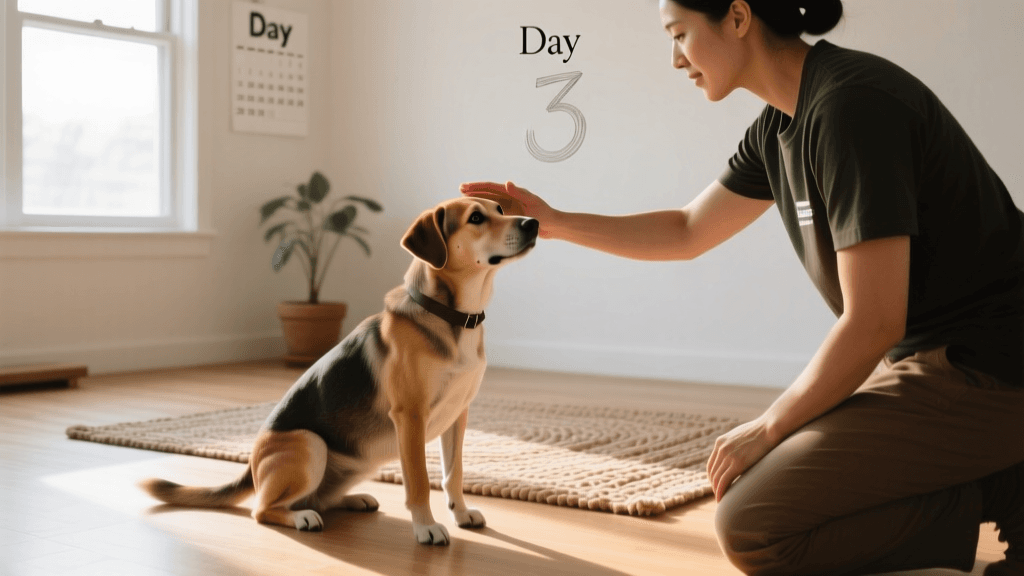
The Humane Society's behavioral resources emphasize that dogs do not naturally know how to "turn off" in a stimulating environment. You must actively teach them how to relax. The "Settle" protocol is the most critical training sequence for any remote worker.
Phase 1: Mat and Place Training
Your puppy needs a designated "office" that is not your lap. Choose a raised cot or a specific flat mat placed just outside your immediate workspace but within your line of sight.
- Luring: Hold a high-value treat (like freeze-dried chicken liver) to your puppy's nose and guide them onto the mat. The moment all four paws touch the mat, say "Yes!" and deliver the treat.
- Adding the Cue: Once the puppy reliably follows the lure onto the mat, add the verbal cue "Place" or "Mat" just before you gesture.
- Building Duration: Stop luring. Wait for the puppy to offer a sit or down on the mat. Reward heavily for a down position, as it is physically incompatible with pacing or jumping.
- Adding Distance: Take one step back toward your desk. If the puppy stays on the mat, return and reward. Gradually increase the distance until you can sit in your office chair while the puppy remains on their mat.
Phase 2: Capturing Calmness
Remote workers often accidentally reinforce demanding behavior. If your puppy whines while you are typing, and you reach down to pet them to quiet them, you have just taught them that whining equals attention.
- Keep a jar of low-value kibble or training treats on your desk.
- Throughout the workday, whenever you notice your puppy voluntarily lying down, sighing, and relaxing on their own, calmly walk over and drop a treat between their front paws.
- Do not speak or make eye contact. Simply reward the physical state of relaxation.
- Over time, your puppy will learn that doing absolutely nothing is the most profitable behavior in the home office.
2026 WFH Breed Training Matrix
Understanding the specific behavioral tendencies of your chosen breed allows you to anticipate and mitigate common work-from-home distractions. Use the matrix below to tailor your training approach.
| Breed | Baseline Energy | "Settle" Training Difficulty | Primary WFH Distraction | Recommended Training Tool |
|---|---|---|---|---|
| Cavalier King Charles | Low-Medium | Easy | Separation distress when you leave the room | Snuffle mat for independent foraging |
| Bichon Frise | Medium | Moderate | Alert barking at household noises | White noise machine & "Quiet" cue training |
| Japanese Chin | Low | Easy | Stubbornness / ignoring recall | High-value freeze-dried treats |
| Greyhound | Low (Post-Sprint) | Moderate | Startling at sudden movements/sounds | Desensitization audio tracks |
| Pug | Low | Easy | Begging / food scavenging | Kong Wobbler for meal-time pacing |
Desensitizing to the Digital Office Environment
In 2026, our digital environments are filled with synthetic sounds that can trigger a puppy's prey drive or anxiety. The sudden chime of a video conferencing app, the ping of a direct message, or the robotic voice of a smart home assistant can easily startle a young dog.
To prevent your puppy from barking at your computer, you must systematically desensitize them to these audio cues. Record the specific notification sounds from your most-used applications (e.g., Slack, Microsoft Teams, Zoom). Play these sounds through your phone at a very low volume—so low that your puppy notices but does not react. Immediately follow the sound with a high-value treat. Repeat this process dozens of times over several days, gradually increasing the volume and eventually playing the sound from your actual computer speakers. According to the American Kennel Club's training experts, pairing a previously neutral or startling stimulus with a positive outcome fundamentally changes the dog's emotional response to the trigger.
Recommended 2026 Training Gear for Remote Workers
Equipping your home office with the right tools can significantly accelerate your puppy's training and preserve your sanity during deep-work blocks.
- K&H Pet Products Thermo-Peaceful Pals Bed: Ideal for toy breeds like the Japanese Chin or Cavalier, this bed provides gentle, thermostatically controlled warmth, encouraging the puppy to stay on their designated mat rather than seeking the warmth of your lap.
- EufyPet Smart Camera & Treat Dispenser: For remote workers who occasionally need to work from a different room or step out for a neighborhood coffee run, this 2026 model allows you to monitor your puppy's settle behavior and remotely dispense treats when you catch them being calm on their mat.
- Snuffle Mat for Deep Work Blocks: When you have a two-hour block of uninterrupted focus required, scatter your puppy's daily kibble ration into a dense snuffle mat. Foraging is a natural canine behavior that lowers heart rate and promotes quiet, independent mental stimulation.
Conclusion
Integrating a puppy into your remote work life in 2026 is a deeply rewarding experience, provided you approach it with intentionality. By selecting a breed suited for indoor companionship and rigorously applying the "settle" protocol, place training, and audio desensitization, you can cultivate a peaceful, productive environment. Remember that consistency is your greatest asset; reward the quiet moments, ignore the demanding ones, and your new WFH companion will quickly learn the unwritten rules of the home office.
anouk-beaumont
All our authors care for dogs every day — read more of their work on the authors page.