Top 5 Puppy Breeds for Remote Workers in 2026: WFH Guide
Discover the best puppy breeds for remote workers in 2026. Learn which low-bark, adaptable dogs thrive in home offices and boost your WFH productivity.
The Rise of the Work-From-Home Dog in 2026
As remote and hybrid work models continue to dominate the corporate landscape in 2026, the home office has evolved from a makeshift desk in the corner to a permanent, optimized workspace. For many professionals, the only thing missing from their daily routine is the companionship of a dog. However, bringing a puppy into a remote work environment requires careful consideration. You need a companion that can handle the quiet focus of deep work, won't interrupt important video calls with excessive barking, and can adapt to the unique rhythms of a home-based lifestyle.
Choosing the right breed is the difference between a productivity-boosting furry friend and a stressful, distraction-filled workday. In this comprehensive guide, we explore the best puppy breeds for remote workers, detailing their temperaments, care requirements, and how to set up your home office for success.
What Makes a Good Work-From-Home Dog?
Not every dog is cut out for the home office lifestyle. While high-energy working breeds like Border Collies or Siberian Huskies are wonderful pets, they often require hours of intense physical and mental stimulation that simply isn't compatible with a standard eight-hour workday. When evaluating breeds for a remote work environment, prioritize the following traits:
- Low Vocalization Drive: You need a dog that is naturally quiet. Breeds prone to alert barking will disrupt your Zoom meetings and frustrate your colleagues.
- Moderate to Low Energy Levels: A puppy that is content to nap on a dog bed under your desk while you type is ideal. They should be satisfied with a brisk morning walk and an evening play session.
- Adaptability: The best WFH dogs can seamlessly transition from active morning routines to long stretches of quiet relaxation.
- Independence: While cuddly dogs are great, a breed that suffers from severe 'velcro' tendencies may develop separation anxiety the moment you step into the kitchen for lunch.
Top 5 Puppy Breeds for Remote Workers in 2026
1. Cavalier King Charles Spaniel
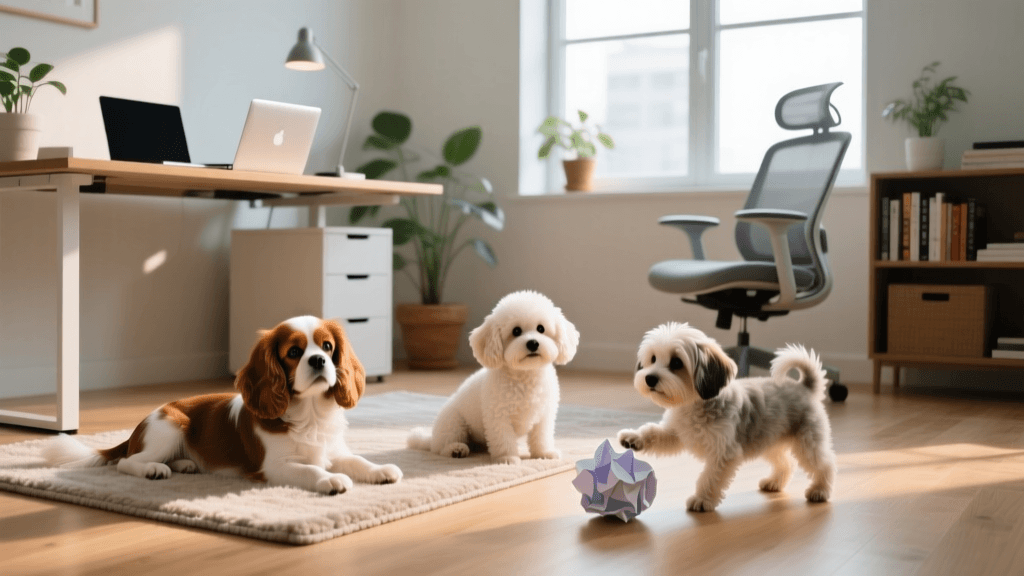
The Cavalier King Charles Spaniel remains a top-tier choice for remote workers. Known for their gentle, affectionate, and incredibly adaptable nature, Cavaliers are just as happy going for a hike as they are curling up on your lap during a spreadsheet session. They are notably quiet dogs, rarely barking without a significant reason, making them perfect for open-microphone environments. In 2026, prospective owners should budget between $2,800 and $4,500 for a puppy from a health-tested breeder, ensuring they screen for common mitral valve heart disease.
2. Bichon Frise
If you work from a smaller home office or suffer from mild pet allergies, the Bichon Frise is an exceptional choice. Their hypoallergenic, low-shedding coat keeps your workspace clean and your sinuses clear. Bichons are cheerful, highly trainable, and possess a moderate energy level that is easily satisfied with indoor play and a neighborhood walk. They do require professional grooming every four to six weeks, which is an important budgetary consideration (averaging $80-$120 per session in 2026).
3. Havanese
The Havanese is Cuba's national dog and a beloved WFH companion worldwide. They are deeply attuned to their owners' emotions, often acting as natural stress-relievers during high-pressure workdays. Havanese dogs are sturdy enough for a good play session but small enough to rest comfortably in a crate or playpen beside your desk. They are highly intelligent and respond beautifully to positive reinforcement training, which is crucial for teaching them the 'quiet' command.
4. Miniature Schnauzer
For remote workers who want a slightly more alert and spirited companion without the high energy of a terrier, the Miniature Schnauzer is a fantastic fit. They are highly intelligent, easy to train, and shed very little. While they can be vocal if not trained early, their intelligence makes them quick learners when it comes to office etiquette. According to the American Kennel Club, early socialization is key to ensuring your Schnauzer remains confident and calm when the doorbell rings during your workday.
5. Japanese Chin
Often described as 'cat-like,' the Japanese Chin is an aristocratic, quiet, and deeply observant breed. They are not overly demanding of attention and are perfectly content to watch you work from their favorite velvet cushion. Their low exercise requirements make them ideal for apartment-dwelling remote workers. They are sensitive dogs that thrive in calm, quiet environments, aligning perfectly with the focused atmosphere of a home office.
WFH Puppy Breed Comparison Chart
| Breed | Energy Level | Barking Level | Grooming Needs | Avg. 2026 Price |
|---|---|---|---|---|
| Cavalier King Charles Spaniel | Moderate | Low | Moderate (Brushing) | $2,800 - $4,500 |
| Bichon Frise | Moderate | Low to Moderate | High (Professional) | $2,200 - $3,800 |
| Havanese | Moderate | Low | High (Professional) | $2,000 - $3,500 |
| Miniature Schnauzer | Moderate to High | Moderate | High (Professional) | $2,500 - $4,000 |
| Japanese Chin | Low | Very Low | Moderate (Brushing) | $2,500 - $4,200 |
Structuring Your WFH Puppy Schedule
Puppies thrive on routine. As a remote worker, you have the unique advantage of being home to enforce a strict, healthy schedule that prevents accidents and promotes good behavior. Here is a sample daily schedule optimized for a WFH professional and an 8-to-12-week-old puppy:
- 7:00 AM: Wake up, immediate potty break outside, followed by 20 minutes of active play to burn off morning energy.
- 8:00 AM: Breakfast and a second potty break.
- 8:30 AM - 10:30 AM: Deep work block. Puppy is in a playpen near your desk with a safe chew toy or a snuffle mat. Most puppies will nap during this time.
- 10:30 AM: Potty break and 15 minutes of basic obedience training (sit, stay, mat).
- 11:00 AM - 1:00 PM: Meetings and calls. Puppy is resting in their crate with a white noise machine running to mask your voice and outside sounds.
- 1:00 PM: Lunch break for you; a 30-minute sniffari walk for the puppy.
- 2:00 PM - 5:00 PM: Afternoon work block. Puppy naps or plays quietly with interactive puzzle toys.
- 5:00 PM: Laptop closes. Evening walk, dinner, and dedicated bonding time.
Setting Up Your Home Office for a Puppy
To maintain your productivity and keep your puppy safe, your home office must be puppy-proofed and properly equipped. Invest in a high-quality, modular playpen (such as the Diggs Revol crate and playpen system) that allows you to contain the puppy near your feet without them being able to chew on expensive ethernet cables or power strips.
Audio management is critical. Even the quietest breeds may whimper or squeak during a dream. Utilize a smart white noise machine, like the LectroFan Evo, placed near your desk to drown out ambient puppy noises for your microphone. Additionally, equip your office with interactive enrichment toys. The Kong Classic, stuffed with frozen peanut butter and kibble, can keep a puppy occupied for 45 minutes, providing you with an uninterrupted block of time to finish a report.
Preventing Separation Anxiety in WFH Dogs
The greatest risk of raising a puppy while working from home is inadvertent separation anxiety. Because you are always present, the puppy may fail to learn how to self-soothe when you inevitably leave the house for grocery runs, gym sessions, or occasional in-office days. The ASPCA notes that separation anxiety is one of the most common behavioral issues in dogs, often stemming from an over-reliance on the owner's constant presence.
To prevent this, you must practice 'mock departures.' Even if you are working from home, put your puppy in their crate or a separate dog-proofed room for 30 to 60 minutes a day while you remain in the house. Do not make a fuss when you leave the room, and ignore them for the first five minutes when you return. This teaches the puppy that your absence is temporary, boring, and nothing to panic about. Utilizing a smart pet camera allows you to monitor their stress levels and toss treats remotely when they are calm and settled.
Final Thoughts on WFH Puppies
Bringing a puppy into your remote work life in 2026 is a highly rewarding endeavor that can lower your stress levels, encourage healthy screen-time breaks, and provide unmatched companionship. By selecting a breed that aligns with your professional demands—like the quiet Cavalier or the hypoallergenic Bichon Frise—and implementing a structured daily routine, you can cultivate a harmonious environment where both your career and your new best friend thrive.
marcus-aldridge
All our authors care for dogs every day — read more of their work on the authors page.