Choosing the Best Family Dog for Homes with Toddlers
Discover the best dog breeds for toddlers, essential safety tips, and a step-by-step guide to preparing your home for a safe, happy family introduction.
The Magic and Chaos of Toddlers and Dogs
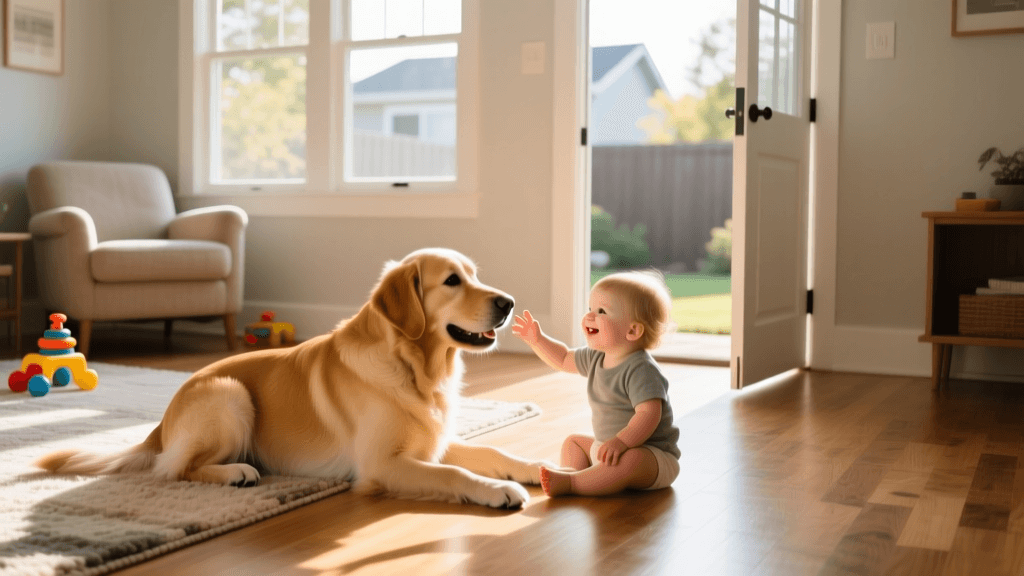
Bringing a dog into a home with toddlers is a beautiful milestone. The image of a gentle canine watching over a playful child is a timeless one, but the reality requires careful planning, immense patience, and strategic home preparation. Toddlers, typically aged one to three years, are naturally curious, uncoordinated, and lack impulse control. They grab, pull, and make sudden loud noises—all of which can be highly stressful for an unprepared dog. When you are in the 'Getting a Dog' phase, selecting the right companion and setting up a safe environment is critical for the welfare of both your child and your new pet.
Why the Right Dog Choice Matters for Families
According to the American Academy of Pediatrics, the majority of dog bites to children occur in the home, often involving a familiar family dog, and are frequently triggered by a child's unintentional provocation. This underscores the importance of choosing a dog with a proven, stable temperament and a high tolerance for erratic movements. While no dog is entirely bite-proof, selecting a breed or an adult rescue with a documented history of patience can drastically reduce risks. Furthermore, the AAP emphasizes that no infant or toddler should ever be left alone with a dog, regardless of the breed's reputation.
Top Dog Profiles for Homes with Young Children
While individual temperament always outweighs breed stereotypes, certain breeds are historically recognized for their patience, sturdiness, and low prey drive. The American Kennel Club frequently highlights breeds that thrive in active, noisy family environments. Below is a comparison of suitable profiles for homes with toddlers.
| Breed / Type | Average Weight | Energy Level | Grooming Needs | Toddler Suitability |
|---|---|---|---|---|
| Golden Retriever | 55-75 lbs | High | Moderate (Weekly brushing) | 5/5 (Highly tolerant, sturdy) |
| Beagle | 20-30 lbs | Medium | Low (Short coat) | 4/5 (Sturdy, but can be vocal) |
| Bichon Frise | 12-18 lbs | Medium | High (Professional grooming) | 4/5 (Gentle, but fragile for rough toddlers) |
| Boxer | 50-80 lbs | High | Low | 3/5 (Playful, but may knock over small kids) |
| Adult Mixed Breed (Fostered) | Varies | Varies | Varies | 5/5 (If tested with kids in foster care) |
Pro Tip: Adopting an adult mixed-breed dog (aged 2 or older) from a foster-based rescue is often the safest route. Foster parents can provide empirical data on how the dog reacts to loud noises, dropped food, and sudden movements, removing the guesswork associated with raising a puppy.
Essential Home Preparation: Creating Safe Zones
Before your dog arrives, you must toddler-proof your home for the dog, and dog-proof your home for the toddler. Creating physical boundaries is non-negotiable. Budget approximately $150 to $250 for essential safety and management gear.
1. The Dog's Sanctuary (Crate Training)
Your dog needs a designated retreat where toddlers are strictly forbidden to enter. A wire crate is ideal because it allows the dog to see out while remaining physically protected.
- Product Recommendation: MidWest Homes for Pets iCrate.
- Measurements: For a medium-to-large dog (like a Retriever mix), purchase the 36 x 23 x 25-inch model.
- Cost: Approximately $65.
- Actionable Advice: Place the crate in a low-traffic area like a corner of the living room or a quiet home office. Teach your toddler from day one that the crate is the dog's 'bedroom' and we do not knock on the door or throw toys inside.
2. Physical Barriers (Baby Gates)
Gates allow the dog and toddler to see and smell each other without the risk of physical contact, which is crucial for decompression.
- Product Recommendation: Regalo Easy Step Walk Thru Gate.
- Measurements: Fits doorways and hallways between 29 and 39 inches wide.
- Cost: Approximately $40.
- Actionable Advice: Use pressure-mounted gates for standard doorways, but if you need to block off a staircase, you must use a hardware-mounted gate bolted into the studs to prevent a toddler or large dog from pushing it over.
3. Cleanup and Sanitation
Toddlers drop food, and dogs will inevitably have an accident during the transition period. Standard household cleaners do not break down the uric acid in dog urine, leading to repeat offenses.
- Product Recommendation: Nature's Miracle Advanced Stain and Odor Eliminator.
- Cost: Approximately $15 for a 32 oz spray bottle.
- Actionable Advice: Keep this out of reach of toddlers but easily accessible for parents to treat any accidents immediately.
Teaching Toddlers and Dogs to Coexist Safely
The American Veterinary Medical Association (AVMA) strongly advocates for educating children on how to safely interact with animals. While you cannot have a deep conversation with a two-year-old, you can instill basic physical rules through repetition and modeling.
The 3 Golden Rules for Toddlers
- Never approach a sleeping or eating dog: Teach your child that when the dog is in their crate or eating from their bowl, they are 'invisible.' Use a visual cue, like a red bandana on the crate, to signify 'do not disturb.'
- Pet the back, not the face: Toddlers naturally want to hug or pat dogs on the head, which many dogs find threatening. Guide your toddler's hand to gently stroke the dog's back or side.
- Be a Tree: If the dog gets overly excited or jumps, teach your toddler to 'be a tree'—stand completely still, fold their arms (branches), and look down at their feet (roots). This removes the excitement trigger for the dog.
Recognizing Canine Stress Signals
Toddlers cannot read body language, so parents must act as the dog's advocate. Dogs rarely bite 'out of nowhere'; they almost always provide warning signs that they are overwhelmed. If you see these signs, immediately separate the dog and the toddler, and give the dog a break in their safe zone.
Key Canine Stress Signals to Watch For:
- Whale Eye: The dog turns its head away but keeps its eyes on the toddler, showing the whites of its eyes.
- Lip Licking: Rapid, repetitive licking of the nose or lips when not eating.
- Yawning: Frequent yawning when the dog is not tired, used as a calming signal to diffuse stress.
- Stiffening: The dog freezes its body completely when a toddler approaches or touches it.
- Tucked Tail: The tail is pulled low or between the legs, indicating fear or submission.
The First 14 Days: A Timeline for Success
The transition period is critical. Do not expect the dog and toddler to be best friends on day one. Follow this structured timeline to build a foundation of trust.
Days 1-3: Decompression and Scent Swapping
Keep the dog and toddler physically separated using baby gates. Allow the dog to explore the home while the toddler is napping or out of the house. Swap scents by letting the dog sniff a blanket the toddler slept on, and vice versa. Keep interactions to zero; let the dog acclimate to the ambient noise of your home.
Days 4-7: Gated Visual Introductions
Allow the toddler to stand near the baby gate while the dog is on a leash on the other side. Toss high-value treats (like small pieces of boiled chicken) to the dog whenever the toddler is nearby. This builds a positive association: Toddler = Delicious Treats. Keep these sessions under five minutes to prevent overstimulation.
Days 8-14: Supervised Leash Interactions
With the dog securely on a leash held by an adult, allow the toddler to enter the same room. Give the toddler a toy to hold to keep their hands occupied. Ask the dog to perform basic commands like 'sit' or 'down' and reward heavily. If the dog shows any stress signals, calmly end the session and guide the dog to their crate with a stuffed KONG Classic Dog Toy (Medium size, approx. $12) to chew on.
Conclusion
Choosing and preparing for a family dog when you have toddlers is a profound responsibility that yields incredible rewards. By selecting a patient breed or a proven adult rescue, investing in physical barriers like crates and gates, and vigilantly monitoring canine stress signals, you are setting the stage for a lifelong bond. Remember that supervision is your greatest tool. With time, consistency, and a well-prepared home, your toddler and your new dog will safely navigate their shared world together.
aaron-whyte
All our authors care for dogs every day — read more of their work on the authors page.