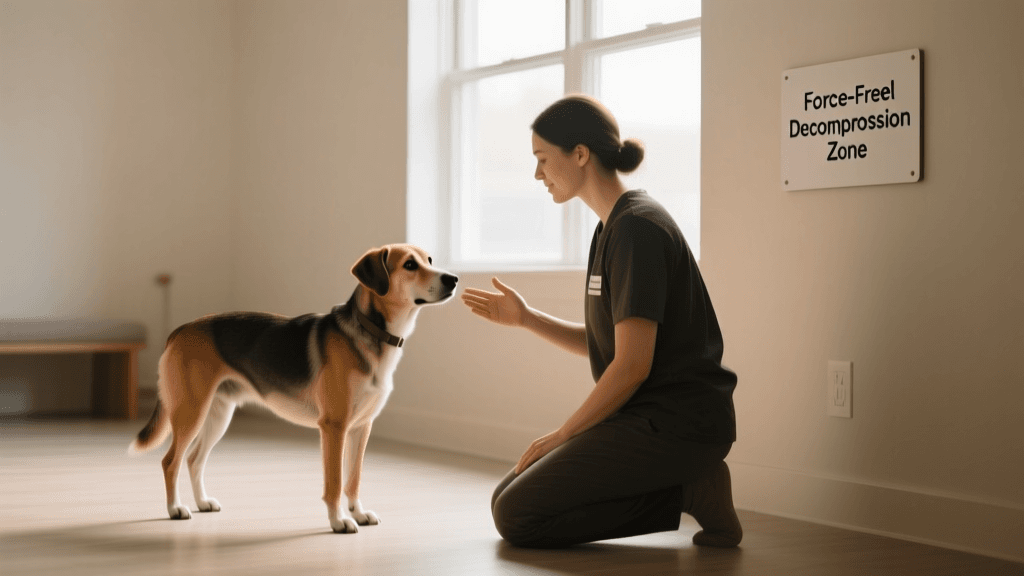
2026 Force-Free Decompression Setup for New Rescue Dogs
Learn how to set up a force-free decompression zone and use positive reinforcement on day one with your newly adopted rescue dog in 2026.
Welcome to Force-Free Dog Ownership in 2026
Bringing a newly adopted dog home is one of the most exciting milestones in your life, but for the dog, it is a profoundly overwhelming sensory experience. In 2026, the veterinary behaviorist consensus has shifted entirely away from outdated dominance-based theories, embracing force-free, positive reinforcement methodologies as the gold standard for canine care. When you bring a rescue dog into your home, their brain is flooded with cortisol and adrenaline. They do not need a firm hand or strict rules on day one; they need a carefully curated decompression zone and a human who understands the power of positive association.
According to the ASPCA's official dog training guidelines, positive reinforcement is not just about handing out treats; it is about building a foundation of trust where the dog feels safe enough to learn. This guide will walk you through the exact steps to set up a force-free decompression environment and outline a positive reinforcement timeline for your first 48 hours together.
The Science of Decompression and the 3-3-3 Rule
Before setting up your home, it is vital to understand the 3-3-3 rule of rescue dog adoption. The first 3 days are for decompression, the first 3 weeks are for learning your routine, and the first 3 months are for building deep trust and attachment. During those critical first 72 hours, a dog's nervous system is in overdrive. The Fear Free Pets initiative emphasizes that reducing fear, anxiety, and stress (FAS) in the initial days is the single most important factor in preventing behavioral issues later on.
Force-free decompression means giving the dog agency. It means removing forced interactions, avoiding loud noises, and providing species-appropriate enrichment that allows them to self-soothe. Licking and chewing are proven to release endorphins in a dog's brain, naturally lowering their heart rate and promoting a state of calm.
Setting Up Your Dog's Decompression Zone
Your decompression zone should be a quiet, low-traffic area of your home, such as a spare bedroom or a quiet corner of the living room. The goal is to create a safe haven where the dog can observe without being overwhelmed.
Essential Force-Free Gear for Day One
- The Safe Playpen: Instead of isolating a scared dog in a closed room or a cramped crate, use a 4x4 foot or larger wire playpen. This provides a physical boundary while allowing the dog to see their surroundings, reducing feelings of entrapment. In 2026, the average cost for a high-quality, rust-proof playpen setup is around $80 to $120.
- Visual Barriers: Attach a breathable canvas cover or a light sheet to two sides of the playpen. This creates a den-like feel and blocks out sudden movements from other pets or children.
- Orthopedic Bedding: Invest in a washable, bolster-style orthopedic bed. The raised edges provide a place for the dog to rest their chin, which is a natural calming posture for canines.
- Enrichment Feeders: Ditch the standard food bowl. Use a West Paw Toppl or a KONG Classic stuffed with high-value, easily digestible wet food (such as canned pumpkin or plain goat milk) and frozen overnight. A snuffle mat is also excellent for encouraging natural foraging behaviors, which tires the dog out mentally without requiring physical exercise.
- White Noise Machine: A simple white noise machine or a fan placed near the zone helps mask triggering household sounds like doorbells, footsteps, or traffic.
Choosing the Right Day-One Harness
If you must take your dog outside for a potty break on day one, never use a slip lead or a collar that applies pressure to the trachea. Pressure on the neck triggers the opposition reflex and spikes anxiety. Instead, use a Y-front, force-free harness with a dual-clip option (front and back). The 2026 models of the Perfect Fit Harness or the Haqihana Harness are excellent choices, as they are designed to avoid the shoulder joints and distribute pressure evenly across the chest.
The First 48 Hours: A Positive Reinforcement Timeline
How you interact with your dog during the first two days will set the tone for your entire relationship. The core philosophy is 'Capture and Reward.' You are not asking the dog to perform commands; you are simply rewarding them for making calm choices.
Hour 1 to 12: The Silent Welcome
When you first arrive home, lead the dog directly to their decompression zone. Keep your voice low and your body language relaxed. Do not force eye contact, and do not invite them out of the pen. Simply toss a few high-value treats (like freeze-dried beef liver or Ziwi Peak air-dried venison) into the pen every time they look at you or sniff the ground. This is called 'classical conditioning'—you are teaching the dog that your presence predicts wonderful things, without demanding any work from them.
Hour 12 to 24: Introduction to Choice
By the next morning, your dog may begin to show interest in their surroundings. Open the playpen door and let them choose whether to exit. If they step out, calmly toss a treat on the floor. If they retreat back to the pen, respect their choice and do not follow them. This agency is the cornerstone of force-free training. When a dog realizes they have the power to leave a situation, their anxiety drops significantly.
Hour 24 to 48: Capturing Calmness
Begin practicing 'Capturing Calmness,' a methodology popularized by renowned positive reinforcement trainer Kathy Sdao. Keep a treat pouch on you at all times. Whenever the dog voluntarily lies down, settles their chin, or lets out a deep sigh, quietly walk over and place a treat between their front paws. Do not use a clicker or say 'good dog' loudly, as this might startle them or excite them back to their feet. You are rewarding the state of relaxation itself.
Day 1 vs. Day 2 Force-Free Interaction Guide
Use the following table to gauge your interaction levels, treat types, and session durations during the critical first 48 hours.
| Metric | Day 1: Deep Decompression | Day 2: Gentle Exploration |
|---|---|---|
| Interaction Level | Passive (tossing treats, ignoring demanding behavior) | Active but low-energy (hand-feeding, gentle engagement) |
| Treat Type | High-value, aromatic (freeze-dried liver, sardines) | Medium-value (boiled chicken, kibble mixed with yogurt) |
| Handling | Zero forced handling; no petting unless requested | Light chest scratches only if dog initiates contact |
| Enrichment | Frozen KONGs, lick mats, passive white noise | Snuffle mats, gentle scent trails in the yard |
| Training Duration | 0 minutes of formal training | Maximum 3-minute 'capture calmness' intervals |
Common Force-Free Mistakes to Avoid
Even well-meaning owners can accidentally trigger fear responses in a newly adopted dog. Avoid these common pitfalls during the first week:
- Flooding: This occurs when you force a dog to face their fears without an escape route (e.g., dragging a scared dog into a busy park to 'socialize' them). This destroys trust and can lead to learned helplessness or defensive aggression.
- The Alpha Roll: Never physically force a dog onto its back to establish dominance. This is a debunked 20th-century myth that causes immense psychological trauma and is entirely contrary to modern behavioral science.
- Leash Corrections: Jerking the leash when a dog pulls or lunges creates a negative association with the trigger (e.g., another dog or a bicycle). Instead, use positive reinforcement to reward the dog for looking back at you when a trigger appears in the distance.
- Over-Exercise: Many new owners believe a tired dog is a good dog, so they take their newly adopted rescue on a 5-mile run on day two. Physical exhaustion without mental decompression actually increases cortisol levels. Prioritize mental enrichment and sniffing over physical mileage.
Building a Lifetime of Trust
Getting a dog is not just about bringing an animal into your house; it is about welcoming a sentient being into your family. By committing to positive reinforcement and force-free methods from the very first minute, you are communicating to your new rescue that they are safe, understood, and valued. The 2026 standards of canine care demand empathy, patience, and science-backed strategies. Take a deep breath, lower your expectations for immediate obedience, and focus entirely on building a bond rooted in mutual respect. Your patience during these first 48 hours will pay dividends for the next decade of your life together.
aaron-whyte
All our authors care for dogs every day — read more of their work on the authors page.