WFH Dog Training 2026: Best Breeds & Quiet Protocols
Discover the best dog breeds for remote workers in 2026 and learn specific WFH training protocols to keep your dog quiet during important Zoom calls.
The Rise of the WFH Dog in 2026
As we navigate the professional landscape of 2026, remote and hybrid work models have solidified into permanent fixtures for millions of professionals. With the home office now serving as a dual-purpose living and working space, the presence of canine companions during the workday has become increasingly common. However, sharing your workspace with a dog presents unique behavioral conditioning challenges. A sudden bark during a critical client presentation or a demand for attention during deep-work sprints can severely impact productivity. According to the American Kennel Club's training experts, teaching a dog to 'settle' and respect boundaries is one of the most vital skills for modern pet owners. This guide explores the best dog breeds for remote workers and outlines a specialized, actionable training protocol to ensure your dog remains a calm, quiet, and supportive presence in your home office.
Top 4 Dog Breeds for Remote Workers (And How to Train Them)
Not all dogs are naturally suited for the quiet, sedentary environment of a home office. High-energy herding breeds or vocal terriers often struggle with the lack of physical stimulation during an eight-hour workday. Instead, remote workers should look for breeds with lower baseline energy levels, high biddability, and a natural inclination toward lounging. Here are the top four breeds and their specific training requirements.
1. Cavalier King Charles Spaniel
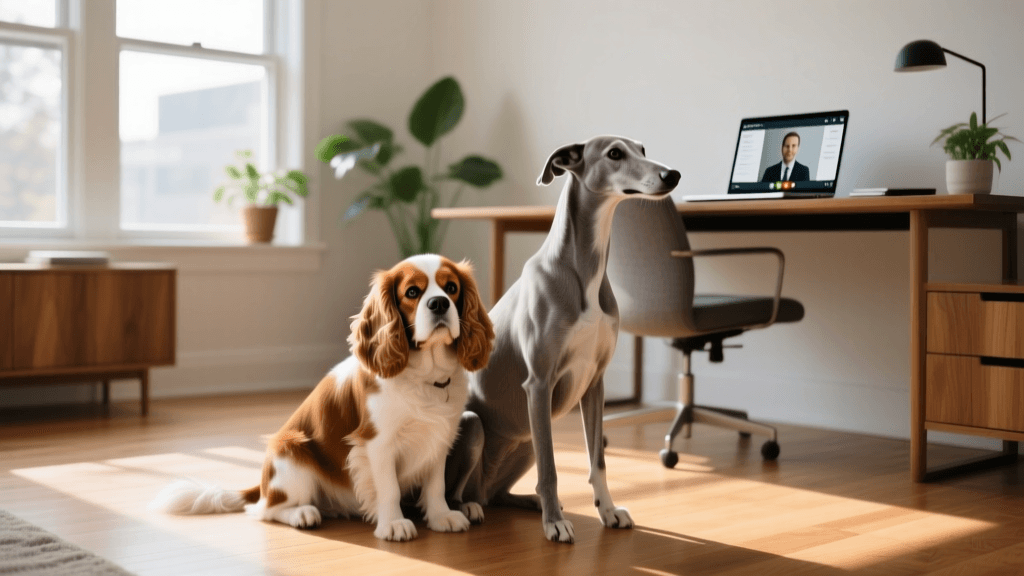
The Cavalier King Charles Spaniel is the quintessential lap dog, making them an ideal companion for remote workers who want a dog resting at their feet. They are highly affectionate and generally quiet. However, their deep attachment to their owners can lead to 'attention-seeking' behaviors when they feel ignored during long video calls. Training Focus: Mat training and boundary setting. You must train the Cavalier that their designated bed is a rewarding place to be, even when you are actively engaged with your computer. Use high-value treats like freeze-dried beef liver to reward them for staying on their mat while you type.
2. Greyhound
Despite their reputation as racers, retired Greyhounds are famously known as '45-mph couch potatoes.' They sleep for up to 18 hours a day and are exceptionally quiet indoors. Training Focus: Impulse control and desensitization to sudden movements. Greyhounds have a high prey drive and can be startled by sudden movements on screen or quick gestures you make while presenting. Training the 'leave it' command and practicing impulse control with flirt poles in the yard will help them remain grounded and unbothered by your home office activities.
3. Basset Hound
Basset Hounds are low-energy, stubborn, and generally uninterested in interrupting your workflow. They are perfectly content to snore softly under your desk. Training Focus: Scent-based redirection. Because they are scent hounds, they can become vocal if they catch an interesting smell or if they become bored. Incorporating daily scent-work games before your workday begins will exhaust their mental energy, ensuring they remain quiet and settled while you work.
4. Standard Poodle
Standard Poodles are highly intelligent, observant, and remarkably adaptable. They are less hyperactive than their Miniature counterparts and excel at reading their owner's routines. Training Focus: Independent task training. Poodles need mental stimulation to prevent boredom-induced mischief. Train them to interact independently with puzzle toys, such as the Nina Ottosson Dog Brick, on cue. This gives them a 'job' to do while you are in a virtual meeting.
The 2026 'Quiet-Time' WFH Training Protocol
Selecting the right breed is only half the equation. To truly integrate a dog into your remote work routine, you must implement a structured behavioral conditioning protocol. The following steps are designed to create a reliable 'quiet-time' routine.
Step 1: Desensitizing to Digital Triggers
In 2026, our digital environments are filled with auditory triggers: Slack notification pings, Zoom meeting chimes, and smartphone ringtones. To a dog, these high-pitched, sudden sounds can trigger alert barking. The Protocol: Record the specific notification sounds from your devices. Play these sounds back at a very low volume while feeding your dog their favorite treats. Gradually increase the volume over a two-week period. This classical conditioning technique changes the dog's emotional response to the sound from 'alert/intruder' to 'food/happy.' The ASPCA Virtual Pet Behaviorist highly recommends systematic desensitization for managing noise sensitivities in home environments.
Step 2: The 'Place' Command with Duration
The 'Place' command is the cornerstone of WFH dog training. Unlike 'stay,' which requires the dog to hold a rigid posture, 'place' allows the dog to stand, sit, lie down, or stretch, provided all four paws remain on their designated mat or cot.
- Setup: Place a raised dog cot (like the Coolaroo Elevated Pet Bed) exactly four feet from your desk, ensuring the dog can see you but is out of your immediate workspace.
- Execution: Lure the dog onto the cot with a treat and mark the behavior with a clicker or the word 'Yes.'
- Duration Building: Start with 5-second intervals. Deliver the treat directly on the mat. Gradually increase the time between treats. If the dog breaks the place command, calmly guide them back without offering a treat.
- Real-World Application: Once the dog can hold 'place' for 20 minutes, begin practicing while you are on mock phone calls, gradually transitioning to real, low-stakes meetings.
Step 3: Scheduled Enrichment Breaks
Even the calmest breeds require structured breaks to maintain their behavioral conditioning. In 2026, smart home integration makes this easier than ever. Use a device like the Furbo 360 Dog Camera to monitor your dog's restlessness levels. Schedule two 15-minute enrichment breaks during your workday—one at mid-morning and one at mid-afternoon. During these breaks, engage in active play, a brief walk, or a structured training session. This clear delineation between 'work time' and 'play time' helps the dog understand when they are expected to be quiet.
WFH Breed Training Comparison Chart
| Breed | Energy Level | Primary WFH Challenge | Recommended Training Tool |
|---|---|---|---|
| Cavalier King Charles Spaniel | Low to Moderate | Attention-seeking / Whining | Snuffle Mat for independent foraging |
| Greyhound | Low (Indoors) | Startle response to sudden movements | Flirt pole for impulse control |
| Basset Hound | Very Low | Boredom-induced baying | Scent-work kits and tracking mats |
| Standard Poodle | Moderate to High | Destructive boredom / Pacing | Nina Ottosson Dog Brick Puzzle |
Expert Insights on Canine Behavioral Conditioning
'The key to a successful work-from-home relationship with your dog is predictability. Dogs thrive on routine. If you establish a clear sequence of events—morning walk, settle on the mat, work time, enrichment break—your dog will naturally adjust their energy levels to match your schedule. The goal is not to suppress their natural behaviors, but to channel them into appropriate, scheduled outlets.'
— Veterinary Behaviorist Insights, 2026 Canine Wellness Report
Final Thoughts on Remote Work and Dog Training
Integrating a dog into your remote work lifestyle in 2026 requires intentional breed selection and a commitment to consistent behavioral conditioning. By choosing a breed naturally suited for indoor tranquility, such as the Cavalier King Charles Spaniel or the Greyhound, and implementing the 'Quiet-Time' WFH Training Protocol, you can create a harmonious home office. Remember that training is an ongoing process. Utilize positive reinforcement, manage digital triggers, and provide adequate mental enrichment. With patience and the right protocols, your dog will become the ultimate, quiet co-worker, enhancing your remote work experience without ever interrupting a crucial Zoom call.
jonas-cole
All our authors care for dogs every day — read more of their work on the authors page.