No Pull Dog Harness Training Guide 2026: Stop Leash Pulling
Master leash walking in 2026 with our expert no pull dog harness training guide. Learn fitting tips, top gear picks, and step-by-step conditioning methods.
The End of Leash Pulling: Why 2026 is the Year of the Front-Clip Harness
Walking your dog should be a relaxing bonding experience, but if you are constantly yanked down the street, it quickly becomes a frustrating chore. As we move through 2026, modern canine behavioral science has largely moved away from aversive tools like prong or choke collars, favoring humane, biomechanically sound equipment. The no pull dog harness, specifically those featuring a front chest clip, has emerged as the gold standard for managing and retraining strong pullers. However, simply strapping on a harness will not magically cure pulling; it requires a structured behavioral conditioning protocol. In this comprehensive guide, we will explore the mechanics of front-clip harnesses, review the top models available this year, and provide a step-by-step training blueprint to teach your dog to walk politely on a loose leash.
The Science of Pulling and the Danger of Traditional Collars
Dogs pull for several reasons: they are naturally faster than us, they are eager to explore environmental scents, and they experience the "opposition reflex." When a dog feels pressure against their chest or neck, their instinct is to push against it. This is why back-clip harnesses often inadvertently encourage pulling, making them ideal for sledding breeds but terrible for neighborhood strolls. A front-clip harness circumvents this reflex by gently turning the dog's center of gravity toward the handler when tension is applied.
Furthermore, relying on standard flat collars for strong pullers poses severe health risks. According to the Cornell University College of Veterinary Medicine, excessive pressure on the trachea from collars can exacerbate or trigger tracheal collapse, a painful and life-threatening condition particularly common in small and toy breeds. Large dogs are not immune either; they can suffer from cervical spine strain and thyroid trauma from chronic pulling against a neck collar.
Top No Pull Dog Harness Models for 2026
When selecting a no pull dog harness, you need a durable, escape-proof design with a sturdy front D-ring. Here is a comparison of the top-rated models for 2026:
| Harness Brand & Model (2026) | Clip Locations | Best For | Price Range |
|---|---|---|---|
| Ruffwear Front Range | Front & Back | All-day wear, hiking, moderate pullers | $40 - $45 |
| Kurgo Tru-Fit Smart | Front & Back | Crash-tested safety, barrel-chested dogs | $35 - $40 |
| 2 Hounds Design Freedom | Front & Back | Escape artists, strong pullers, martingale loop | $30 - $35 |
| Rabbitgoo No-Pull | Front & Back | Budget-friendly, beginners, wide sizing | $20 - $25 |
How to Properly Fit a No Pull Harness
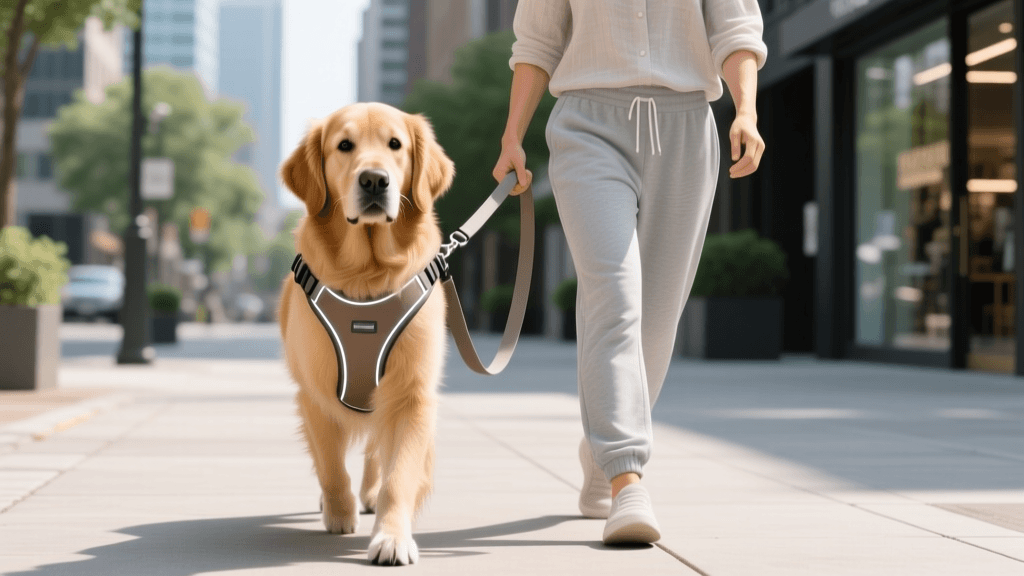
A poorly fitted harness can cause chafing, restrict shoulder movement, and render the front-clip useless. The golden rule of harness fitting is the "two-finger rule." You should be able to comfortably slide two fingers flat under any strap. The chest plate should sit high on the sternum, not resting on the soft tissue of the throat or the delicate shoulder joints. When you attach the leash to the front D-ring, a gentle backward pull should turn the dog's chest slightly toward you, naturally breaking their forward momentum without causing pain or restricting their breathing.
The 4-Step Behavioral Conditioning Protocol
Equipment manages behavior; training changes it. Follow this four-step protocol to permanently alter your dog's leash manners.
Phase 1: Harness Desensitization
Many dogs develop "harness anxiety" because the gear is only brought out when they are forced to leave the house. Do not just force it over their head. Use high-value treats like freeze-dried liver or boiled chicken. Let them sniff the harness. Treat. Touch it to their chest. Treat. Slowly work up to buckling it, keeping initial sessions under three minutes. Feed them their favorite meal while wearing the harness to build a strong positive emotional response.
Phase 2: Indoor Leash Pressure Games
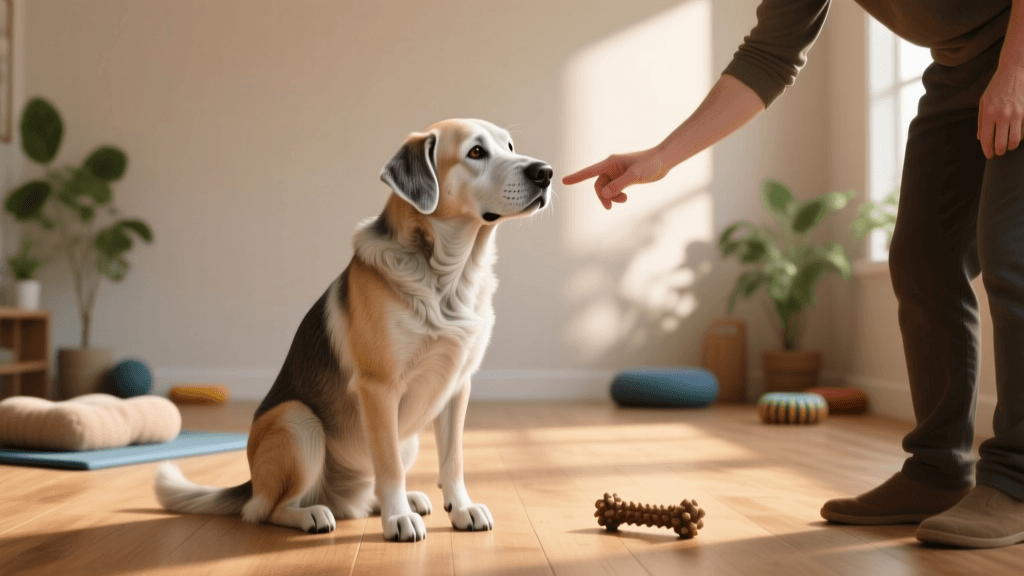
Before hitting the distracting outdoors, teach leash pressure indoors. With the leash attached to the front clip, apply one ounce of backward pressure. The millisecond your dog yields to the pressure, shifts their weight back, or looks at you, mark the behavior with a cheerful "Yes!" and reward. This teaches them that leash pressure means "orient to my human," rather than "pull harder against the tension."
Phase 3: The "Be a Tree" Method Outdoors
When you step outside, the environment becomes highly stimulating. If your dog surges forward and the leash goes tight, immediately stop walking. Become a tree. Do not yank the leash back; simply hold your ground and wait. Wait for your dog to turn their head back to you or take a single step backward to create slack. The moment the leash forms a "J" shape, mark, reward, and resume walking. The American Kennel Club (AKC) emphasizes that consistency in stopping when the leash is tight is the single most effective way to communicate that pulling results in a loss of forward momentum.
Phase 4: Rewarding the Engagement Check-In
You want your dog to voluntarily check in with you. Every time your dog looks up at you while walking without being prompted, praise and treat. Over time, increase the criteria, requiring them to maintain eye contact for two seconds, then three, rewarding heavily. This shifts their focus from the environment to you, making you the most rewarding part of the walk.
Managing High-Arousal Triggers
When a dog spots a squirrel, a delivery truck, or another dog, their adrenaline spikes, and the front-clip harness might not be enough to stop the initial lunge. To combat this, teach the "Look at That" (LAT) game. When your dog notices a trigger at a distance where they are still under threshold (not reacting wildly), mark and treat before they have the chance to pull. This changes their emotional response from "I must chase that" to "Seeing a squirrel means I get a high-value treat from my human." If your dog goes over threshold, calmly increase the distance from the trigger until they can think clearly again.
Common Training Mistakes to Avoid
- Jerking the Leash: Popping or jerking the leash creates frustration and can cause physical injury. Keep your hands relaxed and let the harness do the mechanical work.
- Inconsistent Rules: If you let your dog pull to a fire hydrant just once, you have taught them that pulling sometimes works. You must be 100% consistent in stopping when tension occurs.
- Using the Back Clip Too Early: The front clip is a training tool. Do not switch to the back clip until your dog has walked on a loose leash consistently for at least four to six weeks.
- Dragging a Seated Dog: If your dog sits and refuses to move, crouch down, encourage them with a happy voice, and lure them forward. Never drag a seated or braced dog, as this increases their opposition reflex.
Conclusion
A no pull dog harness is an incredible communication tool, but it is not a magic switch. By combining the biomechanical advantage of a 2026 front-clip harness with positive reinforcement, desensitization, and the "Be a Tree" method, you can transform your dog's leash manners. Patience, high-value rewards, and unwavering consistency are your best allies. Stick to the protocol, celebrate the small victories, and look forward to years of peaceful, enjoyable walks together.
beth-carrasco
All our authors care for dogs every day — read more of their work on the authors page.