Canine Nosework Scent Training For Deep Bonding 2026
Discover how canine nosework and birch scent training strengthens your bond. Learn DIY setup steps, reward timing, and 2026 gear picks for deep trust.
The Evolution of the Human-Canine Bond in 2026
As we navigate through 2026, the landscape of dog training has shifted dramatically from dominance-based obedience to cognitive, relationship-focused partnership. Modern canine behavioral science emphasizes that true obedience stems from mutual trust rather than compliance. Among the myriad of training modalities available today, canine nosework—specifically scent detection training—has emerged as one of the most powerful tools for deepening the human-dog bond. Unlike traditional agility or obedience, which rely heavily on the dog following your physical cues, scent work requires the dog to take the lead. You become the supportive partner, relying entirely on your dog's natural olfactory superpower. This role reversal builds profound confidence in your dog and establishes a unique, unbreakable layer of trust between you both.
Why Scent Work is the Ultimate Relationship Builder
Dogs experience the world primarily through their noses. A dog's olfactory bulb is proportionally 40 times larger than a human's, allowing them to process scents in a way we can barely comprehend. When a dog engages in focused sniffing, their heart rate actually decreases, and their brain releases dopamine, the neurotransmitter associated with pleasure and reward. According to the American Kennel Club (AKC), nose work is uniquely beneficial because it taps into a dog's primal instincts, providing deep mental enrichment that physical exercise alone cannot achieve.
When you train scent work, you are not just teaching a trick; you are facilitating a state of flow for your dog. By controlling the environment and providing high-value rewards when they succeed, you become the gateway to their greatest joy. The National Association of Canine Scent Work (NACSW) highlights that this cooperative game fosters a 'teamwork' mentality, drastically reducing reactivity and anxiety while solidifying your bond.
Understanding the 'Change of Behavior' (COB)
To bond through nosework, you must learn to speak your dog's silent language. The core of the partnership relies on you recognizing the dog's 'Change of Behavior' (COB) when they hit a scent cone. A COB might look like:
- A sudden, sharp inhalation (the 'sniff-suck')
- A rapid flick of the ears or a sudden head snap
- A change in tail carriage (e.g., a wagging tail suddenly going still and high)
- A closing of the mouth and intense, focused breathing
By observing and rewarding these subtle cues, you show your dog that you are paying attention to them. This mutual attentiveness is the bedrock of a deep relationship.
Essential 2026 Nosework Gear for Bonding
You do not need to spend a fortune to start your bonding journey. In 2026, high-quality starter kits average between $45 and $65. Here is what you need:
- Scent Oil: Birch essential oil is the universal starter scent. Brands like Ray Allen Manufacturing or K9 Nose Work official kits provide properly diluted, safe birch oil.
- Scent Vessels: Ventilated aluminum scent tins with magnetic backs. These allow the odor to escape while keeping the oil-soaked cotton swabs safely away from your dog's nose and mouth.
- High-Value Rewards: Scent work demands premium motivation. Ziwi Peak Air-Dried Beef or freeze-dried beef liver cut into pea-sized pieces are top choices in 2026 for maintaining high drive.
- Markers: A distinct clicker or a consistent verbal marker like 'Yes!' to pinpoint the exact moment the dog finds the odor.
Phase 1: Imprinting the Birch Scent (The Box Game)
The first step in building trust is teaching your dog that the birch scent predicts a massive reward. This is done through classical conditioning using 'The Box Game'.
Step-by-Step Setup:
- Gather 4 to 6 identical cardboard boxes and place them in a circle or a line on the floor.
- Place your birch-scented tin inside one of the boxes. Leave the others empty.
- Bring your dog into the room on a leash. Do not point or say 'find it' yet. Simply let them explore.
- The moment your dog's nose goes into the box with the scent and they exhibit a COB, mark with your clicker or 'Yes!'.
- The Bonding Key: Deliver the treat directly inside the box where the scent is. This teaches the dog that the odor is the source of the reward, not your hand or your body language.
Repeat this until your dog bypasses the empty boxes and drives straight for the hot box. This builds immense confidence. Your dog learns that their nose never lies, and you are the reliable provider of the reward.
Phase 2: Room Hides and Building Trust
Once the scent is imprinted, move to 'room hides'. Place the scent tin on low furniture, behind a door, or under a chair. The critical bonding element here is handler restraint. You must follow your dog, keeping the leash loose, and allow them to problem-solve. If they get stuck, do not point or guide them. Simply encourage them to 'keep searching' by moving to a different part of the room to open up new scent cones. Trusting your dog to figure it out without interference shows them that you believe in their abilities, which translates to a more secure, confident companion in everyday life.
Phase 3: Environmental Scenting Outdoors
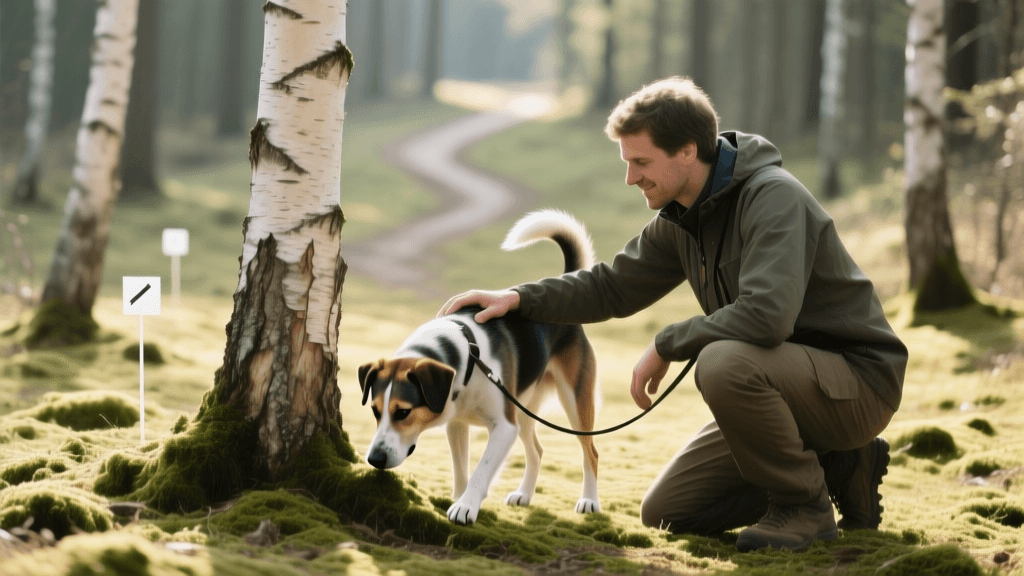
Taking nosework outside introduces wind, weather, and distractions. This is where the ultimate trust test occurs. Outdoors, scent cones are erratic. Your dog will track the odor past the hide and work back to the source. By standing back and letting your dog navigate the complex environmental variables, you solidify your role as a secure base. They venture out, solve the puzzle, and return to you for the celebration.
Comparison of Nosework Scents for Beginners
While Birch is the starting point, understanding the progression of scents helps you plan your long-term bonding journey.
| Scent Odor | Scent Profile | Difficulty Level | Best Bonding Application |
|---|---|---|---|
| Birch | Sweet, Wintergreen | Beginner | Initial imprinting and confidence building |
| Anise | Licorice-like | Intermediate | Discrimination exercises and focus enhancement |
| Clove | Spicy, Warm | Advanced | Environmental proofing and outdoor trust building |
Handling Mistakes That Damage the Bond
Because nosework is heavily reliant on the emotional state of the dog, handler errors can quickly erode trust. Avoid these common pitfalls:
- Hovering: Standing too close to the hide. Your body language will inadvertently cue the dog, making them rely on you rather than their nose.
- Repeating the Cue: Saying 'find it' over and over creates pressure and frustration. Say it once, and let the dog work in silence.
- Delayed Rewards: If you mark the find but take three seconds to deliver the treat, the dog may leave the source. The reward must meet the dog at the source of the odor to maintain the psychological link.
Conclusion: A Lifelong Partnership
Canine nosework is far more than a competitive sport; it is a profound dialogue between human and dog. By stepping back and allowing your dog to lead the way through the invisible world of scent, you validate their natural instincts. As you progress through your birch scent training in 2026, you will notice the benefits spilling over into your daily life. A dog that is heard, understood, and trusted in scent work is a dog that is deeply bonded, emotionally regulated, and joyfully connected to you for a lifetime.
aaron-whyte
All our authors care for dogs every day — read more of their work on the authors page.