The Viral Puppy Enrichment Trend: Lick Mats and Brain Games
Discover the viral puppy enrichment trend! Learn how to use lick mats, snuffle boxes, and brain games to mentally stimulate your puppy and stop biting.
The #PuppyEnrichment Trend: Why TikTok Got It Right
Scroll through TikTok or Instagram Reels, and you will inevitably stumble upon the #puppyenrichment hashtag. Millions of views are dedicated to a modern shift in puppy care: moving away from physical exhaustion and toward mental stimulation. For decades, the standard advice for a hyperactive puppy was to 'tire them out' with long walks or endless games of fetch. However, veterinary behaviorists and modern dog trainers have popularized a new, science-backed approach. Puppies do not just need to move; they need to think, sniff, and forage.
This viral trend is not just an aesthetic internet fad; it is rooted in canine psychology. Enrichment activities tap into a puppy's natural instincts to chew, lick, sniff, and problem-solve. When implemented correctly, these brain games can drastically reduce destructive behaviors, separation anxiety, and the infamous 'puppy witching hour' biting sprees.
The Science: Mental vs. Physical Fatigue
Why are pet parents trading walks for snuffle mats? The answer lies in how a puppy's brain processes energy. According to the American Kennel Club (AKC), canine enrichment is about providing dogs with opportunities to express their natural behaviors in a safe and appropriate way. Sniffing and foraging lower a dog's heart rate and release dopamine, the 'feel-good' neurotransmitter.
Furthermore, the Cornell University College of Veterinary Medicine highlights that mental stimulation can be just as tiring, if not more so, than physical exercise. A common rule of thumb among certified trainers is that 15 minutes of active sniffing and puzzle-solving is equivalent to an hour of physical walking. For young puppies whose joints are still developing and who cannot endure long physical exercises, mental enrichment is a safe, joint-friendly way to burn off excess energy.
'A tired puppy is a good puppy, but a mentally fulfilled puppy is a balanced one. Enrichment builds confidence and prevents the frustration that leads to destructive chewing.' - Modern Canine Behavioral Science
Viral Tool 1: The Lick Mat Revolution
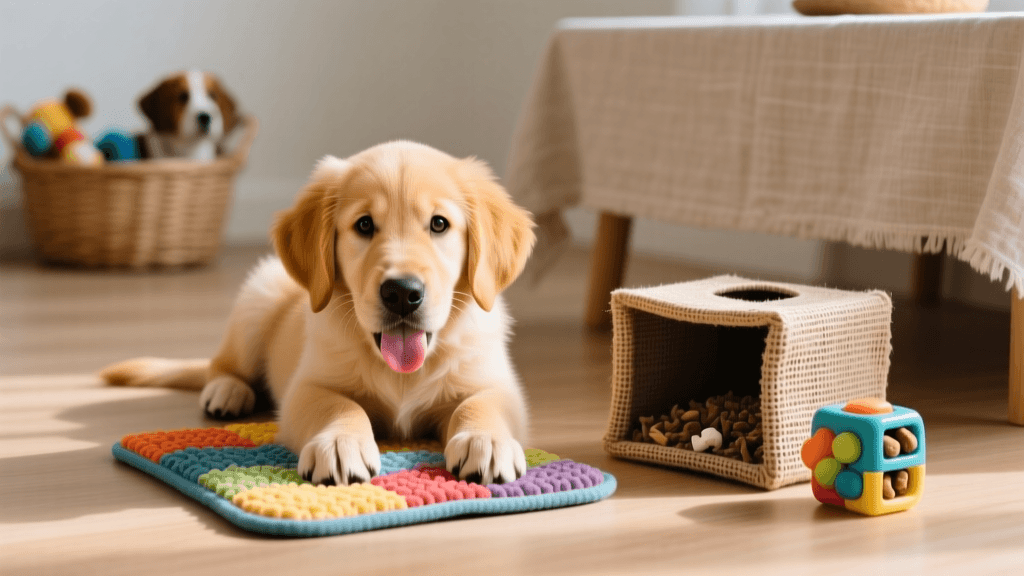
The lick mat is arguably the superstar of the puppy enrichment trend. Brands like LickiMat and Hyper Pet have flooded the market with textured silicone mats designed to spread out mealtime and encourage repetitive licking. The act of licking is naturally soothing for dogs and stimulates the release of endorphins.
Actionable Advice: The 'Puppy Calm-Down' Recipe
To use a lick mat effectively, you must layer ingredients and freeze them. This increases the difficulty and extends the activity time from 5 minutes to over 20 minutes.
- Base Layer: 2 tablespoons of plain, unsweetened Greek yogurt or xylitol-free peanut butter.
- Middle Layer: 1 tablespoon of pureed pumpkin (not pie filling) or mashed banana.
- Top Layer: Sprinkle your puppy's regular kibble or a few freeze-dried liver treats.
- Prep Time: Spread the ingredients into the grooves using a spatula. Freeze for 2 to 4 hours.
- Cost: $10 to $15 for a high-quality silicone mat (e.g., LickiMat Soother).
Pro Tip: Always supervise your puppy with a lick mat. Once they master the frozen version, some puppies will try to chew the silicone edges. If this happens, transition to a hard plastic or stainless steel enrichment toy.
Viral Tool 2: The DIY Snuffle Box
While store-bought snuffle mats are popular, the viral DIY 'Snuffle Box' is taking over social media because it is virtually free, highly customizable, and excellent for puppies who destroy fabric toys.
How to Build a Snuffle Box
- The Container: Take a sturdy, shallow cardboard box (like a shoebox or a small Amazon shipping box). Remove any tape or staples.
- The Fillers: Crumple up pieces of plain paper, add empty toilet paper rolls, and toss in a few plastic ball-pit balls.
- The Reward: Take your puppy's daily measured portion of kibble and scatter it deep within the crumpled paper and tubes.
- The Execution: Let your puppy use their nose to root through the box, unroll the paper tubes, and forage for their meal.
This activity mimics the natural scavenging behavior of wild canines. It is incredibly cheap (under $5 if you buy ball-pit balls, or $0 if you use household recycling) and provides massive mental fatigue. Once the box is destroyed, simply recycle it and build a new one.
Viral Tool 3: West Paw Toppl vs. Classic Kong
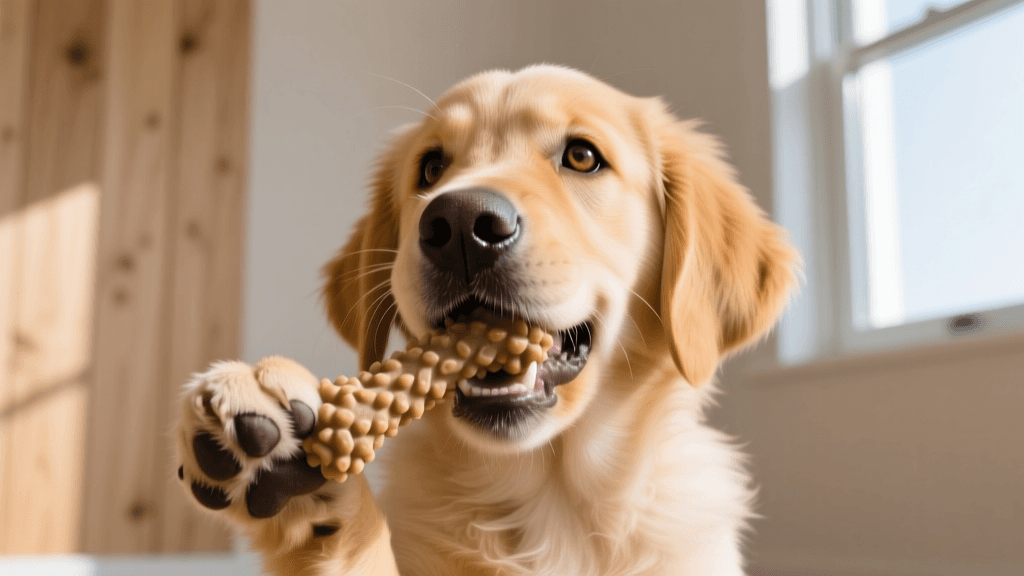
When it comes to stuffable toys, the classic rubber Kong has been the gold standard for decades. However, the viral favorite for puppies is now the West Paw Toppl. The Toppl features a wider opening and an inner prong system that makes it easier for young puppies with weaker jaw muscles to extract food. Furthermore, you can buy a 'Large' and a 'Small' Toppl and interlock them to create a complex, 3D puzzle toy that traps treats inside, requiring the puppy to roll, bat, and chew to get the food out.
While a Classic Kong costs around $12 to $15, a West Paw Toppl ranges from $15 to $22. The investment is widely considered worth it by modern trainers because the wider opening prevents puppies from getting frustrated and giving up—a common issue with tightly packed Kongs.
Comparison Chart: Top Puppy Enrichment Tools
| Enrichment Tool | Estimated Cost | Prep Time | Difficulty Level | Best Use Case |
|---|---|---|---|---|
| Frozen Lick Mat | $10 - $15 | 5 mins + Freezing | Easy to Medium | Calming anxiety, bath time, nail trims |
| DIY Snuffle Box | $0 - $5 | 3 mins | Medium | Daily meal replacement, scent work |
| West Paw Toppl | $15 - $22 | 5 mins + Freezing | Medium to Hard | Crate training, long-term chewing |
| Classic Rubber Kong | $12 - $18 | 5 mins + Freezing | Hard (for puppies) | Heavy chewers, teething relief |
| Cardboard Shredding Box | $0 | 2 mins | Easy | Destructive chewers, teething phase |
Safety Rules for Puppy Brain Games
As the ASPCA notes, safety must always be the priority when introducing new toys and activities. Puppies explore the world with their mouths, and enrichment tools can quickly become choking hazards if not managed correctly.
- Always Supervise: Never leave a young puppy alone with a lick mat, snuffle box, or chew toy until you are 100% confident they will not ingest the silicone, cardboard, or plastic.
- Watch for Frustration: Enrichment should be rewarding, not infuriating. If your puppy whines, barks, or walks away from a puzzle toy, it is too difficult. Make it easier by using larger treats or removing the interlocking pieces.
- Count Calories: Enrichment often involves food. To prevent rapid weight gain, subtract the calories used in your lick mats and snuffle boxes from your puppy's daily meal allowance. Use their regular kibble as the primary filler.
- Avoid Toxic Ingredients: Never use ingredients containing xylitol (birch sugar), grapes, raisins, onions, or macadamia nuts in your frozen recipes.
Sample Weekly Enrichment Schedule
Integrating these viral trends into your daily routine is simple. Here is a sample schedule to keep your puppy's brain engaged throughout the week:
- Monday: Breakfast served in a DIY Snuffle Box. Dinner served from a frozen LickiMat.
- Tuesday: Breakfast scattered in the grass (safe, fenced yard). Dinner inside an interlocked West Paw Toppl.
- Wednesday: Breakfast inside crumpled paper balls in a cardboard box. Dinner from a classic Kong.
- Thursday: 'Puppy Witching Hour' prevention: Offer a frozen Lick Mat at 6:00 PM to soothe teething gums and prevent evening biting.
- Friday: Hide-and-seek with kibble around the living room. Use a snuffle mat for dinner.
By embracing the viral puppy enrichment trend, you are not just following a social media fad; you are investing in your puppy's cognitive development. Lick mats, snuffle boxes, and puzzle toys transform chaotic puppy energy into focused, calming mental work, setting the foundation for a well-adjusted, happy adult dog.
beth-carrasco
All our authors care for dogs every day — read more of their work on the authors page.