Stop Leash Reactivity: Diagnosis and Training Solutions
Is your dog lunging and barking on walks? Learn how to diagnose leash reactivity, choose the right gear, and apply proven desensitization solutions.
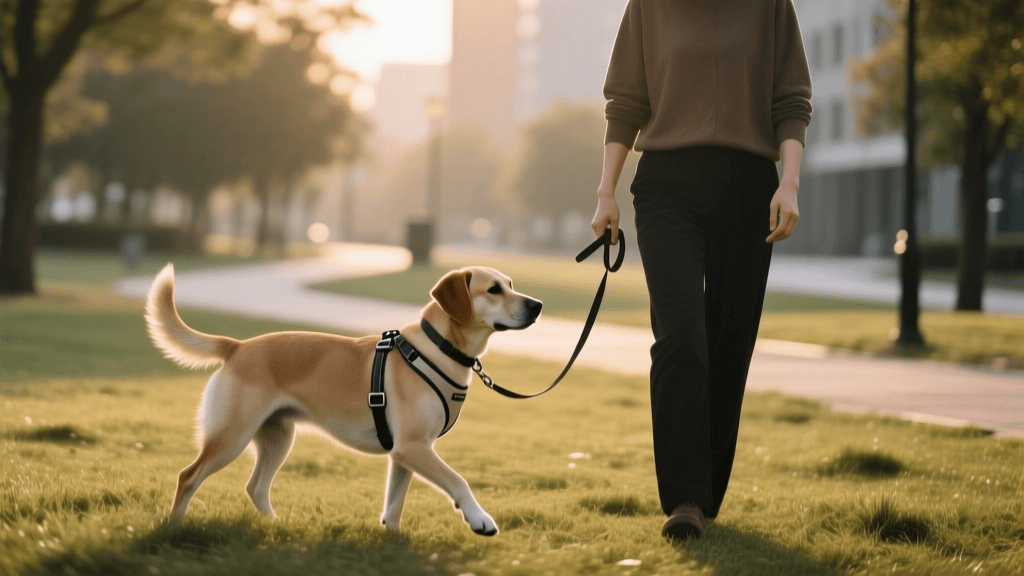
Walking your dog should be a relaxing bonding experience, but for owners of leash-reactive dogs, it often feels like navigating a high-stress minefield. Leash reactivity—characterized by lunging, barking, growling, or pulling toward other dogs, people, or moving objects—is one of the most common behavioral challenges reported by dog owners. However, reactivity is not a personality flaw or a sign of a 'bad' dog. It is a symptom of an underlying emotional response, usually rooted in fear, anxiety, or barrier frustration. To effectively modify this behavior, we must move beyond generic obedience commands and address the root cause through systematic problem diagnosis and targeted desensitization solutions.
Diagnosing the Root Cause: Fear vs. Frustration
Before implementing any training protocol, it is critical to diagnose why your dog is reacting. Misinterpreting the motivation can lead to training methods that inadvertently worsen the behavior. Reactivity generally falls into two distinct categories: fear-based reactivity and frustration-based reactivity. While the outward behavior (barking and lunging) may look identical to an untrained eye, the internal emotional state and the required training approach are vastly different.
| Feature | Fear-Based Reactivity | Frustration-Based Reactivity |
|---|---|---|
| Underlying Emotion | Anxiety, fear, desire to increase distance | Excitement, impatience, desire to decrease distance |
| Body Language | Tucked tail, pinned ears, whale eye, cowering, lunging then retreating | Loose wagging tail, play bows, whining, pulling forward, bright eyes |
| Off-Leash Behavior | Often avoids other dogs or shows defensive aggression if cornered | Typically highly social, playful, and friendly with other dogs |
| Primary Goal | Make the scary trigger go away | Get to the trigger to interact or play |
| Training Focus | Counter-conditioning, building confidence, creating safe distance | Impulse control, teaching calmness, rewarding disengagement |
Understanding this distinction is paramount. If your dog is fear-based, forcing them into a 'sit-stay' while a strange dog approaches will only heighten their panic. If your dog is frustration-based, they need to learn that calm behavior, not pulling, is the key to earning access to their environment.
Understanding Thresholds and Trigger Stacking
A core concept in behavioral conditioning is the 'threshold.' This is the distance at which your dog notices a trigger but remains capable of learning and taking treats. Once a dog crosses their threshold (the trigger gets too close, too loud, or too sudden), their amygdala hijacks their brain, the prefrontal cortex shuts down, and learning becomes biologically impossible. As the ASPCA's guide on common dog behavior issues notes, managing your dog's environment to keep them under threshold is the foundational step of any behavior modification plan.
Furthermore, owners must understand 'trigger stacking.' This occurs when a dog experiences multiple mild stressors in a short period, causing their cortisol levels to compound. A dog might tolerate a distant skateboard, a loud truck, and a stranger making eye contact individually. But if all three happen within a ten-minute walk, the accumulated stress pushes them over threshold, resulting in an explosive reaction to a seemingly minor trigger. Recognizing trigger stacking means knowing when to cut a walk short and prioritize your dog's nervous system over your daily step count.
Essential Gear for Reactive Dogs
You cannot train a reactive dog effectively if you are fighting them on the other end of a leash. The right equipment provides safety, prevents injury to the dog's trachea, and gives you mechanical leverage without causing pain. Avoid aversive tools like prong collars, choke chains, or e-collars, as these suppress the outward symptom (barking) while intensifying the internal negative emotional response, often leading to sudden, unprovoked bites later on.
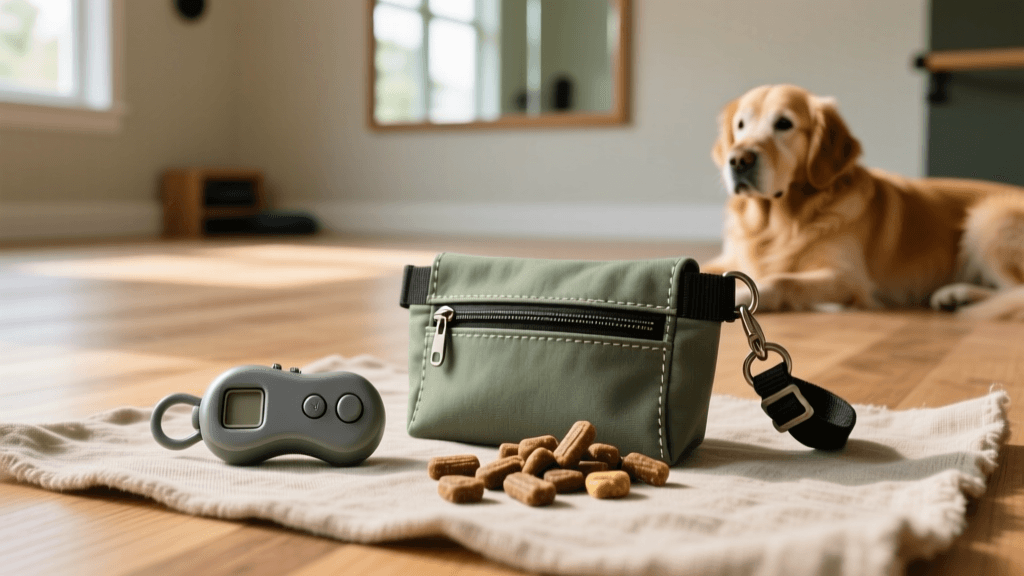
- Front-Clip No-Pull Harness (Cost: $25 - $40): Products like the Rabbitgoo No-Pull Harness or the Kurgo Tru-Fit feature a D-ring on the chest. When the dog pulls, the front clip gently redirects their momentum back toward you, breaking their forward drive without choking them.
- Fixed-Length Leash (Cost: $15 - $25): Use a 6-foot biothane or nylon leash. Biothane is highly recommended because it is waterproof, easy to clean, and doesn't cause leash burn if the dog suddenly lunges. Never use a retractable leash with a reactive dog; the constant tension teaches the dog to pull, and the thin cord can snap under the sudden force of a lunging dog.
- High-Value Treats (Cost: $5 - $10 per bag): Dry kibble will not compete with the adrenaline of seeing another dog. Use pea-sized (1/4 inch) pieces of boiled chicken, string cheese, or commercial treats like Zuke's Mini Naturals. The small size allows for rapid consumption and frequent repetition without overfeeding.
- Accessible Treat Pouch (Cost: $15 - $20): The Doggone Good Trainer's Pouch or a similar magnetic-closure pouch allows you to deliver a treat within 1 to 2 seconds. Fumbling in your pockets ruins the timing required for classical conditioning.
The Core Solution: The Engage-Disengage Game
Developed by canine behavior professionals, the Engage-Disengage game is a powerful desensitization and counter-conditioning protocol. It teaches the dog to voluntarily look away from a trigger and check in with the handler. This game relies on classical conditioning (changing the emotional response) and operant conditioning (rewarding a specific behavior).
Phase 1: Engage (Classical Conditioning)
Find a location where your dog can see their trigger (e.g., another dog) from a safe distance, typically 30 to 50 feet away, ensuring they are under threshold.
- The moment your dog looks at the trigger, mark the behavior with a clicker or a consistent verbal marker word like 'Yes!' within 0.5 seconds.
- Immediately follow the marker with a high-value treat. The treat must be delivered within 1 to 2 seconds.
- Repeat this process 10 to 15 times per session. You are building a neurological association: 'Seeing another dog predicts the arrival of boiled chicken.' Eventually, your dog will see the trigger and immediately look up at you, anticipating the treat.
Phase 2: Disengage (Operant Conditioning)
Once your dog reliably looks at you upon seeing the trigger, you move to Phase 2. This phase rewards the dog for the active choice to disengage from the trigger.
- Wait for your dog to look at the trigger, but do not mark it immediately.
- The second they make eye contact with you, mark with 'Yes!' and deliver a jackpot reward (3 to 4 small treats in succession).
- If your dog stares at the trigger for longer than 3 seconds, they are likely over threshold. Calmly increase your distance from the trigger and try again.
Consistency in timing is the most common point of failure for owners. According to the American Kennel Club's training resources, precise marker timing is essential for clear communication, ensuring the dog understands exactly which behavior earned the reward.
Management Strategies: The Emergency U-Turn and Decompression Walks
While desensitization takes weeks or months, management keeps everyone safe in the interim. You must master the 'Emergency U-Turn.' Practice this in your living room first. Say a cue like 'Let's Go!', turn 180 degrees, take three brisk steps away, and scatter a handful of treats on the ground for your dog to sniff and eat. On the street, if a loose dog or unexpected trigger rounds a corner, deploy the U-Turn immediately to create distance before your dog crosses their threshold.
Additionally, incorporate 'Decompression Walks' or 'Sniffaris' into your weekly routine. Take your dog to a quiet, open field using a 15-foot long line. Allow them to sniff, dig, and explore at their own pace without demanding heel position or obedience. Sniffing lowers a dog's heart rate and reduces baseline cortisol levels, making them more resilient to stressors on subsequent days.
When to Seek Professional Help
Leash reactivity can be dangerous if the dog has a history of biting or if the owner is physically unable to manage the dog's lunging. If your dog is injuring themselves on the leash, showing signs of severe panic (drooling, panting, refusing food even at a distance), or if you feel overwhelmed, it is time to bring in a professional. Look for a certified behavior consultant who uses force-free, science-based methods. The Fear Free Certified Professional Directory is an excellent resource for finding veterinarians and trainers who prioritize the emotional well-being and low-stress handling of reactive dogs. By combining accurate diagnosis, proper equipment, and systematic desensitization, you can transform your daily walks from a source of dread into an opportunity for profound trust and connection with your dog.
hannah-wickes
All our authors care for dogs every day — read more of their work on the authors page.