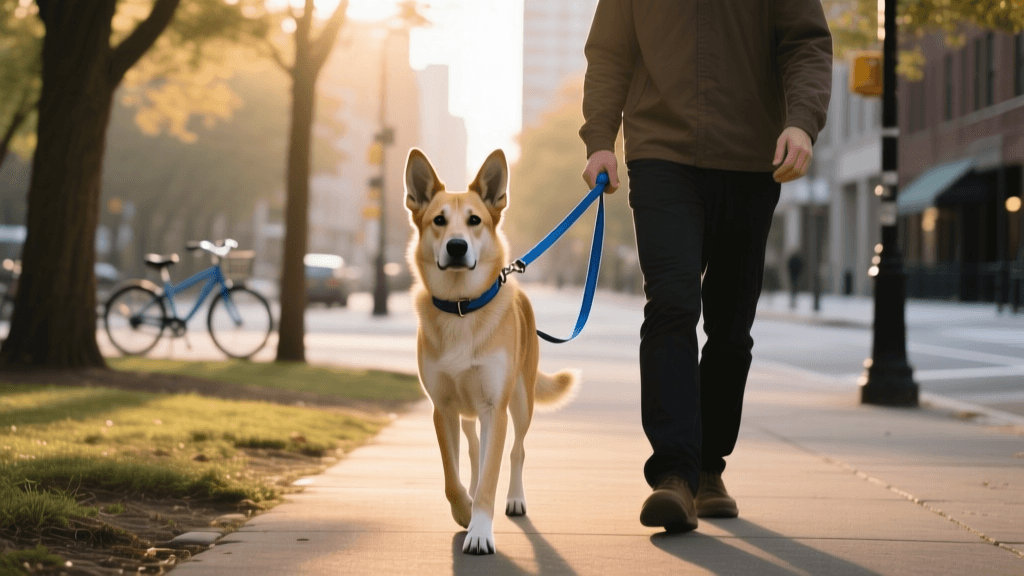
Master Urban Loose Leash Walking: A Six Week Progression Plan
Master city strolls with our six-week urban loose leash walking progression plan. Actionable steps, gear guides, and timing for reactive dogs.

The Urban Walking Challenge
Walking a dog in an urban environment is a sensory gauntlet. Sirens, narrow sidewalks, passing bicycles, and close-proximity trigger stacking can turn a relaxing stroll into a frustrating tug-of-war. According to the Humane Society of the United States, pulling on the leash is one of the most common reasons dogs are surrendered to shelters or relegated to a life of inadequate exercise. Overcoming this requires more than just a firm grip; it demands a structured, incremental approach that builds your dog's confidence and focus.
This six-week training progression plan is designed specifically for urban and suburban dog owners. By breaking the complex behavior of loose leash walking into manageable, measurable milestones, you can transform your dog's reactivity into relaxed engagement. Remember to keep training sessions short—ideally 10 to 15 minutes, twice a day—to prevent cognitive fatigue.
Essential Gear for Your Progression Plan
Before starting Week 1, ensure you have the right equipment. Avoid retractable leashes and choke chains, which can increase anxiety and cause physical harm. The ASPCA strongly recommends positive reinforcement tools that do not rely on pain or fear.
- Harness: A front-clip, Y-shaped harness is non-restrictive and gently redirects forward momentum. Recommendation: Ruffwear Front Range Harness (Approx. $39.95). Ensure you can fit two fingers snugly under the chest strap.
- Leash: A 6-foot fixed-length leash provides consistent boundaries without the tension of retractable cords. Recommendation: Mendota 6ft Biothane Snap Leash (Approx. $24.99). Biothane is waterproof, easy to sanitize, and doesn't burn your hands if the dog pulls.
- Treat Pouch: A magnetized or quick-open pouch worn on your hip. Recommendation: Doggone Good Rapid Rewards Pouch (Approx. $18.00).
- High-Value Rewards: Urban environments require high-value currency. Recommendation: Zuke's Mini Naturals or boiled chicken breast, cut into pea-sized pieces (Approx. $7.99 per bag).
The 6-Week Loose Leash Progression Plan
Week 1: Indoor Foundation & Engagement
Location: Living room and hallway.
Goal: Teach the dog that a loose leash yields rewards, and that engaging with you is more profitable than sniffing the environment.
Start with the leash dragging indoors. Hold the loop and take three steps away from your dog. The moment they move toward you and the leash forms a 'J' shape (slack), click a clicker or say 'Yes!' and deliver a treat right at the seam of your pant leg. Practice 'Yielding to Pressure': apply gentle, steady backward pressure on the leash. The second the dog takes a single step toward you, releasing the tension, mark and reward. Do this for 10 minutes daily. Do not move to Week 2 until your dog reliably follows you around the house with a slack leash for 20 consecutive steps.
Week 2: The Driveway & Quiet Cul-de-sac
Location: Private driveway or empty dead-end street.
Goal: Introduce mild outdoor scents while maintaining the 'J' shape leash criteria.
Step outside your front door. If your dog immediately pulls toward a bush, stop walking immediately. Become a tree. Do not yank the leash. Wait for your dog to look back at you or take a step back toward you, creating slack. Mark, reward, and resume walking. Introduce the '1-2-3' game to build rhythm: take one step, treat; take two steps, treat; take three steps, treat. Gradually increase the steps between treats. Sessions should remain under 15 minutes to keep frustration low.
Week 3: Thresholds and Gateways
Location: Apartment lobby, building gates, or alleyway entrances.
Goal: Maintain engagement through high-anticipation transition zones.
Thresholds (doorways, gates, elevator exits) are major triggers for urban dogs. Practice the 'Sit and Wait' protocol. Approach the gate. If the leash goes tight, stop and step backward. Ask for a sit. Open the gate slightly. If the dog breaks the sit and pulls, close the gate. Repeat until the dog remains seated while the gate is fully open. Release with a specific cue like 'Let's go' and immediately reward at your hip as you walk through. This teaches the dog that calm behavior, not pulling, opens doors.
Week 4: Suburban Sidewalks
Location: Quiet residential streets with occasional pedestrians.
Goal: Navigate moderate distractions using the 'Emergency U-Turn'.
Now you will encounter unpredictable variables: a neighbor taking out the trash or a distant dog barking. Teach the 'Emergency U-Turn'. While walking, suddenly say 'Let's go!', pivot 180 degrees on your heel, and walk the other way. Reward your dog generously when they catch up to your hip. This maneuver is crucial for urban living, allowing you to proactively retreat from a trigger before your dog goes over their reactivity threshold. Practice this 5 times per walk.
Week 5: Urban Parks & Trigger Stacking
Location: Perimeter of a busy dog park or popular walking trail.
Goal: Desensitization to high-value distractions (other dogs, runners).
Find a distance from the main path where your dog notices triggers but remains under threshold (usually 15 to 30 feet). Play 'Look at That' (LAT). When your dog looks at a passing runner, mark 'Yes!' before they can pull, and feed a treat while they are still facing you. If the dog pulls or barks, you are too close; increase the distance immediately. The Centers for Disease Control and Prevention (CDC) notes that proper socialization and distance-based training significantly reduce stress-related bite incidents in crowded areas. Spend 20 minutes just observing and rewarding calmness at a distance.
Week 6: The Busy City Street
Location: Commercial avenues with foot traffic and street noise.
Goal: Generalization of all skills in a real-world, high-stimulus environment.
Combine the 'J' shape walking, threshold waiting, and Emergency U-Turns. Walk during off-peak hours first (e.g., 10:00 AM on a Tuesday). Keep your treat rate high—one treat every 5 to 10 seconds when navigating crowded intersections. If your dog struggles, drop back to Week 4 criteria and rebuild. Celebrate small victories; a 10-minute successful walk on a busy street is vastly superior to a 45-minute walk filled with pulling and frustration.
Progression Milestones & Criteria Chart
Use this table to objectively assess if your dog is ready to advance to the next week. Do not rush the timeline; some dogs may spend three weeks on Week 2.
| Week | Environment | Advancement Criteria (Must achieve 80% success) | Primary Skill Focus |
|---|---|---|---|
| 1 | Indoor / Hallway | 20 consecutive steps with a slack 'J' leash; yields to backward pressure instantly. | Engagement & Pressure Yielding |
| 2 | Driveway / Cul-de-sac | Self-corrects (stops pulling) within 3 seconds of hitting the end of the leash. | Outdoor Scent Tolerance |
| 3 | Thresholds / Gates | Remains seated while a gate/door is fully opened; waits for the release cue. | Impulse Control |
| 4 | Quiet Sidewalks | Executes a 180-degree Emergency U-Turn on the first verbal cue without leash pressure. | Handler Focus & Disengagement |
| 5 | Park Perimeters | Can look at a passing dog/runner from 20ft away and turn back to handler for a treat. | Trigger Desensitization |
| 6 | Busy City Street | Walks 15 minutes on a busy avenue with fewer than 3 pulling incidents. | Real-World Generalization |
Troubleshooting Setbacks
Progression is rarely linear. If your dog experiences a 'setback'—such as a sudden fear of a construction noise or a regression in pulling—do not punish them. Punishment suppresses behavior temporarily but increases underlying anxiety, making future urban walks more volatile. Instead, immediately increase the distance from the trigger, lower your criteria to the previous week's baseline, and increase your treat rate.
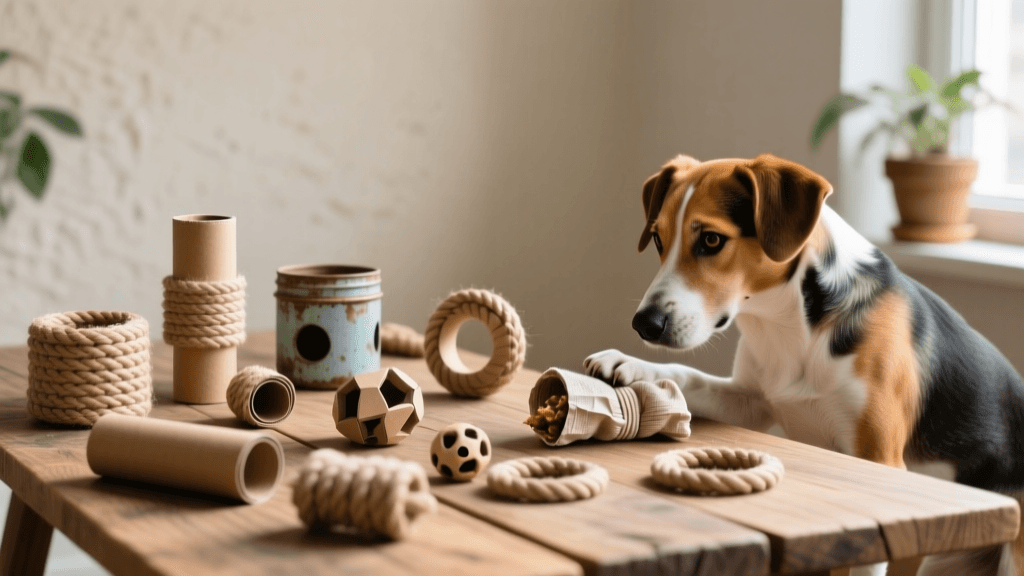
Consider your dog's physical and mental state. A dog that hasn't had mental enrichment (like snuffle mats or puzzle toys) will have excess energy that manifests as pulling. Ensure your urban walks are supplemented with 15 minutes of daily indoor scent work or training games. By following this structured progression plan, you are not just teaching your dog to walk; you are teaching them how to navigate the human world safely, confidently, and calmly.
aaron-whyte
All our authors care for dogs every day — read more of their work on the authors page.