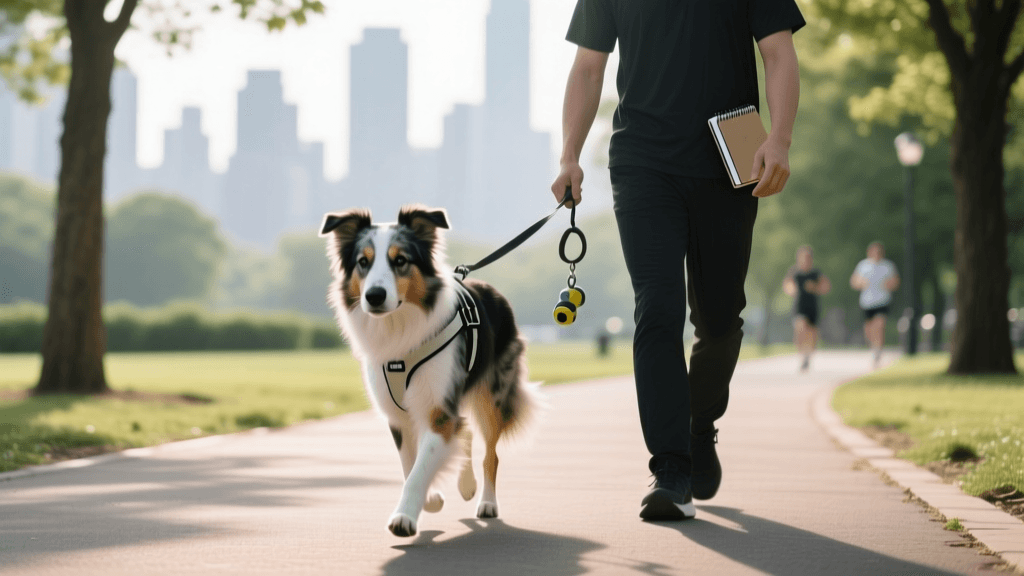
Expert Guide to Curing Leash Reactivity in Urban Dogs
Discover expert behavior analysis techniques to cure urban leash reactivity. Learn threshold management, DS/CC protocols, and gear recommendations.
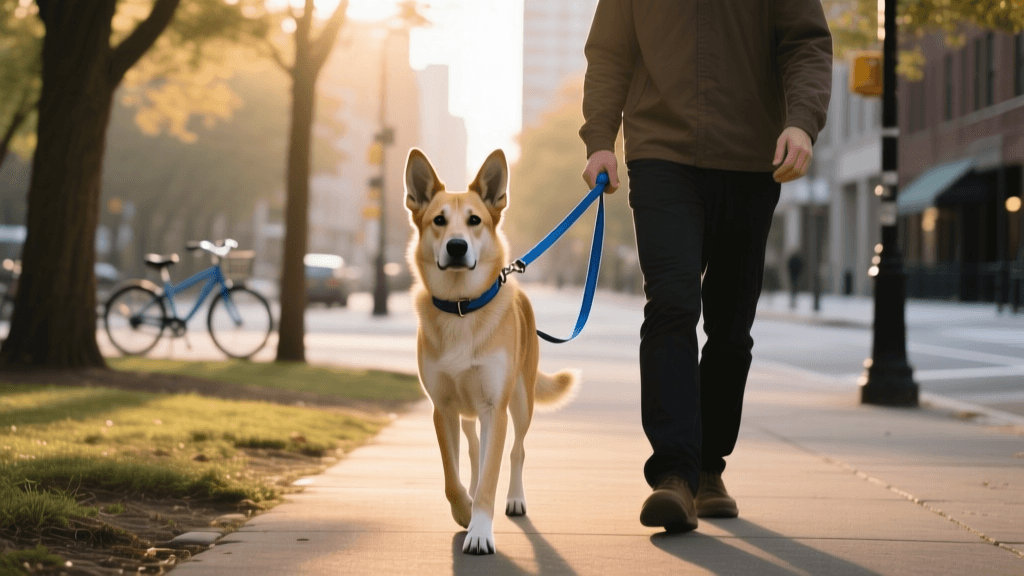
Understanding Leash Reactivity Through Behavior Analysis
Leash reactivity is one of the most challenging behavioral issues for urban dog owners. It manifests as barking, lunging, and pulling when a dog is on a leash and exposed to specific triggers, such as other dogs, strangers, or bicycles. From an expert behavior analysis perspective, reactivity is not a sign of a "bad" or "dominant" dog. Instead, it is a measurable behavioral response driven by classical and operant conditioning, often rooted in fear, frustration, or barrier frustration.
When a dog is on a leash, their natural flight response is restricted. According to the American Kennel Club (AKC), this restriction often causes a dog to default to a "fight" or confrontational response to make the scary stimulus go away. Because lunging often results in the trigger moving away (or the owner pulling the dog away), the dog learns that lunging is an effective tool for increasing distance from the threat. This is known as negative reinforcement, and it makes the reactive behavior stronger over time.
The Neurobiology of Stress and the Amygdala Hijack
To effectively modify reactive behavior, we must understand the canine nervous system. When a dog spots a trigger, the amygdala (the brain's threat-detection center) processes the visual information before the prefrontal cortex (the logical, learning center) can intervene. If the dog is too close to the trigger, they experience an "amygdala hijack." Cortisol and adrenaline flood the bloodstream, and the dog enters a fight-or-flight state.
In this over-threshold state, operant conditioning is impossible. The dog cannot learn new commands or accept food. Furthermore, cortisol takes up to 72 hours to fully clear from a dog's system. This means that a single severe reactive episode on a Tuesday can leave your dog in a heightened state of arousal through Thursday. Expert behavior modification requires strict management to prevent these neurological spikes, utilizing planned rest days to allow the nervous system to reset.
The ABC Framework of Reactivity
Applied Behavior Analysis (ABA) relies on the ABC framework to dissect and modify behavior:
- Antecedent: The environmental trigger or cue that precedes the behavior (e.g., a Golden Retriever appearing 40 feet away).
- Behavior: The observable action (e.g., stiffening, staring, barking, lunging).
- Consequence: What happens immediately after the behavior (e.g., the other dog crosses the street, providing distance relief).
To change the behavior, we must manipulate the antecedent (manage the distance) and change the consequence (pair the trigger with high-value food rather than distance relief). This process is known as Desensitization and Counter-Conditioning (DS/CC).
Identifying and Managing the Threshold
The "threshold" is the invisible line in the sand where a dog transitions from a state of calm learning to emotional reactivity. Finding your dog's sub-threshold distance is the most critical step in behavior modification. Below is a data chart to help you identify your dog's threshold based on distance and body language.
| Distance to Trigger | Dog's Emotional State | Behavioral Response | Training Action Required |
|---|---|---|---|
| 50+ Feet (Sub-Threshold) | Calm, observant, receptive to food | Orienting toward trigger, loose body, open mouth | Mark and treat (Engage-Disengage protocol) |
| 20-50 Feet (Approaching Threshold) | Mild arousal, slight tension | Stiffening, whale eye, closed mouth, raised hackles | Emergency U-turn, increase distance immediately |
| Under 20 Feet (Over-Threshold) | Amygdala hijack, fight-or-flight | Lunging, barking, snapping, refusing food | Do not train; remove from situation to prevent rehearsal |
The Engage-Disengage Protocol: Step-by-Step
The Engage-Disengage game is a cornerstone of modern DS/CC protocols. It teaches the dog that seeing a trigger predicts good things, rather than predicting a threat.
Step 1: The Engage (Classical Conditioning)
Stand with your dog at a sub-threshold distance (e.g., 60 feet from a park bench where dogs pass). The moment your dog looks at the trigger, use a verbal marker like "Yes!" or a clicker within 1 second. Immediately follow the marker by delivering a high-value treat (e.g., boiled chicken or Zuke's Mini Naturals) directly to the dog's mouth. Repeat this 10-15 times. The dog learns: Trigger appears = Chicken appears.
Step 2: The Disengage (Operant Conditioning)
Once the dog is reliably looking for the treat after seeing the trigger, wait for them to look at the trigger, and then voluntarily turn their head back to you before you mark. When they make eye contact with you, mark "Yes!" and reward heavily. The dog learns: Looking at the trigger and then checking in with my human is the most rewarding behavior available.
Essential Gear for Behavior Modification
Using the correct equipment is vital for safety and ethical training. The American Veterinary Society of Animal Behavior (AVSAB) strongly advises against the use of aversive tools like prong collars, choke chains, or e-collars, as these suppress warning signs and can increase underlying aggression by associating the trigger with physical pain.
- Front-Clip Harness: A harness like the Ruffwear Front Range (approx. $40) features a front chest D-ring. If the dog lunges, the front clip gently redirects their momentum back toward you without choking them.
- Fixed-Length Leash: Avoid retractable leashes, which teach dogs that pulling yields more distance. Use a 6-foot Biothane or leather leash (approx. $25-$35) to maintain consistent communication and control.
- Treat Pouch: Speed of reinforcement is critical. A dedicated pouch like the Dog Gone Smart Treat Tote (approx. $15) allows for 0.5-second treat delivery, which is necessary for the dog to associate the reward with the trigger.
Tracking Progress and Managing Extinction Bursts
Behavior modification is not linear. As you change the consequences of your dog's behavior, you may encounter an "extinction burst." This occurs when a previously reinforced behavior (lunging) no longer works, causing the dog to temporarily increase the intensity, frequency, or duration of the behavior before it fades. If your dog suddenly barks louder or longer during week three of training, do not panic and do not revert to punishment. Maintain your sub-threshold distance and continue the DS/CC protocol.
Expert behaviorists recommend keeping a daily training log. Track the date, location, trigger type, distance, and your dog's reaction level on a scale of 1 to 5. According to resources provided by the ASPCA, consistent data tracking helps owners identify hidden patterns, such as environmental triggers (e.g., the dog is more reactive on windy days when sound is distorted, or during twilight when vision is compromised).
Conclusion
Curing urban leash reactivity requires patience, precise timing, and a deep understanding of canine behavior analysis. By respecting your dog's neurological thresholds, utilizing the Engage-Disengage protocol, and equipping yourself with force-free gear, you can systematically rewire your dog's emotional response to the urban environment. Remember that the goal is not merely to suppress a behavior, but to change the underlying emotional state, transforming your dog's daily walks from a source of stress into an enriching, shared experience.
jonas-cole
All our authors care for dogs every day — read more of their work on the authors page.