Moving With Dogs: Apartment Noise Desensitization 2026
Master your dog's urban apartment move in 2026. Learn noise desensitization, boundary training, and stress-relief techniques for a smooth transition.
The Challenge of Urban Relocation for Dogs in 2026
Relocating to a new home is universally ranked as one of life’s most stressful events, and for our canine companions, the experience can be profoundly disorienting. As of 2026, the continued shift toward high-density urban living and hybrid work models means more dogs are transitioning from spacious suburban yards to compact apartment environments. This life transition introduces a barrage of novel stimuli: elevator dings, muffled conversations through shared walls, heavy footsteps in hallways, and the constant hum of city traffic.
When a dog moves into an apartment, their baseline stress levels naturally elevate due to the loss of familiar territorial markers. Without proactive training, this environmental shock can quickly manifest as reactive barking, door-dashing, or separation anxiety. According to the ASPCA's guidelines on noise fears, sudden exposure to unpredictable, high-decibel urban sounds is a primary trigger for acute anxiety in relocated dogs. To ensure a successful life transition, owners must implement a structured noise desensitization and boundary training protocol before and immediately after the move.
Pre-Move Preparation: Setting the Baseline
Training for an apartment move does not begin on moving day; it begins weeks in advance. The goal of pre-move preparation is to build a resilient emotional baseline. Start by identifying the specific sounds your new environment will introduce. If you are moving to a high-rise, record or source audio tracks of elevator chimes, hallway chatter, and sirens.
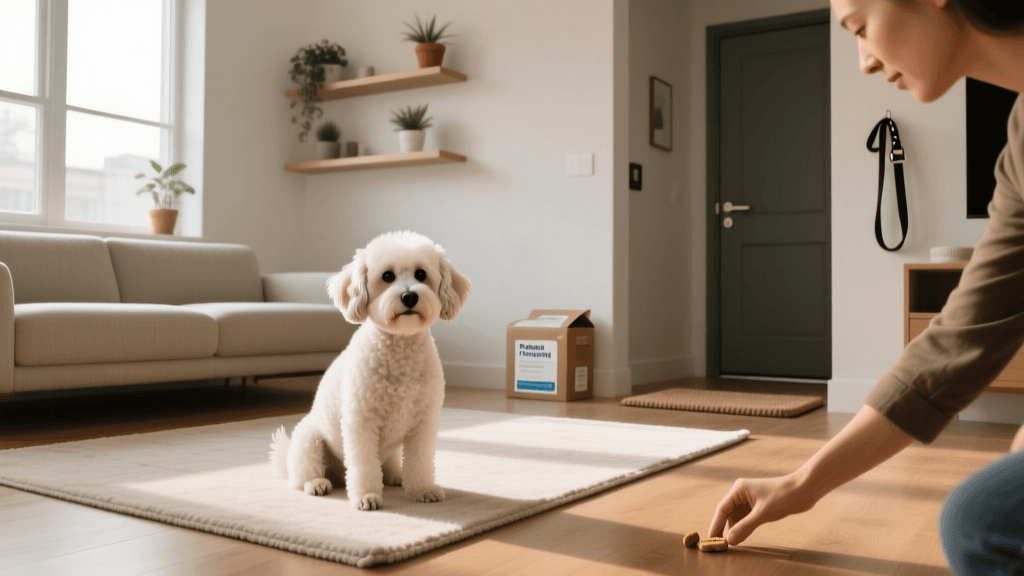
During the final month in your current home, establish a designated "decompression zone." This is a specific mat or raised cot where your dog learns to settle on command. By heavily reinforcing the "Place" command in your current, low-stress environment, you create a portable safe space that you can immediately deploy in the new apartment. Practice sending your dog to their mat while you simulate moving chaos—packing boxes, dropping tape dispensers, and playing background audio of city noise at a very low volume.
Step-by-Step Noise Desensitization Protocol
Desensitization is the process of gradually exposing your dog to a trigger at an intensity low enough that they do not react, paired with high-value rewards. The American Kennel Club emphasizes that desensitization and counterconditioning must be done at the dog's pace to avoid flooding them with anxiety. In 2026, pet owners have access to excellent smart-home audio systems and high-fidelity sound libraries to simulate apartment environments accurately.
Below is a structured protocol for desensitizing your dog to common urban apartment triggers:
| Trigger Sound | Decibel Range | Desensitization Tool | Counter-Conditioning Reward |
|---|---|---|---|
| Hallway Footsteps | 40-60 dB | Recorded audio played via smart speaker | Frozen bone broth Lickimat |
| Elevator Chimes | 50-70 dB | Soundboard app on smartphone | Boiled chicken or freeze-dried liver |
| Muffled Voices | 30-50 dB | YouTube ambient apartment noise tracks | Kong Classic stuffed with peanut butter |
| Sirens / Traffic | 60-85 dB | White noise machine + gradual audio fade-in | Snuffle mat foraging activity |
Executing the Protocol
- Step 1: Play the trigger sound at a volume so low that your dog notices it but remains relaxed (e.g., 10% volume).
- Step 2: The exact second the sound plays, present a high-value reward or engaging enrichment toy like a Lickimat.
- Step 3: Remove the reward when the sound stops. This teaches the dog that the scary noise predicts wonderful things.
- Step 4: Over 2 to 3 weeks, incrementally increase the volume by 5% as long as the dog remains under their reactivity threshold.
Pro Tip for 2026: If your new apartment features smart-home integration, program your automated blinds and lights to mimic the natural rhythms of your new space before you officially move in, reducing the visual shock of a new environment.
Establishing New Boundaries in an Apartment
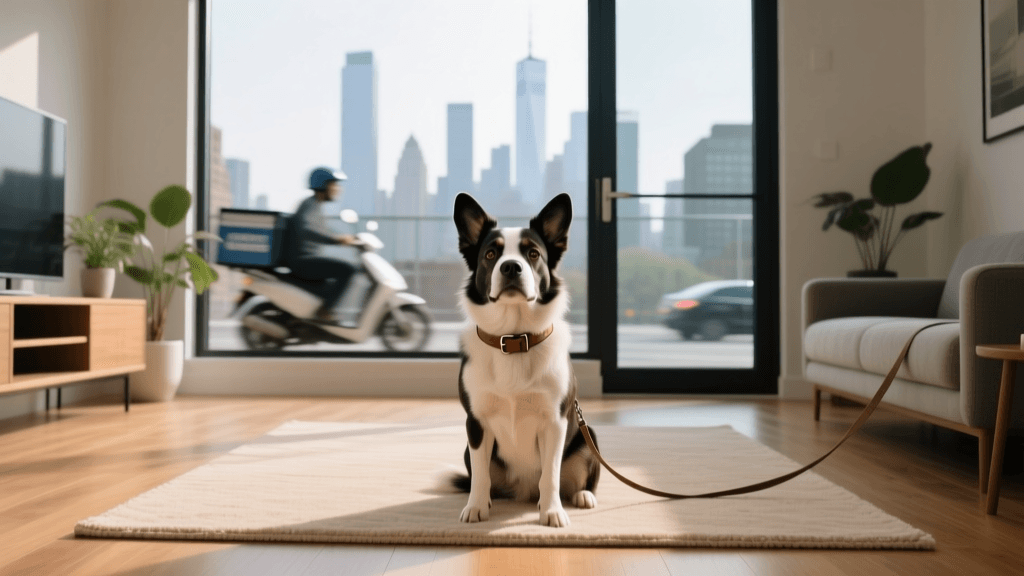
Apartment living requires strict boundary training, particularly around the front door. In a suburban home, a dog bolting out the front door might land in a fenced yard. In an apartment, they bolt into a shared hallway, risking encounters with reactive dogs, startled neighbors, or open stairwells.
The "Threshold Wait" Command
Teach your dog that an open door is not a release cue; it is a cue to sit and make eye contact. Start this training in your current home. Leash your dog with a 6-foot biothane leash for secure control. Approach the door, touch the handle, and reward your dog for remaining seated. Gradually work up to opening the door an inch, then a foot, then fully. If the dog breaks their sit, calmly close the door and reset. The door only opens fully when the dog is anchored in a sit or on their "Place" mat.
Managing the "Window Reactivity" Zone
Ground-floor or low-rise apartment windows often trigger barrier frustration as dogs watch pedestrians and other dogs pass by. To manage this, apply removable frosted window film to the bottom two feet of your windows in 2026. This blocks the visual trigger while still allowing natural light to enter. Pair this environmental management with the "Engage-Disengage" game: when your dog looks at a trigger through the un-frosted upper window, mark the behavior with a clicker or a "yes," and reward them for turning their head back to you.
Recommended 2026 Training Tools for Relocation
Having the right gear can dramatically shorten the adjustment period for a relocated dog. Here are the top tools for managing life transitions in high-density housing this year:
Adaptil Calm Diffuser and Transport Spray
Pheromone therapy remains a cornerstone of veterinary behavioral support for relocation stress. The Adaptil Calm Diffuser (retailing around $28 for the starter kit in 2026) plugs into the wall of your new apartment's main living area, releasing synthetic dog-appeasing pheromones that mimic those produced by a nursing mother. For moving day itself, spray the Adaptil Transport Spray onto your dog's crate bedding or car harness 15 minutes before travel to lower acute transit anxiety.
Sniffspot Private Yard Rentals
One of the hardest transitions for apartment-dwelling dogs is the loss of a private backyard for decompression. Sniffspot, the leading platform for renting private dog parks, offers an essential lifeline. For roughly $15 to $25 per hour, you can rent fully fenced, private acreage near your new urban apartment. This allows your dog to engage in off-leash sniffing and exploring without the overwhelming pressure of encountering unfamiliar dogs in crowded public city parks.
Smart White Noise Machines
Modern acoustic environments in 2026 apartment builds often suffer from "impact noise" (footsteps from the floor above). A high-fidelity white noise machine, such as the Hatch Restore or LectroFan, placed near your dog's sleeping area, effectively masks these unpredictable thuds, allowing your dog's nervous system to down-regulate during sleep.
Managing Separation Anxiety in Hybrid Work Models
As hybrid work schedules solidify in 2026, many dogs experience a secondary life transition: adjusting to their owners leaving the new apartment for the office. Moving to a new place already spikes a dog's need for proximity; suddenly leaving them alone in an unfamiliar space can trigger severe separation anxiety.
To combat this, implement "mock departures" during your first two weeks in the new apartment. Put on your shoes, grab your keys, walk out the front door, and immediately return. Gradually extend the time you are gone from 10 seconds to 5 minutes, then 20 minutes. Always provide a long-lasting enrichment item, like a frozen Kong, exactly as you walk out the door. This shifts the dog's emotional response from "my owner is leaving me in a scary place" to "my owner leaving means I get my favorite puzzle toy."
Conclusion
Transitioning to an urban apartment is a major life event that requires patience, empathy, and structured training. By proactively desensitizing your dog to novel noises, enforcing strict doorway boundaries, and utilizing modern behavioral tools, you can transform a stressful relocation into an opportunity to deepen your bond. Remember that behavioral conditioning is not a race; allow your dog the grace and time they need to learn that their new apartment is, above all else, a safe and secure home.
anouk-beaumont
All our authors care for dogs every day — read more of their work on the authors page.