Understanding Dog Zoomies And What Causes Them
Learn about understanding dog zoomies and what causes them with expert tips and data-backed advice.
What Are Dog Zoomies?
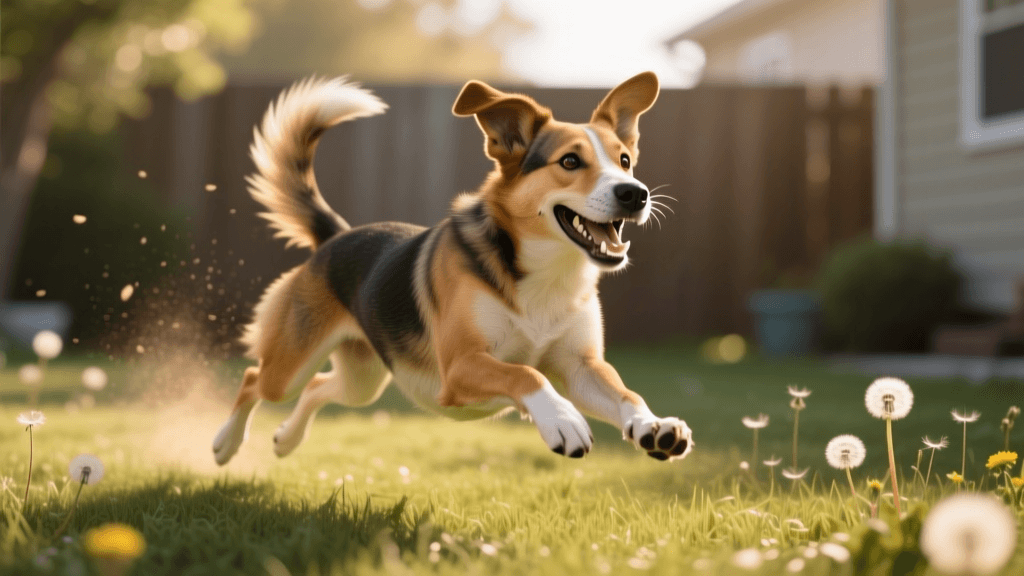
If you've ever watched your dog suddenly explode into a frantic, spinning, full-speed sprint around the living room for no apparent reason, you've witnessed what dog owners affectionately call "zoomies." The scientific term is Frenetic Random Activity Periods, or FRAPs. These bursts of high-energy movement are completely normal canine behavior, observed across breeds, ages, and sizes — though the triggers and frequency vary considerably from dog to dog.
FRAPs are characterized by repetitive, high-speed locomotion that often includes tight circles, figure-eight patterns, and sudden directional changes. Dogs in the middle of a zoomie episode frequently adopt a distinctive low-crouched posture with their hindquarters tucked under their body — a gait sometimes called the "zoomie tuck." The episode typically lasts between 30 seconds and 2 minutes, after which the dog often stops abruptly and appears entirely calm, sometimes flopping down as if nothing happened.
The Ethological Basis of FRAPs
Animal behaviorists classify FRAPs as a form of displacement activity — a behavior that occurs when an animal experiences a buildup of arousal or conflicting motivational states and releases that tension through seemingly unrelated, exaggerated movement. Research from the University of Bristol's School of Veterinary Sciences has documented FRAPs in multiple domestic species, noting that the behavior appears most frequently following periods of confinement, restraint, or heightened emotional stimulation.
From an evolutionary standpoint, the explosive locomotion seen in FRAPs may be rooted in predatory motor sequences. Wolves and wild canids engage in similar burst-running behaviors during play, which helps calibrate neuromuscular coordination and practice the rapid acceleration needed for hunting. In domestic dogs, this motor pattern persists even though the hunting context has largely disappeared, surfacing instead as a response to emotional overflow.
The Role of the Autonomic Nervous System
During a FRAP, a dog's sympathetic nervous system is highly activated. Heart rate, respiration, and muscle tension all spike rapidly. Cortisol and adrenaline levels rise, and the dog's body essentially enters a brief "fight or flight" state — except the energy is discharged through movement rather than directed at a threat. Studies measuring heart rate variability in dogs during play and FRAPs have recorded heart rates exceeding 200 beats per minute in medium-sized breeds during peak zoomie activity, compared to a resting rate of approximately 60–140 bpm depending on the dog's size.
After the episode ends, the parasympathetic nervous system reasserts control, which explains the rapid return to calm. This physiological reset is one reason many behaviorists consider FRAPs functionally beneficial — they appear to help dogs regulate their own arousal levels.
Neurochemical Involvement
The neurochemistry underlying FRAPs involves dopamine and endorphin release. Physical activity in mammals triggers the release of endogenous opioids, and the anticipatory excitement that precedes a FRAP likely involves dopaminergic reward pathways. Research published by the Animal Behavior Society in 2019 noted that dogs engaging in spontaneous high-intensity play bouts showed behavioral indicators consistent with positive affective states — relaxed facial muscles, loose body posture immediately after the episode, and increased social engagement with nearby humans or animals.
Common Triggers for Zoomies
While FRAPs can appear spontaneous, careful observation usually reveals a consistent set of triggers. Understanding these can help owners anticipate zoomies and manage them safely.
- Post-bath zoomies: One of the most reliably reported triggers. The combination of physical restraint during bathing, the unfamiliar sensation of being wet, and the relief of the experience ending creates a potent arousal spike. Many dogs will immediately launch into a FRAP the moment they are released from the tub.
- After defecation: Commonly observed and sometimes called "poo zoomies." The exact mechanism is debated, but one hypothesis involves the vagus nerve — stimulation of the colon during defecation can trigger a vasovagal response that produces a brief euphoric sensation, prompting the burst of movement.
- Evening energy surges: Many dogs experience a predictable FRAP window in the late afternoon or early evening, roughly between 5 PM and 8 PM. This aligns with crepuscular activity patterns inherited from ancestral canids, who were most active at dawn and dusk.
- After extended confinement: Dogs that have been crated, leashed, or otherwise restricted for several hours frequently exhibit FRAPs upon release. The longer the confinement, the more intense the episode tends to be.
- Social excitement: Greeting a returning owner, meeting a familiar dog, or anticipating a walk can all trigger FRAPs. The emotional intensity of social bonding appears to be a significant driver.
Age and Breed Patterns
Puppies and adolescent dogs (typically under 2 years of age) exhibit FRAPs far more frequently than adult dogs. This is consistent with the general principle that younger animals have less developed inhibitory control over their motor systems. A survey conducted by the American Kennel Club in 2021 found that 78% of dog owners reported their puppies experiencing daily zoomies, compared to only 31% of owners of dogs aged 5 years and older.
Breed also plays a role. High-energy working breeds such as Border Collies, Australian Shepherds, and Siberian Huskies tend to have more frequent and intense FRAPs than lower-energy breeds. However, even typically calm breeds like Basset Hounds and Bulldogs exhibit the behavior — it simply occurs less often and with less intensity. Researchers at the Anthrozoology Institute at the University of Southampton have noted that FRAP frequency correlates more strongly with individual temperament and daily exercise levels than with breed alone.
Reading Your Dog's Body Language During a FRAP
Distinguishing a zoomie from distressed or anxious behavior is important. While both can involve rapid movement, the body language signals are quite different. A dog in a genuine FRAP typically displays:
- A loose, wiggly body with a relaxed jaw and soft eyes
- A "play face" — mouth slightly open, tongue lolling
- The characteristic hindquarter tuck, with the rear end lowered and tucked under
- Frequent glances toward the owner, often with an apparent invitation to chase
- Abrupt stops followed by a "bow" posture or immediate relaxation
By contrast, a dog running frantically due to fear or anxiety will show a tucked tail, flattened ears, wide "whale eye" (showing the whites of the eyes), and may attempt to hide or escape rather than circle back toward familiar people. The distinction matters because misreading anxiety as playfulness can delay appropriate intervention.
"FRAPs represent one of the clearest windows we have into a dog's emotional state. The behavior is almost always a reliable indicator of positive arousal — the dog is not in distress, it is experiencing something closer to joy expressed through movement."
— Dr. Marc Bekoff, Professor Emeritus of Ecology and Evolutionary Biology, University of Colorado Boulder, in The Emotional Lives of Animals (2007)
Are Zoomies Healthy? What the Research Says
For most dogs, FRAPs are entirely benign and may even be beneficial. The physical exertion involved provides cardiovascular exercise, and the emotional release appears to reduce overall stress levels. A study from the Waltham Petcare Science Institute found that dogs with regular opportunities for spontaneous high-intensity play showed lower baseline cortisol levels than dogs whose exercise was limited to structured leash walks, suggesting that unstructured movement has distinct physiological benefits beyond simple caloric expenditure.
However, there are contexts where zoomies warrant attention. Dogs with orthopedic conditions such as hip dysplasia, luxating patellas, or recovering from surgery can injure themselves during the sudden directional changes and high-impact movements of a FRAP. Senior dogs with arthritis may experience pain during or after an episode. In these cases, managing the environment to reduce injury risk — removing obstacles, ensuring non-slip flooring, and redirecting energy into lower-impact activities — is advisable.
| Trigger | Estimated Frequency | Typical Duration | Intensity Level |
|---|---|---|---|
| Post-bath | Very high (>85% of dogs) | 1–3 minutes | High |
| After defecation | Moderate (~40% of dogs) | 30–60 seconds | Moderate |
| Evening energy surge | High in puppies, moderate in adults | 1–5 minutes | High |
| Post-confinement release | High (~70% of dogs after 4+ hours) | 2–5 minutes | Very high |
| Social greeting | Moderate (~50% of dogs) | 30–90 seconds | Moderate to high |
How to Respond When Your Dog Gets the Zoomies
The most important thing to understand is that attempting to stop a FRAP mid-episode is usually unnecessary and often counterproductive. Chasing your dog during a zoomie typically amplifies the excitement and extends the episode. If the behavior is occurring in a safe, open space, the most effective response is simply to let it run its course.
If zoomies are happening in a dangerous environment — near a road, on slippery hardwood floors, or in a space with sharp furniture — the goal is redirection rather than suppression. Calling your dog to you in a calm, upbeat tone and rewarding them for coming can interrupt the episode without creating negative associations. Over time, dogs can learn to redirect their FRAP energy toward a specific toy or outdoor space when given a consistent cue.
Owners who find their dogs' zoomies disruptive — particularly large breeds whose indoor zoomies cause chaos — often benefit from adjusting the dog's daily exercise schedule. Providing a vigorous play session or off-leash run approximately 30 minutes before the dog's typical FRAP window can reduce the intensity and frequency of indoor episodes. This approach is grounded in the principle that FRAPs are partly a response to accumulated energy, and pre-emptively discharging that energy through structured exercise reduces the pressure that builds toward a spontaneous FRAP.
Understanding FRAPs ultimately comes down to recognizing them for what they are: a healthy, normal expression of canine emotion. Dogs do not have the verbal language to say they are happy, relieved, or excited — but a full-speed, tail-tucked sprint around the coffee table communicates it clearly enough.
Aaron Whyte
All our authors care for dogs every day — read more of their work on the authors page.