Canine Calming Signals: An Expert Behavior Analysis
Learn to read canine calming signals with expert behavior analysis. Discover how dogs communicate stress and appeasement to prevent conflict.
Introduction to Canine Calming Signals
As dog owners and handlers, we often project human emotions and communication styles onto our canine companions. We speak in complex sentences, rely heavily on direct eye contact, and use physical embraces to show affection. However, from an expert behavior analysis perspective, these human-centric actions frequently clash with a dog's innate communication systems. Dogs possess a highly sophisticated, nuanced vocabulary of body language designed to maintain social harmony and avoid physical conflict. At the core of this vocabulary are 'calming signals'—a series of appeasement behaviors and stress indicators that dogs use to self-soothe, diffuse tension, and communicate their internal emotional state to those around them.
When a dog exhibits a calming signal, they are not merely 'acting cute' or being stubborn; they are actively attempting to de-escalate a situation that they perceive as overwhelming, confusing, or mildly threatening. Misinterpreting these signals is one of the most common pitfalls in human-dog relationships, often leading to chronic anxiety, learned helplessness, or sudden behavioral outbursts. By learning to identify and respect these signals, we can profoundly improve our dogs' psychological welfare and build a foundation of deep, cross-species trust.
The Evolutionary Purpose of Appeasement
The concept of calming signals was extensively documented and popularized by Norwegian dog trainer and behaviorist Turid Rugaas. In the wild, and within feral dog populations, physical altercations are incredibly costly. A fight can result in severe injury, infection, or death, which ultimately threatens the survival of the individual and the pack. Therefore, canines evolved a complex system of ritualized appeasement gestures to resolve disputes without resorting to violence.
According to the ASPCA, recognizing these subtle stress signals is critical for preventing behavioral escalation. When a dog feels pressured—whether by a stranger approaching too quickly, a loud environmental noise, or an owner leaning over them—they will deploy calming signals to say, 'I mean no harm, please do not harm me, and I am feeling uncomfortable.' If these early warning signs are ignored or punished, the dog may feel forced to skip the appeasement phase and jump straight to defensive aggression, such as growling, snapping, or biting.
Decoding the Top 5 Calming Signals
To truly understand your dog, you must become fluent in their physical language. Here is an expert breakdown of the most common, yet frequently misunderstood, calming signals.
1. Yawning and Lip Licking
While yawning can certainly indicate that a dog is tired, in a high-stress context, it is a primary calming signal. If you are reprimanding your dog, or if a veterinarian is approaching with a stethoscope, and your dog lets out a wide yawn, they are not bored; they are experiencing a spike in cortisol and attempting to self-regulate. Similarly, rapid 'lip licking' or 'tongue flicking'—where the tongue darts out to lick the nose or lips briefly—is a classic sign of mild to moderate anxiety. The American Kennel Club (AKC) notes that these displacement behaviors occur when a dog is experiencing conflicting emotions or social pressure.
2. Averting the Gaze and Turning Away
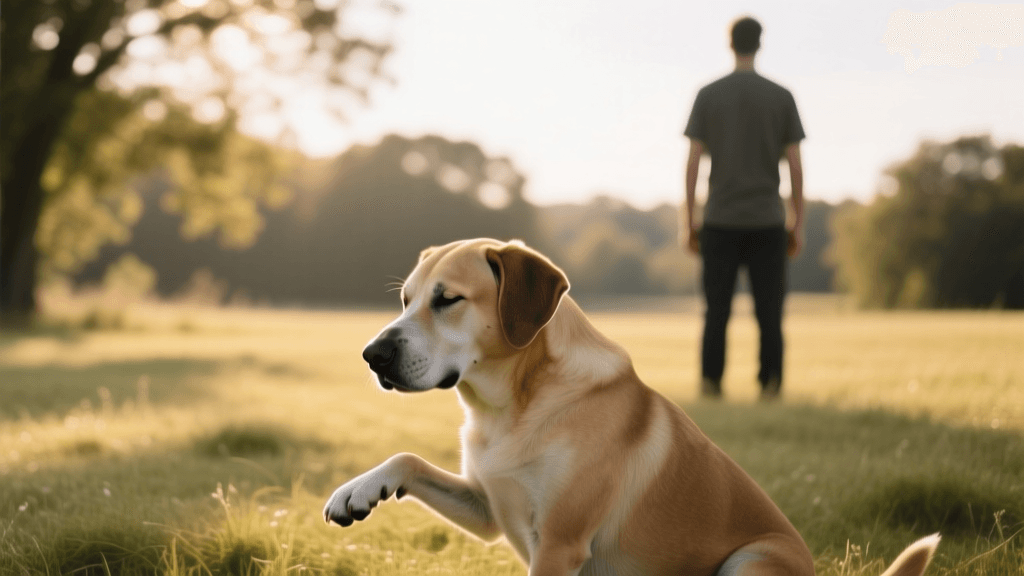
In human culture, direct eye contact is a sign of respect and attentiveness. In canine culture, a prolonged, direct stare is a challenge and a potential prelude to an attack. When a dog turns their head away from you, squints their eyes, or physically turns their back to you, they are offering a profound gesture of peace. They are communicating that they are not a threat and are asking you to lower your social pressure. Forcing a dog to 'look at me' while they are exhibiting these signals only heightens their internal panic.
3. Ground Sniffing and Displacement Behaviors
Dogs explore the world through their olfactory system, but sudden, intense sniffing of the ground in a socially charged environment is often a displacement behavior. If your dog suddenly becomes fascinated by a barren patch of dirt while another dog approaches, or while you are calling them in an angry tone, they are using scent-work to avoid making eye contact and to signal non-aggression. It is a polite way of saying, 'I am busy, I am not a threat, please pass by peacefully.'
4. The Curved Approach
Walking directly head-on toward a dog is inherently confrontational in the canine world. Polite canine greetings involve a wide, curved approach, allowing both parties to gather scent and visual information without triggering a fight-or-flight response. If your dog pulls to the side of the sidewalk to walk in an arc around an oncoming stranger or another dog, they are practicing excellent canine manners and attempting to keep the environment calm.
5. Slowing Down or Freezing
When a dog feels overwhelmed by a fast-paced environment or an owner's erratic, high-energy movements, they may intentionally slow their pace to a crawl or freeze entirely. This is often mislabeled as 'stubbornness' by frustrated owners. In reality, the dog is attempting to lower the energy of the interaction. Freezing is a more severe signal, indicating that the dog's stress threshold has been crossed and they are assessing whether to flee or fight.
Behavioral Matrix: Signals, Triggers, and Human Responses
Understanding the signal is only the first step; modifying our own behavior in response is where true expert handling begins. The table below outlines how to properly respond to common appeasement gestures.
| Calming Signal | Typical Trigger Context | Canine Internal State | Common Human Mistake | Expert Human Response |
|---|---|---|---|---|
| Lip Licking / Yawning | Leaning over dog, direct eye contact, grooming | Mild to moderate anxiety | Punishing, forcing compliance, or ignoring | Step back, turn body sideways, soften gaze, offer space |
| Averting Gaze | Being scolded, approaching an unfamiliar person | Appeasement, desire to avoid conflict | Forcing the dog's head up, demanding 'watch me' | Break eye contact, speak in a low, soothing tone |
| Intense Sniffing | Another dog approaching, chaotic environment | Overstimulation, avoidance | Yanking the leash, demanding immediate recall | Allow 3-5 seconds to sniff, create physical distance |
| Curved Approach | Meeting a new dog or person on a walk | Polite caution, tension diffusion | Pulling the dog into a direct, head-on greeting | Follow the dog's lead, allow the arc, loosen leash |
| Freezing / Slowing | Fast-paced owner movements, loud noises | High stress, threshold reached | Labeling as 'stubborn', pulling forward | Stop moving, assess environment, initiate decompression |
Practical Application: Modifying the Human End of the Leash
Expert behavior analysis dictates that we must change the environment and our equipment to support the dog's emotional needs. Here are specific, actionable adjustments you can implement today, including product recommendations and timing metrics.
1. Upgrade Your Walking Equipment
Neck pressure from standard collars can mimic the feeling of being restrained by a predator, instantly elevating a dog's baseline stress and suppressing calming signals. Switch to a front-clip harness, such as the Rabbitgoo No-Pull Dog Harness (Cost: $20-$30). The front-clip design gently redirects forward momentum without causing tracheal pressure, allowing the dog to feel physically secure and more likely to offer relaxed body language.
2. Implement Decompression Walks
If your dog is frequently exhibiting ground-sniffing and freezing, they need environmental decompression. Ditch the standard 4-to-6-foot leash and invest in a 15-foot Biothane Long Line (Cost: $35-$45). Biothane is waterproof, easy to clean, and won't burn your hands. Allow your dog the full 15 feet of radius to explore, sniff, and curve around obstacles. A minimum of 20 minutes of uninterrupted sniffing has been shown to lower a dog's heart rate and provide immense mental enrichment.
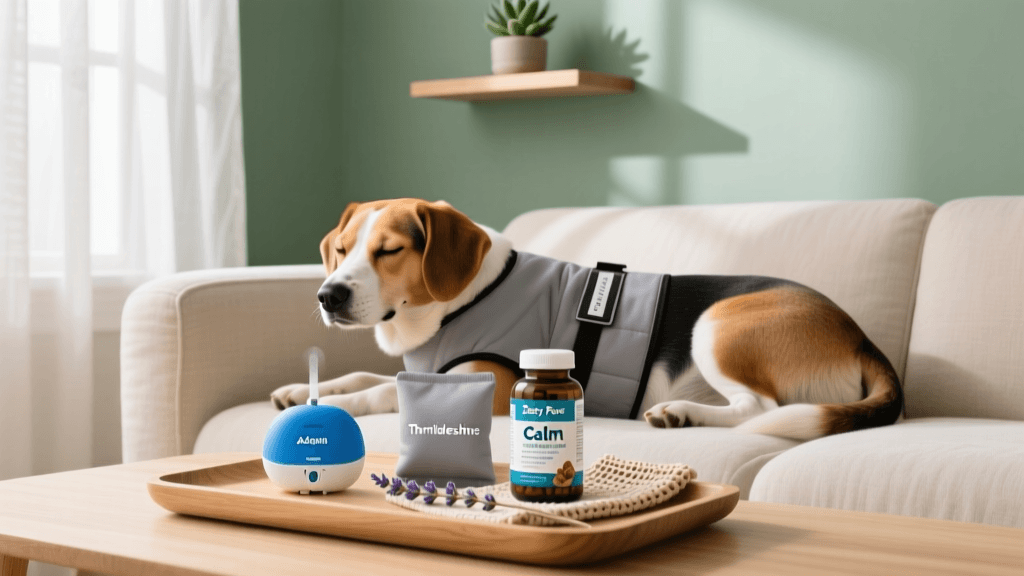
3. Utilize Pheromone Support for Baseline Anxiety
For dogs that exhibit chronic lip-licking and yawning in public spaces, consider integrating synthetic pheromones. The Adaptil Calm On-The-Go Collar (Cost: $30-$40) releases a synthetic copy of the dog-appeasing pheromone (DAP) produced by nursing mothers. Put the collar on the dog 48 hours before a known stressful event (like a road trip or a move) to lower their overall reactivity threshold, making it easier for them to process new stimuli without resorting to severe stress signals.
4. Precision Timing in Positive Reinforcement
When rewarding a dog for calm behavior or for voluntarily offering a relaxed signal (like turning their head away from a trigger), your timing must be impeccable. Use a pet-safe box clicker or a sharp verbal marker like 'Yes!' within 0.5 seconds of the desired behavior. Follow immediately with a high-value, low-calorie treat such as Zuke's Mini Naturals (under 3 calories per treat, Cost: $6-$8 per bag). This precise timing maps the neurological pathway that calm, appeasing behaviors yield positive outcomes, reinforcing the dog's confidence.
When Calming Signals Fail: Escalation and Intervention
The Humane Society of the United States emphasizes that if a dog's calming signals are repeatedly ignored, the dog will escalate to 'distance-increasing' signals. These include hard staring, stiffening of the body, raised hackles (piloerection), deep growling, and air-snapping. Once a dog has escalated to this level, their cognitive processing has essentially shut down; they are operating purely on the sympathetic nervous system's fight-or-flight response.
At this stage, training is impossible. The only expert response is immediate removal from the triggering environment without punishment. Yelling or physically correcting a dog that has escalated past the calming signal phase will only validate their belief that the environment is indeed dangerous, potentially leading to a bite. If your dog regularly bypasses calming signals and moves straight to aggression, it is imperative to seek the guidance of a certified veterinary behaviorist or a fear-free certified trainer who can design a comprehensive desensitization and counter-conditioning protocol.
Conclusion
Understanding canine calming signals is not merely an academic exercise; it is a fundamental requirement for ethical and effective dog ownership. By observing the subtle flick of a tongue, the deliberate turn of a head, or the intentional slowing of a paw, we gain a window into our dog's emotional world. When we honor these signals by adjusting our body language, upgrading our equipment, and providing adequate space, we communicate to our dogs that their voices are heard. This mutual understanding is the bedrock of a resilient, trusting, and deeply fulfilling human-canine bond.
jonas-cole
All our authors care for dogs every day — read more of their work on the authors page.