Understanding Dog Anxiety: Best Calming Aids Reviewed
Discover the science behind canine anxiety and explore our buyer's guide to the best calming aids, from anxiety wraps to pheromone diffusers.
The Psychology of Canine Anxiety
To effectively help a stressed dog, we must first understand the psychological and physiological mechanisms driving their behavior. Canine anxiety is not merely a behavioral quirk; it is a complex neurobiological response rooted in the amygdala, the brain's fear center. When a dog perceives a threat—whether it is a booming thunderstorm, the sound of fireworks, or the departure of their primary caregiver—their sympathetic nervous system triggers a fight-or-flight response. This floods their bloodstream with cortisol and adrenaline, preparing them to survive a perceived danger.
Unlike their wild ancestors, modern domestic dogs often cannot flee from or fight their stressors. A dog locked in a crate during a storm or left alone in an apartment cannot escape the trigger. This lack of control over their environment often leads to chronic stress, manifesting in destructive behaviors, vocalization, or self-harm. According to VCA Hospitals, fears and phobias in dogs can develop from a single traumatic event or through repeated exposure to stressors without proper desensitization. Understanding this biological reality is the first step toward selecting the right calming aids to help regulate their nervous system.
Recognizing Stress Signals in Your Dog
Before investing in calming products, it is crucial to accurately read your dog's body language. Dogs communicate their emotional state through a ladder of stress signals, ranging from subtle appeasement gestures to overt panic. The American Kennel Club (AKC) notes that many owners miss the early warning signs of anxiety, only intervening when the dog begins destroying furniture or barking uncontrollably.
Early signs of canine stress include:
- Displacement Behaviors: Yawning when not tired, sudden ground sniffing, or scratching.
- Appeasement Signals: Lip licking, 'whale eye' (showing the whites of the eyes), and pinned-back ears.
- Physical Tension: Shaking off (as if wet), trembling, or a stiff, low-hanging tail.
- Escalated Panic: Pacing, panting without heat, hiding, or attempts to escape confinement.
By identifying where your dog falls on this stress ladder, you can choose products that intervene at the appropriate level of anxiety.
Buyer's Guide: Top Calming Products Reviewed
The pet market is saturated with 'miracle' cures for anxiety. However, only a few product categories have proven efficacy when used correctly. Below is a detailed review of the most reliable calming aids, focusing on their mechanism of action, sizing, and cost.
1. Pressure Wraps (e.g., ThunderShirt)
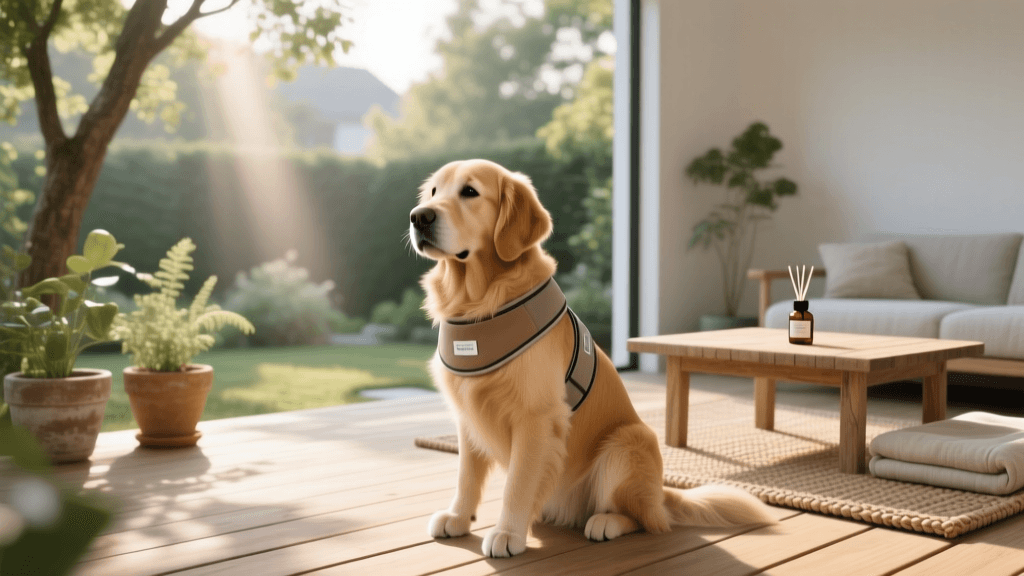
Mechanism of Action: Pressure wraps utilize the science of Deep Pressure Stimulation (DPS). Similar to swaddling an infant or using a weighted blanket for humans, gentle, constant pressure on a dog's torso stimulates the release of endorphins and oxytocin while lowering heart rate.
Practical Advice: Sizing is critical. You must measure your dog's chest girth at the widest part behind the front legs. A wrap that is too loose provides no therapeutic pressure, while one that is too tight restricts breathing and increases panic. Expect to spend between $40 and $50. Introduce the wrap during calm moments, pairing it with high-value treats, so the dog does not associate the garment solely with the onset of a thunderstorm.
2. Pheromone Diffusers (e.g., Adaptil Calm)
Mechanism of Action: Adaptil and similar brands synthesize Dog Appeasing Pheromone (DAP), a chemical signal naturally emitted by nursing mother dogs to reassure their puppies. When inhaled by an adult dog, these pheromones bind to the vomeronasal organ, sending a biological message of safety to the brain.
Practical Advice: Plug-in diffusers cover approximately 700 square feet and cost around $25 for the starter kit, with refills at $15 each. For maximum efficacy, plug the diffuser into the room where your dog spends the most time or where they sleep. Do not plug it in behind furniture or near open windows, as airflow disrupts the pheromone dispersion. It takes 24 to 48 hours for the pheromones to reach optimal saturation in a room, so plug it in well before a known stressor like a holiday with fireworks.
3. Interactive Lick Mats (e.g., Hyper Pet IQ Treat Mat)
Mechanism of Action: The repetitive motion of licking is inherently self-soothing for dogs. It engages the parasympathetic nervous system, promoting digestion and relaxation while lowering cortisol levels.
Practical Advice: Lick mats cost between $10 and $15. To use them for anxiety prevention, spread a thin layer of dog-safe peanut butter, plain pumpkin puree, or low-sodium bone broth over the textured surface and freeze it for two hours. This extends the activity time from 5 minutes to over 20 minutes. Use a lick mat 15 minutes before a known trigger (like a guest arriving or you leaving for work) to shift your dog's brain from a state of anticipation to a state of focused, calming engagement.
4. Bolster Calming Beds (e.g., Best Friends by Sheri Donut Bed)
Mechanism of Action: These beds cater to a dog's natural instinct to burrow and nest. The raised, plush rim provides a sense of physical boundaries and security, mimicking the feeling of sleeping against littermates or a den wall.
Practical Advice: Priced between $30 and $60 depending on size, these beds are ideal for dogs who exhibit 'hiding' behaviors when stressed. Choose a bed with a shag faux-fur exterior, as the texture mimics a mother's coat. Ensure the bed is machine washable, as anxious dogs may drool or shed excessively.
Comparison Chart: Matching Products to Anxiety Triggers
| Product Type | Best For (Trigger) | Mechanism of Action | Average Cost | Time to See Results |
|---|---|---|---|---|
| Pressure Wraps | Noise phobias, travel | Deep Pressure Stimulation | $40 - $50 | Immediate (if conditioned) |
| Pheromone Diffusers | General anxiety, new environments | Olfactory VNO stimulation | $25 (Starter Kit) | 24 - 48 hours |
| Lick Mats | Separation anxiety, boredom | Repetitive motor soothing | $10 - $15 | Immediate (during use) |
| Calming Bolster Beds | Environmental stress, hiding | Tactile security, nesting | $30 - $60 | Immediate |
Integrating Products with Behavior Modification
It is vital to understand that no product on the market is a standalone cure for severe canine anxiety. Calming aids are tools designed to lower a dog's arousal threshold enough so that they can engage in active learning and behavior modification. If a dog is in a state of full-blown panic, their brain is incapable of processing new information or responding to training cues.
The ASPCA emphasizes that treating separation anxiety requires a structured protocol of desensitization and counter-conditioning. For example, a pressure wrap or a pheromone diffuser can create a baseline of calm, allowing the dog to tolerate being left alone for three minutes instead of one. During those three minutes, the dog practices being relaxed, and the owner gradually increases the duration of absence over several weeks.
Ultimately, understanding your dog's unique psychological triggers and stress signals allows you to become an advocate for their mental health. By combining scientifically backed calming products with patience, positive reinforcement, and, when necessary, the guidance of a certified veterinary behaviorist, you can help your dog navigate a loud and unpredictable world with confidence and peace.
hannah-wickes
All our authors care for dogs every day — read more of their work on the authors page.