Canine Foraging Instincts: How Scatter Feeding Reduces Anxiety
Discover how your dog's natural foraging instinct impacts their psychology. Learn scatter feeding strategies to reduce anxiety, boredom, and digestive issues.

When we bring dogs into our homes, we often strip away the very behaviors that kept their ancestors alive for thousands of years. Chief among these is the instinct to forage. While modern pet parents typically serve meals in a stainless steel or ceramic bowl, this convenient method completely ignores the complex psychological and neurological needs of the canine brain. Understanding your dog requires looking past their role as a beloved companion and recognizing them as a natural scavenger and hunter. By shifting from traditional bowl feeding to strategic foraging and scatter feeding methods, you can profoundly impact your dog's mental health, reduce anxiety, and eliminate destructive behaviors born from boredom.
The Evolutionary Psychology Behind Canine Foraging
To understand why feeding strategies matter, we must look at canine neurobiology. In the mammalian brain, there is a primary emotional system known as the 'SEEKING' circuit. When a dog uses their nose to track a scent, paws at the ground, or searches for hidden food, this circuit is activated, releasing a steady stream of dopamine. Dopamine is not just a 'reward' chemical; it is the neurochemical driver of motivation, curiosity, and anticipation.
In the wild, canines spend up to 80% of their waking hours searching for, capturing, and consuming food. This prolonged engagement provides immense psychological satisfaction. When we place a bowl of kibble in front of a domestic dog, they consume their daily caloric requirement in less than sixty seconds. The SEEKING circuit is entirely bypassed. The sudden spike and immediate drop in blood sugar, combined with the lack of mental stimulation, leaves the dog in a state of psychological under-arousal. This void is frequently filled with maladaptive behaviors such as excessive licking, shadow chasing, hyperactivity, or destructive chewing.
The Psychological and Physical Cost of the Food Bowl
Bowl feeding does more than just bore your dog; it can actively contribute to behavioral and physical issues. 'Vacuuming' or gulping food from a bowl introduces excess air into the stomach, increasing the risk of gastrointestinal distress, regurgitation, and in large, deep-chested breeds, the life-threatening condition known as Gastric Dilatation-Volvulus (GDV) or bloat. Furthermore, behavioral enrichment guidelines from the Humane Society of the United States emphasize that a lack of mental stimulation during meal times is a leading contributor to separation anxiety and general restlessness in indoor dogs.
Actionable Foraging and Feeding Strategies
Transitioning your dog from a bowl to a foraging-based diet is one of the most effective, low-cost behavioral modifications you can implement. Here are three primary strategies, complete with product recommendations and timing.
1. Scatter Feeding (The Natural Approach)
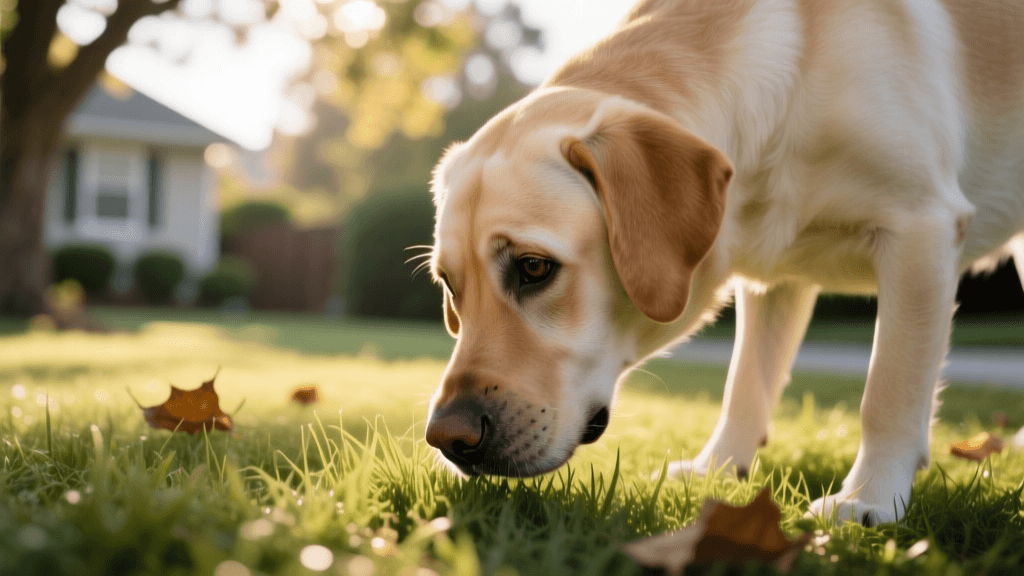
Scatter feeding involves tossing your dog's dry kibble across a safe, enclosed area, such as a grassy backyard or a large indoor rug. This forces the dog to use their olfactory senses—comprising up to 300 million scent receptors—to locate each piece of food.
- Cost: $0 (Uses existing kibble).
- Timing: 10 to 20 minutes per meal.
- Best For: High-energy breeds, scent hounds (Beagles, Bloodhounds), and dogs that eat too quickly.
- Action Step: Take your dog's measured morning portion (e.g., 1 cup of kibble) and scatter it across a 10x10 foot patch of grass. Release them with a 'find it' cue.
2. Snuffle Mats and LickiMats
For apartment dwellers or days with poor weather, commercial foraging tools are excellent alternatives. A snuffle mat mimics the texture of grass, while a LickiMat utilizes the soothing psychological effect of repetitive licking, which releases endorphins and lowers cortisol (the stress hormone).
- Recommended Products: PAW5 Wooly Snuffle Mat (Approx. $45) and Hyper Pet LickiMat Soother (Approx. $10).
- Measurements & Preparation: Press 1/2 cup of kibble deep into the fleece strips of a snuffle mat. For a LickiMat, blend 1/4 cup of plain pumpkin puree with a tablespoon of xylitol-free peanut butter and spread it thinly over the textured surface. Freeze for 2 hours to extend the activity time.
- Timing: 15 to 30 minutes of focused engagement.
3. Food-Dispensing Puzzle Toys
Puzzle toys require the dog to solve a physical problem to access their food, engaging their spatial reasoning and problem-solving skills. Veterinary behaviorists and resources like the ASPCA's behavioral health guides frequently recommend puzzle feeders to combat cognitive decline in senior dogs and hyperactivity in adolescents.
- Recommended Products: KONG Classic ($15-$25) and Outward Hound Nina Ottosson Dog Brick ($30).
- Cost Analysis: An initial investment of $30-$50 provides years of daily use, easily offsetting the cost of destroyed household items caused by boredom.
- Action Step: For a KONG, layer 1/3 of the dog's daily kibble with a low-sodium chicken broth or plain Greek yogurt, then freeze overnight. This turns a 30-second meal into a 45-minute cognitive workout.
Comparison Chart: Bowl Feeding vs. Foraging Enrichment
Understanding the stark contrast between traditional feeding and foraging strategies highlights why the latter is superior for canine psychological health.
| Feeding Metric | Standard Bowl Feeding | Foraging & Scatter Strategies |
|---|---|---|
| Time to Consume | 30 - 90 seconds | 15 - 45 minutes |
| Mental Stimulation | Minimal to None | High (Olfactory & Cognitive) |
| Digestion Pace | Rapid (Risk of bloating/gas) | Slow & Steady (Improved digestion) |
| Dopamine Release | Post-meal spike only | Sustained release during the search |
| Anxiety Reduction | Low | High (Lowers cortisol via enrichment) |
| Daily Equipment Cost | $0 (Assuming bowl is owned) | $0 (Scatter) to $1 (Wear on toys) |
Implementing a Foraging Diet: Measurements and Daily Routine
A common mistake pet parents make is adding foraging treats on top of a dog's regular meals, leading to obesity. The key to success is reallocating your dog's daily caloric allowance. If your 50-pound dog requires 1,000 calories a day (roughly 3 cups of standard kibble), you must divide this across their enrichment activities.
Sample Daily Foraging Routine:
- Morning (7:00 AM): Scatter feed 1 cup of kibble in the backyard. (Approx. 330 calories). This provides morning mental exhaustion, making them more likely to nap while you work.
- Afternoon Enrichment (2:00 PM): Provide a frozen KONG stuffed with 1/2 cup of kibble soaked in bone broth. (Approx. 165 calories). This breaks up the midday lull and prevents separation anxiety.
- Evening Wind-Down (6:00 PM): Use a snuffle mat or puzzle toy for the remaining 1.5 cups of kibble. (Approx. 505 calories). This engages their brain before the evening settle-down period.
Monitoring and Adjusting for Your Dog's Psychology
Not all dogs will immediately understand how to forage, especially if they have been bowl-fed their entire lives. If your dog shows signs of frustration—such as pawing aggressively at a puzzle toy, whining, or walking away—you must adjust the difficulty. The goal is cognitive engagement, not defeat.
Start by making the food highly visible and easily accessible. For a snuffle mat, leave the kibble resting on top of the fleece before gradually pushing it deeper over several weeks. For puzzle toys, remove the locking mechanisms until the dog understands the basic premise of 'move the piece, get the food.' Always supervise your dog with new foraging toys to ensure they do not attempt to chew and ingest non-food materials like rubber or plastic.
Conclusion
Understanding your dog means respecting their evolutionary blueprint. By replacing the mundane food bowl with scatter feeding, snuffle mats, and puzzle toys, you are not just feeding your dog; you are providing them with a daily psychological outlet. This simple shift in your feeding strategy can dramatically reduce anxiety, curb destructive behaviors, and foster a calmer, more fulfilled companion. Embrace the mess, encourage the sniffing, and let your dog experience the profound joy of the hunt right in your living room.
tom-renshaw
All our authors care for dogs every day — read more of their work on the authors page.