Understanding Canine Chewing: Home Proofing Strategies
Discover the psychology behind canine chewing and learn actionable home proofing strategies to protect your belongings and reduce your dog's anxiety.

The Psychology Behind Canine Chewing
To effectively dog-proof your home, you must first understand why dogs chew. Chewing is not an act of malice or spite; it is a deeply ingrained instinctual behavior and a primary way canines interact with their environment. Puppies explore the world with their mouths much like human babies use their hands. During the teething phase, which typically peaks between 12 and 16 weeks of age, chewing provides essential relief for sore gums as adult teeth erupt.
However, when chewing persists into adulthood or becomes destructive, it usually points to an underlying psychological or environmental deficit. According to the ASPCA, destructive chewing in adult dogs is frequently a symptom of unmet physical or psychological needs, such as insufficient mental stimulation, lack of physical exercise, or profound boredom.
Breed-Specific Instincts and Chewing
Not all dogs chew with the same intensity or motivation. Breed genetics play a massive role in how a dog interacts with their home environment. For instance, Retriever breeds (like Golden Retrievers and Labrador Retrievers) were selectively bred to carry game in their mouths, giving them a natural, lifelong inclination to hold and chew on objects. Terriers, on the other hand, were bred to hunt and kill vermin, resulting in a fierce, high-velocity chewing style designed to break through bone and hide. Working breeds like German Shepherds and Belgian Malinois possess high drive and intelligence; if left without a job or adequate mental stimulation, they will often assign themselves the job of dismantling your drywall or furniture. Understanding your dog's genetic predisposition allows you to tailor your dog-proofing strategy. A terrier mix will require heavy-duty nylon chews and reinforced baseboards, while a retriever might be perfectly satisfied with a durable rubber fetch toy and a designated carry basket of approved plush items.
Anxiety and Stress Relief
For many dogs, chewing is a self-soothing mechanism. The physical act of gnawing releases endorphins in a dog's brain, which helps calm them during periods of stress. When chewing is linked to distress, it may be a sign of separation anxiety. The ASPCA notes that separation anxiety triggers intense panic when a dog is left alone, often resulting in frantic, destructive chewing focused on exit points like door frames and window sills, or on items that carry their owner's scent, such as shoes and remote controls.
Assessing Your Home Environment: The Dog's Eye View
Before purchasing baby gates or bitter sprays, you must conduct a thorough audit of your home from your dog's perspective. Get down on your hands and knees to see the world from their vantage point. What looks like a harmless rug fringe to you is an inviting tug-toy to a terrier. A dangling laptop charger is a fascinating, textured vine.
Identifying High-Risk Zones
- The Floor Zone (0-12 inches): Baseboards, electrical cords, dropped pills, toxic houseplants, and small objects that pose choking hazards.
- The Mid-Level Zone (12-36 inches): Coffee tables, low shelves, trash cans, and the edges of sofas. This is the prime real estate for opportunistic chewing.
- The Counter-Surfer Zone (36+ inches): Kitchen counters and high tables. While not strictly chewing, large breeds will easily clear these heights to access food, which often leads to the ingestion of dangerous packaging.
Strategic Dog-Proofing: Room by Room Guide
Dog-proofing is not about creating a sterile environment; it is about managing the space to set your dog up for success while providing safe alternatives. The Humane Society of the United States emphasizes that management and supervision are the cornerstones of preventing destructive behavior.
Living Room & Common Areas
The living room is typically where dogs spend the most time, making it a high-risk area for furniture damage. Use split-loom tubing or PVC cord concealers to encase all visible electrical wires. Not only does this prevent the destruction of expensive electronics, but it also prevents fatal electrocution. Apply a pet-safe deterrent, such as Grannick's Bitter Apple Spray, to the wooden legs of coffee tables and the corners of baseboards. Reapply daily for at least two weeks to break the habit loop.
Kitchen & Dining Areas
Kitchens present severe ingestion risks. Trash cans must be secured inside cabinets or replaced with heavy-duty, pedal-operated models that a dog cannot nudge open. Keep all toxic foods (chocolate, xylitol, grapes, onions) in upper cabinets. Furthermore, be mindful of the dishwasher. Dogs are notorious for licking food residue off plates before you close the door, which can lead to ingestion of toxic foods or sharp bones. Always rinse plates immediately or close the dishwasher door the second you load a dish. If you have a large breed, consider installing a dog gate at least 36 inches tall to restrict kitchen access entirely when you are not actively supervising.
Bedrooms & Home Offices
Bedrooms are filled with high-value scent items. Shoes, socks, and laundry must be kept in closed hampers or closets. In home offices, use cable management boxes to hide power strips and use zip-ties to secure loose wires to the back of desk legs, keeping them out of the Floor Zone.
Safe Alternatives and Enrichment
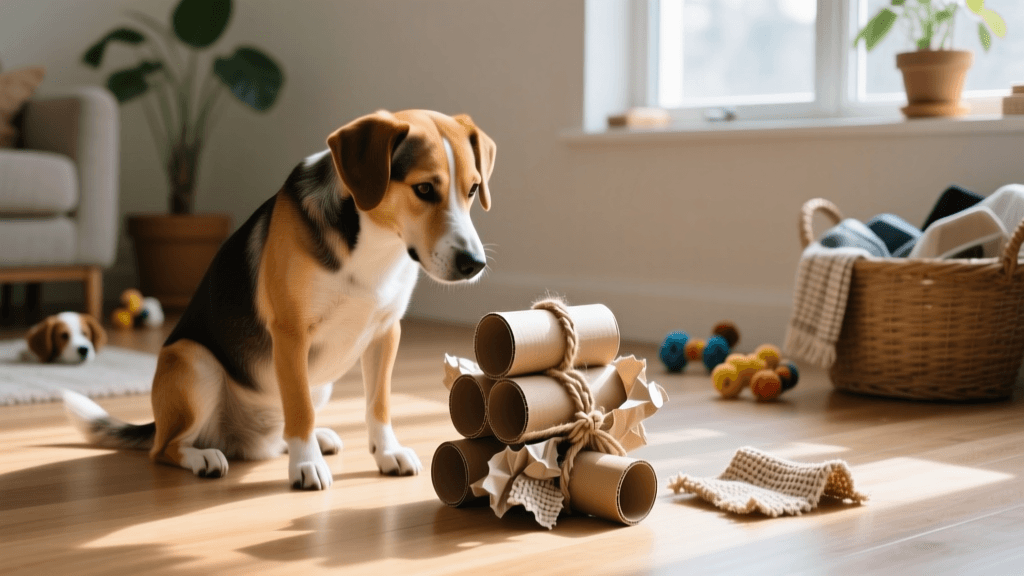
You cannot simply remove a dog's outlet for chewing; you must replace it with an appropriate alternative. Providing a variety of textures satisfies their instinctual need to gnaw while protecting your home.
Pro Tip: Never give your dog an old shoe or a child's discarded toy to chew on. Dogs cannot distinguish between an old sneaker and your brand-new running shoes. Always provide items that are distinctly different from your household belongings.
Chew Toy Safety & Durability Chart
| Material Type | Durability | Best For | Safety Risk | Example Brands |
|---|---|---|---|---|
| Natural Rubber | High | Aggressive Chewers | Low (if sized correctly) | KONG Classic, Goughnuts |
| Solid Nylon | Very High | Power Chewers | Medium (monitor for sharp edges) | Benebone, Nylabone Power |
| Edible Chews | Low to Medium | Moderate Chewers | High (choking or intestinal blockage) | Bully Sticks, Yak Cheese |
| Plush / Fabric | Low | Gentle Chewers / Seniors | Very High (stuffing ingestion risk) | ZippyPaws, Outward Hound |
To maintain your dog's interest, practice toy rotation. Keep only three or four chew toys available at any given time, and store the rest in a closet. Swap them out weekly. This prevents habituation and keeps the toys feeling novel and exciting, which significantly reduces the likelihood of your dog seeking out forbidden household items.
Managing Anxiety-Related Chewing
If your dog's chewing is driven by anxiety, standard dog-proofing and toy rotation will only act as temporary band-aids. You must address the root psychological cause. For dogs with mild confinement distress or separation anxiety, creating a secure den environment can be highly effective.
Use a sturdy, well-ventilated wire or heavy-duty plastic crate. Outfit it with a chew-proof bed (such as the Kuranda Chewproof Cot) and a frozen KONG stuffed with peanut butter. The crate should be placed in a quiet, low-traffic area of the home, draped partially with a breathable blanket to mimic the enclosed, secure feeling of a natural den. Over time, through positive reinforcement and desensitization training, the dog will associate this space with safety rather than isolation.
In severe cases of separation anxiety, where the dog is injuring their teeth or gums trying to escape confinement, it is vital to consult a certified veterinary behaviorist. They may recommend a combination of behavioral modification protocols and temporary anti-anxiety medications to lower the dog's arousal threshold, making it possible for them to learn new, healthier coping mechanisms.
Conclusion
Understanding your dog's chewing psychology is the first and most critical step in creating a harmonious home environment. By recognizing that chewing is a natural, instinctual behavior driven by teething, breed traits, boredom, or anxiety, you can shift your approach from frustration to proactive management. Through strategic dog-proofing, providing appropriate and varied enrichment, and addressing underlying emotional needs, you can protect your home while ensuring your dog remains mentally stimulated, physically safe, and deeply content.
priya-sutaria
All our authors care for dogs every day — read more of their work on the authors page.