Understanding the Adolescent Dog: Navigating Fear Periods
Learn why your teenage dog is suddenly scared. Discover the psychology of canine adolescent fear periods and actionable life stage training tips.

The Science of the Canine Teenage Brain
Every dog owner remembers the exhausting but rewarding days of early puppyhood. You survived the potty training, the chewed-up shoes, and the sleepless nights. Your dog was finally becoming a well-mannered companion, responding to cues and confidently navigating the world. Then, seemingly overnight, everything changed. Your confident pup is suddenly terrified of the garbage can, has forgotten how to sit, and is pulling on the leash. Welcome to canine adolescence.
This life stage, typically spanning from six to eighteen months of age, is one of the most misunderstood phases in a dog's psychological development. Far from being simply stubborn, your adolescent dog is undergoing massive neurological and hormonal shifts. Understanding the psychology behind the teenage fear period is crucial for maintaining your bond and ensuring your dog develops into an emotionally stable adult. In this comprehensive life stage care guide, we will decode the adolescent canine brain and provide actionable, science-backed strategies to help you both navigate this turbulent time.
The Science of the Canine Teenage Brain
To understand why your dog is acting out, we must look at what is happening inside their developing brain. During adolescence, a dog's brain undergoes a process called synaptic pruning. Just like in human teenagers, the canine brain eliminates weaker neural connections to make the remaining pathways faster and more efficient. However, this restructuring temporarily disrupts established behaviors and emotional regulation.
Furthermore, the amygdala—the brain's fear and emotion center—matures much faster than the frontal cortex, which is responsible for impulse control and rational decision-making. This developmental mismatch means your teenage dog experiences emotions, particularly fear and frustration, much more intensely than they did as a puppy, but lacks the neurological brakes to calm themselves down. According to a landmark 2020 study conducted by the Royal Veterinary College (RVC), dogs are significantly more likely to ignore commands given by their primary caregivers during adolescence. This mirrors human teenage rebellion, where adolescents push boundaries with their parents while often behaving perfectly for strangers. The RVC study highlights that this disobedience is not a sign of poor training or a lack of love, but a temporary, biologically driven phase of psychological distancing and boundary testing.
Identifying the Second Fear Period
Alongside brain restructuring, adolescent dogs experience what behaviorists call the Second Fear Period. While the first fear period occurs around eight to eleven weeks of age, the second is far more unpredictable, typically emerging anywhere between six and fourteen months.
From an evolutionary psychology perspective, this fear period serves a vital survival function. In the wild, this is the age when young canids begin to venture further from the safety of the den to explore their wider territory and eventually hunt. A built-in, heightened fear response ensures they do not blindly approach novel stimuli, predators, or environmental hazards. In our modern domestic environment, however, this survival mechanism often manifests as sudden reactivity or phobias. Your dog might suddenly bark at a neighbor they have greeted happily for months, refuse to walk past a specific storm drain, or become hyper-vigilant at the dog park.
The Fear Free Pets organization emphasizes that how an owner reacts during this sensitive window will permanently shape the dog's adult temperament. Forcing a terrified dog to interact with their trigger—a harmful practice known as flooding—will only deepen the neural pathways associated with fear, potentially leading to lifelong aggression or anxiety.
Actionable Life Stage Care: Managing the Adolescent Dog
Navigating the teenage fear period requires a shift from basic obedience training to advanced emotional management. Here is your actionable care guide, complete with specific products, measurements, and timings to support your dog through this life stage.
1. Environmental Management and Stress Reduction
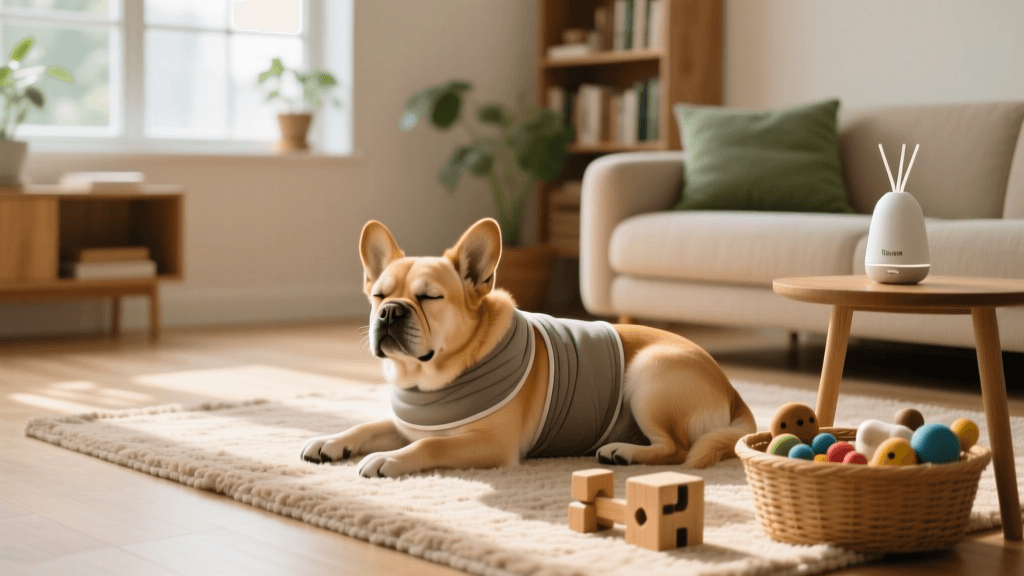
Your first line of defense is creating a low-stress home environment. Chronic stress elevates cortisol levels, which keeps the amygdala on high alert. Invest in an Adaptil DAP (Dog Appeasing Pheromone) diffuser (approximately $25 to $35 for a 30-day supply). Plug it into the wall in the room where your dog spends the most time. These synthetic pheromones mimic the calming nursing pheromones produced by mother dogs, providing a subtle, continuous baseline of comfort.
Additionally, incorporate daily decompression sessions using a LickiMat Soother ($10 to $15). Spread the mat with plain Greek yogurt or xylitol-free peanut butter and freeze it for two hours. The repetitive act of licking releases endorphins in the canine brain, naturally lowering heart rate and reducing anxiety.
2. Training Adjustments: The Engage-Disengage Game
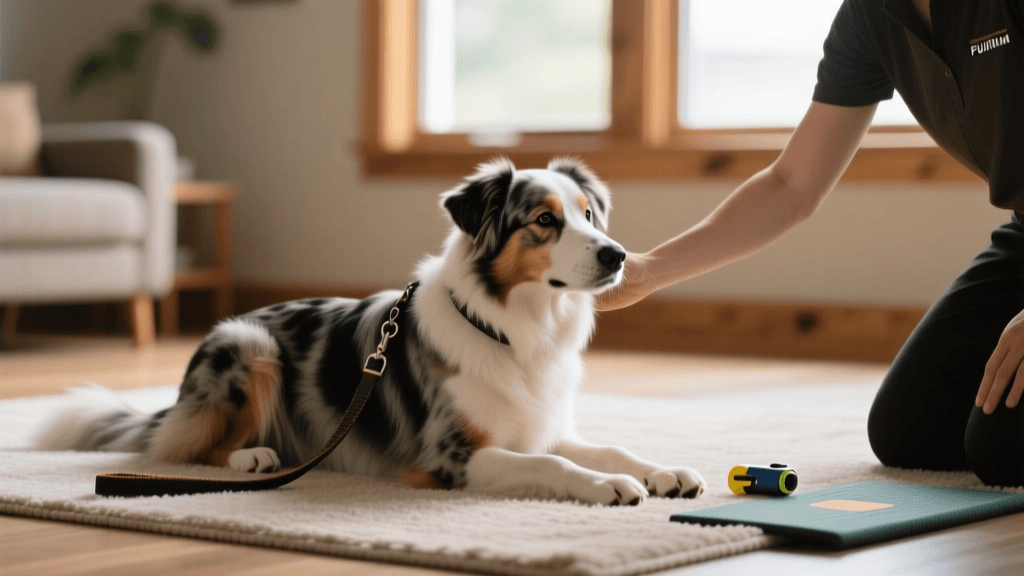
When your dog reacts fearfully to a trigger (e.g., a person wearing a hat), do not force them closer. Instead, use the Engage-Disengage game to rebuild positive associations. Find your dog's threshold distance—the exact measurement where they notice the trigger but do not react (e.g., 20 feet away). The moment your dog looks at the trigger (Engage), mark the behavior with a calm yes or a clicker, and feed a high-value treat like boiled chicken. Repeat this until your dog voluntarily looks away from the trigger and up at you (Disengage). This empowers the dog to make choices, engaging the frontal cortex and bypassing the panicked amygdala.
The American Kennel Club (AKC) recommends keeping training sessions during adolescence incredibly short—no more than five to ten minutes—to prevent cognitive overload and frustration.
3. Targeted Nutritional and Supplement Support
For dogs experiencing severe adolescent anxiety, targeted supplements can bridge the gap between behavioral triggers and training. Zylkene, a natural supplement derived from a milk protein called casein, is highly regarded for its calming properties without causing drowsiness. Depending on your dog's weight, a one-month supply costs between $25 and $45. Administer the capsule daily, or double the dose 48 hours before a known high-stress event (like a veterinary visit or fireworks). Another excellent option is Solliquin, which contains L-theanine and ashwagandha root to support long-term emotional balance during this turbulent life stage.
Canine Life Stages and Psychological Milestones
To contextualize adolescence, it is helpful to view it within the broader spectrum of canine psychological development. The table below outlines the key life stages, their approximate timelines, and the primary psychological focus for each period.
| Life Stage | Age Range | Key Psychological Milestone | Primary Care Focus |
|---|---|---|---|
| Neonatal | 0 - 2 Weeks | Sensory development; complete dependence on mother. | Thermal regulation; gentle handling (Early Neurological Stimulation). |
| Transitional | 2 - 4 Weeks | Eyes and ears open; first steps and tail wagging. | Safe exploration; introduction to varied textures. |
| Socialization | 4 - 12 Weeks | Primary fear imprinting; critical learning window. | Positive exposure to novel sights, sounds, and people. |
| Juvenile | 3 - 6 Months | Teething; testing boundaries; high energy. | Bite inhibition; basic obedience; impulse control games. |
| Adolescence | 6 - 18 Months | Second fear period; synaptic pruning; hormonal surges. | Emotional regulation; threshold training; stress reduction. |
| Adulthood | 1.5 - 7 Years | Behavioral stabilization; established routines. | Mental enrichment; maintaining physical health. |
| Senior | 7+ Years | Cognitive changes; sensory decline. | Joint support; cognitive therapy; environmental adaptation. |
As highlighted in the table, adolescence is the longest and most psychologically complex developmental stage prior to adulthood. Recognizing that your dog is in the Second Fear Period allows you to adjust your expectations and provide the specific support they need.
When to Consult a Professional
While most teenage rebellion and mild fear responses can be managed with patience and the strategies outlined above, some dogs develop severe phobias or aggression during this life stage. If your dog's fear escalates to lunging, snapping, or shutting down completely (learned helplessness), it is time to seek professional help.
Consult a Certified Applied Animal Behaviorist (CAAB) or a Veterinary Behaviorist (DACVB). An initial behavioral consultation typically costs between $150 and $350, but it is a vital investment in your dog's long-term psychological well-being. These professionals can prescribe anti-anxiety medications, such as fluoxetine or trazodone, which act as a chemical bridge, lowering the dog's baseline anxiety enough for training to actually take hold.
Conclusion
Ultimately, the adolescent phase is not a regression of your dog's training, but a vital evolutionary stepping stone. By understanding the psychology of the teenage brain, managing their environment, and responding to fear with empathy rather than frustration, you will guide your dog through this turbulent life stage and emerge with a deeply bonded, confident, and resilient adult companion.
robin-maitland
All our authors care for dogs every day — read more of their work on the authors page.