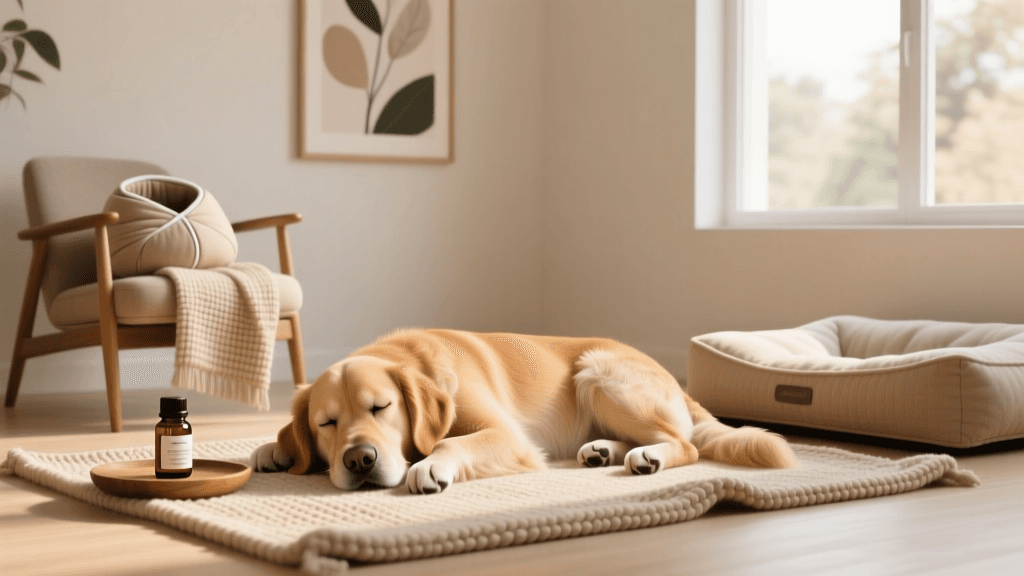
How to Train the Settle Command for Hyperactive Dogs
Learn how to train the settle command to manage canine hyperarousal. Follow our step-by-step guide with timing, gear, and behavioral psychology tips.
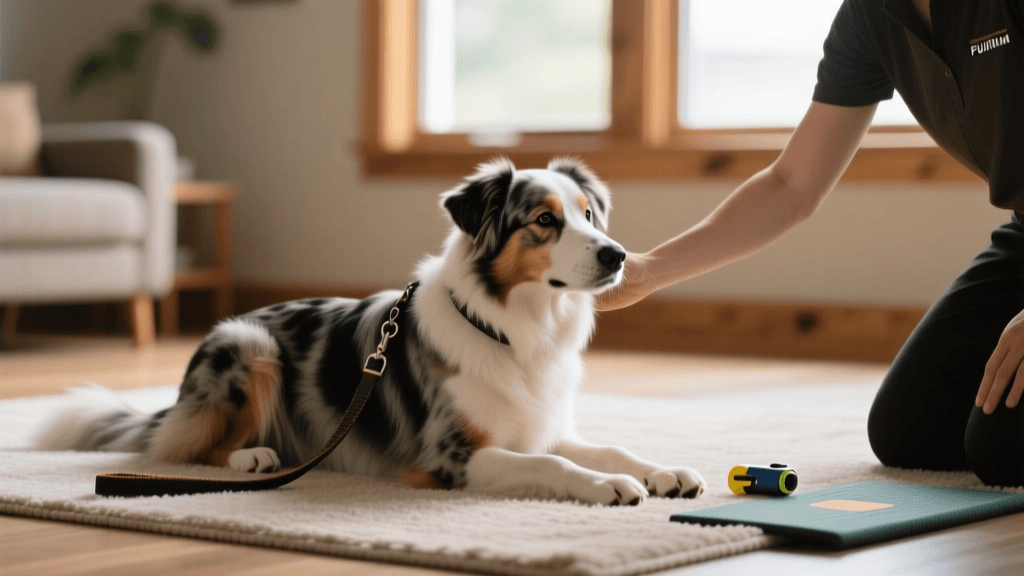
The Psychology of Canine Hyperarousal
Many dog owners mistakenly believe that calmness is an innate personality trait. We often expect our dogs to intuitively understand that lying quietly on a rug while we work, eat, or host guests is the desired behavior. However, from a canine psychological perspective, being "calm" is an active, learned behavior that must be shaped, reinforced, and generalized. When a dog is hyperactive, pacing, whining, or unable to switch off, they are often trapped in a state of sympathetic nervous system arousal. This fight-or-flight system floods their body with adrenaline and cortisol, making relaxation biologically impossible without intervention.
According to VCA Animal Hospitals, hyperarousal in dogs is frequently a result of overstimulation, lack of mental enrichment, or learned excitement rather than a simple lack of physical exercise. Teaching the "settle" or "place" command actively engages the dog's parasympathetic nervous system (the rest and digest state). By providing a designated mat and a clear behavioral protocol, you give your dog a tangible job: to relax. This step-by-step guide will walk you through the exact methodology to train a bombproof settle command, complete with specific gear recommendations, timing protocols, and troubleshooting charts.
Essential Gear for Settle Training
Before beginning your training sessions, gather the following specific tools. Using the right equipment prevents frustration and accelerates the learning process.
- The Training Mat: You need a distinct visual and tactile boundary. A 24x36 inch raised cot, such as the Kuranda Chewproof Dog Bed (approx. $130), is ideal because the elevated edges provide clear physical boundaries. For a budget-friendly alternative, use a $15 rubber-backed bath mat from a local home goods store. Avoid using the dog's everyday sleeping bed, as you want the training mat to be a specific cue for active settling, not just sleep.
- High-Value Treats: Boiled, unseasoned chicken breast (approx. $5 per lb) or low-sodium string cheese. Cut these into pea-sized pieces (roughly 1/4 inch cubes). You will need about 1/2 cup of treats per 5-minute session.
- Medium-Value Treats: Zuke's Mini Naturals (approx. $6 per 6oz bag) or kibble from their daily ration for lower-criteria repetitions.
- Clicker or Marker Word: A PetSafe Clik-R Training Clicker (approx. $8) or a consistent verbal marker like "Yes!" delivered in a bright, calm tone.
- Timer: Use your smartphone's stopwatch feature to track session lengths and duration intervals accurately.
Step 1: Charging the Mat (Days 1 to 3)
The goal of this first step is to create a strong positive emotional response to the mat. We are not asking the dog to lie down yet; we are simply teaching them that the mat is a magical treat-dispensing zone.
- Placement: Put the mat on the floor in a quiet room with zero distractions (e.g., a closed bedroom).
- The Lure: Hold a pea-sized piece of chicken in your hand and guide your dog's nose onto the mat. The moment all four paws touch the mat, click your clicker (or say "Yes!") and deliver the treat directly on the mat surface.
- Reset: Toss a second treat three feet away from the mat to reset the dog. This forces them to choose to return to the mat.
- Repetition: Repeat this process 30 to 50 times in a single session. Keep sessions strictly to 5 minutes to prevent cognitive fatigue.
Behavioral Cue to Watch For: By day 3, your dog should be sprinting to the mat and offering eye contact the moment you set it on the floor. This is known as "mat magnetism."
Step 2: Shaping the Down (Days 4 to 7)
Now that the dog loves the mat, we will shape the physical posture of lying down. According to training guidelines supported by the American Kennel Club (AKC), capturing the behavior is often more effective than physically forcing the dog into a down position.
- Wait for the Offer: When your dog steps onto the mat, do not click immediately. Stand completely still and wait.
- Capture the Movement: The dog will likely sit, look around, and eventually offer a downward movement out of curiosity or mild frustration. The exact millisecond their elbows touch the mat, click and deliver a high-value treat.
- Continuous Reinforcement: For the next 5 minutes, click and treat every single second the elbows remain on the mat. If they stand up, simply wait for them to go back down.
Pro Tip: Deliver the treat low to the ground, directly between their front paws. If you deliver the treat too high, you will accidentally lure them into a sitting or standing position.
Step 3: Building Duration and the 3 Ds (Weeks 2 to 3)
Dogs live in the present moment. A two-second down feels exactly the same to them as a two-minute down unless we systematically build duration. We use the rule of the "3 Ds": Duration, Distance, and Distraction. Never increase more than one "D" at a time.
Duration Protocol:
- Ask for a down on the mat.
- Count 2 seconds in your head. Click and treat.
- Next rep: Count 4 seconds. Click and treat.
- Next rep: Count 6 seconds. Click and treat.
- If the dog breaks the down before the time is up, you have increased the duration too quickly. Drop back down to 2 seconds and build up slower.
Once your dog can comfortably hold a down on the mat for 60 seconds while you stand right next to them, you can begin adding Distance. Take one step back, wait 3 seconds, step back to the mat, and reward. Gradually increase to taking three steps back, then walking across the room.
Step 4: Adding the Verbal Cue and Proofing (Week 4 and Beyond)
Only after the dog reliably performs the behavior should you attach the verbal cue. Saying "Settle" while the dog is jumping around teaches them that the word means "be hyper." Instead, say the word "Settle" or "Place" exactly one second before they step onto the mat and lie down.
Proofing the Behavior (Generalization):
A dog that settles in the living room may not know how to settle on the back patio. You must generalize the behavior by moving the mat to new environments. Follow this checklist:
- Move the mat to the kitchen while you cook.
- Move the mat to the front porch while you drink coffee.
- Take the mat to a quiet park bench.
- Bring the mat to a dog-friendly brewery or cafe patio.
Each time you change locations, drop your criteria back to Step 1 for the first five minutes. Reward heavily for simply interacting with the mat in the new, distracting environment.
Troubleshooting Common Settle Training Issues
Even with perfect timing, dogs will sometimes struggle. Use this diagnostic table to identify and correct common hurdles in your training journey.
| Observed Issue | Underlying Psychological Cause | Step-by-Step Solution |
|---|---|---|
| Dog breaks the settle immediately after eating the treat. | The dog views the treat as a release cue. The reinforcement rate is too low. | Implement a continuous reinforcement schedule. Deliver 5 to 10 treats in rapid succession (one every 2 seconds) while the dog remains down. |
| Dog paws at the mat or whines while lying down. | Canine arousal is too high; the dog is experiencing frustration from lack of clarity. | Stop the session. Take the dog for a 10-minute decompression sniff-walk on a long leash, then resume training with lower-value treats (kibble). |
| Dog refuses to get on the mat in new environments. | Environmental distraction outweighs the value of the reward. Generalization failure. | Increase distance from the distraction. Move the mat 20 feet further away and use high-value treats (boiled chicken or freeze-dried liver). |
| Dog falls asleep and misses the click/treat. | The dog has successfully engaged the parasympathetic nervous system. This is a success! | Do not wake the dog to reward. Quietly place a few treats near their nose so they smell them upon waking, reinforcing the mat as a positive zone. |
Recognizing True Canine Relaxation
How do you know if your dog is actually settling, or just freezing in anticipation of a treat? True behavioral relaxation is characterized by specific physiological and body language markers. Look for a softly closed mouth, relaxed ears (neither pinned back nor pricked sharply forward), and soft, blinking eyes. The ultimate sign of success is the "canine sigh"—a deep, audible exhale accompanied by the dog shifting their hip to the side and resting their head heavily on their paws. When you see this, you can safely reduce your treat delivery rate to one reward every 3 to 5 minutes.
When to Seek Professional Help
While the settle command is highly effective for typical hyperactive behaviors, some dogs suffer from clinical anxiety, separation distress, or neurological hyperactivity disorders. If your dog exhibits destructive behaviors, self-mutilation, or extreme panic when left alone on their mat, training alone is not enough. The ASPCA strongly recommends consulting with a Certified Applied Animal Behaviorist (CAAB) or a board-certified veterinary behaviorist. These professionals can work in tandem with your veterinarian to explore behavioral modification plans and, if necessary, anti-anxiety medications to help balance your dog's brain chemistry so that training can actually take root.
Conclusion
Training the settle command is one of the most profound gifts you can give your dog. In a world full of loud noises, fast movements, and constant stimulation, teaching your dog how to actively power down their nervous system improves their overall health, longevity, and your mutual bond. Stick to the 5-minute daily sessions, respect the 3 Ds of dog training, and remember that you are not just teaching a trick—you are teaching a vital life skill for navigating a human world.
beth-carrasco
All our authors care for dogs every day — read more of their work on the authors page.