2026 Guide: Training Best Puppy Breeds for Remote Workers
Discover the best puppy breeds for remote workers in 2026 and learn essential mat training and quiet commands for distraction-free Zoom calls.
The Home Office Pack: Best Puppy Breeds for Remote Workers in 2026
As we navigate the permanent remote and hybrid work landscapes of 2026, sharing your home office with a furry companion is no longer just a pandemic-era trend—it is a standard lifestyle choice. However, working from home with a puppy requires strategic training. A puppy that barks during critical Zoom presentations or demands constant attention can severely impact your productivity. The key to a harmonious home office lies in selecting the right breed and implementing specialized training protocols tailored for remote workers.
Not all breeds are suited for the quiet, confined environment of a home office. High-drive herding breeds or vocal hounds can struggle with the sedentary nature of desk work. Instead, remote workers should look for breeds with moderate energy levels, low barking tendencies, and an eagerness to please. In 2026, veterinary behaviorists and professional dog trainers consistently recommend the following breeds for remote professionals:
- Cavalier King Charles Spaniel: Known for their affectionate yet calm demeanor, they are perfectly content to sleep on a mat beside your desk for hours.
- Havanese: Intelligent and highly trainable, they thrive on learning tricks during your screen-free breaks and are generally quiet indoors.
- Miniature Goldendoodle: When sourced from reputable breeders focusing on temperament, these dogs offer a great balance of playfulness and off-switch relaxation.
- Bichon Frise: Cheerful and adaptable, they are excellent companions who respond beautifully to positive reinforcement training.
Breed Comparison Chart for the Home Office
| Breed | Energy Level | Barking Tendency | Best Training Focus |
|---|---|---|---|
| Cavalier King Charles Spaniel | Low to Moderate | Low | Mat Training & Relaxation |
| Havanese | Moderate | Moderate | Quiet Command & Trick Training |
| Miniature Goldendoodle | Moderate to High | Low to Moderate | Puzzle Toys & Impulse Control |
| Bichon Frise | Moderate | Moderate | Independence & Crate Training |
Pillar 1: Mat Training for Distraction-Free Virtual Meetings
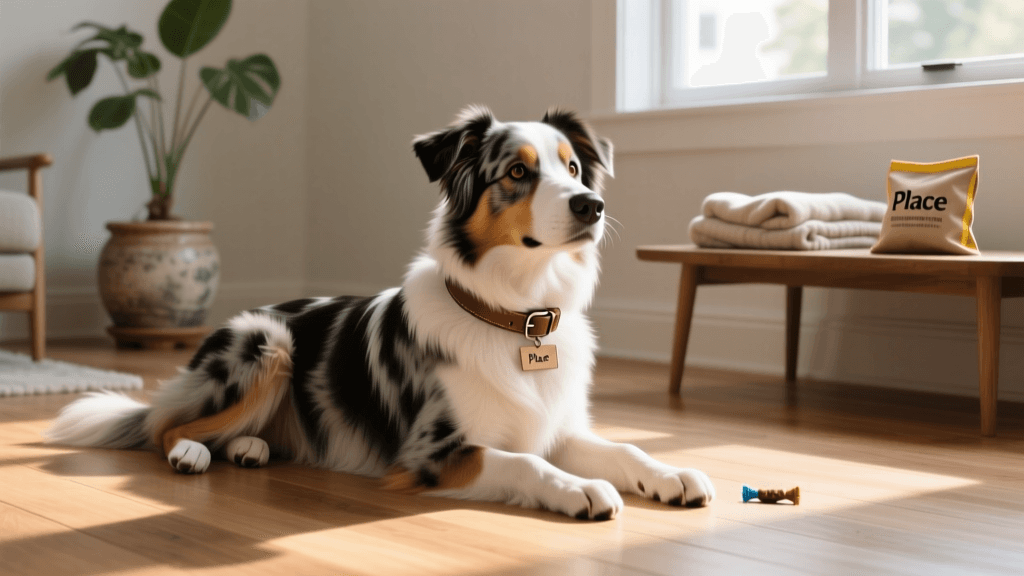
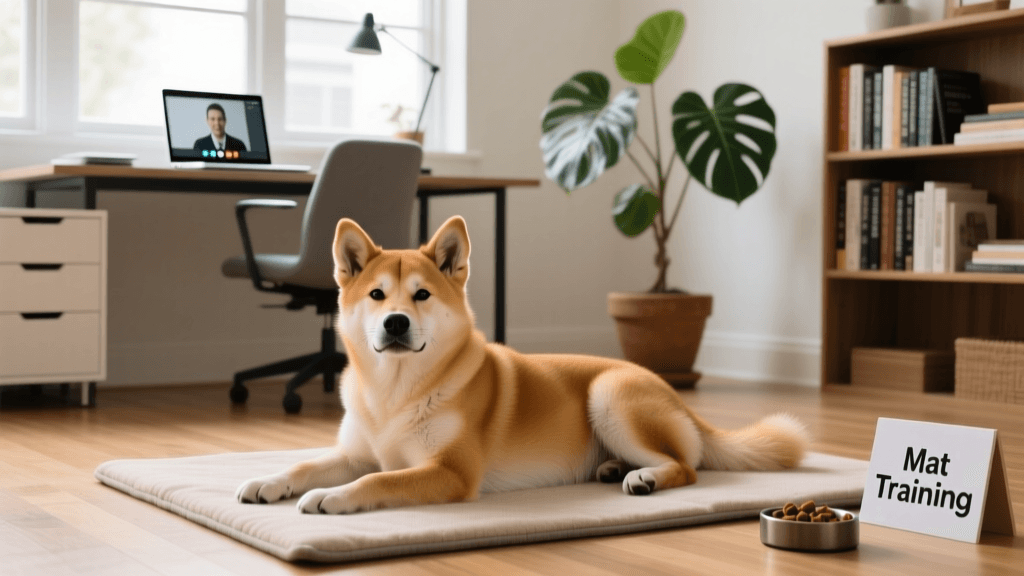
The most critical skill for any remote worker's puppy is the "Place" command. Mat training teaches your dog to go to a specific spot and remain there until released, which is invaluable when you are on camera. In 2026, professional trainers heavily favor raised dog cots over flat beds for mat training because the elevated edges provide a clear physical boundary that helps puppies understand where they are supposed to stay.
Step-by-Step Mat Training Protocol
Equipment Needed: A raised cot (brands like Kuranda or Coolaroo are excellent, costing between $60 and $130 in 2026) and high-value training treats like Zuke's Mini Naturals (approximately $14 per bag).
- The Lure: Stand near the cot with your puppy. Toss a treat onto the mat. The moment all four paws step onto the mat, use a marker word like "Yes!" and reward them with a second treat.
- The Cue: Once your puppy is reliably stepping onto the mat for the tossed treat, introduce the verbal cue "Place" right before they step on.
- Building Duration: Ask your puppy to go to their "Place." Instead of tossing the treat, deliver it directly to their mouth while they are sitting or lying down on the mat. Start with 5 seconds of duration, gradually increasing to 10, 30, and eventually 60 seconds.
- Adding Distance: Take one step back from the mat. If the puppy stays, mark and reward. Slowly increase your distance until you can sit at your desk while the puppy remains on their cot.
Pro Tip for 2026: Use a smart treat dispenser like the Furbo 4 or Petcube Bites 3 to remotely reward your puppy for staying on their mat while you are on a video call. This reinforces the behavior without you having to break eye contact with your webcam.
Pillar 2: Mastering the "Quiet" Command for Zoom Calls
Even the quietest breeds will occasionally bark at a delivery driver or a neighborhood dog. When you are in a virtual meeting, you need an immediate "off switch" for vocalizations. Teaching the "Quiet" command requires patience and precise timing. According to the Humane Society of the United States, addressing excessive barking through positive reinforcement and redirection is far more effective and humane than using punitive shock or vibration collars, which can increase anxiety and worsen the problem.
How to Teach "Quiet"
- Trigger the Bark: Find a controlled trigger that makes your puppy bark, such as a doorbell sound effect played from your phone or a gentle knock on the wall.
- Mark the Behavior: When your puppy barks, say "Speak" and give them a treat. Repeat this until they associate the word "Speak" with the action of barking.
- Introduce the Interrupter: Once they are barking on cue, say "Quiet" in a calm, firm voice. Immediately present a high-value treat (like a small piece of boiled chicken or freeze-dried liver) right in front of their nose. A dog cannot sniff intently and bark at the same time.
- Reward the Silence: The moment your puppy stops barking to sniff the treat, say "Yes!" and let them eat it. Gradually delay the treat delivery, requiring 3 seconds, then 5 seconds, then 10 seconds of silence before rewarding.
During your workday, keep a treat pouch on your desk. If a sudden noise triggers a bark, calmly say "Quiet," wait for the pause, and toss a treat to their mat. Consistency is the cornerstone of this training.
Pillar 3: Independence Training to Prevent Separation Anxiety
One of the hidden dangers of getting a puppy as a remote worker is the unintentional development of separation anxiety. Because you are home 24/7, your puppy becomes accustomed to your constant presence. When you eventually need to return to a corporate office, run errands, or attend in-person networking events, the sudden absence can trigger severe panic. The ASPCA notes that separation anxiety is one of the most common behavioral issues in dogs, but it is highly preventable if independence training begins during puppyhood.
The Departure Desensitization Protocol
To prevent your puppy from panicking when you leave, you must desensitize them to your departure cues. Puppies learn patterns quickly; they know that picking up your keys or putting on your shoes means you are leaving.
- Flirt with Departure: Throughout your workday, put on your shoes, pick up your keys, walk to the front door, and then simply sit back down at your desk. Do this 5 to 10 times a day until your puppy stops reacting to these cues entirely.
- Micro-Absences: Once your puppy ignores your departure cues, step outside the front door for exactly 3 seconds, then re-enter. Do not make a fuss when you return. Gradually increase this time to 10 seconds, 30 seconds, 1 minute, and eventually 15 minutes.
- Enrichment for Absences: Whenever you leave the house, even for a short walk without the dog, provide a long-lasting enrichment item. A Kong Classic stuffed with frozen peanut butter and kibble (costing around $18 in 2026) will keep your puppy occupied and create a positive association with your departure.
The 2026 Remote Worker's Puppy Daily Schedule
Puppies thrive on routine. As a remote worker, structuring your day around your puppy's biological needs will prevent behavioral issues born from boredom or pent-up energy. Here is an optimized daily schedule for a 4-to-6-month-old puppy:
- 7:00 AM - 7:30 AM: Wake up, immediate potty break, followed by 15 minutes of active play or a short sniffari walk to burn off morning energy.
- 7:30 AM - 8:00 AM: Breakfast time. Use a slow-feeder bowl or a snuffle mat to engage their brain while you have your morning coffee.
- 8:00 AM - 10:00 AM: Deep Work Block. Puppy goes to their mat or crate with a chew toy. This is your time for focused, uninterrupted tasks.
- 10:00 AM - 10:30 AM: Potty break and a 10-minute training session focusing on the "Place" or "Quiet" commands.
- 10:30 AM - 12:30 PM: Meetings & Calls. Puppy naps in their crate or on their cot. Puppies this age need 18-20 hours of sleep per day, so mid-morning naps are biologically necessary.
- 12:30 PM - 1:30 PM: Lunch break for you, potty break, and a longer 30-minute walk or play session for the puppy.
- 1:30 PM - 4:00 PM: Afternoon Work Block. Puppy naps or chews on a safe toy on their mat beside your desk.
- 4:00 PM - 4:30 PM: Potty break and a quick game of tug-of-war or fetch to stretch their legs.
- 4:30 PM - 5:30 PM: Wrap-up Work Block. Puppy practices independence training (you work in a different room or step out briefly) while they enjoy a frozen Kong.
- 5:30 PM Onwards: Workday ends. Transition to evening family time, dinner, and relaxation.
Final Thoughts on Home Office Harmony
Bringing a puppy into your remote work life in 2026 is an incredibly rewarding experience, provided you approach it with a strategic training mindset. By selecting a breed suited for indoor companionship, rigorously enforcing mat and quiet commands, and proactively training for independence, you can cultivate a peaceful, productive home office. Remember that consistency is your greatest asset; dedicate just 15 minutes a day to focused training, and your puppy will quickly transform into the perfect, unobtrusive co-worker you always wanted.
hannah-wickes
All our authors care for dogs every day — read more of their work on the authors page.