Training Kids and Dogs Together: A Safe Family Obedience Guide
Learn how to safely train your dog and children together. Discover actionable obedience tips, safe interaction rules, and family-friendly routines.

The Psychology of Joint Family Training
Bringing a dog into a family with children is a profoundly rewarding experience that can teach kids empathy, responsibility, and compassion. However, a harmonious household does not happen by accident. It requires deliberate, structured, and consistent training that involves both the canine and the children. When kids actively participate in dog training, the benefits extend far beyond basic obedience. Children learn how to read animal body language, establish healthy boundaries, and communicate clearly, while the dog learns to respect the children as part of their social hierarchy.
According to the American Veterinary Medical Association (AVMA), the majority of dog bites involving children occur not from aggressive stray dogs, but from familiar family pets when boundaries are misunderstood or when a dog feels cornered. By integrating children into the training process under strict adult supervision, families can drastically reduce these risks and build a lifelong bond based on mutual trust and clear communication.
Age-Appropriate Training Tasks for Children
One of the most common mistakes parents make is assigning training tasks that are too complex or physically demanding for a child's developmental stage. A toddler cannot safely hold a leash attached to a pulling Labrador, but they can absolutely participate in positive reinforcement exercises. Below is a structured guide to matching training tasks with your child's age and capability.
| Child Age | Recommended Training Tasks | Supervision Level | Safety Notes |
|---|---|---|---|
| 3-5 Years | Assisting with treat tossing, practicing the 'sit' command with an adult holding the leash, filling water bowls. | Constant, hands-on adult supervision. | Keep sessions to 3-5 minutes. Teach kids to offer treats on a flat palm to prevent accidental nips. |
| 6-9 Years | Holding the leash (with adult backup), basic clicker training, teaching 'shake' or 'touch', practicing recall in fenced areas. | Direct line-of-sight adult supervision. | Use a 6-foot leash. Ensure the child knows to drop the leash if the dog lunges or pulls hard. |
| 10-12 Years | Independent leash walking in safe areas, teaching 'stay' and 'leave it', managing feeding routines. | Periodic adult check-ins and initial coaching. | Child must demonstrate the ability to read canine stress signals before walking the dog alone. |
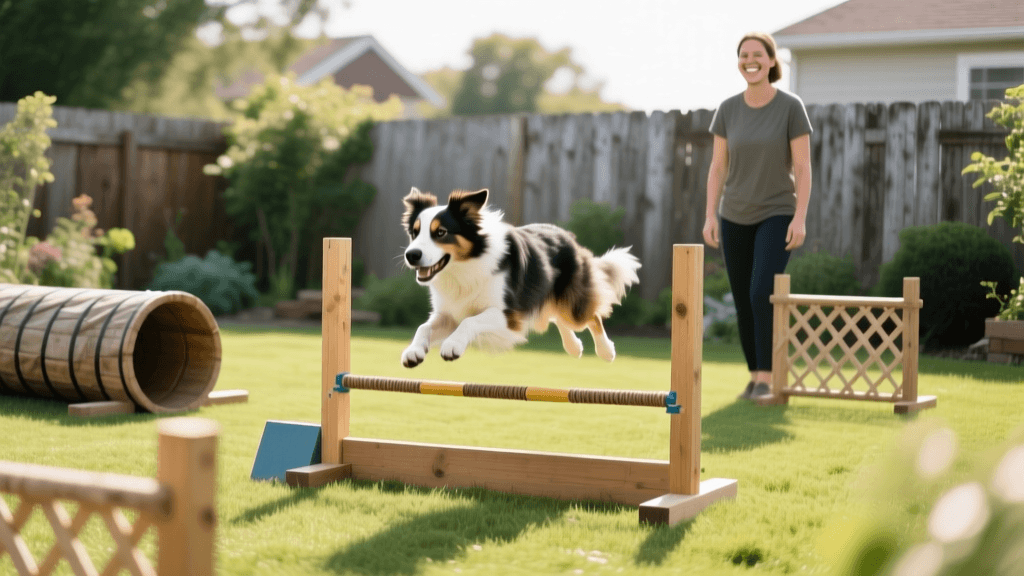
| 13+ Years | Full responsibility for basic obedience, advanced trick training, agility exercises, and daily exercise routines. | General household awareness. | Teens should still consult adults for behavioral issues like resource guarding or reactivity. |
Core Obedience Commands to Teach Together
When training with children, focus on commands that directly impact household safety and daily interactions. Keep training sessions brief—ideally 5 to 7 minutes—to match both a child's attention span and a dog's cognitive fatigue threshold.
The 'Sit and Wait' Protocol
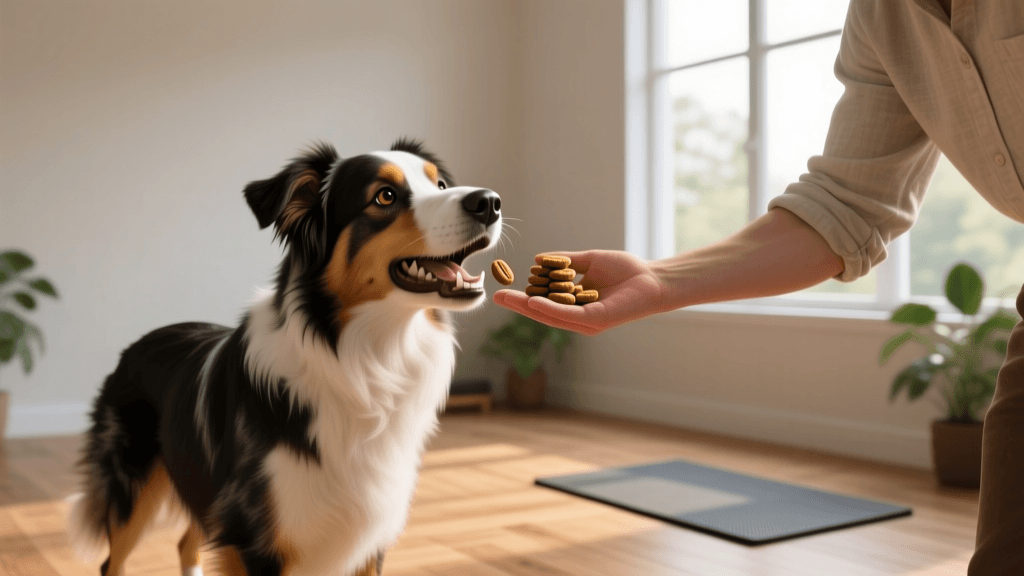
This command is crucial for preventing door-darting and teaching the dog to respect a child's personal space. Have your child stand holding the leash (with you holding a backup loop). Ask the child to say 'Sit' in a calm, firm voice. Once the dog sits, the child takes one step back and says 'Wait'. If the dog breaks the sit, the child steps back in and resets. Reward with a small treat (cut into 1/4-inch cubes to avoid overfeeding) only when the dog remains seated. This teaches the dog that calm behavior, not jumping, earns attention from the kids.
The 'Leave It' Command
Children frequently drop food, toys, or craft supplies on the floor. The 'Leave It' command is a vital safety net. Start with the dog on a leash. Have your child place a low-value item (like a dog toy) on the floor and cover it with their hand. When the dog sniffs and eventually pulls away, the child says 'Yes!' and rewards the dog with a high-value treat from their other hand. Gradually progress to dropping treats and eventually safe household items, always ensuring the child is ready to cover the item if the dog dives for it.
The 'Drop It' Command
Resource guarding can be dangerous when children are involved. Teach 'Drop It' as a fun trading game rather than a forceful extraction. If the dog has a low-value chew, have your child offer a high-value treat (like a tiny piece of boiled chicken or a Zuke's Mini Natural) right at the dog's nose. The moment the dog opens its mouth to take the treat, the child says 'Drop It' and praises enthusiastically. This conditions the dog to view giving up items as a highly rewarding experience, preventing panic if a child accidentally grabs a toy the dog is chewing.
Essential Gear and Budgeting for Family Training
Investing in the right equipment ensures safety and sets both the child and the dog up for success. Avoid retractable leashes entirely, as they can cause severe friction burns to small hands and offer zero control in an emergency. Here is a recommended starter kit for family training:
- Mendota Slip Lead (5/16 inch width, 6-foot length): Priced around $14 to $18. The rope texture provides a secure grip for smaller hands, and the 6-foot length offers the perfect balance of freedom and control.
- Starmark Pro-Training Clicker: Priced around $5. The distinct, sharp sound cuts through household noise, helping children mark the exact moment the dog performs the correct behavior without needing to fumble with treat pouches.
- Zuke's Mini Naturals Treats: Priced around $6 to $8 for a 6oz bag. These are low-calorie (under 2 calories per treat) and soft, making them easy for children to break into smaller pieces for rapid-fire reward sequences.
- SnackTastic Training Treat Pouch: Priced around $15. A magnetic-closure pouch allows children to quickly access rewards without the dog learning to snatch treats from an open zipper pocket.
Total initial investment: Approximately $40 to $46. This modest budget provides all the professional-grade tools necessary for safe, effective family training sessions.
Recognizing Canine Stress Signals
Obedience training is only half of the equation; the other half is teaching children how to read a dog's non-verbal communication. Dogs rarely bite without warning, but their warnings are often subtle and easily missed by young children. The American Academy of Pediatrics (AAP) emphasizes that teaching children to recognize signs of animal distress is the most effective form of bite prevention.
Teach your children to look for the 'Calming Signals' or stress indicators. These include:
- Whale Eye: When the dog turns its head away but keeps its eyes fixed on the child, showing the whites of the eyes.
- Lip Licking and Yawning: When not tired or eating, frequent yawning and lip-licking are strong indicators of anxiety or discomfort.
- Stiff Body Posture: A dog that suddenly freezes, closes its mouth tightly, and shifts its weight backward is asking for space.
- Pinned Ears and Tucked Tail: Classic signs of fear that indicate the dog wants to retreat and should not be approached.
Expert Safety Rule: Never leave a child under the age of 10 alone in a room with a dog, even a deeply trusted family pet. The dynamic between a child's erratic, unpredictable movements and a dog's natural startle reflex or prey drive requires an adult mediator to interpret body language and intervene before a situation escalates.
Building a Lifelong Bond
Training a dog alongside your children is an investment in the emotional and physical safety of your entire household. By assigning age-appropriate tasks, utilizing the right gear, and prioritizing the recognition of canine stress signals, you transform potential friction points into opportunities for connection. Remember that consistency is your greatest tool. When both the dog and the children understand the rules of engagement, your home becomes a sanctuary of mutual respect, joy, and unconditional love.
priya-sutaria
All our authors care for dogs every day — read more of their work on the authors page.