Border Collie vs Golden Retriever vs German Shepherd Training
Compare the training needs, learning speeds, and behavioral traits of Border Collies, Golden Retrievers, and German Shepherds to find your perfect match.

The Intersection of Breed Selection and Trainability
Choosing a dog is one of the most exciting decisions a prospective owner can make, but it is also one that requires careful consideration of cognitive compatibility. While physical appearance and size often dominate the selection process, a dog's trainability and behavioral conditioning needs are far more critical to long-term household harmony. If you are considering a highly intelligent breed, you are likely looking at the Border Collie, the Golden Retriever, or the German Shepherd. These three breeds consistently rank at the top of canine intelligence charts, but their learning styles, drive, and training requirements are vastly different.
Understanding these differences is not just about teaching basic commands like 'sit' and 'stay.' It is about matching a breed's psychological needs with your lifestyle, time commitment, and training experience. In this comprehensive guide, we will compare the obedience training, behavioral conditioning, and trick-teaching capacities of these three powerhouse breeds to help you select the perfect canine partner.
Decoding Canine Intelligence: Working vs. Instinctive
Before diving into breed-specific training protocols, it is essential to understand how canine intelligence is measured. According to the American Kennel Club's training resources, canine intelligence is generally broken down into three categories: instinctive intelligence (what the dog was bred to do), adaptive intelligence (how well the dog learns from its environment), and working/obedience intelligence (how well the dog learns from humans).
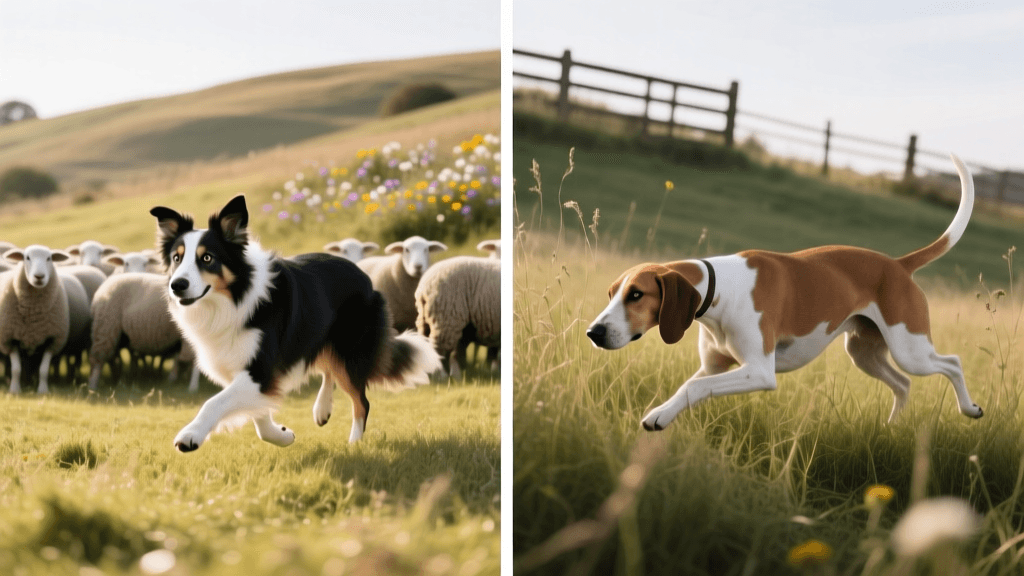
While all three breeds excel in working and obedience intelligence, their instinctive drives dictate how they approach training. A Border Collie's herding instinct means it is hyper-aware of movement. A Golden Retriever's birding background makes it highly motivated by retrieving and carrying objects. A German Shepherd's guarding heritage makes it highly attuned to environmental threats and handler protection. Successful behavioral conditioning requires leveraging these instincts rather than fighting them.
The Border Collie: The Workaholic Genius
The Border Collie is widely considered the most intelligent dog breed in the world, capable of learning a new command in fewer than five repetitions. However, this raw cognitive power is a double-edged sword. According to the AKC's Border Collie breed profile, these dogs were bred to work tirelessly on farms, meaning they possess an almost bottomless reservoir of mental and physical energy.
Training Focus: Border Collies thrive on complex problem-solving. Basic obedience is merely a warm-up for this breed. To prevent destructive behavioral issues born from boredom, owners must engage them in advanced trick teaching, agility, or herding trials.
- Timing & Duration: Expect to dedicate at least 60 to 90 minutes daily to structured mental training and physical exercise.
- Techniques: Clicker training and shaping are highly effective. Border Collies excel at learning complex behavioral chains (e.g., 'go to your mat, pick up the toy, and put it in the basket').
- Costs: Because they require advanced outlets, budget for agility equipment (tunnels, weave poles, and jumps can cost between $200 and $500) or specialized herding clinic fees ($100 to $250 per session).
The Golden Retriever: The Biddable Companion
If the Border Collie is the intense workaholic, the Golden Retriever is the eager-to-please team player. Golden Retrievers are renowned for their 'biddability'—a willingness to obey and a deep desire to work in partnership with their handlers. This makes them exceptionally forgiving of novice owner mistakes during the training process.
Training Focus: Golden Retrievers excel in obedience, therapy work, and retrieving games. Their soft mouths and natural carrying instinct make trick teaching involving object manipulation incredibly rewarding for them.
- Timing & Duration: 30 to 45 minutes of structured training and play per day is usually sufficient to keep a Golden mentally satisfied.
- Techniques: Positive reinforcement, particularly food and toy rewards, yields the best results. The ASPCA emphasizes that positive reinforcement builds confidence and strengthens the human-animal bond, which is exactly what a Golden Retriever craves.
- Costs: Standard group obedience classes ($150 to $250 for a six-week course) and basic retrieving dummies or puzzle toys ($20 to $50) are generally all you need to keep a Golden engaged.
The German Shepherd: The Confident Protector
The German Shepherd Dog (GSD) is a confident, courageous, and highly driven working breed. Unlike the Golden Retriever, which works to please you, the GSD works because it has a job to do and a territory or family to protect. Their intelligence is matched by a strong will, requiring an owner who can provide firm, fair, and consistent leadership.
Training Focus: Early socialization and impulse control are paramount. The critical socialization window for puppies occurs between 3 and 14 weeks of age. For a GSD, failing to expose them to diverse environments, sounds, and people during this window can result in fear-based reactivity or over-protectiveness.
- Timing & Duration: 45 to 60 minutes of intense mental stimulation, scent work, or protection sports training daily.
- Techniques: Scent discrimination, tracking, and structured obedience. The Premack Principle (using a high-probability behavior, like scanning the yard, as a reward for a low-probability behavior, like heeling) is highly effective for driven GSDs.
- Costs: Specialized training, such as IGP (protection and tracking sports) or advanced scent work classes, can cost $300 to $600+ per season, plus specialized tracking harnesses and scent articles ($50 to $150).
Head-to-Head Trainability Comparison Chart
To help you visualize the differences in training requirements, review the comparison table below. This chart outlines the practical realities of living with and training these three distinct breeds.
| Feature | Border Collie | Golden Retriever | German Shepherd |
|---|---|---|---|
| Coren Intelligence Rank | 1st | 4th | 3rd |
| Daily Mental Stimulation | 60 - 90+ mins | 30 - 45 mins | 45 - 60 mins |
| Best Training Focus | Agility, Trick Chains, Herding | Retrieving, Therapy, Obedience | Scent Work, Protection, Tracking |
| Novice Owner Friendly? | No (Requires advanced handling) | Yes (Highly forgiving) | Moderate (Needs confident leadership) |
| Socialization Urgency | Moderate (Focus on movement control) | Low-Moderate (Naturally social) | Extremely High (Prevents reactivity) |
| Est. Annual Training Cost | $400 - $800 | $150 - $300 | $500 - $1,000+ |
Actionable Selection Guide: Matching Your Lifestyle
Selecting the right breed based on trainability requires an honest assessment of your daily routine, physical capabilities, and financial readiness. Here is how to match your lifestyle to the right breed:
Choose the Border Collie If:
You are an active runner, hiker, or agility enthusiast who views dog training as a primary hobby rather than a chore. You have the time to dedicate to shaping complex behaviors and the financial means to invest in advanced canine sports. You live in an environment where a dog with a high prey and herding drive can be safely managed.
Choose the Golden Retriever If:
You are a first-time dog owner, a family with young children, or someone looking for a highly trainable but emotionally soft companion. You want a dog that excels in basic and intermediate obedience, enjoys learning fun tricks for family gatherings, and is eager to participate in therapy or assistance dog programs without the intense drive of a working-line herding or protection breed.
Choose the German Shepherd If:
You have experience with strong-willed, driven breeds and are interested in structured dog sports like IGP, nose work, or advanced tracking. You are prepared to invest heavily in early puppy socialization classes and ongoing behavioral conditioning to ensure your dog is a stable, confident, and well-adjusted member of the community.
Final Thoughts on Behavioral Conditioning
Trainability is not just about how fast a dog can learn to sit; it is about how the dog processes the world and how it partners with a human. The Border Collie will challenge your creativity, the Golden Retriever will reward your patience with unwavering enthusiasm, and the German Shepherd will demand your consistency and respect. By understanding the unique behavioral conditioning needs and training costs associated with each breed, you can make an informed selection that sets both you and your future dog up for a lifetime of successful communication and mutual fulfillment.
aaron-whyte
All our authors care for dogs every day — read more of their work on the authors page.