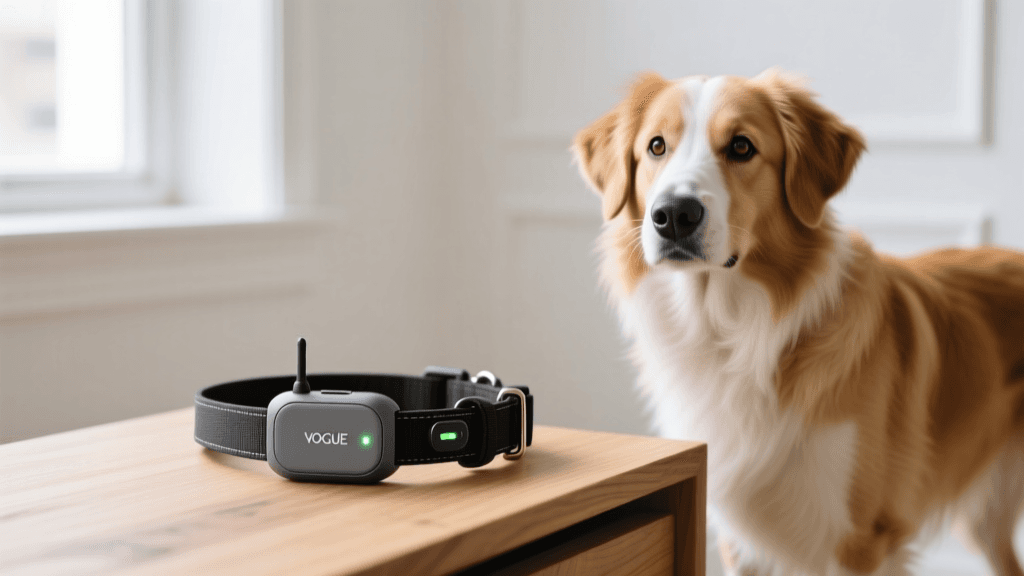
Mastering Group Recall: Train Multiple Dogs to Come
Learn how to train multiple dogs to come when called together. Discover step-by-step group recall techniques, gear, and tips for multi-dog homes.
The Challenge of Group Recall in Multi-Dog Homes
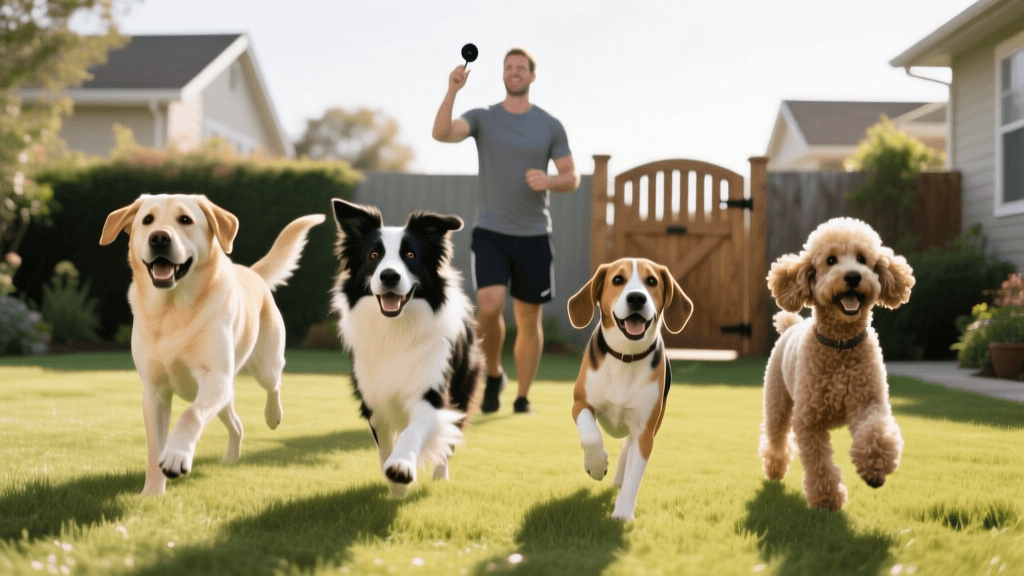
Living with multiple dogs is a profound joy, but training them as a cohesive unit presents unique behavioral challenges. When you call one dog in a single-dog household, you are competing with the environment. When you call a dog in a multi-dog household, you are competing with the environment and the pack mentality. The 'pack effect' can amplify distractions, trigger competitive behaviors, and cause dogs to feed off each other's excitement or hesitation. Mastering a group recall—where all dogs reliably return to you simultaneously or on individual command—is one of the most advanced and necessary skills for multi-pet owners.
The Psychology of the Pack Effect
Dogs are highly social animals that look to their housemates for cues. If Dog A decides to chase a squirrel, Dog B is biologically wired to join the chase, even if they don't see the squirrel. Conversely, if Dog A ignores your recall command, Dog B will likely follow suit. According to the behavioral guidelines published by the ASPCA, managing a multi-dog household requires understanding these social dynamics and ensuring that each dog has an individualized foundation before expecting group compliance. You cannot train a reliable group recall if the individual components (the dogs) do not already possess a strong, independent recall.
Essential Gear for Multi-Dog Recall Training
Before stepping outside, you need the right equipment to manage multiple leashes and deliver rapid reinforcement. Investing in quality gear prevents tangles and ensures safety.
- Harnesses (e.g., Ruffwear Front Range): Costing around $39.95 each, these feature four adjustment points and a sturdy back handle. The back handle is crucial for safely grabbing a dog who blows past you during a recall.
- Long Lines (e.g., Mendota Pets Biothane): Priced between $25 and $40, Biothane lines are waterproof, mud-proof, and don't tangle as easily as nylon. Get 15-foot lines for initial training and 30-foot lines for proofing. Ensure they are 1/2 inch wide for medium-to-large dogs to prevent line burn.
- Treat Pouch (e.g., Doggone Good Trainer's Pouch): At roughly $15, this pouch features a magnetic closure that allows for one-handed access. When managing two or more leashes, you need to be able to grab treats without fumbling with zippers or drawstrings.
- High-Value Treats (e.g., Zuke's Mini Naturals): Costing about $7 per bag, these are only 3 calories each and can be easily broken into 1/4-inch cubes. In a multi-dog scenario, you will be dispensing a high volume of treats, so low-calorie, high-smell options are vital.
Phase 1: Establishing Individual Baselines
The American Kennel Club emphasizes that a reliable recall is the most critical safety command a dog can learn. However, in a multi-dog home, you must first establish this baseline individually. Dedicate at least three weeks to training each dog completely separately. Take Dog A out while Dog B is safely crated or resting in another room. Build Dog A's recall to 95% reliability in your yard and on a 15-foot long line at a quiet park. Then, repeat the exact same process with Dog B. If either dog fails to come when called individually, they are not ready for group training.
Phase 2: The Name Game and Discrimination
Once both dogs have an individual recall, you must teach them to discriminate between their names. In a group setting, saying 'Come!' will cause both dogs to move. You need them to respond only when their specific name is paired with the cue.
Start indoors with both dogs off-leash. Stand three feet away. Say Dog A's name, pause for one second, and say 'Come.' If Dog A moves toward you, mark the behavior with a 'Yes!' and toss a treat directly to Dog A. If Dog B moves toward you, gently block them with your body or step on their leash (if tethered) and wait for them to disengage. Reward Dog A. Switch and do the same for Dog B. This teaches Dog B that moving when Dog A's name is called does not yield a reward, fostering impulse control.
Phase 3: Introduction to Group Recalls
Now, transition to the backyard with both dogs on their 15-foot Biothane long lines. Let them sniff and explore for five minutes to burn off initial excitement. Stand 10 feet away, hold both lines loosely, and give a group cue: 'Dogs, Come!' (or whatever your general release word is, like 'Here!').
As they approach, use rapid-fire treating. Give Dog A a treat, then immediately give Dog B a treat. The goal is to prevent competition. If they arrive at different times, reward the first arrival, keep your hand in the treat pouch, and reward the second arrival the moment they reach you. Never punish the slower dog; simply withhold the reward until they complete the behavior. Gradually increase the distance from 10 feet to 20 feet, and eventually drop the long lines (in a secure, fenced area) once they are consistently successful.
Troubleshooting Common Multi-Dog Recall Issues
Even with meticulous training, the pack dynamic will occasionally cause hiccups. Below is a troubleshooting guide for common multi-dog recall failures.
| Issue | Likely Cause | Actionable Solution |
|---|---|---|
| Dog A comes, Dog B runs away | Dog B lacks individual baseline or is playing 'keep away' triggered by Dog A's movement. | Revert to Phase 1. Step on Dog B's long line to prevent them from running, and heavily reward Dog A. Do not chase Dog B. |
| Both dogs ignore the cue | Environmental distraction is higher than the value of your treats or your training history. | Decrease distance to 3 feet. Upgrade treats to boiled chicken or freeze-dried liver. Ensure you only give the cue once. |
| Dogs fight over treats upon arrival | Resource guarding or poor treat delivery mechanics by the handler. | Implement 'scatter feeding' (tossing treats into the grass) or hand-feed one dog while the other is asked to 'Sit' and 'Wait' for their turn. |
| Dogs collide and knock you over | High arousal and lack of spatial awareness. | Teach a 'Place' command on separate mats. Recall them to their respective mats rather than directly to your body. |
Advanced Treat Tossing and Resource Guarding Prevention
Resources from the Humane Society of the United States highlight the importance of managing resources to prevent conflict in multi-pet homes. When multiple dogs come to you at high speed, holding treats in your hand can lead to accidental nips or resource guarding. To mitigate this, master the 'treat toss.'
As the dogs approach, toss one treat slightly to the left for Dog A, and one treat slightly to the right for Dog B. This naturally separates their heads and prevents them from converging on a single point (your hand). If you have three or more dogs, toss treats in a wide semi-circle in the grass. This turns the recall into a fun scavenger hunt and drastically lowers the arousal levels upon arrival, as the dogs immediately transition into a foraging mindset rather than a competitive one.
Maintaining the Group Recall Over Time
A group recall is not a 'train it once and forget it' behavior. The pack dynamic shifts as dogs age, gain confidence, or experience changes in the household. To maintain a bulletproof group recall, incorporate 'jackpot' rewards into your weekly routine. Once a week, call your dogs as a group, and when they arrive, surprise them with a jackpot: a handful of high-value treats, a 5-minute session with their favorite flirt pole, or immediate release to a favorite swimming hole. By keeping the reinforcement history incredibly rich and unpredictable, you ensure that coming when called as a pack is always the most rewarding choice they can make.
anouk-beaumont
All our authors care for dogs every day — read more of their work on the authors page.