Leash Training Warnings: What NOT to Do on Daily Walks
Avoid common leash training mistakes that cause pulling and reactivity. Learn what NOT to do on daily walks and how to use positive reinforcement effectively.

The Hidden Dangers of Poor Leash Training
Walking your dog should be a relaxing, bonding experience, but for many owners, it devolves into a frustrating game of tug-of-war. When faced with a dog that lunges, pulls, or chokes itself at the end of the leash, it is incredibly tempting to try quick-fix solutions. However, the dog training industry is flooded with outdated advice and aversive tools that can cause long-term behavioral and physical damage. If you want to build a reliable loose-leash walk, you must first understand the pitfalls of traditional methods. In this guide, we will explore the most critical leash training warnings, detailing exactly what NOT to do on your daily walks, and providing actionable, science-backed alternatives.
1. What NOT to Do: Relying on Aversive Equipment
When a dog pulls, the immediate instinct is to seek out equipment that stops the behavior through physical discomfort. Prong collars, choke chains, and electronic shock collars are frequently marketed as "miracle cures" for pulling. However, these tools rely on positive punishment—adding an aversive stimulus to decrease a behavior. While they may suppress pulling in the short term, they do not teach the dog what to do instead.
More dangerously, aversive tools can trigger the opposition reflex (thigmotaxis). When a dog feels pressure on its neck, its natural instinct is to push against that pressure, making pulling worse over time. Furthermore, associating the pain of a collar correction with the sight of another dog or a stranger can quickly lead to leash reactivity and aggression. According to the American Veterinary Society of Animal Behavior (AVSAB), the use of punishment and aversive tools is linked to increased stress, fear, and aggression in dogs, and they strongly recommend reward-based training methods for all canine behavioral conditioning.
2. What NOT to Do: The "Leash Pop" Correction
Often paired with aversive collars is the technique of the "leash pop" or "correction jerk." This involves abruptly snapping the leash to startle or hurt the dog into compliance. You should never use leash pops for several reasons. First, the sudden force can cause severe physical injury, including tracheal collapse, cervical spine damage, and neurological issues, particularly in small or brachycephalic breeds.
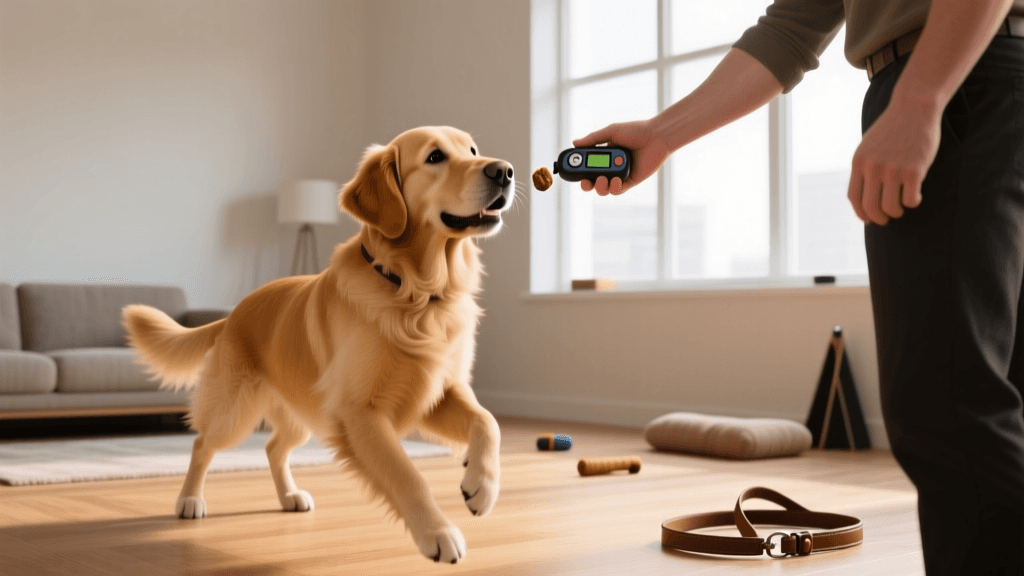
Second, leash pops create "barrier frustration." If your dog is pulling toward a squirrel and you jerk the leash, the dog does not necessarily think, "I should stop pulling." Instead, the dog thinks, "Every time I look at a squirrel, I get hurt, therefore squirrels are bad." This directly fuels reactive lunging. Instead of popping the leash, use a front-clip no-pull harness and the "Be a Tree" method: the moment the leash goes tight, stop walking completely. Wait for the dog to turn and look at you, mark the behavior with a "Yes!", and reward them at your side before moving forward.
3. What NOT to Do: Accidental Variable Reinforcement
One of the most common reasons dogs continue to pull is accidental variable reinforcement. Imagine you are in a hurry and let your dog pull you to a specific fire hydrant to sniff. The next day, you have more time and correct the dog for pulling to that same hydrant. You have just taught your dog that pulling is a slot machine: sometimes it works, and sometimes it doesn't.
In behavioral psychology, a variable ratio schedule of reinforcement creates the most persistent, hard-to-extinguish behaviors (it is the same psychology behind gambling). If pulling works even 10% of the time, your dog will pull 100% of the time. The Rule: Never allow the leash to go tight and remain tight while moving forward. If the leash is tight, forward movement must stop immediately. Consistency is far more important than the duration of your training walks.
Equipment Comparison: What to Avoid and What to Use
Choosing the right gear is half the battle. Below is a comparison chart to help you avoid harmful tools and select the right equipment for positive reinforcement training.
| Equipment Type | Mechanism of Action | Risk Level | Training Verdict |
|---|---|---|---|
| Prong / Choke Collar | Pain, pressure, and airway restriction | High (Physical & Behavioral) | AVOID: Causes fear, reactivity, and tracheal damage. |
| Retractable Leash | Variable tension, thin cord, plastic handle | Medium (Safety & Control) | AVOID: Teaches dog that pulling extends the leash; high risk of rope burn and dropped handles. |
| Standard Back-Clip Harness | Distributes pressure across the chest | Low (Physical) | CONDITIONAL: Safe for the neck, but encourages pulling due to the opposition reflex. Best for running/hiking, not training. |
| Front-Clip No-Pull Harness | Redirects momentum toward the handler | Very Low | RECOMMENDED: Safely disrupts pulling without pain. Ideal for loose-leash training. |
| Martingale Collar (Limited Slip) | Tightens slightly to prevent slipping, but stops | Low | RECOMMENDED: Great for sighthounds or escape artists when paired with positive reinforcement. |
4. What NOT to Do: Forcing a Strict "Heel" on Every Walk
Many owners believe that a successful walk means the dog must be glued to their left leg, staring up at them for the entire 45-minute duration of the walk. This is an unrealistic and exhausting expectation for both you and your dog. Dogs experience the world primarily through their olfactory system. Forcing a strict heel prevents them from engaging in natural sniffing behaviors, which can lead to pent-up mental energy and increased frustration on the leash.
Instead of a military-style march, incorporate decompression walks (often called "Sniffaris"). Allow your dog to sniff the environment on a long line (10 to 15 feet) in a safe, open area. Sniffing lowers a dog's heart rate and reduces cortisol levels. As highlighted by the ASPCA's dog care guidelines, allowing your dog to explore and sniff is a vital part of their mental enrichment and makes them much more willing to comply with training when you do ask for a heel in high-distraction urban environments.
5. What NOT to Do: Using Retractable Leashes for Training
Retractable leashes are a major hindrance to leash training. These devices are designed to maintain constant, light tension on the leash. Because the dog must pull against the internal spring to get more line, the retractable leash actively trains your dog that pulling is the key to moving forward. Furthermore, the thin nylon cords can cause severe friction burns, and the bulky plastic handles are easily dropped if a large dog lunges, which can terrify the dog and trigger a flight response.
The Alternative: Invest in a high-quality, 6-foot static leash. Biothane leashes (typically costing between $30 and $45) are waterproof, easy to clean, and provide excellent grip. For small dogs under 20 lbs, look for a 3/8-inch or 1/2-inch width. For dogs over 40 lbs, a 3/4-inch or 1-inch width provides the necessary durability. A standard 6-foot leather or Biothane lead gives you precise control, allows for instant communication, and keeps your dog safely within your sphere of influence near roads and intersections.
6. What NOT to Do: Holding the Leash Too Short (White-Knuckling)
When owners feel anxious or anticipate their dog pulling, they tend to "white-knuckle" the leash, wrapping it around their wrists and holding it at a tight 1-foot length. This creates immediate, constant tension. Dogs are highly sensitive to physical tension; if you are tense and holding the leash tight, your dog will mirror that physical state, assuming there is a threat nearby and entering a state of hyper-arousal.
To fix this, practice holding the leash in a relaxed loop. Keep your hands near your waist or belly button. A loose leash should form a "J" or "U" shape between you and your dog's harness. If you feel yourself tensing up, take a deep breath, loosen your grip, and reset. Your calm physical energy will communicate to your dog that the environment is safe, reducing their urge to lunge.
Summary: Building a Better Walk
Leash training is not about dominance or physical control; it is about communication, consistency, and mutual respect. By avoiding aversive tools, eliminating accidental reinforcement, and ditching the retractable leash, you set your dog up for success. Remember that the American Kennel Club (AKC) emphasizes that patience and high-value rewards (like boiled chicken or freeze-dried liver) are the true keys to teaching a dog to check in with you on walks. Ditch the corrections, embrace the sniffari, and enjoy the journey of building a harmonious walking routine with your best friend.
beth-carrasco
All our authors care for dogs every day — read more of their work on the authors page.