Master the Place Command: Step-by-Step Dog Training
Learn how to teach your dog the place command with our step-by-step guide. Perfect for daily routines, guests, and creating a calm household environment.
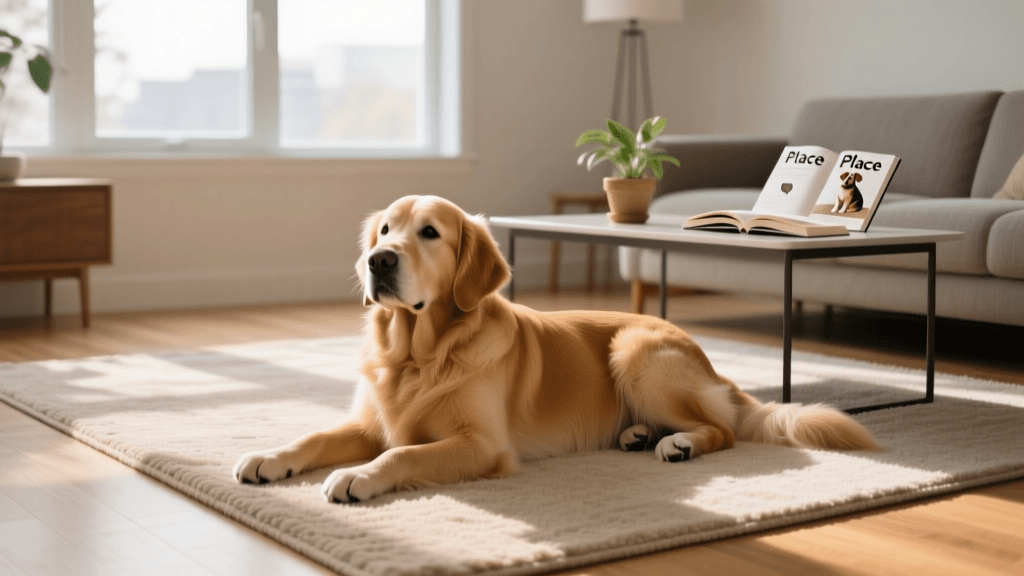
Mastering the 'Place' Command: A Step-by-Step Guide for Daily Life
Living with a dog brings immense joy, companionship, and a reason to stay active. However, sharing your home with a canine companion also introduces unique challenges to your daily routine. Whether you are trying to cook dinner without a dog begging at your feet, answering the front door without your pup bolting outside, or managing a multi-pet household where a new puppy needs to be separated from an older resident cat, you need a reliable off-switch. Enter the 'Place' command. Unlike a simple 'Sit' or 'Down', the 'Place' command directs your dog to a specific, designated spot and asks them to remain there until released. This is not just a party trick; it is a fundamental lifestyle management tool that reduces household stress, keeps your dog safe, and fosters a calmer environment. In this comprehensive, step-by-step training guide, we will walk you through exactly how to teach, proof, and utilize the 'Place' command in real-world scenarios.
Why 'Place' is a Lifestyle Game-Changer
When you train your dog to go to their place, you are giving them a job and a safe zone. According to the American Society for the Prevention of Cruelty to Animals (ASPCA), providing dogs with clear boundaries and structured routines significantly reduces anxiety and behavioral issues. A designated mat or cot becomes a sanctuary for your dog. When the doorbell rings, instead of rehearsing the chaotic behavior of jumping and barking, your dog defaults to running to their mat. When you are eating, they are settled on their cot. This command is especially critical in multi-pet households. If you are feeding a raw diet to your cat or introducing a nervous rescue dog to the home, having your primary dog anchored to a 'Place' across the room ensures safety and prevents resource guarding.
Essential Gear and Budget for Success
Before beginning, gather the right tools. You do not need to spend a fortune, but having the right equipment accelerates the learning process.
- The 'Place' Mat: You need a distinct, portable bed. The Kuranda Chewproof Cot (approx. $130) is excellent for heavy chewers and provides an elevated, distinct boundary. For a budget option, a simple rubber-backed bath mat or a Kong Classic Mat ($25) works perfectly. Avoid using their primary sleeping bed, as you want 'Place' to be an active training zone, not a sleep zone.
- High-Value Treats: Use soft, pea-sized treats that can be consumed quickly. Zuke's Mini Naturals ($7 per bag) or freeze-dried beef liver are ideal. You will need about 1/2 cup of treats per week of active training.
- Marker: A mechanical clicker like the Starmark Pro-Training Clicker ($4) or a consistent verbal marker like the word 'Yes!'.
- Long Line: A 15-foot biothane leash ($25) is crucial for the later stages of proofing distance and managing distractions safely.
Step 1: Introducing the Mat and Shaping the Behavior (Days 1-3)
Your first goal is to make the mat the most rewarding place in the room. Do not use a verbal cue yet; we are simply shaping the physical action.
- Positioning: Stand in a quiet room with the mat placed a few feet away. Have your treat pouch full and your clicker ready.
- The Lure and Mark: Toss a treat onto the center of the mat. When your dog steps onto the mat to eat it, click the clicker the exact millisecond all four paws touch the fabric. Immediately follow the click with a second treat delivered directly on the mat.
- Resetting: Toss a third treat off the mat into the surrounding room. This forces your dog to leave the mat, resetting the behavior so they can choose to return.
- Repetition: Repeat this cycle 15 to 20 times per session. Keep sessions short—no longer than 5 minutes. You are teaching your dog that stepping on the mat triggers the click and the reward.
Step 2: Adding the Verbal Cue and Hand Signal (Days 4-7)
Once your dog is confidently and quickly stepping onto the mat to earn a click, it is time to attach the verbal cue.
- Timing the Cue: Say the word 'Place' in a clear, upbeat tone exactly one second before you toss the treat or point to the mat. Dogs associate the sound that precedes the action with the behavior.
- The Hand Signal: Pair the verbal cue with a distinct hand signal, such as extending your arm and pointing an open palm toward the mat.
- Fading the Lure: Stop tossing the treat onto the mat. Instead, say 'Place', point to the mat, and wait. When your dog walks over and steps on it, click and reward from your hand, delivering the treat directly to their mouth while they are on the mat.
- Adding the Down: Once they are reliably stepping onto the mat, ask for a 'Down' once they are on it. Click and reward the down position. The ultimate goal is for 'Place' to mean 'go to your mat and lie down'.
Step 3: Building Duration and the Release Word (Weeks 2-3)
A dog on a mat is only useful if they stay there. This requires building duration and teaching a clear release word, such as 'Free' or 'Break'.
- The One-Second Rule: Ask your dog to go to 'Place' and lie down. Wait just one second, click, and reward in the down position. Gradually increase the time between the click and reward by one or two seconds per session.
- Intermittent Reinforcement: As you build up to 10 seconds, then 30 seconds, then a full minute, stop clicking every single second. Reward the duration of the stay. Toss a treat between their front paws to keep them anchored in the down position.
- The Release: After your target duration is met, say your release word ('Free!') in an upbeat tone, clap your hands, and encourage your dog to step off the mat. This teaches them that they must remain on the mat until explicitly told the job is over.
Step 4: Proofing with Distance and Distractions (Weeks 4 and Beyond)
According to the American Veterinary Society of Animal Behavior (AVSAB), reward-based training is the most effective method for modifying behavior, but it must be proofed against real-world distractions. A dog who stays on a mat in a quiet bedroom may break their stay when the doorbell rings.
- Adding Distance: Attach the 15-foot long line. Ask for 'Place'. Take one step back. If they stay, click, step back in, and reward. Gradually increase your distance, eventually walking out of the room for a few seconds before returning to reward.
- Adding Distractions: Introduce mild distractions. Drop a toy nearby. Bounce a tennis ball. If your dog stays on the mat, jackpot reward them with three treats in a row. If they break the stay, calmly guide them back using the long line without repeating the verbal cue, and ask for a down.
- Real-World Application: Move the mat to high-traffic areas. Place it near the front door and practice while a family member knocks. Place it in the kitchen while you prepare their dinner. Always reward heavily for calm, settled behavior amidst the chaos.
Training Progression Chart
| Phase | Focus Area | Target Duration | Distance | Treat Frequency |
|---|---|---|---|---|
| Week 1 | Shaping & Luring | 1-2 seconds | Standing next to mat | Continuous (Every rep) |
| Week 2 | Verbal Cue & Down | 5-10 seconds | 1-2 steps away | Continuous to Variable |
| Week 3 | Duration & Release | 1-3 minutes | Across the room | Variable (Every 15-30s) |
| Week 4+ | Proofing & Distraction | 5-15 minutes | Out of sight / Active home | Intermittent (Jackpot rewards) |
Troubleshooting Common Challenges
My dog keeps breaking the stay before I release them.
If your dog is breaking the stay, you are likely increasing the difficulty too quickly. Return to the last successful step. If they can do 30 seconds but fail at 1 minute, drop your criteria back to 20 seconds and build up in smaller five-second increments. Ensure you are rewarding on the mat, not calling them off the mat to get their treat.
My dog will go to the mat but will not lie down.
Separate the two behaviors. Practice the 'Down' command on the floor away from the mat until it is fluent. Then, ask for 'Place', and once all four paws are on the mat, ask for 'Down'. Reward the down heavily. Over time, the dog will associate the mat with the down position and combine the actions.
My dog falls asleep on the mat and misses the release cue.
This is actually a sign of success! It means your dog feels completely relaxed and secure in their designated spot. Simply let them sleep, or gently wake them with a soft 'Free' when you are ready to move on with your day.
Conclusion: Integrating 'Place' into Your Shared Life
Teaching the 'Place' command requires patience, consistency, and a generous supply of high-value treats. However, the return on investment for your daily life is immeasurable. As highlighted by the American Kennel Club (AKC), dogs thrive when they understand what is expected of them and have a clear way to earn rewards. By dedicating just 10 minutes a day to this step-by-step process, you will transform your mat into an invisible tether that keeps your dog safe, calm, and out of trouble. Whether you are hosting a dinner party, managing a multi-pet feeding schedule, or simply enjoying a quiet cup of coffee, the 'Place' command ensures that life with your dog remains harmonious, structured, and deeply rewarding.
marcus-aldridge
All our authors care for dogs every day — read more of their work on the authors page.