Step-by-Step Guide to Stress-Free Car Rides With Your Dog
Learn how to train your dog to enjoy calm car rides with our step-by-step guide. Includes gear tips, timing, and desensitization techniques.
Introduction: Transforming Car Rides from Chaos to Calm
For many dog owners, the dream of cruising down the highway with a happy, relaxed pup in the passenger seat is quickly replaced by the reality of whining, pacing, drooling, and frantic scratching. Whether you are heading to the veterinarian, embarking on a cross-country road trip, or simply running errands, car travel is an unavoidable part of life with your dog. Fortunately, canine car anxiety is not a permanent life sentence. Through systematic desensitization, counter-conditioning, and the right safety equipment, you can completely change your dog's emotional response to the vehicle.
This comprehensive, step-by-step training guide will walk you through the exact protocol to transform your dog's car anxiety into calm confidence. We will cover essential gear, specific training timelines, high-value reward strategies, and how to manage motion sickness along the way.
Understanding Canine Car Anxiety and Motion Sickness
Before diving into the training protocol, it is crucial to understand why your dog dislikes the car. According to the American Kennel Club (AKC), car anxiety in dogs typically stems from two main sources: negative associations and motion sickness. If the only time your dog rides in the car is to visit the vet for vaccinations or to the groomer for a stressful bath, they will quickly associate the vehicle with fear. Furthermore, a dog's vestibular system (which controls balance) can be easily overwhelmed by the sensory input of a moving vehicle, leading to severe nausea. When a dog feels sick, their anxiety spikes, creating a vicious cycle of fear and physical discomfort.
Essential Gear for Safe and Calm Car Travel
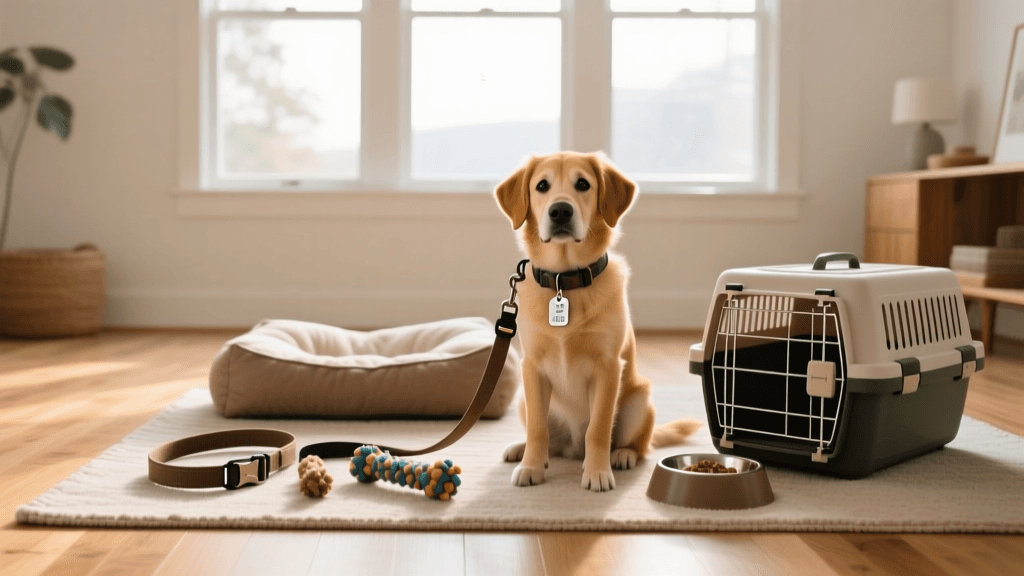
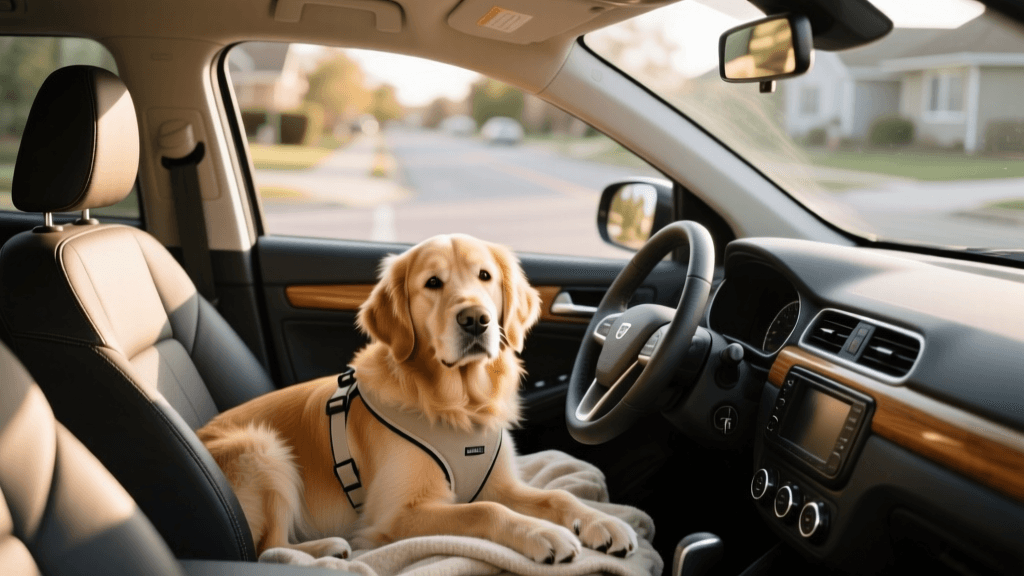
Before beginning your training, you must equip your vehicle with the proper safety and comfort tools. An unrestrained dog is not only a distraction to the driver but also a severe projectile hazard in the event of a sudden stop. The Center for Pet Safety strongly recommends using independently crash-tested restraints. Here is what you need to invest in:
- Crash-Tested Harness: Products like the Sleepypod Clickit Sport or the Kurgo Enhanced Strength Tru-Fit Smart Harness are excellent choices. These distribute crash forces across the dog's chest and cost between $40 and $90.
- Crash-Tested Crate: For larger dogs or those who prefer a den-like environment, a rotomolded crate such as the Ruff Land Performance Kennel or Gunner G1 (ranging from $300 to $600) provides maximum protection.
- Calming Pheromones: Adaptil Transport Spray ($15 to $20) mimics the natural calming pheromones of a nursing mother dog. Spray it on your dog's bedding or crate 15 minutes before travel.
- High-Value Training Treats: You will need treats that your dog only gets during car training. Boiled chicken breast, low-sodium hot dogs, or Zuke's Mini Naturals are ideal. Budget about $10 to $15 a month for training treats.
Comparison Chart: Car Restraint Options
Choosing the right restraint depends on your dog's size, temperament, and your vehicle type. Use the table below to compare your options:
| Restraint Type | Safety Level | Best For | Estimated Cost |
|---|---|---|---|
| Crash-Tested Harness | High (when tethered to seatbelt latch) | Dogs under 75 lbs; dogs who like to see out the window | $40 - $90 |
| Rotomolded Crate | Maximum (when strapped in cargo area) | Large breeds; highly anxious dogs who need a 'den' | $300 - $600 |
| Soft-Sided Carrier | Moderate (for in-cabin use only) | Toy and small breeds under 15 lbs | $30 - $80 |
| Seatbelt Tether (Clip only) | Low (not crash-tested for impact) | Not recommended for safety; prevents wandering only | $10 - $20 |
The 4-Step Desensitization Training Protocol
This training plan requires patience. Do not rush the steps. If your dog shows signs of stress at any point, drop back to the previous step. Keep all training sessions short—between 5 to 10 minutes maximum.
Step 1: The Parked Car (Days 1 to 5)
Goal: Create a positive emotional association with the vehicle while it is completely turned off. Timing: 5 minutes per session, twice a day. Action: Open all the car doors to reduce the feeling of being trapped. Toss high-value treats into the back seat or cargo area. Let your dog jump in, eat the treat, and jump right back out. Do not close the doors. Once your dog is happily jumping in and waiting for treats, begin feeding them a long-lasting chew (like a bully stick or a Kong stuffed with frozen peanut butter) while they sit in the parked car with the doors open. Gradually progress to closing one door, then all doors, for a few seconds at a time while they chew.
Step 2: Engine On, Car in Park (Days 6 to 10)
Goal: Desensitize your dog to the sound and vibration of the engine. Timing: 5 to 10 minutes per session, once a day. Action: Secure your dog in their chosen restraint (harness or crate). Sit in the driver's seat and start the engine. Do not put the car in gear. Turn on the air conditioning to a comfortable temperature (around 68°F to 72°F) and play soft, classical music or reggae, which studies have shown to lower canine heart rates. Feed your dog high-value treats continuously for 3 minutes, then turn off the engine and end the session. Repeat this until your dog remains relaxed, with a soft mouth and relaxed ears, while the engine runs.
Step 3: Short Drives Around the Block (Days 11 to 15)
Goal: Introduce motion without triggering anxiety or nausea. Timing: 5 to 15 minutes per drive. Action: Drive smoothly—avoid hard braking and rapid acceleration. Have a passenger sit in the back seat to feed treats and offer praise. If you are alone, use a lick mat smeared with plain pumpkin puree or Greek yogurt suction-cupped to the window or crate. Licking is a naturally soothing behavior for dogs. Drive for just two or three minutes, then return home. The destination must always be your home, so the dog learns that the car ride ends safely.
Step 4: Fun Destinations (Days 16 and Beyond)
Goal: Break the 'car equals vet' association. Timing: Varies. Action: Begin taking short drives to highly rewarding locations. Drive five minutes to your dog's favorite hiking trail, a local park, or a drive-thru for a 'puppuccino' (a small cup of plain whipped cream). Keep the outings positive and relatively short. Over time, you can gradually increase the duration of the drives and reintroduce necessary but less fun trips, like the vet, once the dog's baseline association with the car is overwhelmingly positive.
Reading Canine Stress Signals
During your training, you must become an expert at reading your dog's subtle body language. If you push a dog past their threshold, you will inadvertently reinforce their fear. Watch for these early indicators of stress:
- Lip Licking and Yawning: When not tired or eating, these are classic calming signals indicating rising anxiety.
- Whale Eye: When the dog turns their head away but keeps their eyes fixed on you, showing the whites of their eyes.
- Panting: Heavy, rapid panting when the car is cool and the dog has not been exercising.
- Shedding: Sudden, excessive shedding (often called 'blowing coat') is a physiological response to adrenaline.
If you observe any of these signs, immediately stop the training session, turn off the car, and let your dog out to decompress. Resume training at an easier step the next day.
Managing Motion Sickness and Setbacks
Even with excellent behavioral training, some dogs suffer from physiological motion sickness. According to VCA Animal Hospitals, motion sickness is more common in puppies and young dogs because their inner ear structures are not fully developed. If your dog continues to drool excessively, smack their lips, or vomit despite desensitization training, consult your veterinarian. They may prescribe an anti-nausea medication such as Cerenia (maropitant citrate), which is highly effective and does not cause the heavy drowsiness associated with older antihistamines like Benadryl.
Additionally, manage your dog's diet on travel days. Withhold food for two to three hours before a car ride to ensure their stomach is empty, but always provide access to fresh water. You can also offer a small ginger supplement or a ginger-infused dog treat 30 minutes before departure, as ginger is a natural anti-emetic for canines.
Conclusion: Patience Pays Off
Training your dog to enjoy car rides is not an overnight process; it is a journey of building trust and rewriting negative associations. By investing in crash-tested safety gear, following a meticulous step-by-step desensitization protocol, and respecting your dog's stress signals, you will transform car travel from a stressful chore into an enjoyable shared adventure. Remember to celebrate the small victories, keep your training sessions short and positive, and always prioritize your dog's physical and emotional safety on the road.
marcus-aldridge
All our authors care for dogs every day — read more of their work on the authors page.