Best Puppy Breeds for Remote Workers in 2026: Top 5 Picks
Discover the best puppy breeds for remote workers in 2026. Find low-barking, adaptable dogs perfect for your home office setup and Zoom calls.
The Rise of the Work-From-Home Dog in 2026
As we navigate the professional landscape of 2026, remote and hybrid work models have firmly cemented themselves as the standard for millions of professionals. With the home office now serving as a permanent hub for productivity, video conferences, and deep-focus work, the desire for canine companionship during the workday has never been higher. However, bringing a puppy into a remote work environment requires careful consideration. Not every breed is suited for the quiet demands of a home office, and the wrong choice can lead to disrupted Zoom calls, chewed ethernet cables, and heightened stress levels.
Choosing the right puppy means finding a balance between companionship and independence. You need a dog that is content to snooze under your desk while you tackle spreadsheets, yet affectionate enough to provide a comforting presence during your coffee breaks. According to the American Kennel Club (AKC), understanding a breed's inherent temperament, energy levels, and vocalization tendencies is the most critical step in matching a dog to your specific lifestyle. In this comprehensive guide, we explore the absolute best puppy breeds for remote workers in 2026, ensuring your new furry friend enhances your workday rather than interrupting it.
Criteria for the Perfect Remote Work Puppy
Before diving into specific breeds, it is essential to establish what makes a dog suitable for a home office environment. The modern remote worker needs a puppy that aligns with the following criteria:
- Low Vocalization: Frequent barking at delivery drivers or neighborhood noises will ruin professional phone calls and frustrate your household.
- Moderate to Low Energy: While all puppies require exercise and mental stimulation, breeds with hyperactive tendencies will demand attention during your most critical working hours.
- Adaptability: The best work-from-home dogs can handle the occasional day when you must leave the house for an in-person meeting without developing severe separation anxiety. The ASPCA notes that early independence training is vital for preventing destructive behaviors when your routine changes.
- Trainability: A puppy that quickly grasps the "settle" or "place" command is invaluable for maintaining boundaries in a shared workspace.
The Top 5 Puppy Breeds for Remote Workers in 2026
1. Cavalier King Charles Spaniel
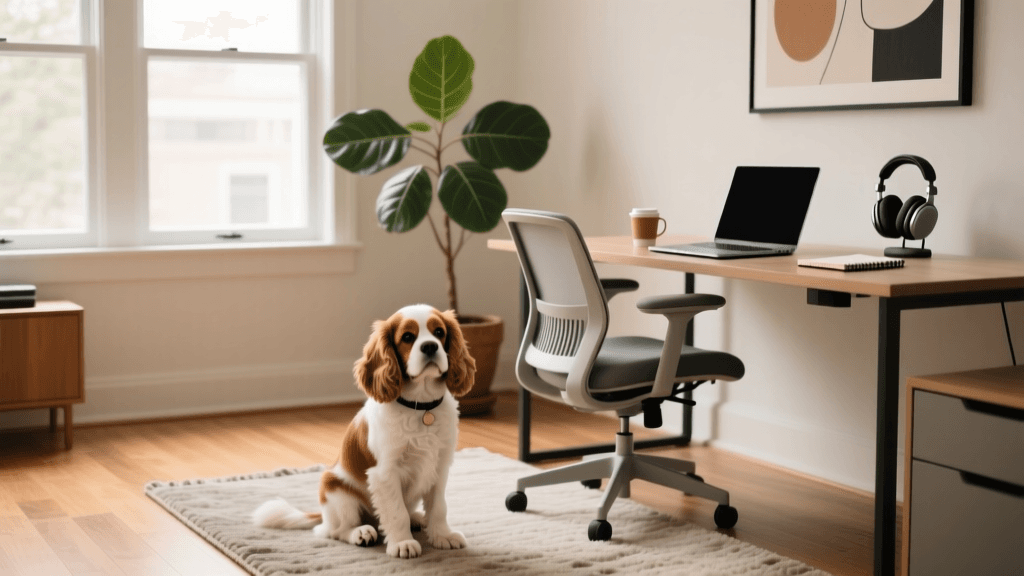
The Cavalier King Charles Spaniel is widely regarded as the ultimate lap dog, making it a phenomenal choice for remote workers who want a quiet, affectionate companion. Cavaliers are notoriously eager to please and possess a gentle demeanor that translates beautifully to a quiet home office. They are far more likely to curl up on a nearby dog bed and watch you type than they are to demand a game of fetch in the middle of a quarterly review. Their moderate energy levels mean a brisk morning walk and a quick afternoon play session are usually sufficient to keep them happy and relaxed for the remainder of the workday. Furthermore, their low tendency to bark at passing stimuli makes them an ideal background presence for video calls.
2. Bichon Frise
If you want a cheerful, upbeat companion without the mess of heavy shedding, the Bichon Frise is a top-tier candidate for 2026. Known for their powder-puff appearance and remarkably happy disposition, Bichons thrive on human companionship but are generally content to simply be in the same room as their owners. They are highly intelligent and respond exceptionally well to positive reinforcement training, making it easy to teach them to stay on their designated office mat. Because they are a low-shedding breed, they are excellent for remote workers who want to maintain a pristine home office environment and avoid constantly cleaning dog hair off their ergonomic desk chairs. While they can be vocal if bored, providing them with puzzle toys during your deep-work blocks will keep them quietly entertained.
3. Shih Tzu
Bred specifically to be royal companions, the Shih Tzu is practically engineered for the work-from-home lifestyle. These small, sturdy dogs have incredibly low exercise requirements compared to sporting or herding breeds. A short indoor play session and a quick outdoor potty break are often enough to satisfy their daily needs. Shih Tzus are famously aloof to outside noises, meaning the sound of a ringing doorbell or a passing garbage truck is unlikely to trigger a barking fit. They are deeply affectionate and will happily sleep the day away at your feet. Remote workers who appreciate a dog that acts as a living, breathing stress-relief pillow will find the Shih Tzu to be an unparalleled office mate.
4. Bernese Mountain Dog
For remote workers with larger home offices or dedicated basement setups, the Bernese Mountain Dog offers a majestic, gentle giant presence. Despite their massive size, "Berner" puppies grow into remarkably calm, docile adults that prefer lounging to patrolling. They are deeply bonded to their families and will happily station themselves near your desk, offering a grounding, comforting weight against your leg while you work. Their quiet nature is a major asset, though their size means they require ample space to stretch out without tripping over your office chair. It is important to note that Bernese Mountain Dogs require early socialization and consistent, gentle training to ensure they remain manageable as they grow, but their serene adult temperament makes the early effort entirely worthwhile.
5. Papillon
Do not let the tiny stature of the Papillon fool you; this breed is a powerhouse of intelligence and adaptability. For remote workers who want a highly trainable, engaging dog that can learn complex office routines, the Papillon is a stellar choice. They excel at learning boundary commands, such as staying off the keyboard and remaining on a specific rug during meetings. While they are more energetic than the Shih Tzu or Cavalier, their exercise needs can easily be met with indoor agility games and structured training sessions during your lunch break. They are alert and observant, often acting as a quiet sentinel in your home office, only vocalizing when something truly unusual occurs.
Breed Comparison Chart for the Home Office
| Breed | Bark Level | Energy Level | Shedding | WFH Suitability |
|---|---|---|---|---|
| Cavalier King Charles Spaniel | Low | Moderate | Moderate | Excellent |
| Bichon Frise | Low to Moderate | Moderate | Very Low | Excellent |
| Shih Tzu | Low | Low | Moderate | Outstanding |
| Bernese Mountain Dog | Low | Moderate | High | Great (Large Spaces) |
| Papillon | Moderate | High | Moderate | Great (Active Owners) |
Setting Up Your 2026 Home Office for a Puppy
Bringing a puppy into your workspace requires more than just a dog bed; it requires strategic environmental design. To maintain productivity and keep your puppy safe, consider the following home office upgrades:
- Cable Management Solutions: Puppies explore the world with their mouths, and exposed ethernet or power cables are a major hazard. Use hard plastic cord covers and zip-tie all loose wires behind your desk. In 2026, wireless charging hubs and concealed routing tracks are more affordable than ever, making it easy to puppy-proof your tech setup.
- Smart Pet Monitors: If you occasionally need to work from a different room or take a call in the backyard, a smart pet camera with two-way audio and treat-tossing capabilities allows you to check in on your puppy and reward calm behavior remotely.
- White Noise Machines: To prevent your puppy from reacting to neighborhood sounds while you are on important calls, position a white noise machine near the window or exterior door of your office. This creates an acoustic buffer that keeps your puppy relaxed and your audio feed clear.
- Chew-Safe Furniture: Invest in a durable, easy-to-clean dog bed with a chew-resistant border. Avoid wicker or soft plush beds that can be easily shredded and ingested during your afternoon focus blocks.
Training Your Puppy for Video Calls and Meetings
Even the quietest breeds require training to understand the rhythm of a remote workday. The most valuable skill you can teach your home office puppy is the "Place" or "Mat" command. This involves training your dog to go to a specific bed or rug and remain there until released. Start by luring your puppy onto the mat with high-value treats, gradually increasing the duration they must stay before receiving a reward. Over time, your puppy will associate the mat with relaxation and chewing on a long-lasting treat, like a stuffed Kong or a yak cheese chew, while you attend to your professional duties.
Additionally, you must desensitize your puppy to the unique sounds of remote work. Notification chimes, ringing tones, and sudden voices emanating from your computer speakers can trigger a barking response. Play recordings of common video conferencing sounds at a very low volume while feeding your puppy treats, gradually increasing the volume over several weeks. This classical conditioning teaches the puppy that digital sounds predict positive outcomes, effectively neutralizing their urge to bark at your screen.
Adoption vs. Buying: Making the Right Choice
While purebred puppies offer predictable temperaments, remote workers should also strongly consider adopting from breed-specific rescues. Many rescues have adult dogs that have already been fostered in home environments, meaning their foster parents can provide accurate reports on their bark levels, energy, and suitability for a home office. As highlighted by The Humane Society of the United States, adopting an older puppy or young adult dog can bypass the most destructive and demanding stages of early puppyhood, allowing you to integrate a calm companion directly into your work routine. Whether you choose to work with a reputable breeder or a dedicated rescue organization, prioritizing temperament over aesthetics will ensure a harmonious work-from-home experience for years to come.
Conclusion
Integrating a puppy into your remote work life in 2026 is a deeply rewarding endeavor that can drastically improve your daily well-being, reduce stress, and provide a sense of routine. By selecting a breed that naturally aligns with the quiet, structured environment of a home office—such as the Cavalier King Charles Spaniel, Bichon Frise, or Shih Tzu—you set yourself up for success. Combine the right breed selection with proactive puppy-proofing, smart environmental design, and consistent boundary training, and your new dog will quickly become the best colleague you have ever had.
marcus-aldridge
All our authors care for dogs every day — read more of their work on the authors page.