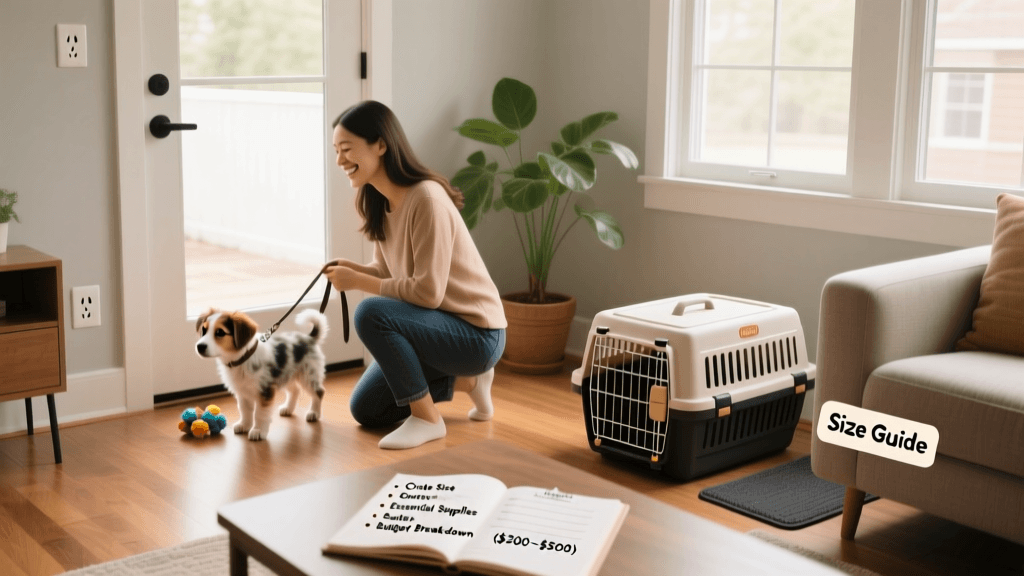
First-Week Rescue Dog Decompression: Behavior Case Studies
Discover how to prepare your home and manage the first week with a rescue dog using real behavioral case studies and the proven 3-3-3 decompression rule.

The Reality of Bringing Home a Rescue Dog
The day you bring home a rescue dog is often filled with excitement, new toys, and the eager anticipation of a lifelong bond. However, from a canine behavioral perspective, this massive environmental shift is one of the most stressful events a dog can experience. When getting a dog, especially from a shelter or foster environment, new owners frequently mistake a dog's initial exhaustion or submissive behavior for 'instant adjustment.' In reality, the dog is often in a state of behavioral shutdown or running on adrenaline. Understanding the biological and psychological needs of a newly adopted dog is critical to preventing early behavioral fallout, such as separation anxiety, resource guarding, and leash reactivity.
According to the American Veterinary Medical Association, recognizing early signs of stress and providing a structured, low-stimulation environment is paramount for a dog's long-term welfare. By examining real-world behavioral case studies, we can uncover the hidden mechanics of canine decompression and learn how to set our new companions up for success from day one.
Understanding Trigger Stacking and Canine Cortisol
Before diving into case studies, it is essential to understand 'trigger stacking.' This phenomenon occurs when a dog experiences multiple stressors in a short period, causing their cortisol (stress hormone) levels to compound. Unlike humans, who can process and release stress relatively quickly, a dog's cortisol half-life can take up to 72 hours to return to baseline after a significant stress event. When a newly adopted dog is exposed to a busy household, a trip to the pet store, and a walk in a noisy neighborhood all on the same day, their stress threshold is breached. The resulting behavioral 'explosion'—often manifesting as biting, barking, or destructive chewing—is not a sign of a 'bad dog,' but rather a biological system in overload.
Case Study 1: The Overstimulated Hound (What Happens When We Rush)
Subject: Buster, a 3-year-old Labrador Mix.
Background: Surrendered to a high-kill shelter due to a family move. Spent four weeks in a concrete run before adoption.
The First Week: Buster's new family was thrilled to adopt him. On day one, they brought him home, immediately introduced him to their three young children, and hosted a small 'welcome home' gathering with neighbors. The next day, they took him to an off-leash dog park to 'burn off energy' and socialize.
The Behavioral Fallout: By day four, Buster began exhibiting severe resource guarding over his food bowl and snapped at the youngest child when approached while chewing a toy. On walks, he became highly reactive, lunging and barking at other dogs.
Behavioral Analysis: Buster was a victim of extreme trigger stacking. The shelter environment had already elevated his baseline cortisol. The chaotic home introduction, loud gathering, and overwhelming dog park visit pushed him far past his stress threshold. His resource guarding was a symptom of a dog who felt entirely unsafe and lacked control over his environment. The family mistook his initial shelter 'shutdown' (freezing and compliance) for a laid-back personality, failing to realize he was simply too overwhelmed to react.
Case Study 2: The Shut-Down Terrier (Creating a Safe Haven)
Subject: Luna, a 5-year-old Terrier Mix.
Background: Found as a stray, lived in a foster home with multiple other dogs for six months.
The First Week: Luna's adopter, educated on canine decompression, prepared a dedicated 'safe room' (a 10x10 foot spare bedroom) before her arrival. When Luna came home, she was placed directly into this quiet room, equipped with a 4x4 foot metal exercise pen, a calming pheromone diffuser, and a heartbeat plush toy. For the first three days, the adopter only entered the room to quietly drop off food, offer gentle toss-treats, and take Luna out on a 6-foot leash to a quiet, fenced backyard for bathroom breaks. No guests were allowed, and no neighborhood walks were attempted.
The Behavioral Outcome: By day five, Luna began to initiate play and show relaxed, loose body language. By week three, she was confidently navigating the rest of the house and walking calmly on a leash in low-traffic areas.
Behavioral Analysis: Luna's adopter successfully managed her allostatic load (the cumulative wear and tear on the body from chronic stress). By restricting her environment and controlling her exposure to novel stimuli, Luna's nervous system was allowed to down-regulate. The Best Friends Animal Society heavily advocates for this type of structured transition, noting that dogs need time to process the loss of their previous environment before they can confidently map and bond with a new one.
First-Day Essentials: A Behavioral Toolkit
Preparing your home with the right tools is a vital step in the 'Getting a Dog' process. Here is a specific, actionable toolkit designed to facilitate decompression:
- Adaptil Calm Home Diffuser ($55 - $65): Covers up to 700 square feet. Plugs into the wall in the dog's safe room 24 hours before arrival. It releases synthetic dog-appeasing pheromones that signal safety and reduce physiological stress markers.
- Heartbeat Snuggle Puppy ($45 - $50): A plush toy with a simulated heartbeat and a 24-hour heat pack. Highly effective for the first 72 hours to mimic the presence of littermates or a foster pack, reducing nighttime whining and isolation distress.
- 4x4 Foot Metal Exercise Pen ($40 - $60): Choose a 24-inch or 30-inch height depending on the dog's size. This creates a 'den' within the safe room, preventing the dog from pacing or feeling overwhelmed by too much open space.
- Kong Classic (Red, Medium or Large) ($15 - $20): Stuff with high-value, easily digestible treats (e.g., plain pumpkin puree or soaked kibble) and freeze. Licking and chewing are naturally soothing, self-reinforcing behaviors that release endorphins in the canine brain.
- 6-Foot Biothane or Leather Leash ($25 - $35): Avoid retractable leashes entirely during decompression. A standard 6-foot leash provides clear communication and prevents the dog from building tension at the end of a long line.
Comparison Chart: Rushed Integration vs. Structured Decompression
| Protocol Element | Rushed Integration (High Risk) | Structured Decompression (Low Risk) |
|---|---|---|
| Environment | Full access to the entire house immediately. | Restricted to a single 'safe room' or pen for 3-7 days. |
| Socialization | Meeting all family members, friends, and neighborhood dogs on day one. | One-on-one quiet time with primary caretakers only; no guests for 2 weeks. |
| Exercise | Long walks in busy areas, dog parks, or pet stores. | Short, 10-minute 'sniffaris' in a quiet, fenced yard or empty field. |
| Sleep | Sleeping in high-traffic areas or forced to stay awake due to household noise. | 14-16 hours of undisturbed sleep in a dark, quiet, climate-controlled room. |
| Outcome | Trigger stacking, shutdown, or sudden behavioral explosions (biting, guarding). | Gradual confidence building, secure attachment, and clear communication. |
Reading Canine Body Language During Decompression
As noted by the ASPCA, establishing a predictable routine and learning to read your dog's subtle stress signals are foundational to successful dog ownership. During the first week, watch closely for 'calming signals' or stress indicators. These include:
- Lip Licking and Yawning: When not related to food or waking up, these are primary indicators of mild to moderate anxiety.
- Whale Eye: When the dog turns its head away but keeps its eyes fixed on a stimulus, showing the whites of the eyes. This is a precursor to a bite and requires immediate removal of the stressor.
- Freezing: A sudden cessation of movement. Often mistaken for 'being a good dog,' freezing is actually a high-stress response indicating the dog is assessing a threat.
- Shaking Off: If your dog shakes their entire body as if wet after a mildly stressful interaction (like meeting a stranger), they are actively attempting to discharge nervous system tension. Allow them space to do so.
Implementing the 3-3-3 Rule in Your Home
The 3-3-3 rule is a widely accepted behavioral framework for rescue dog transitions. While every dog is unique, this timeline provides a realistic expectation for your new pet's emotional journey.
The First 3 Days: Decompression
Your dog is overwhelmed, scared, and unsure of their new surroundings. They may not eat or drink normally, test boundaries, or hide. Action: Keep the environment incredibly boring. Stick to the safe room, offer high-value chews, and speak in low, soothing tones.
The First 3 Weeks: Settling In
Your dog is starting to figure out your routine, their personality begins to emerge, and they may start testing house rules. Action: Begin implementing structured, positive-reinforcement training. Introduce them to the rest of the house slowly, one room at a time, using a 'find it' treat scatter game to build positive associations with new spaces.
The First 3 Months: Building Trust
Your dog is finally feeling secure, attached, and comfortable. Their true temperament is now visible. Action: Slowly introduce more complex socialization, advanced training, and carefully monitored playdates with known, stable dogs. Continue to advocate for their space and never force interactions.
Conclusion
Getting a dog is a profound commitment that extends far beyond purchasing supplies and signing adoption papers. As these behavioral case studies demonstrate, the choices you make in the first 72 hours will echo throughout your dog's life. By prioritizing biological decompression over immediate social gratification, you are not denying your dog a fun life; you are building the neurological foundation required for them to enjoy it safely. Patience, environmental management, and empathetic observation are the most powerful tools in your new journey together.
hannah-wickes
All our authors care for dogs every day — read more of their work on the authors page.